How to Maintain a Water Heater for Better Hot Water Recovery
Drain sediment once a year, verify the thermostat is set to 120°F, and replace a worn anode rod. If recovery is still slow after those steps, service or replace the heater. Sediment leaves an insulating layer in the tank, raises energy use, and turns normal showers into sudden cold stretches. This guide gives you the highest-impact maintenance steps and a fast path for deciding between repair and replacement.
What slows hot water recovery?

- Helps protect the water heater tank
- Flexible four-section design fits tight spaces
- Standard threaded connection suits many heaters
Slow recovery usually starts with sediment, then moves to heat-source problems. In a tank-style water heater, sediment settles at the bottom, blocks heat from reaching the water, and can cause rumbling or popping while recovery slows. A thermostat set too low can reduce recovery speed, and other issues such as a worn anode rod, a dripping TPR valve, or a weak burner or element can also play a role.
What you’ll need
- Garden hose long enough to reach a safe drain or bucket
- Bucket for controlled draining
- Gloves and eye protection
- Replacement anode rod if inspection shows heavy wear
- Screwdriver or wrench for access panels and fittings
- Noncontact voltage tester for electric units
- Towels or rags for minor spills
Safety prep before you start
Turn off power or gas first. For electric units, shut off the circuit breaker; for gas heaters, turn the gas valve to the pilot position. Close the cold water supply on the cold water line leading to the heater, and let the water cool before draining so you do not scald yourself.
How to restore recovery speed
- Set the thermostat to off on electric units or to pilot/off on gas units before opening access panels.
- Shut off the cold water supply valve on the cold water line leading to the tank.
- Open a hot water faucet to prevent a vacuum while the tank drains.
- Attach a garden hose to the drain valve and route it to a safe drain or bucket.
- Drain until the water runs clear and no longer has sediment.
- Inspect the thermostat setting and return it to a reasonable setting; 120°F is a common target for a balance of comfort and safety.
- Check the burner or heating element for visible scale, corrosion, or damage.
- Inspect the anode rod and the TPR valve; replace a worn anode rod and test the TPR valve only if the manufacturer allows manual testing.
Say your 40-gallon tank starts rumbling after a shower and recovery slips from normal to slow. A flush may remove the sediment blanket that traps heat at the bottom, which can improve recovery without touching the burner or element. If the water stays rusty after flushing, the next step is inspection for corrosion or part failure, not more flushing.
Does flushing the tank make recovery faster?
Yes, if sediment is the problem. Flushing removes the mineral layer that blocks heat transfer, so the burner or element can warm the stored water more efficiently. It can also reduce popping and rumbling. It will not fix a dead thermostat, a weak burner, a failed element, a corroded tank, or an aging valve that will not seal.
What flushing fixes
Flushing helps most when recovery slows after years of mineral buildup. It is the first maintenance task to try because it targets the most common heat-transfer loss in tank-style water heaters. Flush every one to three years, and more often if sediment is heavy or the water supply carries a lot of minerals.
What flushing will not fix
If the heater still runs out of hot water quickly after a clear flush, the issue is likely beyond sediment. A faulty thermostat can limit water temperature. A burned-out electric element or a weak gas burner can slow recovery even in a clean tank. Rusty water, repeated leaks, or a TPR valve that drips and will not reseal point to service, not routine cleaning.
Recovery restoration checklist
This checklist ranks the tasks by likely impact on hot-water recovery. Start at the top and stop when the symptom matches a fix. The more the problem points to corrosion, leaks, or a failing heating part, the less likely simple upkeep will restore recovery speed.
| Symptom | Action | Homeowner difficulty | When to call a pro |
|---|---|---|---|
| Rumbling, popping, slow recovery | Flush sediment through the drain valve with a garden hose until water runs clear | Moderate | If the drain valve leaks, clogs, or will not close properly |
| Older tank, rusty water, corrosion signs | Inspect and replace the anode rod if worn | Moderate to difficult | If the tank shell shows rust, wet spots, or pitting |
| Water too cool or recovery too slow after flushing | Check thermostat setting and restore it to the desired range | Easy to moderate | If the thermostat will not hold setting or control properly |
| Dripping valve, pressure concern, or repeated relief activity | Test the TPR valve only if the manufacturer allows manual testing | Easy, but safety-sensitive | If it drips, fails to reseal, or releases water repeatedly |
| Persistent slow recovery after cleaning | Inspect burner or heating element for scale, damage, or failure | Moderate to difficult | If the unit will not heat normally or shows electrical or gas faults |
| Rusty water, recurring leaks, old tank | Stop maintenance-only troubleshooting and evaluate for service or replacement | N/A | When recovery does not improve after the steps above |
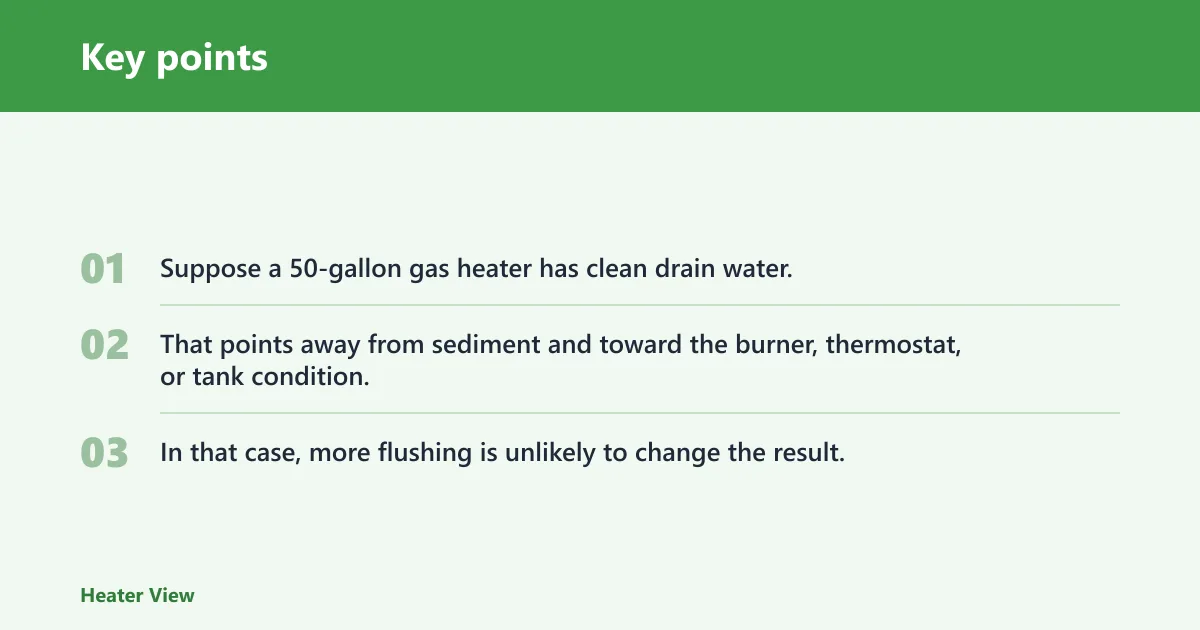
Suppose a 50-gallon gas heater has clean drain water, yet recovery still lags and the water at the tap goes lukewarm after one short shower. That points away from sediment and toward the burner, thermostat, or tank condition. In that case, more flushing is unlikely to change the result.
What water heater parts affect recovery time?
The thermostat, heating element or burner, anode rod, drain valve, and TPR valve all affect recovery, though in different ways. The thermostat controls temperature and usable hot water. The burner or element supplies heat. The anode rod limits tank corrosion. The drain valve matters because a clogged one can prevent a proper flush, which leaves sediment behind.
Thermostat
The thermostat sets the target water temperature, so it directly affects both recovery speed and how much usable hot water you get before the tank feels cold. Make changes only after safe shutdown. On gas units, turn the gas valve to pilot before maintenance; on electric units, shut off the breaker first.
Heating element or burner
Electric elements and gas burners are the parts that actually heat the water. Sediment and mineral buildup can coat them and slow heat transfer. A failure here can mimic sediment-related recovery loss, but the tank may stay clean and still perform poorly. That is the point where service becomes more likely than routine upkeep.
Anode rod and TPR valve
The anode rod is a sacrificial corrosion-prevention part, and replacement may be needed if it is worn. It matters more in older or rusty tanks. The TPR valve is a critical safety component that releases excess pressure inside the tank. Test it only if the manufacturer allows manual testing, and treat a valve that drips or will not reseal as a service issue.
How often should I flush a water heater for better performance?
A common flushing interval is every one to three years, but sediment-prone water may need attention sooner. If recovery slows before that schedule, flush first rather than waiting for the next interval. If the drain water still carries sediment after a full flush, the heater may need part inspection or service.
Simple cadence for homeowners
Check for rumbling, popping, rusty water, or longer reheating times during regular use. If those signs appear, do not wait for a calendar date. Flush the tank, then reassess recovery. If the tank is older or the drain valve is weak, the unit may need service instead of a routine flush.
What causes a water heater to run out of hot water so quickly?
Fast hot-water loss usually means the heater cannot recover between demands, or it is producing less usable heat than it should. Sediment is the first thing to check because it slows heat transfer. After that, look at thermostat setting, burner or element performance, and any sign of corrosion, leaks, or a misbehaving valve.
If that didn’t work, try this next
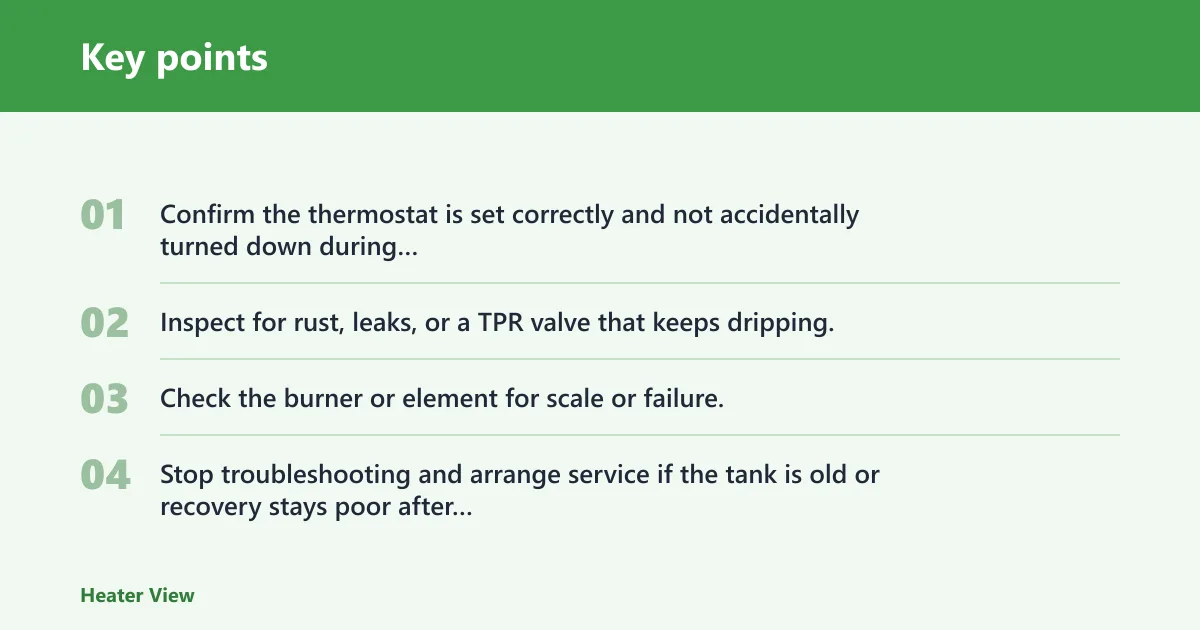
- Confirm the thermostat is set correctly and not accidentally turned down during maintenance.
- Inspect for rust, leaks, or a TPR valve that keeps dripping.
- Check the burner or element for scale or failure.
- Stop troubleshooting and arrange service if the tank is old or recovery stays poor after the flush.
A common first-timer mistake is to assume low recovery means the tank is too small. Often, the real problem is a burner or element that is not transferring heat well, or sediment that is blocking the heat source. Tank size affects total hot water volume, but recovery loss is usually a parts or maintenance issue first.
When should I call a professional?
Call a professional when flushing does not improve recovery, when the tank is older and rusty, or when the TPR valve seems to misbehave. Recurring leaks, corrosion, or a burner or element that looks damaged are not routine maintenance problems. Those signs point to service, and sometimes replacement, rather than another cleaning cycle.
Older tanks and unsafe valve behavior
Older units deserve extra caution because corrosion is more likely and the TPR valve may not reseal reliably. A valve that drips after testing, or one that keeps releasing water, should not be ignored. If the drain valve itself is clogged or leaking, do not force it; use a pro who can service the tank safely.
Prevention
Keep the tank on a one-to-three-year flush schedule, and check the anode rod sooner if rusty water appears. That simple habit helps maintain heat transfer and gives you a cleaner read on whether slow recovery is from sediment or from a failing part.
Common mistakes
Most recovery problems get worse when the basic shutoff steps are skipped or the symptom is misread. Slow recovery is not always sediment. Rust, recurring leaks, and a faulty TPR valve can mean the heater needs more than routine upkeep.
- Skipping the power or gas shutoff before draining
- Forgetting to shut off the cold water supply before opening the drain valve
- Draining too soon, before the water cools
- Stopping the flush while sediment is still coming out
- Ignoring rusty water or a valve that drips and does not reseal
- Assuming a failing burner or element will improve after another flush
Frequently asked questions
How do I maintain my water heater for faster hot water recovery?
Start with sediment removal, then inspect the thermostat setting, anode rod, TPR valve, and heating source. For a tank-style water heater, the maintenance order matters because sediment is the most common recovery drag. If recovery does not improve after a flush and basic checks, move to service rather than repeating the same steps.
Does flushing a water heater make it recover faster?
Yes, when sediment is the cause. Flushing clears insulating buildup so heat transfers faster from the burner or element to the water. It will not fix a bad thermostat, a worn heating element, a weak burner, or a corroded tank. If recovery stays slow after a clear flush, look beyond sediment.
Should I turn the thermostat off before draining a water heater?
Yes. Set an electric heater to off at the breaker, and turn a gas heater to pilot before maintenance. That keeps the unit from heating while it is empty or partly drained. Once the tank is refilled and air is purged, return the thermostat to the desired setting.
When should I call a professional instead of doing water heater maintenance myself?
Call a pro if the tank is old, the drain valve leaks, the TPR valve drips or will not reseal, or the heater still recovers slowly after flushing. Rusty water and recurring leaks are warning signs, not routine cleanup issues. Those problems can point to tank corrosion or a failing heating part.