5 Best Portable Heaters for a Workshop (2026): We Compared
For a typical small insulated workshop, the best portable heater is the Amazon Basics Ceramic Space Heater. It is a practical fit for enclosed, small-space use because it is a 1500W electric unit with tip-over and overheat protection. If your bay is drafty or partly open, choose a different type.
Quick answer
Quick comparison
| Product | Badge | Best for | Price | ||
|---|---|---|---|---|---|
 |
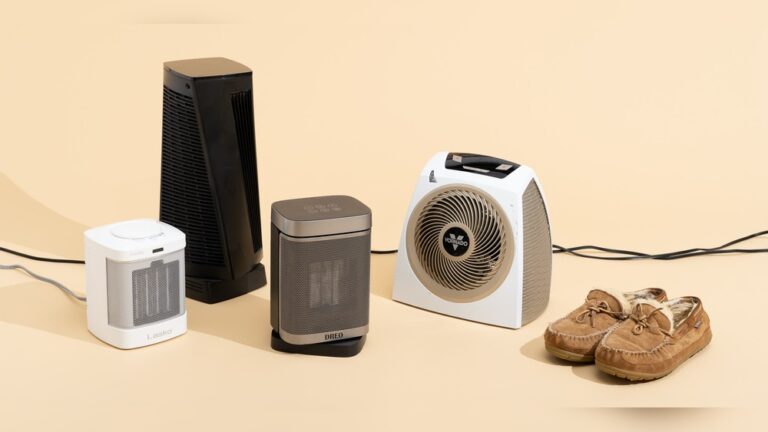
Amazon Basics Ceramic Space HeaterAmazon Basics | Our pick | 1500W · portable · ceramic space heater | $17.59
Price as of 16 Nov 2026
|
View |
 |
Sweetcrispy Oil Filled Radiator Heater for Indoor Use 1500WSweetcrispy | Pair with it | 1500W · quiet · oil-filled radiator | $53.99
Price as of 16 Nov 2026
|
View |
 |
DREO Space Heater, Portable Electric Heaters for Indoor UseDREO | Also great | 1500W · indoor portable · thermostat | $35.13
Price as of 16 Nov 2026
|
View |
 |
Dr Infrared Heater DR-968 Portable Space HeaterDR. INFRARED HEATER | Upgrade pick | 1500W · portable · infrared quartz | $98.80
Price as of 16 Nov 2026
|
View |
 |
COMFORT ZONE 5000-Watt Fan-Forced Ceiling Mount GarageCOMFORT ZONE | Also great | 5000-Watt · 240V · ceiling mount garage heater | $96.00
Price as of 16 Nov 2026
|
View |
Use the table below to match heater type to workshop size, insulation level, and power source, rather than relying on brand claims. A 120 sq ft insulated shop and a 400 sq ft drafty garage typically need different heaters.
Electric heaters work best on a dedicated outlet and circuit, and 240V units belong on a proper installation. Propane needs ventilation and fuel handling, while gas-free infrared can suit spot heat near a bench.
How we chose
The picks below are based on four checks: workshop size, insulation level, power source, and whether the job is whole-space heat or bench-side spot heat. Safety features mattered too, especially overheat protection, tip-over protection, and third-party certification.
The goal is practical fit. A heater that warms a 120 sq ft bench zone can be better than a larger unit that trips a breaker or wastes heat through an open door.
Quick picks
| Best for | Pick | Key spec | Price |
|---|---|---|---|
| Small insulated workshop | Amazon Basics Ceramic Space Heater | 1500W electric, overheat and tip-over protection | $17.59 |
| Quiet portable heat | Sweetcrispy Oil Filled Radiator Heater | 1500W oil-filled radiator, silent operation | $53.99 |
| Bench-side spot heat | Dr Infrared Heater DR-968 | 1500W infrared quartz | $98.80 |
| Drafty garage bay with no outlet nearby | Mr. Heater Portable Buddy | 4,000 to 9,000 BTU propane | Varies by model |
| Larger insulated workshop | COMFORT ZONE 5000-Watt Fan-Forced Ceiling Mount Garage Heater | 240V hardwired, 3 heat settings | $96.00 |
Workshop heater decision matrix
| Workshop scenario | Heater type | Minimum safe output | Power source | Likely operating cost tier | Main failure risk |
|---|---|---|---|---|---|
| Small insulated shop, about 100 to 200 sq ft, doors closed, occasional use | Portable electric | 1500W | Standard wall outlet on a dedicated circuit | Low to medium | Breaker trips or overheated cords if you use an extension cord or share the circuit |
| Small to medium insulated shop, about 200 to 400 sq ft, longer sessions | Portable electric | 1500W to 5600W, depending on the circuit | Direct wall outlet, sometimes a higher-capacity circuit | Medium | Undersized output leaves the space warm only near the heater |
| Drafty garage bay, open door use, or spot heat near a bench | Infrared or propane | Infrared sized for the work zone, or 4,000 to 9,000 BTU propane | Electric outlet for infrared, propane cylinder for gas | Low to medium | Heat loss through drafts, plus carbon monoxide and ventilation risk with propane |
| Larger insulated workshop, about 400 sq ft and up, all-day heat | 240V hard-wired heater | 5,000W to 10,000W | Installed 240V circuit | Medium to high | Wrong placement or weak electrical installation limits output and safety |
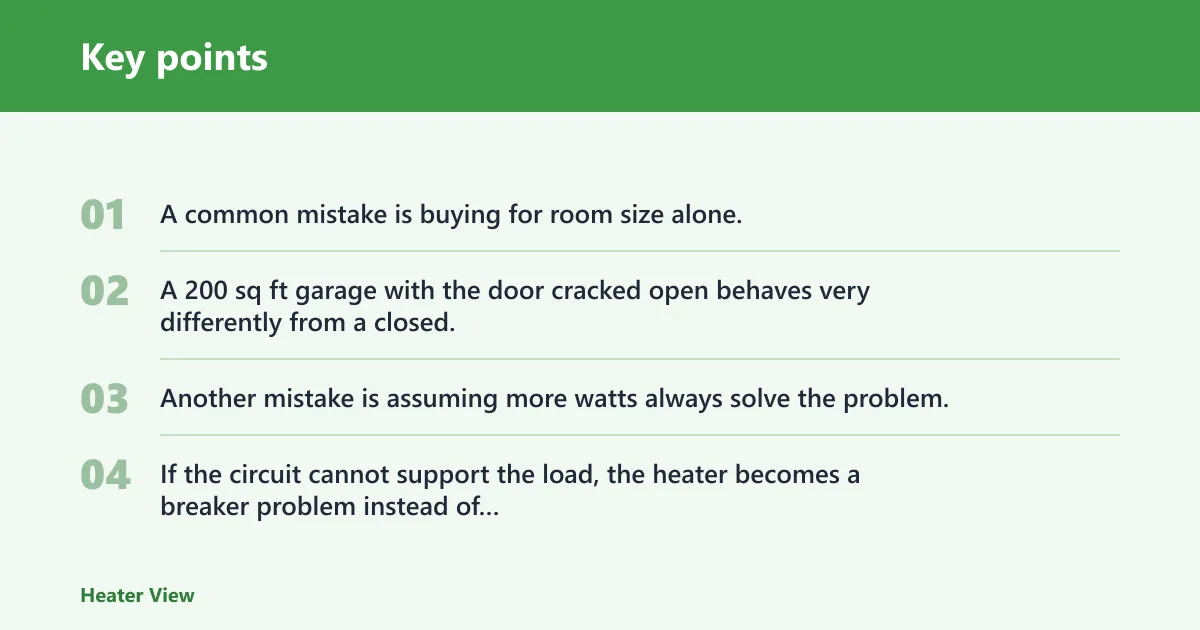
A common mistake is buying for room size alone. A 200 sq ft garage with the door cracked open behaves very differently from a closed, insulated 200 sq ft shop.
Another mistake is assuming more watts always solve the problem. If the circuit cannot support the load, the heater becomes a breaker problem instead of a heat source.
Portable electric heater: best for small shops
The best portable electric workshop heater for an enclosed small shop is usually a 1500W unit. Portable electric workshop heaters commonly range from about 1500W to 5600W, and they can fit small to medium enclosed spaces well when they can be plugged directly into a wall outlet.
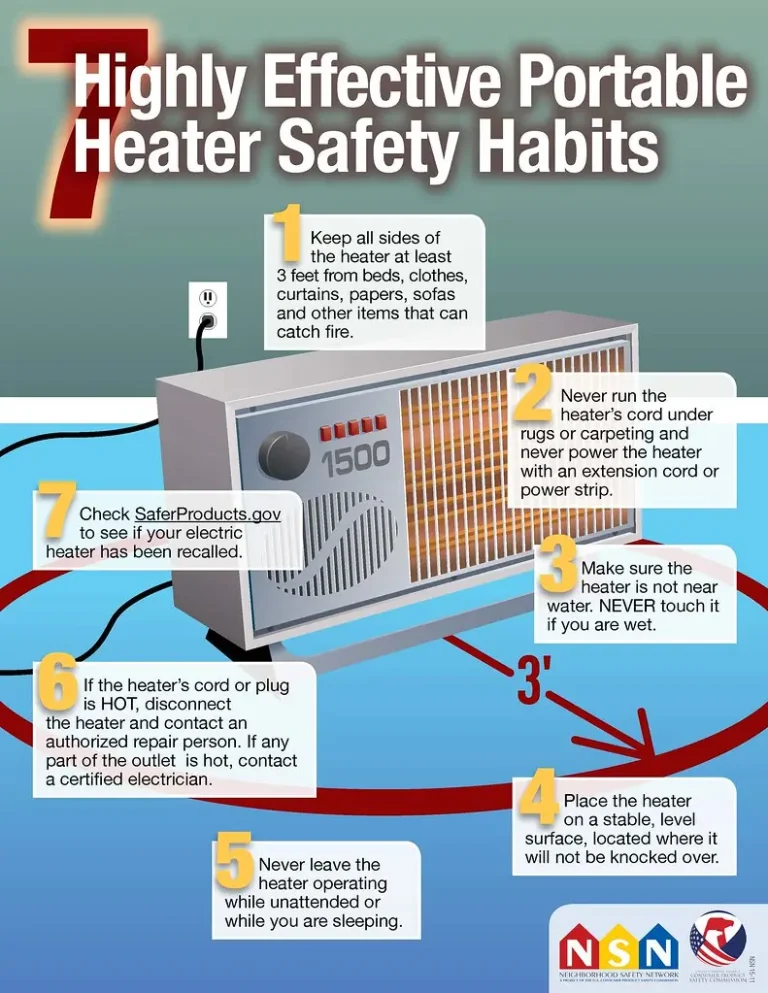
This category makes the most sense when you want steady heat for a closed room, not a bay with the door open. The main rule is simple: use a dedicated outlet and circuit, and do not run the heater through an extension cord.
Standard safety features should include overheat protection and tip-over protection. Third-party certification such as ETL, UL, or CSA is also important because it gives you a basic indoor-safety check before the heater goes into a workshop with cords, tools, and sawdust.
For coverage, a 1500W heater is a modest solution. The POOPLE portable garage heater is a 1500W unit described as about 215 sq ft, and the Dreo Oscillating Quiet Heater is rated for spaces up to 200 sq ft. Those figures fit the small-shop lane, not a leaky garage bay.
Suppose your shop is 160 sq ft, insulated, and the door stays shut while you work at a bench. A 1500W electric heater is the right starting point. If the same space has a drafty overhead door or frequent open-door use, a different heater type is more realistic.
Propane heater: best for drafty garages?
Yes, propane can be the better fit in a drafty garage or workshop bay, especially when electricity is limited. Portable propane heaters in this use case commonly fall in the 4,000 to 9,000 BTU range, and the Mr. Heater Portable Buddy provides adjustable output from 4,000 to 9,000 BTU.
That flexibility helps for spot heating and for jobs where you do not want to rely on an outlet. The tradeoff is ventilation: propane use brings fuel handling and carbon monoxide risk, so it is not a casual indoor substitute for electric heat in a closed shop.
Portable heater use in ice fishing shelters has also raised carbon monoxide concerns in published safety discussion, which is a useful reminder here. A workshop with limited airflow, solvent vapors, or a partly closed door needs careful planning before any propane heater goes in.
Use propane only where the setup allows fresh air exchange and where the heater’s instructions allow that type of use. Do not treat it as a solution for a tightly enclosed workshop that also stores fuels, finishes, or fine dust.
Infrared heater: best for bench heat?
Yes. Infrared is the right call when you want heat aimed at people and objects more than the whole room. That makes it useful for spot heating beside a workbench, especially in a drafty or partially open work area where warm air would escape too quickly.
The Dr Infrared Heater DR-968 combines infrared quartz and PTC heating, which is a useful clue about how some units mix radiant warmth with supplemental airflow. That hybrid approach can feel better than a plain fan heater when the goal is to warm the work zone, not the entire garage volume.
Infrared is usually a better match than a standard box heater when the door opens often. It is also a practical choice when you only need warmth while standing at one bench, not across the whole floor plan.
Keep in mind that infrared does not fix every draft problem. It reduces the discomfort at the bench, but it does less for cold air moving around the room.
Which heater should you buy?
If you have a small insulated workshop and a standard wall outlet, buy the Amazon Basics Ceramic Space Heater. It is the cleanest default choice because the 1500W format suits enclosed spaces, and the built-in overheat and tip-over protection fit workshop use better than a barebones unit.
If your garage bay is drafty, partly open, or used with the door up, buy the Mr. Heater Portable Buddy for spot heat or the Dr Infrared Heater DR-968 if you want electric spot heat without fuel handling. Choose propane only if you can manage ventilation and fuel safety.
If your workshop is larger and insulated, and you already have or can install 240V power, the COMFORT ZONE 5000-Watt Fan-Forced Ceiling Mount Garage Heater is the practical direction. It is the only pick here built around higher-output hard-wired heat, which is what bigger spaces usually need.
For occasional heat, choose the smallest heater that handles the space and the circuit. For all-day heat, choose the option that matches the room and power source, because trying to force a small portable heater to do whole-shop duty usually leads to cold corners and high runtime.
Amazon Basics Ceramic Space Heater: best for small insulated shops
- Three settings for different heat needs
- Tip-over and overheat protection built in
- Compact and easy to move
This is the best default pick for a small insulated workshop. The 1500W output fits enclosed spaces well, and the built-in overheat protection and tip-over protection are the kind of safety features a busy shop should have from the start.
It suits users who want direct, simple heat from a standard outlet. The compact size also makes it easy to move between work zones when the bench shifts.
The drawback is coverage. A 1500W heater is not the right answer for a drafty garage bay or a workshop with the door open, and it should stay on a direct wall outlet instead of a long cord.
Sweetcrispy Oil Filled Radiator Heater: best for quiet portable heat
- Three power modes for flexible heating
- Runs silently without a fan
- Casters and carry handle ease moving
This pick fits a small workshop where quiet operation matters more than fast blast heat. The 1500W oil-filled design runs silently, and the three power modes give you more control than a basic on-off heater.
It is a good fit for enclosed spaces where you want steadier warmth near a desk, bench, or assembly area. The casters and carry handle also make it easy to reposition.
The drawback is speed. Oil-filled heaters are usually slower to feel warm at first, so they are less suited to quick spot heating when you just walked into a cold shop.
DREO Space Heater: best for flexible small-shop heat
- Portable handle makes it easy to carry
- Multiple heat levels and modes
- Quiet operation for workshop use
This is a flexible 1500W electric option for a small indoor workshop. The multiple heat levels and modes make it easier to match changing conditions during a task, and the portable handle helps when you need to move it around the room.
The low noise level is useful if you work close to the heater for long stretches. That makes it easier to keep nearby without turning the shop into a loud box fan zone.
The drawback is that it is still a 1500W portable electric heater, so it is best for enclosed spaces and shorter heat runs. It will not replace a higher-output solution in a drafty bay.
Dr Infrared Heater DR-968: best for bench-side spot heat
- Dual heating combines radiant and air heat
- Electronic thermostat for set-and-hold comfort
- Low-noise blower for steady warmth
This heater is a strong fit when you care more about warming the work zone than the whole room. Its infrared quartz plus PTC design aims heat at people and nearby objects, which helps in drafty or partially open work areas.
The electronic thermostat gives it a more controlled feel than a simple plug-in box heater, and the low-noise blower keeps background noise down. It is a good match for bench work where direct warmth matters.
The drawback is that spot comfort is not the same as whole-space heating. If the shop is large and cold, this style can leave the air chilly even while the bench area feels better.
COMFORT ZONE 5000-Watt Fan-Forced Ceiling Mount Garage Heater: best for larger insulated shops
- 3 heat settings for workshop control
- Ceiling-mount design saves floor space
- Adjustable angle directs heat where needed
This is the right direction for a larger insulated workshop where 240V hard-wired heat makes sense. It offers 3 heat settings at 3,000, 4,000, and 5,000W, and the ceiling-mount design saves floor space that tools and carts need.
The adjustable angle also helps direct heat where you are working. For a bigger shop, that matters more than a small portable heater sitting in one corner.
The drawback is obvious: this is not a casual plug-in portable heater. It requires electrical installation, so it belongs only where the wiring, breaker capacity, and mounting plan are ready for it.
How much wattage do you need?
Start with the room, then the circuit. A 1500W heater is the practical ceiling for many standard indoor outlets, while 240V units in the 5,000W to 10,000W range fit larger insulated workshops that can support installed power.
For a simple rule, use 1500W for a closed, insulated small shop of about 100 to 200 sq ft. Move up to a stronger electric heater only if the circuit can handle it and the outlet is dedicated to the heater.
For larger or leakier spaces, think in terms of heat loss, not square footage alone. A drafty garage bay often needs either infrared for the work zone or propane with ventilation, because warm air escapes too quickly for a small electric unit to keep up.
Can you use a portable heater in a garage workshop?
Yes, but the garage setup decides the type. A closed, insulated garage workshop can use a portable electric heater, while a drafty or partly open bay usually needs infrared or propane, and propane only with ventilation and fuel safety in place.
The hazards are workshop-specific: cords run near tools, sawdust gathers on the floor, and solvents or finishing fumes may be present. Keep heaters at least three feet from combustibles, and do not use extension cords with portable electric heaters.
Open-door use is the big separator. If the door stays open for vehicles or stock movement, the heater must fight air exchange as much as cold temperature, which is why spot heating often beats whole-space heating in that setup.
What safety features should a workshop heater have?
At minimum, look for overheat protection, tip-over protection, and a third-party safety listing such as ETL, UL, or CSA. Those features matter in workshops because cords get dragged, tools get moved, and heaters can be bumped.
Safety is more than the heater body. Use a dedicated outlet or circuit for high-wattage electric heaters, keep the unit at least three feet from combustibles, and avoid extension cords entirely for portable electric models.
If the heater burns fuel, add ventilation to the list. Propane and similar fuel-burning heaters bring carbon monoxide concerns that do not belong in a closed shop with limited airflow.
What is the cheapest portable heater to run in a workshop?
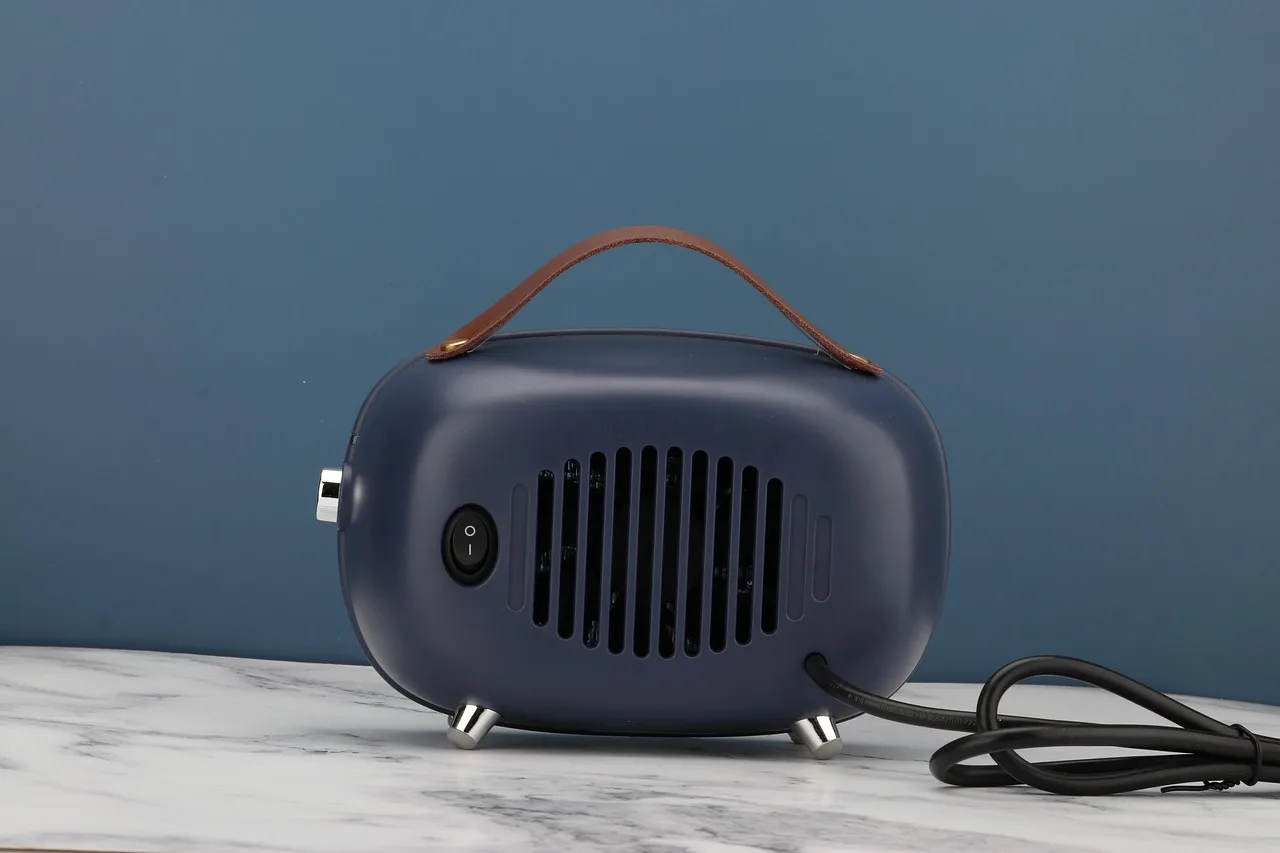
The cheapest heater to run is the one that matches the smallest practical zone. In a small insulated shop, a 1500W electric heater is usually the low-cost starting point because it can heat a closed space without wasting energy on a whole garage bay.
For drafty or open spaces, a cheap heater that cannot keep up is not actually cheap. Infrared can be economical for bench-side work because it warms people and objects directly, while propane can make sense when there is no good electrical option.
Operating cost also depends on runtime. A heater that runs all day because it is undersized often costs more than a better-matched unit that cycles on and off less often.
How many watts do I need for a workshop heater?
Use the outlet and the room together.
For coverage, the practical 1500W rule is this: it fits a small, enclosed workshop best, often around the 100 to 200 sq ft range, and it starts to struggle once the space gets drafty or the door stays open.
Do not size by floor area alone if the insulation is poor. A 1500W heater may be enough for one closed room and still fail in a bigger garage with air leaks.
Which type of portable heater is best for a workshop?
The best type depends on the workshop. Portable electric is best for enclosed small shops, propane is best for drafty garages when ventilation is possible, and infrared is best for bench-side spot heat in partially open work areas.
If the workshop is larger and insulated, a 240V hard-wired heater is usually the better answer, but that is no longer a simple plug-in portable choice. The main decision is whether you need whole-space heat or just warmth where you stand.
What is the best portable heater for a workshop?
The best portable heater for a workshop is the one that matches the room and the power source. For a small insulated shop, the Amazon Basics Ceramic Space Heater is the strongest default because it is a 1500W electric unit with overheat and tip-over protection.
If the room is drafty or partly open, the better answer changes. Infrared helps at the bench, while propane works without electricity but needs ventilation and careful fuel handling.
Is an electric heater or propane heater better for a workshop?
Electric is better for enclosed workshops with reliable outlets, while propane is better where electricity is limited and the space is drafty enough to benefit from direct spot heat. Electric is simpler indoors; propane adds ventilation and carbon monoxide concerns.
If the shop is small and insulated, electric usually wins. If the bay is open or the outlet situation is poor, propane may fit better, but only if the manual allows the use and the ventilation is there.
How much area can a 1500W heater warm in a workshop?
A 1500W heater is a small-shop tool, not a whole-garage solution.
If the workshop is drafty, the usable area drops fast. Open doors, air leaks, and uninsulated walls can cut the effective comfort zone enough that the heater only helps near the bench.
Do not make one. For a workshop, buy a heater with a listed safety certification such as ETL, UL, or CSA, plus overheat protection and tip-over protection. Homemade heaters are a fire and shock risk, especially around sawdust, metal tools, solvents, and crowded cords.
If you need more heat, choose the right heater type instead of building one. The safer path is matching output, ventilation, and circuit capacity to the space you already have.