How to Check for Carbon Monoxide Issues From Heaters
If a CO alarm sounds, or a meter shows a concerning reading near a fuel-burning heater, shut the heater off if you can do so without re-entering a space where the alarm is sounding, leave the area, and call emergency services or the gas utility as appropriate. Ignoring CO can cause poisoning, brain injury, or death. This guide shows what to check first, what heater symptoms and readings mean, and when to evacuate.
What to do first if CO is suspected


If anyone feels headache, dizziness, nausea, weakness, shortness of breath, confusion, or vomiting near a heater, treat it as a possible carbon monoxide exposure and leave immediately. Do not stay inside to keep checking a display. Carbon monoxide has no color or smell, and it can injure or kill.
If the alarm sounds, leave the home immediately and move to fresh air. Do not try to locate the source after the alarm sounds. More than 200 people in the U.S. die every year from accidental non-fire CO poisoning, and more than 100 CO deaths are linked to portable generators. (CPSC)
-
Get everyone out. Take children, older adults, and pets with you if you can do so quickly. If anyone is confused, weak, or short of breath, call emergency services from outside or from a neighbor’s phone.
-
Call the right help. Contact emergency services first if people are sick or the alarm is sounding. Then call the gas utility and an HVAC professional before restarting the heater. Do not relight or reset anything until the source is found.
-
Do not keep checking. A detector number alone does not clear a space. If multiple people feel ill, leave even if the device has not alarmed yet. Symptoms can appear before a consumer alarm reaches its time-and-concentration trigger.
Say a furnace room has a digital display reading of about 25 ppm and one person has a headache and nausea. That is not a cue to keep watching the number. Leave, get fresh air, and call for help if symptoms do not improve quickly.
Heater parts that can create CO problems
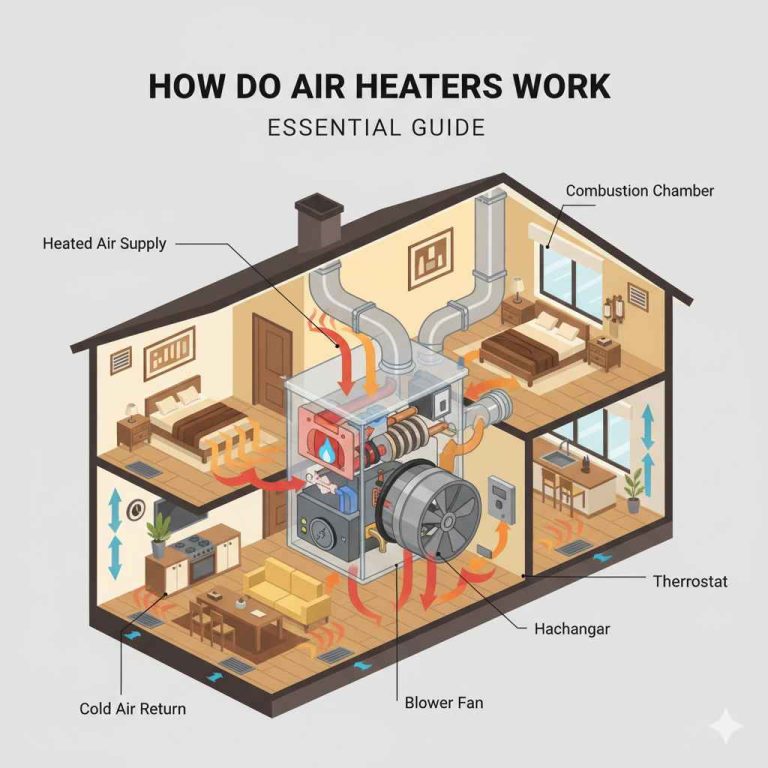
Gas furnaces are a common fuel-burning source of carbon monoxide when something in combustion or venting goes wrong. The parts most tied to risk are the burner and ignition area, the heat exchanger, and the venting path through the flue or chimney. Blocked airflow or backdrafting can turn a working heater into a hazard.
Burner and ignition area
Look for flame behavior that is obviously wrong, such as a lazy yellow flame where a steady blue flame would normally be expected, soot around the burner compartment, or repeated ignition failures. These are warning signs, not proof of CO by themselves.
Heat exchanger concerns
A cracked heat exchanger can release carbon monoxide into the air stream, but you cannot confirm that from symptoms alone or from a quick visual check. If a technician suspects a crack, the heater needs professional evaluation. Do not keep using the furnace while waiting for that diagnosis.
Venting, flue, and chimney path
Blocked or damaged venting can let combustion gases build up instead of leaving the home. Check for disconnected pipe sections, rust, visible holes, snow buildup on outdoor terminations, bird nests, leaves, or other debris that could obstruct exhaust paths. A clear vent path matters as much as the burner itself.
Airflow and backdraft clues
Wind, chimney blockage, or poor makeup air can cause intermittent CO. That is why some problems show up only when the heater starts, after a storm, or when strong wind pushes exhaust back toward the intake or opening. If the furnace seems normal one day and unsafe the next, do not assume the danger is gone.
How to check a heater for warning signs
Start with visible clues around the appliance and venting path. That is the safest at-home check, but only after you have left the area if the alarm is sounding. It can tell you whether a heater needs shutdown and professional service, but it cannot prove the absence of carbon monoxide.
-
Look around the heater. Check for soot, scorch marks, melted plastic, unusual condensation, rust, or water staining near the unit and vent connectors. These signs can point to combustion or venting trouble.
-
Inspect the vent outlet. Look outside for snow, debris, bird nests, ice, damaged caps, or a blocked termination. Outdoor obstructions can stop exhaust from leaving the system and can create intermittent CO issues after wind or snowfall.
-
Watch the flame briefly. If the unit has a sight glass and the manufacturer allows observation, note obvious irregularity such as flickering, lifting, or strong yellow tipping. Do not remove panels or open sealed combustion chambers unless the manual says you may.
-
Stop at any red flag. If you see heavy soot, smell nothing unusual but the alarm sounds, or notice repeated shutdowns, turn the heater off and get professional help. A visual check is a triage tool, not a repair.
Picture a furnace vent that was clear yesterday but is packed with snow after a storm. The heater may run for a short time, then spill exhaust or backdraft. That is a reason to shut it down and call for service, not a sign to wait for a higher detector number.
How do you check furnace for carbon monoxide?
You check a furnace for carbon monoxide by combining three things: symptom awareness, visible inspection, and detector behavior. If people are sick, leave first. If the furnace area shows soot, blocked venting, or unusual flame behavior, shut it off and arrange professional diagnosis.
Do not use a low detector reading as permission to keep the furnace running if occupants feel ill, or you see combustion trouble. Consumer alarms use time-and-concentration thresholds, so a low displayed number does not guarantee safety.
What a detector reading can and cannot tell you
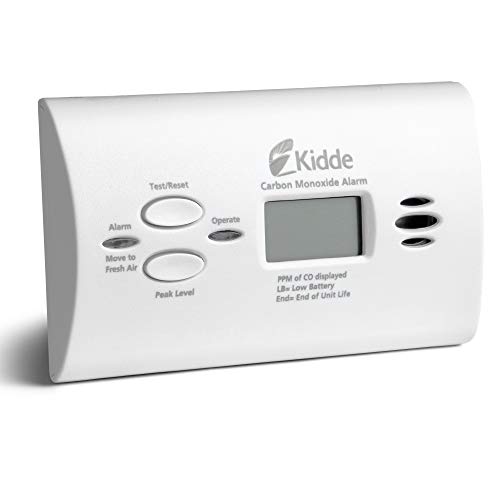
A digital display alarm can show low carbon monoxide levels, but the number is only part of the picture. A reading near a heater may reflect a nearby spike, a short-lived plume, or air movement that has not reached other rooms yet. It does not identify the source.
Consumer alarms are designed to respond over time, not as a simple instant pass-fail meter. That is why a heater area reading, even one below the alarm point, should be treated as a warning when paired with symptoms or visible venting problems.
When to shut the system off
Shut the heater off if the CO alarm sounds, if anyone feels ill, or if you find obvious venting or combustion faults. Leave the home if the alarm sounds or if multiple people have symptoms. Do not keep the system running “just to see what happens.”
Heater CO triage checklist
This checklist helps you decide whether a heater issue looks like a safe at-home check, a service call, or an immediate evacuation. Use it only for triage. If people feel sick, leave first and do not keep checking numbers indoors.
| Symptom | Detector reading | Likely heater fault | Immediate action | Shut the system off? |
|---|---|---|---|---|
| No symptoms, no alarm, visible soot near burner | 0-9 ppm displayed, or no display | Burner, combustion, or venting problem | Stop using the heater and schedule professional inspection | Yes |
| Headache, dizziness, nausea, weakness | Any reading, including low display values | Possible CO exposure from heater or another source | Leave immediately, get fresh air, call emergency services if symptoms are significant | Yes |
| CO alarm sounds near furnace | Alarm event, with or without a number | Possible vent blockage, backdrafting, or combustion fault | Evacuate, do not search for the source, call emergency services or the gas utility | Yes |
| Intermittent odorless illness, worse during heater run time | Low display reading or no alarm yet | Intermittent venting or backdraft issue | Leave if anyone feels ill, then arrange diagnosis before further use | Yes |
| Visible snow, debris, or damage at exhaust outlet | Any reading | Blocked or damaged flue, chimney, or vent termination | Turn off the heater and clear the area only if it is safe to do so from outside; schedule service | Yes |
| No symptoms, no alarm, annual inspection overdue | No reading or normal display | Unknown; risk still exists | Book a professional inspection before the heating season or sooner if anything changes | No, unless a fault appears |
How do you check for carbon monoxide in your house?
To check for carbon monoxide in your house, look for the right alarms, the right placement, and the right behavior near fuel-burning equipment. Install CO alarms on every level of the home and outside sleeping areas. Placement requirements can vary by device, code, and home layout.
General placement guidance
Install a carbon monoxide detector outside sleeping areas and on every level of the home. Follow the manufacturer’s instructions and applicable code for exact placement, because location rules can vary by model and jurisdiction.
Why exact height depends on the device
Some guidance places alarms on the wall about 5 feet above the floor or on the ceiling, but that placement is not universal. The correct position depends on the model, room layout, and code language. A quick answer is: use the manufacturer’s directions first.
Using portable detectors as a backup
A portable carbon monoxide detector can help you check uncertain spaces, outbuildings, or travel locations where a fixed alarm is absent. It is battery-operated and useful for a supplemental check, but it does not replace installed alarms or a professional diagnosis of a heater problem.
How do you check for carbon monoxide levels?
You check carbon monoxide levels with a detector, but you should not treat the display as a simple safety guarantee. A low-level reading can still be important if people feel ill or if the heater shows a venting or combustion problem. A high reading near a heater is an urgent warning.
How to read the number
Parts per million, or ppm, is the unit shown by many detectors. Consumer alarms vary in how they react, because they use time-and-concentration thresholds rather than one universal instant trigger. A reading near 70 ppm is serious, but the number alone is not the whole decision.
How to treat a low-level reading
If a detector shows a low level and nobody has symptoms, inspect the heater area, check vent outlets, and arrange service if anything looks wrong. If anyone has headache, dizziness, nausea, or confusion, leave immediately even if the number is low.
How to treat an alarm event
If the alarm sounds, leave the home immediately and move to fresh air. Do not stay inside to compare readings or search for the source. If the alarm is near a furnace, the heater may be involved, but the source still needs professional diagnosis after everyone is safe.
How do you test a carbon monoxide detector?
Test a carbon monoxide detector by using its test button according to the manufacturer’s instructions. Check it regularly, and follow the manual for any self-test or end-of-life alert. A working detector is only useful if its batteries, sensors, and alarm function are intact.
-
Press the test button. Hold it as the manual directs until the alarm sounds or the display responds. This checks the electronics and sounder, but it does not inject carbon monoxide into the sensor chamber.
-
Check battery status. Look for a low-battery chirp, battery indicator, or end-of-life message. Follow the label on your unit for battery backup details, because sealed 10-year models differ from replaceable-battery models.
-
Replace at end of life. Replace the detector when the manufacturer says to replace it, or when the end-of-life signal appears. Do not keep using an expired alarm because it still powers on.
How often should you test it? Follow the manufacturer’s schedule. Many home safety devices are commonly tested monthly, but the correct interval for a given model is the one in the manual or on the device label. After a battery change or power interruption, test it again.
Frequently asked questions
How do you check for carbon monoxide from a heater?
Start with symptoms, then inspect the heater area for soot, damaged venting, snow or debris at the exhaust, and obvious combustion problems. Check the detector display if one is present, but do not use a low reading as proof that the heater is safe.
How do you tell if a heater is leaking carbon monoxide?
You usually cannot prove a leak from symptoms or a quick look alone. Warning signs include repeated CO alarms, visible vent damage, soot, backdraft clues, or illness that appears when the heater runs. A cracked heat exchanger cannot be confirmed without professional evaluation.
What should you do if a CO alarm goes off near a heater?
Leave the home immediately and move to fresh air. Do not search for the source, and do not reset the alarm first. Call emergency services if anyone has symptoms, then contact the gas utility and an HVAC professional before the heater is used again.
Where should carbon monoxide alarms be placed near heating equipment?
Place alarms on every level of the home and outside sleeping areas, with placement chosen according to the model and applicable code. Exact height and spacing depend on the device, so follow the manufacturer’s directions instead of guessing a universal mounting height.
How often should you test a carbon monoxide alarm?
Test it according to the manufacturer’s instructions, and check the battery or end-of-life status at the same time. Many units are checked monthly, but the label on the alarm takes priority. Replace the unit when the manufacturer says its service life is over.