Are Battery-Powered Heaters Safe Around Pets?
Yes, battery-powered heaters are generally safe when used correctly and according to manufacturer guidelines. They offer a convenient, flameless heating option, but like all electrical devices, they require mindful operation to prevent potential hazards.
Feeling a chill and looking for a new way to warm up your home? You might have seen battery-powered heaters and wondered if they’re a good or safe choice. It’s totally normal to wonder about new heating technology, especially when it comes to keeping your loved ones warm and secure. Many people find themselves a bit puzzled by these cord-free options – are they effective? Are they safe to use around family and pets? We’re here to clear things up! This guide will walk you through everything you need to know about battery-powered heaters, making it easy to understand if they’re the right cozy addition for your home. Get ready to discover how these modern marvels can offer warmth and peace of mind.
Understanding Battery-Powered Heaters: Your Cozy Companion
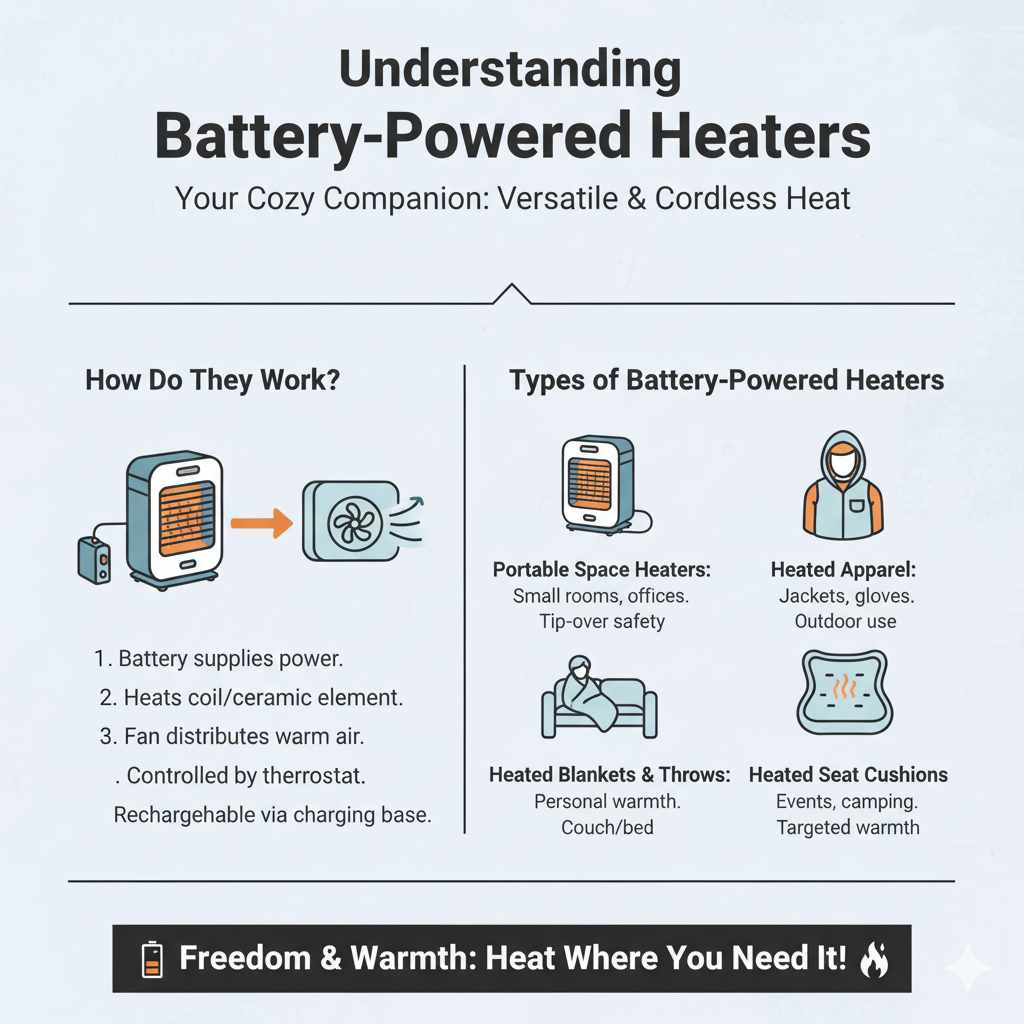
Battery-powered heaters are a relatively new and innovative way to add supplementary warmth to a space. Unlike traditional heaters that rely on an electrical outlet or combustion, these units are powered by rechargeable batteries. This means you can place them just about anywhere without worrying about proximity to a wall socket, making them incredibly versatile for heating a small room, a workshop, a patio, or even a quick spot to take the chill off. They typically come in various forms, such as portable space heaters, heated blankets, or even seat cushions.
The appeal is undeniable: no cords to trip over, no need to extend electrical circuits, and the freedom to move them where you need them most. However, as with any heating device, safety is paramount. Understanding how they work and what precautions to take will ensure you can enjoy their benefits without any worries.
How Do Battery-Powered Heaters Work?
At their core, battery-powered heaters function much like electric resistance heaters. The rechargeable battery pack supplies power to heating elements (often made of ceramic or metal coils). When electricity flows through these elements, they generate heat. The intensity of the heat is usually controlled by fans and thermostat settings within the unit, similar to other electric heaters. The main difference lies in the power source – a battery instead of the grid.
Recharging is straightforward. Most units come with a charging base or a specific adapter. You simply plug the base into a standard wall outlet to replenish the battery’s energy. Charging times can vary greatly depending on the battery’s capacity and the charger’s wattage, from a few hours to overnight. Once fully charged, the heater can operate for a specific duration, also depending on the power setting and battery size.
Types of Battery-Powered Heaters
The range of battery-powered heating devices is growing, offering solutions for different needs:
- Portable Electric Space Heaters: These are compact units designed to heat small to medium-sized rooms. They often include safety features like tip-over protection and overheat shut-off. Their battery power makes them ideal for offices, dorm rooms, or areas without easy access to outlets.
- Heated Blankets and Throws: Battery-powered versions of electric blankets provide personal warmth. They are perfect for cozying up on the couch or adding an extra layer of warmth in bed without heating an entire room.
- Heated Apparel: Think jackets, vests, and gloves. These are designed for outdoor use or in unheated environments like garages and worksites. Small battery packs power heating elements embedded in the fabric.
- Heated Seat Cushions: Great for outdoor events, camping, or even just a chilly desk chair, these portable cushions offer targeted warmth.
Safety First: Are Battery-Powered Heaters Truly Safe?
The question on everyone’s mind: “Are battery-powered heaters safe?” For the most part, the answer is a resounding yes, with a few important considerations. Because they don’t involve open flames or combustion, they eliminate risks associated with fuel-burning heaters, such as carbon monoxide production and fire hazards from gas leaks. Their cord-free nature also reduces tripping hazards.
However, like any electrical appliance, they can pose risks if misused or if they are faulty. It’s crucial to understand these potential risks and how to mitigate them. Safety features are built into most modern units to prevent common issues.
Potential Safety Concerns and How to Address Them
Let’s break down the potential concerns and how to stay safe:
- Overheating: While rare with modern designs, any electrical heating device can overheat if its vents are blocked or if it malfunctions.
- Solution: Always ensure the heater has ample clearance (check the manual for specific distances, usually at least 3 feet) from furniture, curtains, bedding, and other flammable materials. Never cover the heater.
- Battery Issues: Like any rechargeable battery, there’s a slight risk of malfunction, such as overheating during charging or discharge, especially with low-quality or damaged batteries.
- Solution: Use only the charger provided by the manufacturer. Do not charge the battery for excessively long periods beyond what’s recommended. If the battery appears swollen, leaks, or gets unusually hot during charging, discontinue use immediately and contact the manufacturer. Avoid exposing batteries to extreme temperatures (hot or cold).
- Electrical Safety: Even though it’s battery-powered, the charging process involves a standard electrical outlet.
- Solution: Ensure the charging cable and adapter are in good condition. Never use a damaged charger. Keep the charging area clean and dry.
- Tip-Over Hazards: If a heater tips over and its safety shut-off fails, it could potentially pose a localized fire risk, especially if it lands on flammable material.
- Solution: Most battery-powered space heaters come with automatic tip-over shut-off switches. Always test this feature (gently tilting the unit to see if it turns off) and ensure it’s working. Place the heater on a stable, level surface.
- Moisture: Using electrical devices near water is always a concern.
- Solution: Never use battery-powered heaters in bathrooms, near sinks, or in any damp environment where they could come into contact with water. Ensure the unit is completely dry before charging.
Key Safety Features to Look For
When shopping for a battery-powered heater, prioritize models with these safety features:
- Automatic Shut-Off Timer: For peace of mind, ensuring the heater turns off after a set period.
- Overheat Protection: A sensor that automatically turns the heater off if it reaches an unsafe temperature.
- Tip-Over Switch: Shuts the unit down if it’s accidentally knocked over.
- Cool-Touch Exterior: The outer casing remains relatively cool to prevent burns. (More common on smaller personal devices).
- UL or ETL Certification: This indicates the product has been tested by an independent laboratory and meets specific safety standards. Organizations like Underwriters Laboratories (UL) and Intertek (ETL) provide these certifications.
Benefits of Using Battery-Powered Heaters
Beyond safety, battery-powered heaters offer a host of advantages that make them attractive options for many households:
- Portability and Convenience: Their cord-free design means you can easily move them from room to room, use them in garages, workshops, campers, or even on a covered patio.
- No Open Flames: Unlike propane or kerosene heaters, they produce no carbon monoxide and pose no risk of open flames, making them safer for indoor use, especially in homes with children or pets.
- Easy to Use: Most are plug-and-play (for charging) and operation is usually as simple as pressing a button.
- Energy Efficiency (in specific use cases): While battery technology is still evolving, using a small, localized heater to warm just your immediate area can be more energy-efficient than heating an entire room or house with a central system.
- Reduced Tripping Hazards: No cords to navigate means a safer environment, especially in busy households.
- Aesthetics: Many are designed to be sleek and modern, blending seamlessly with home decor.
When to Use Battery-Powered Heaters Effectively
Battery-powered heaters are best suited for supplementary heating and personal warmth. They are not typically designed to heat an entire large home. Think of them as solutions for specific situations:
- Targeted Spot Heating: Keeping your feet warm under your desk, warming up your immediate seating area on the couch, or warming a small, enclosed space like a personal office cubicle.
- Supplementing Central Heating: If one room in your house is consistently colder than others, a battery-powered heater can provide quick, localized warmth without drastically increasing your overall energy bill.
- Areas Without Easy Electrical Access: Workshops, sheds, garages, or even a reading nook in a corner of a room where an outlet is inconveniently located.
- Emergency Backup: In case of a power outage, a fully charged battery-powered heater can provide some much-needed warmth, though their runtime is limited.
- Outdoor Use (Covered Areas): Some models are designed for use on covered patios or decks, providing a cozy environment for gatherings. Always confirm if the model is rated for outdoor or damp conditions.
Comparing Battery-Powered Heaters to Other Heater Types
To truly understand the safety and utility of battery-powered heaters, it’s helpful to compare them to other common heating solutions.
| Heater Type | Power Source | Primary Safety Concern | Typical Use Case | Portability | Battery-Powered Advantage |
|---|---|---|---|---|---|
| Battery-Powered Heater | Rechargeable Battery | Battery integrity, Overheating (rare) | Spot heating, personal warmth, areas w/o outlets | High | No cords, no open flame, silent operation |
| Electric Resistance Heater (Plug-in) | Wall Outlet (AC Power) | Overheating, Fire hazard if blocked, Tripping hazard (cord) | Room heating, supplemental heat | Medium (requires outlet) | N/A |
| Radiant Heater (Plug-in) | Wall Outlet (AC Power) | Hot surfaces, Fire hazard if too close to flammables | Direct, radiant heat for personal zones | Medium (requires outlet) | N/A |
| Propane/Kerosene Heater | Fuel Canister (Propane/Kerosene) | Carbon Monoxide (Poisonous gas), Open flame, Fire risk, Fuel storage | Unventilated spaces (garages, construction), emergency heat | High | No reliance on electricity for operation (but battery ones don’t produce CO) |
| Infrared Heater (Electric) | Wall Outlet (AC Power) | Hot elements, Fire hazard if too close to flammables | Heats objects directly, good for large spaces or drafts | Medium (requires outlet) | N/A |
Pros and Cons of Battery-Powered Heaters
Let’s summarize the upsides and downsides:
Pros:
- Unmatched portability and freedom from outlets.
- Eliminates carbon monoxide risks associated with fuel-burning heaters.
- No open flames, reducing fire hazards.
- Reduced tripping hazards due to lack of cords.
- Quiet operation.
- Ideal for targeted, personal heating needs.
Cons:
- Limited runtime on a single charge, varying by power output.
- May not be suitable for heating large spaces effectively.
- Initial cost can be higher due to the battery technology.
- Battery life can degrade over time.
- Charging requires a standard electrical outlet.
Choosing the Right Battery-Powered Heater for You
With various options available, picking the right one involves considering your specific needs:
- Determine Your Heating Needs: Are you looking to warm your entire home (unlikely), a small office space, your feet under a desk, or just yourself on the couch? This will dictate the size and power of the heater you need.
- Consider Runtime: How long do you need the heater to operate on a single charge? Manufacturers usually provide estimates based on low, medium, and high settings. Check reviews for real-world performance.
- Battery Specifications: Look at the battery capacity (often measured in mAh or Wh) and the expected lifespan of the battery. Can it be replaced?
- Safety Features: As discussed, prioritize models with UL/ETL certification, overheat protection, and tip-over shut-off.
- Portability vs. Power: Smaller heaters are more portable but less powerful. Decide what balance is right for you.
- Ease of Charging: How simple is the charging process? Does it come with a charger? How long does it take?
- Budget: Battery-powered heaters can range in price. Set a budget that aligns with your needs and desired features. Remember to factor in the potential for battery replacement down the line for some models.
Maintaining Your Battery-Powered Heater for Safety and Longevity
Proper maintenance is key to ensuring your battery-powered heater remains safe and functions optimally for years to come.
Regular Cleaning
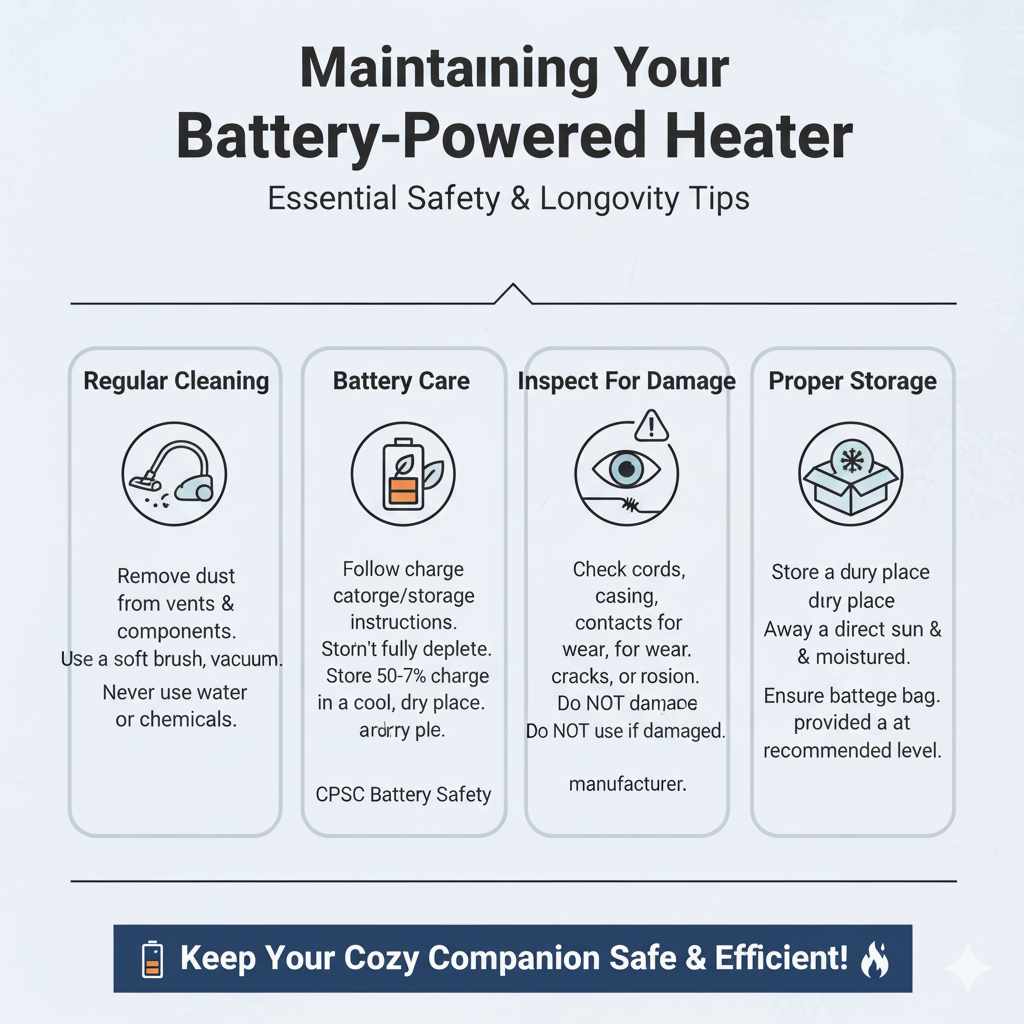
Dust and debris can accumulate on heating elements and fan components, reducing efficiency and potentially creating a fire hazard. Unplug the unit (or ensure it’s powered off and the battery is removed if possible) and use a soft brush or vacuum cleaner with a brush attachment to gently remove dust from vents and surfaces. Never use water or harsh chemicals for cleaning.
Battery Care
Follow the manufacturer’s instructions for charging and storage. Avoid fully depleting the battery regularly, as this can shorten its lifespan. If storing the heater for an extended period, charge the battery to about 50-70% and store it in a cool, dry place. Many modern batteries are lithium-ion, which have good longevity but still require mindful care. For more on battery safety, resources like the U.S. Consumer Product Safety Commission (CPSC) offer valuable insights on lithium-ion battery safety: CPSC Battery Safety.
Inspecting the Unit
Before each use, especially after storage, visually inspect the heater and its charging cable for any signs of damage. Look for frayed wires, cracks in the casing, or signs of corrosion on battery contacts. If you notice any damage, do not use the heater and contact the manufacturer for repair or replacement.
Storage
When not in use, store your battery-powered heater in a cool, dry place away from direct sunlight and moisture. Ensure it’s completely clean and, if applicable, the battery is stored with an appropriate charge level as recommended by the manufacturer. Some units come with storage bags or cases, which are ideal for protecting them.
Frequently Asked Questions (FAQ)
Q1: Can I use a battery-powered heater to heat my whole house?
A: Generally, no. Battery-powered heaters are designed for localized or personal heating. They don’t have the power output to effectively warm larger spaces or an entire home. They are best for heating a small room, a desk area, or just your immediate personal space.
Q2: How long do battery-powered heaters typically last on a charge?
A: This varies greatly depending on the model, battery capacity, and the heat setting used. Some smaller personal heaters might last 2-4 hours on high, while more powerful ones designed for small rooms might offer 4-8 hours, or even longer on lower settings. Always check the manufacturer’s specifications.
Q3: Are battery-powered heaters safe to leave on overnight?
A: It depends on the model and its safety features. If the heater has an automatic shut-off timer and overheat protection rated for unattended use, then it might be safe. However, it’s generally recommended to unplug or turn off any portable heater when you’re not actively supervising it, especially if you are sleeping, to be extra cautious.
Q4: What should I do if my battery-powered heater smells hot or looks damaged?
A: If you notice any unusual smells or see visible damage, stop using the heater immediately. Unplug it from the charger (if plugged in) and allow it to cool down. Do not attempt to use it again. Contact the manufacturer for troubleshooting, repair, or replacement. Do not try to repair it yourself, especially if it involves the battery pack.