Furnace Blowing Cold Air Troubleshooting
If a furnace starts but blows cold air, wait about 3 to 5 minutes for the heat cycle. If the air stays cool after that, treat it as a fault, not normal startup. Ignored heat failures can waste fuel, trip safety controls, and leave the furnace cycling without warming the house. This guide shows how to tell delay from failure, then walks through checks by furnace type and symptom pattern.
When cold air is normal and when it signals a fault


The answer depends on timing. Cold air for a few minutes at startup can be normal, especially on single-stage systems that need time for ignition and warm-up. Cold air that continues after about 3 to 5 minutes, or returns after short bursts of heat, may point to a thermostat problem, airflow restriction, ignition failure, a limit-switch trip, or a safety lockout.
Normal startup delay versus true heat failure
A gas furnace usually runs a startup sequence before the blower delivers warm air: the inducer starts, ignition begins, the flame proves, and only then does the blower send heat through the ducts. Electric and oil furnaces have their own sequence, but the same rule applies: a brief delay is normal, continuous cold air is not.
Cold at startup versus cold all the time
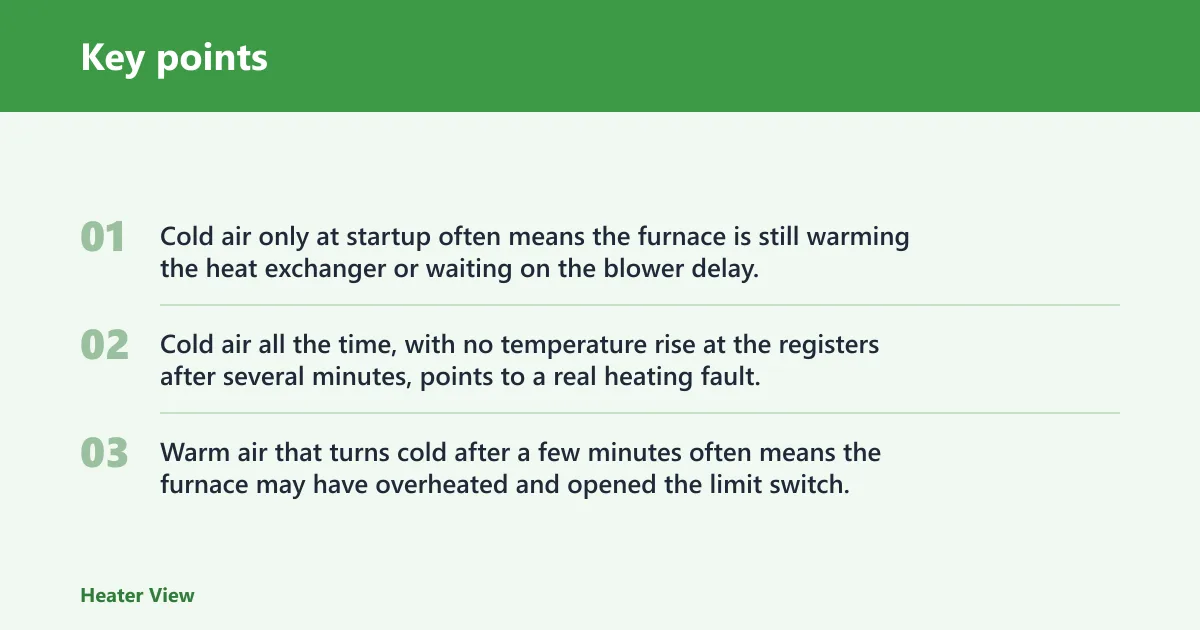
Cold air only at startup often means the furnace is still warming the heat exchanger or waiting on the blower delay. Cold air all the time, with no temperature rise at the registers after several minutes, points to a real heating fault. If the setpoint is above room temperature and the furnace still never produces warm air, move past thermostat checks and inspect the heating side.
Warm then cold cycling and short cycling
Warm air that turns cold after a few minutes often means the furnace may have overheated and opened the limit switch. Restricted airflow is a common cause. A dirty filter, blocked return, or weak blower can push the cabinet temperature high enough that the burner shuts off while the fan keeps running to cool the unit.
Check the thermostat first
Confirm the thermostat is set to Heat, the fan is on Auto, and the setpoint is set a couple of degrees above the room temperature. If the display is blank, erratic, or resets after a power loss, replace the batteries or restore stable 24-volt power before you judge the furnace as failed.
Mode setting and fan setting
Set the thermostat to Heat, not Cool or Off. Put the fan on Auto rather than On. In On mode, the blower runs constantly, which can make the air feel cold even when the furnace is heating normally between cycles.
Setpoint versus room temperature
Make sure the setpoint is above the current room temperature. If the room is already at or above the setpoint, the thermostat will stop calling for heat and the blower may only move room-temperature air. A 2 to 3 degree difference is often enough to confirm a real call for heat.
Battery and power issues
Some thermostats need fresh batteries or stable 24-volt power. Low batteries can cause blank screens, poor communication, or random resets. After a utility outage or breaker trip, restore power and give the system a few minutes before judging the furnace as failed.
Check airflow and the limit switch
Airflow matters because furnaces depend on moving enough air across the heat exchanger or heating elements. A clogged filter or blocked return can overheat the furnace, trip the limit switch, and create cold-air cycles. That failure pattern is different from ignition trouble because the blower often still runs.
Dirty filter and airflow restriction
A filter packed with dust can choke airflow enough to trigger overheating. Check the filter size and replacement interval listed by the manufacturer or on the filter frame, then replace it if it looks loaded or curled. A high-restriction filter can reduce airflow even before it looks fully clogged.
Picture a furnace that delivers warm air for 5 minutes, then switches to room-temperature air while the fan keeps running. That pattern often fits a restriction problem, not a dead burner. The furnace is protecting itself by shutting down heat output.
Overheat trips and the limit switch
The limit switch is a safety device. When the furnace cabinet gets too hot, the switch opens and stops heat production. The blower may continue running to cool the unit, which makes the air feel cold even though the furnace is still powered.
How restricted airflow creates cold-air cycles
Restricted return air, closed supply registers, a filthy filter, or a weak blower can all raise temperature inside the furnace. The furnace may repeatedly heat, trip the limit switch, cool down, and restart. That cycle shortens heating time and can leave the house cold even though the thermostat keeps calling.
- Check the filter. Replace a visibly dirty filter and make sure the size matches the furnace slot. If the filter is heavily loaded soon after replacement, look for return-air blockage or a duct issue.
- Open the supply vents. Make sure registers are open and not buried under rugs or furniture. Closed vents can raise static pressure and reduce airflow through the furnace.
- Wait for a full cycle. Run the furnace long enough to see whether warm air stays warm. If the unit cools off again after a few minutes, the limit switch or airflow path needs attention.
Does your furnace type change the diagnosis?
Yes. Gas, electric, and oil furnaces fail differently, so the sound, timing, and smell matter. A gas furnace can fail at ignition or safety lockout. An electric furnace may run the blower with no heat if a heating element fails. An oil furnace can shut down on ignition or fuel delivery problems.
Gas furnace clues
Gas furnaces usually make a startup sequence you can hear or feel: inducer, ignition, flame, then blower. If you hear the blower but no burner sound, think ignition, gas supply, flame sensor, or control-board timing. A gas furnace that blows cold air and never lights needs service, not guesswork.
Electric furnace clues
Electric furnaces do not use a burner, pilot, or gas valve. If the blower runs but the air stays cold, the heating elements, sequencer, or control circuit may have failed. Because electric systems can still move air even when heating elements are offline, the symptom can look like a fan problem when it is really a heat failure.
Oil furnace clues
Oil furnaces rely on fuel delivery, ignition, and clean combustion. A blocked nozzle, failed ignition, or fuel supply interruption can stop heat while the blower still runs. If the burner locks out, do not keep cycling it without understanding the cause.
Single-stage versus variable-speed behavior
Single-stage furnaces often have a more obvious delay before warm air arrives. Variable-speed systems can move air more gradually and may run longer at lower output, which can feel different at the registers. That difference is normal. What is not normal is repeated cold cycles or a blower that never gets any heat from the burner.
Ignition, fuel supply, and lockout checks
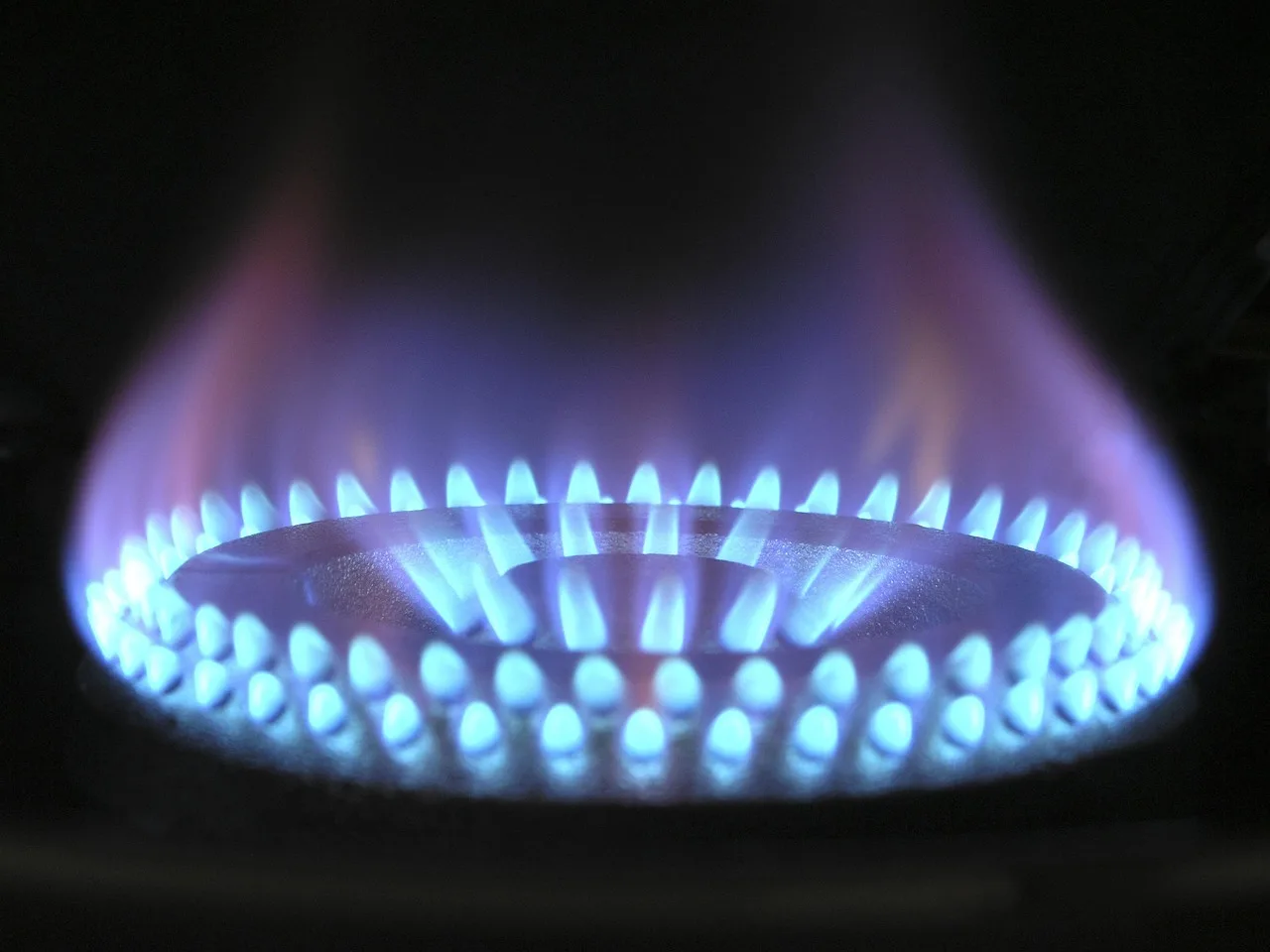
Ignition and fuel problems are the point where homeowner checks should stay limited. You can confirm whether the furnace has power, whether a shutoff valve is open, and whether the thermostat is calling for heat. You should not tamper with gas valves, igniters, flame sensors, or control boards.
Hot surface igniter and pilot light behavior
Many gas furnaces use a hot surface igniter instead of a standing pilot. If the igniter fails, the furnace will not light. Older systems with a pilot light can also lose flame from drafts, dirty components, or gas interruption. Either way, no ignition means no heat.
Flame sensor and startup sequence
The flame sensor confirms that flame is present after ignition. If the sensor cannot prove flame, the control board may shut the gas off, retry, and then lock out. That can produce brief warm air followed by cold air or repeated failed starts.
Gas shutoff valve, utility interruption, and safety lockout
Verify that the gas shutoff valve is open and that the utility has not interrupted service. If another gas appliance also fails, the issue may be supply-wide. A furnace that senses a combustion problem may also shut itself down for safety, which is different from a simple thermostat problem.
Control board error codes and relay timing
Many furnaces use a control board that stores error codes or blinks them on a diagnostic light. Relay logic controls the start sequence, blower delay, and safety lockout. If the board never sends the proper signal to ignition or blower stages, the furnace can run air without heat or refuse to heat at all.
Suppose a gas furnace blows cold air for 10 seconds, clicks, and shuts down, then tries again 5 minutes later. That pattern points more toward ignition or lockout than toward a dirty filter. The exact symptom pattern matters.
Furnace cold-air decision table
This table sorts the symptom, likely cause, safe homeowner check, and the point where service is the right move.
| Symptom pattern | Most likely cause | Safe homeowner check | Service-now trigger |
|---|---|---|---|
| Cold only at startup | Normal warm-up delay or blower delay | Wait 3 to 5 minutes; confirm Heat mode and fan on Auto | Air never turns warm after the delay |
| Cold after filter change | Wrong filter type, blocked return, or airflow restriction | Confirm filter size, airflow direction, and vent openings | Limit-switch cycling continues after airflow is corrected |
| Blows cold then shuts off | Ignition failure, flame sensor issue, or gas supply interruption | Check thermostat call and gas shutoff valve position | Repeated failed starts, clicking, or lockout |
| Blows cold with no ignition sound | Control board issue or no gas/fuel call sequence | Check power, thermostat setting, and breaker status | No ignition sequence after power and thermostat are correct |
| Fan runs but no heat | Electric heating element failure, gas ignition fault, or limit switch trip | Check filter and note whether the blower ever stops | Air stays cold after a full cycle |
| Intermittent warm-then-cold cycles | Overheating from restricted airflow or weak blower performance | Replace dirty filter and check for blocked vents | Cycling continues or the furnace locks out again |
When should you call for service?
Call for service when the symptom involves ignition, gas delivery, venting, lockout, or repeated safety shutdowns. Those are not homeowner-adjustable issues. If the furnace blows cold air after the basic thermostat and airflow checks, the next steps are usually diagnostic work on the heating components.
Blows cold with no ignition sound
If the furnace never begins its ignition sequence, the problem may be in the control board, igniter, gas valve circuit, or power supply. That is service territory. A homeowner can confirm the thermostat, power, and gas shutoff valve, but should stop there.
Fan runs but no heat
A fan that runs steadily with no heat can point to an electric heating fault, a failed gas ignition sequence, or a safety trip. If the blower keeps moving cold air after several minutes, do not keep resetting the furnace. Repeated resets can mask the real failure.
Blocked venting, condensate drain problems, and heat-exchanger concerns
Blocked exhaust can create a safety lockout because combustion gases must leave the furnace safely. High-efficiency models can also shut down if condensate drain problems affect operation. Any suspicion of a cracked heat exchanger or repeated overheating calls for professional inspection, since safety is part of the diagnosis.
Intermittent warm-then-cold cycles
That pattern often tracks a limit-switch trip, airflow restriction, or blower problem. If the furnace repeatedly warms, cools, and starts over, the system is telling you something is wrong. A technician should check combustion airflow, venting, and safety controls before the problem grows.
Frequently asked questions
Why gas furnace blowing cold air
A gas furnace that blows cold air usually has a problem in the ignition path, gas supply, or safety controls. Check the thermostat, filter, and gas shutoff valve first. If the furnace never lights, or lights and then shuts down, the issue is likely service-only.
When furnace blows cold air
When a furnace blows cold air for only a few minutes, that can be the normal startup delay. When it keeps blowing cold air after 3 to 5 minutes, the problem is usually a failed heat cycle, an airflow trip, or a control lockout.
Why is my furnace blowing cold air instead of heat?
Your furnace is probably failing in one of four places: thermostat command, airflow, ignition, or safety shutdown. The quickest checks are Heat mode, fan on Auto, a clean filter, and power or gas supply. If those are fine and the air stays cold, call for service.
Why does my furnace blow cold air at startup?
Cold air at startup is often just the warm-up delay while the furnace completes ignition and heats the exchanger. Gas furnaces, electric furnaces, and oil furnaces can all do this. If the delay lasts more than a few minutes or repeats often, it needs diagnosis.
Why does my furnace blow cold air then hot air?
That pattern often means the furnace is starting normally but then tripping on the limit switch or another safety control. Restricted airflow is a common cause. The blower may keep running while the burner shuts off, which makes the air turn cool again.
What should I check first when my furnace blows cold air?
Check the thermostat mode, fan setting, and setpoint first. Then check the filter, breaker, and gas shutoff valve if you have a gas furnace. Those checks are safe and often explain a no-heat call without touching ignition parts or control boards.
When is a furnace blowing cold air a DIY fix versus a service call?
DIY checks are limited to thermostat settings, batteries, filter replacement, breaker status, and gas shutoff position. Call for service if the furnace shows ignition failure, repeated lockout, short cycling, blocked venting, condensate trouble, or any concern about the heat exchanger. Safety-related shutdowns are not normal operation.
Why is my furnace running but the house staying cold?
If the furnace runs but the house stays cold, the system may be moving air without producing enough heat, or it may be shutting the burner down early. Check for a clogged filter, closed vents, or a limit-switch trip. If the heat never builds, the problem is deeper than airflow.
Furnace reliability also changes with age and upkeep. This Old House says a well-maintained furnace can last between 15 and 25 years. It also says new furnace installation typically costs between $2,000 and $10,000, while high-efficiency furnace models can exceed $13,000. For Carrier specifically, it lists furnace prices from $2,000 to $15,000 and gives the brand a 4.8 overall score. Carrier also has a page titled What Is A Furnace? | How Gas Furnaces Work & Heat Your Home and a residential category page titled Furnaces | Carrier Residential. This Old House lists Carrier’s warranty as “10-year parts-only limited, 20-year limited heat exchanger, 3-year labor limited,” says Lennox has a 20-year heat exchanger warranty, and says Amana offers a 10-year standard parts and unit replacement limited warranty.