Bed Heaters for Warm Sleep Without Worry
Whether bed heaters are bad for you depends entirely on how they are used and maintained. When operated correctly and according to manufacturer instructions, modern electric bed heaters are generally safe. However, potential risks like overheating, fire hazards, and minor burns can arise from misuse, damage, or neglecting essential safety checks. This guide will show you how to use them safely.
For the safety side of this topic, Leaving a Garage Heater On Is It Safe? Safety and Prevention gives readers a practical next check before using a heater.
For the safety side of this topic, Are Ceramic Wall Heaters Safe: Safety gives readers a practical next check before using a heater.
For the safety side of this topic, Is Burning Dust from Heaters Bad for Your Health and Home Safety? gives readers a practical next check before using a heater.
Staying warm in bed during chilly nights is a wonderful feeling, right? But as the temperatures drop, many of us wonder about those cozy electric blankets and mattress pads. The question, “Are bed heaters bad for you?” pops up, and it’s a completely valid concern. Nobody wants to compromise their well-being for a little extra warmth, especially when it comes to something as personal as their bed. It’s natural to feel a bit unsure, especially with all sorts of information out there. I’m Tanim, your friendly guide to all things home heating, and my job is to make this simple and safe for you.
We’ll walk through everything, from how these bed warmers work to the simple steps you can take to ensure they are perfectly safe for you and your loved ones. Let’s get cozy and learn how to stay warm the right way!
What Exactly Are Bed Heaters?
Before we dive into safety, let’s quickly understand what we’re talking about. Bed heaters, commonly known as electric blankets, electric throws, or heated mattress pads, are basically fabric coverings with built-in electric wires. These wires are designed to generate low levels of heat when the device is plugged into a power source. They’re a popular way to add targeted warmth to your bed, making those cold nights much more comfortable. Unlike central heating that warms an entire room, bed heaters focus the warmth right where you need it most – in your bed!
How They Work: A Simple Breakdown
Inside most electric blankets and mattress pads, you’ll find thin, flexible wires. These wires are made of a material that heats up when an electric current passes through them. Think of it like a tiny heating element woven into the fabric. The heat is distributed evenly across the surface of the blanket or pad. You control the temperature using a controller, which is usually a small box with buttons or a dial that plugs into the heating element. This controller allows you to set how warm you want to be, and it also has built-in safety features to prevent overheating.
Types of Bed Heaters
When you’re looking for a bed heater, you’ll usually find a few main types:
- Electric Blankets: These are placed over your top sheet and tucked around the mattress. They are designed to cover your whole body.
- Electric Throws: Similar to blankets but often smaller, electric throws are great for snuggling on the couch or for single-person use in bed.
- Heated Mattress Pads: These are designed to go directly on top of your mattress, under your fitted sheet. They provide a consistent layer of warmth across the entire sleeping surface without the bulk of a blanket. These are often preferred for an even distribution of heat.

Are Bed Heaters Bad For You? The Safety Concerns
This is the big question! For the most part, modern electric blankets and pads are very safe when used as intended. Major manufacturers put a lot of effort into safety features. However, like any electrical appliance, there are potential risks if they aren’t used correctly or if they become damaged. It’s good to be aware of these so you can avoid them.
Potential Risks to Consider:
- Overheating: This is the most common concern. Overheating can happen if the heater is set too high for too long, if it’s covered with something that traps heat (like another thick blanket), or if there’s a malfunction.
- Fire Hazard: While rare with newer models, faulty wiring or damage to the heating element could, in theory, pose a fire risk. This is why checking for wear and tear is crucial.
- Burns: If the heater malfunctions or is set to an extremely high temperature, it could cause minor skin burns, especially for individuals with sensitive skin or conditions that affect their ability to feel heat or pain.
- Electromagnetic Fields (EMFs): Some people worry about EMFs emitted by electrical devices. While electric blankets do emit low-level EMFs, research has generally found them to be too low to pose a significant health risk. The U.S. Food & Drug Administration (FDA) states that there is no clear evidence of harm from these low-level EMFs associated with household appliances.
- Damage to the Device: Folding, bunching, or sleeping on the wires can cause them to break, leading to uneven heating or potential electrical issues.
Modern Safety Features Have Eased Worries
The good news is that manufacturers have responded to these concerns by building in advanced safety features. Most modern electric blankets and mattress pads include:
- Automatic Shut-Off: Many units will turn themselves off after a set period (e.g., 2, 4, or 10 hours) to prevent overheating if you fall asleep.
- Overheating Protection: Multiple thermostats and safety sensors are built into the heating elements to detect and correct any potential overheating.
- Flexible Wiring: The wires are designed to be durable and flexible, reducing the risk of breakage.
- Low Voltage Options: Some advanced systems even use low-voltage technology, which is inherently safer.
Essential Safety Tips for Using Bed Heaters
Using your bed heater safely is straightforward when you follow a few key guidelines. These tips are designed to make sure you get all the comfort without any of the worry. Think of them as your easy checklist for a warm and safe night’s sleep.
Before You Plug It In: Your Checklist
This is the most important stage to ensure safety. A quick check can prevent a lot of potential issues down the line.
- Inspect for Damage: Every single time you use your bed heater, give it a visual inspection. Look for any signs of wear and tear:
- Frayed cords
- Cracked or damaged controllers
- Burn marks or discoloration on the fabric or wires
- Any other visible damage to the unit, cord, or plug.
- Read the Manual: Seriously, this is crucial! Every model is slightly different. Your user manual will have specific instructions on how to operate your model safely, including recommended temperature settings, washing instructions, and any unique safety features.
- Certification: Ensure your bed heater has been certified by a recognized safety organization, such as UL (Underwriters Laboratories) or ETL (Intertek). This means it has met strict safety standards. Look for the certification mark on the product’s label or packaging.
Safe Usage Practices for Daily Comfort
Once you know your heater is in good condition, here’s how to use it safely every night:
- Always Use It Flat: Never fold, bunch up, or create creases in your electric blanket or mattress pad while it’s on. This can cause the internal wires to overheat in those spots, creating a fire hazard or damaging the unit. Lay it out flat on your bed.
- Don’t Tuck It In Too Tightly: Avoid tucking the edges of an electric blanket tightly under the mattress, especially if the cords are also tucked. This can restrict airflow and concentrate heat, leading to overheating.
- Use Only as Directed: Don’t use your electric blanket or mattress pad as a regular blanket on top of you while it’s on. It’s designed to be placed under you or as a layer beneath your top sheet and duvet. Covering it with other heavy blankets can trap heat and cause it to overheat.
- Keep Controllers Accessible: Make sure the controller is easily accessible. This allows you to adjust the temperature or turn it off if needed.
- Use the Right Controller: Always use the controller that came with your specific bed heater. Using a different controller could result in improper heating or safety failures.
- Plug Directly into Wall Outlet: Avoid using extension cords or power strips if possible. Plug the bed heater directly into a grounded wall outlet. If an extension cord is absolutely necessary, make sure it is heavy-duty and suitable for the appliance’s wattage.
- Never Use on Pets or Infants: Electric blankets are not suitable for use on infants, children, elderly individuals, or anyone with mobility issues, disabilities, or conditions that prevent them from feeling or reacting to heat. They could accidentally increase the temperature or inability to move away from excessive heat. Ensure pets also do not chew on cords or wires.
- Avoid Use with Water: Never use an electric blanket or mattress pad if it has been exposed to water or is damp. Water can conduct electricity and create a serious safety hazard.
Maintenance and Storage for Longevity
Proper care extends the life of your bed heater and maintains its safety:
- Washing: Always follow the manufacturer’s instructions for washing. Many are machine washable, but they usually require a gentle cycle and air drying. Never put them in a tumble dryer, as the heat can damage the internal wiring. Ensure the unit is completely dry before using it again.
- Storage: When storing your bed heater, fold it loosely. Avoid creasing or folding the wires sharply. Store it in a dry place, away from direct sunlight and moisture. Do not place heavy items on top of it, as this can damage the wires and controls.
Temperature Settings and Sleep
Getting the temperature just right is key to both comfort and safety:
- Pre-warming: It’s a good idea to turn your bed heater on about 15-30 minutes before you get into bed to pre-warm the mattress or blankets.
- Lower Settings are Often Best: Many people find that a low to medium setting is perfectly comfortable throughout the night. You don’t need extremely high heat to stay warm.
- Use the Timer: If your unit has an automatic shut-off timer, use it! This is an excellent safety feature that prevents the heater from running all night long.
- Listen to Your Body: If you wake up feeling too hot, turn the temperature down or off.
Bed Heaters vs. Central Heating: A Quick Comparison
When considering how to stay warm, it’s helpful to compare bed heaters with traditional central heating systems. Each has its pros and cons, especially regarding safety and energy efficiency.
| Feature | Bed Heaters (Electric Blankets/Pads) | Central Heating (Furnace/Boiler) |
|---|---|---|
| Energy Efficiency | Highly energy-efficient for personal warmth, as they only heat a small area. Uses much less electricity than running a central heating system for the whole house overnight. | Can be less efficient if heating unoccupied rooms. Higher energy consumption to heat the entire home. |
| Targeted Warmth | Excellent. Heats only your bed, providing direct comfort. | Whole-house heating. Can be controlled with zones, but still generally less targeted than a bed heater. |
| Initial Cost | Low to moderate. Easily affordable for most budgets. | High. Requires professional installation and significant upfront investment. |
| Safety Considerations | Potential risks if damaged or misused (fire, burns). Modern safety features greatly reduce these risks. Requires regular inspection. | Ductwork maintenance, carbon monoxide risks (if gas-powered), potential for leaks or system failures. Generally considered very safe when properly installed and maintained by professionals. For more on furnace safety, resources like the Energy Star website provide excellent guidance on efficient and safe heating systems. |
| Comfort Control | Precise, with multiple temperature settings and timers on modern units. | Thermostat control for the entire house or zones. Less precise for individual sleeping comfort without additional adjustments. |
| Maintenance | Washing and electrical inspection. Simple. | Annual professional servicing, filter changes, and duct cleaning. More involved. |
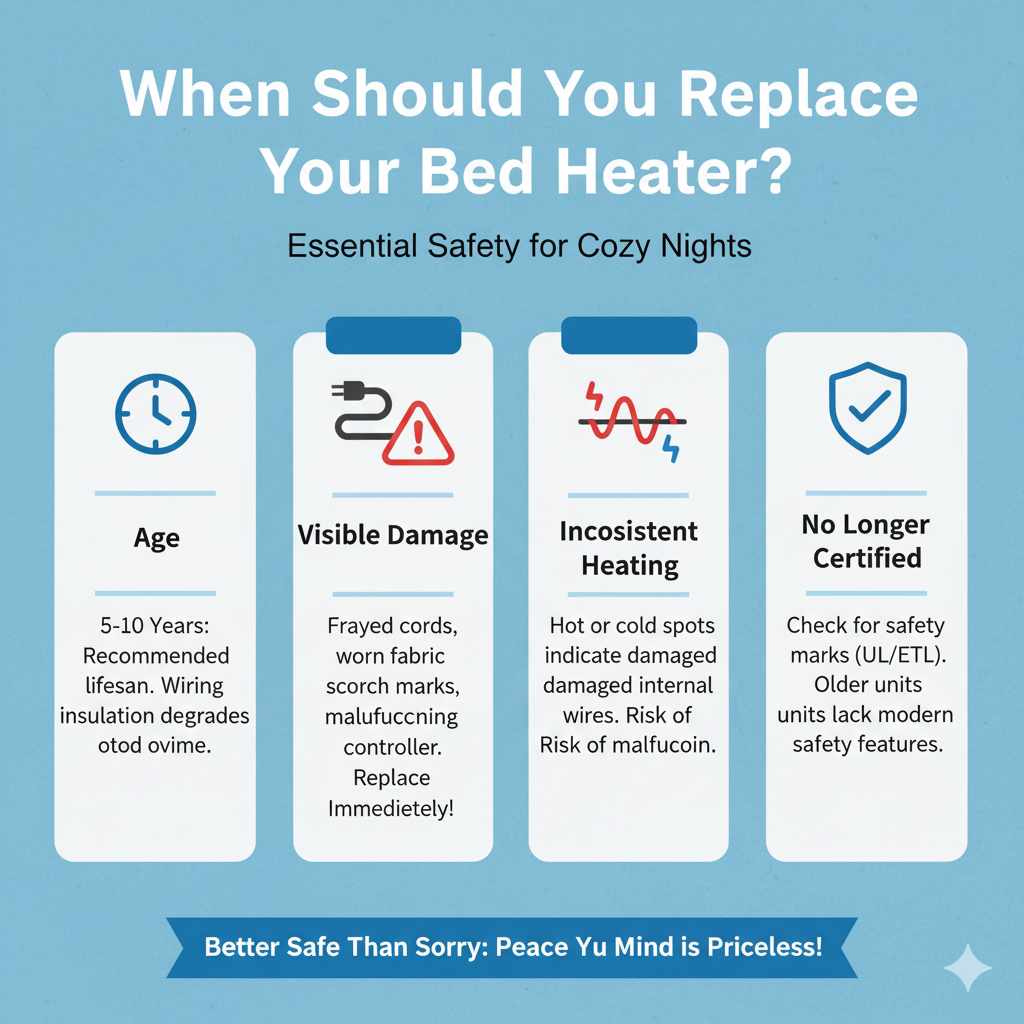
When Should You Replace Your Bed Heater?
Even with the best care, electrical appliances have a lifespan. Replacing your bed heater at the right time is another crucial aspect of safety:
- Age: Most manufacturers recommend replacing electric blankets and mattress pads every 5 to 10 years. After this period, the wiring insulation can degrade, increasing the risk of malfunction and electrical issues.
- Visible Damage: As mentioned before, any sign of damage – frayed cords, worn fabric, scorch marks, or a malfunctioning controller – is an immediate reason to replace the unit.
- Inconsistent Heating: If your bed heater starts to heat unevenly, with hot or cold spots, it’s a sign that the internal wires may be damaged or failing. This needs to be replaced.
- No Longer Certified: If your unit is very old and you can’t find its safety certification mark (like UL or ETL), it might be worth considering an upgrade to a newer, certified model with advanced safety features.
It’s better to be safe than sorry. A new electric blanket or pad isn’t always a huge expense, and the peace of mind that comes with a safe, functional unit is well worth it.
FAQ About Bed Heater Safety
Are electric blankets safe to sleep with all night?
Yes, modern electric blankets with safety certifications (like UL or ETL) and automatic shut-off features are generally safe to sleep with all night when used according to the manufacturer’s instructions. Always inspect your blanket for damage before use and ensure it’s not folded or bunched up. Avoid using them on children or individuals who cannot feel or react to heat.
Can electric blankets cause cancer?
Current scientific evidence does not show a clear link between the use of electric blankets and an increased risk of cancer. They emit very low levels of electromagnetic fields (EMFs), and research by health organizations like the World Health Organization (WHO) has not established a causal relationship between these low-level EMFs and cancer.
Is it safe to sit or lie on an electric blanket?
It is generally not recommended to sit or lie directly on an electric blanket while it is on and not being used for its intended purpose (heating your bed). This can cause the wires to bunch up or overheat in certain areas, potentially damaging the blanket or creating a safety hazard.
What to do if my electric blanket smells like burning?
If your electric blanket emits a burning smell, immediately unplug it from the wall outlet. Do not attempt to use it again. This smell indicates a potential electrical fault, such as overheating wires or melting insulation, which is a serious fire risk. It’s time to replace the unit.
Can I use my electric blanket with my pet?
It is generally not recommended to use electric blankets directly on pets unsupervised. Pets might chew on cords or wires, potentially causing damage and electrical hazards. If pets are on the bed with you, ensure they do not have access to the cords and that the blanket is not bunched up due to their movement. Always supervise pets around electrical appliances.