Water Heater Element Failure Symptoms
For electric water heaters, no hot water usually points to a failed upper element or thermostat, while lukewarm water after a short draw often means the lower element has failed. Checking the wrong part wastes time, trips breakers, and can leave you with cold water or repeat repairs. This guide maps water heater element failure symptoms to the most likely fault, then shows how to confirm it with safe multimeter checks.
Why your water heater lost hot water

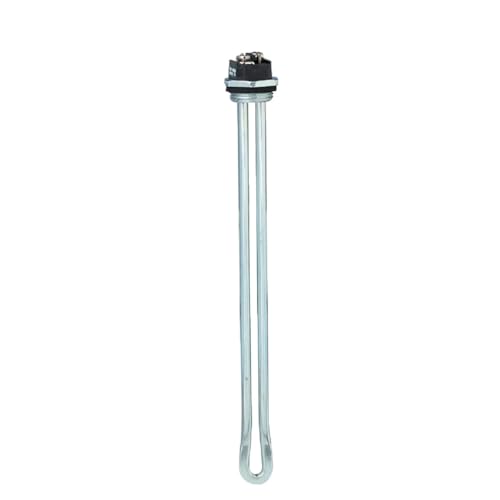

An electric water heater uses heating elements, not a burner. Most residential tanks have two elements, and the upper one usually gets the first call for heat. If hot water disappears completely, the upper element, upper thermostat, or reset button is often the first place to check. If water starts hot and then turns lukewarm, the lower element is commonly a likely cause.
What you’ll need
- Multimeter that measures resistance in ohms and continuity
- Non-contact voltage tester, as a quick screen only
- Insulated screwdriver or nut driver for the access covers
- Replacement element that matches the tank’s wattage and thread size, if needed
- Owner’s manual or the water heater rating label
- Flashlight
- Needle-nose pliers
- Kill power at the breaker. Switch off the water heater breaker, then verify no voltage is present at the element terminals before you touch any wiring. Electric water heaters run on 240 volts, so treat the panel and leads as energized until a meter proves otherwise.
- Remove the access covers. Take off the upper and lower panels and fold back the insulation carefully. Check for melted insulation, loose spade terminals, or scorch marks before disconnecting wires, because those faults can mimic element failure.
- Match the symptom pattern. Use the decision table below to decide whether the upper element, lower element, thermostat, reset button, or wiring is the most likely fault. That keeps you from replacing a good part first.
- Test the suspect part. Disconnect the element wires, then use the multimeter to measure resistance across the two terminals. A plausible resistance reading points to a functioning element; zero or near zero means a shorted element; OL or infinite means an open element.
- Check for ground fault. Keep one meter lead on a terminal and touch the other to the tank body. Any continuity means the element has shorted to ground and should be replaced.
- Inspect the thermostat next. If the symptom points to the upper tank and the element tests good, check the upper thermostat and reset button. A bad thermostat can stop power from reaching the element even when the element itself is fine.
Symptom-to-cause decision table
| Common complaint | Most likely failure | First safe check | Likely next test result |
|---|---|---|---|
| No hot water at all | Upper element or upper thermostat | Check the reset button on the upper thermostat after power is off and wires are exposed | A tripped reset may point to a shorted element or a thermostat fault. |
| Water starts hot, then goes lukewarm | Lower element | Test the lower element with the wires disconnected | Open or OL resistance usually points to a burned-out lower element. |
| Hot water runs out quickly | Lower element | Check the lower element and lower thermostat path | Zero or near zero resistance suggests a shorted lower element |
| Breaker trips when the heater runs | Shorted element or grounded element | Look for continuity from each terminal to the tank body | Any continuity to the tank means the element has shorted to ground |
| Reset button keeps tripping | Upper element, upper thermostat, or wiring fault | Inspect the upper thermostat and terminal connections first | A bad element can trip the reset repeatedly |
| Water is only lukewarm during normal use | Lower element or sediment-related heat loss | Check the lower element, then look for sediment buildup at the tank bottom | Healthy resistance with poor output points away from the element and toward control or sediment issues |
Is the upper element failing?
No hot water at all often points to the upper element or upper thermostat. On a two-element tank, the upper section heats first, so a failure there can leave the whole tank cold even before the lower element matters. A repeated reset trip also puts the upper section near the top of the list.
Upper-element symptom pattern
Look for a dead tank, cold water at every fixture, or a reset button that trips again after you restore power. If the upper element opens, the lower element may never get power in many tanks, so the failure looks bigger than it is. That is why symptom pattern matters before any meter work.
Reset button and upper thermostat checks
A tripped reset button can mean the element is failing, but it can also mean the upper thermostat is bad. If the button trips repeatedly, stop and inspect the upper thermostat, the wiring, and the element terminals for heat damage. A shorted element can make the reset button trip repeatedly.
Is the lower element failing?
Lukewarm water only often points to the lower element. So does hot water running out quickly. The top of the tank may still heat fine, which is why the water feels normal at first and then cools off sooner than it should.
Separate lower-element test
Do not assume the lower element is bad just because the tank feels weak. Disconnect its wires and test it on its own, because an in-circuit reading can mislead you through the rest of the circuit. If the element shows OL or infinite resistance, it is open. If it shows zero or near zero, it is shorted.
Say your water starts out hot at the sink, then fades to tepid before the faucet is fully closed even though the heater keeps cycling. That pattern fits a lower-element problem better than an upper-element problem, because the tank can heat only the upper volume and then lose usable hot water before recovery catches up.
Element symptom
Use this table before you remove parts. It separates the symptom pattern from the likely fault, which helps you avoid replacing the wrong component when the thermostat, reset button, wiring, or element grounding is the real problem.
How to read the meter results
The resistance reading should be taken with the element isolated from the circuit. A plausible resistance reading means the element is likely functioning. Zero or near zero resistance indicates a shorted element. Infinite or OL resistance indicates a burned-out or open element. If either terminal shows continuity to the tank, the element has shorted to ground.
Suppose the lower element reads OL across the terminals, but the upper element reads normally and the wiring looks intact. That points to a failed lower element, not a thermostat problem. If the lower element reads normally yet the water still goes lukewarm, the next suspect is the thermostat or sediment reducing heat transfer.
How to test with a multimeter
Use a multimeter to measure resistance across the element terminals and continuity to the tank body. Do not test an element while it is still wired into the circuit. That can create confusing readings and send you toward the wrong replacement part.
- Confirm power is off. Switch off the breaker and verify no voltage is present at the terminals before you touch the wiring. A non-contact tester can be a quick screen, but the meter check at the terminals is the real proof.
- Disconnect both element wires. Pull the two leads off the element terminals so the element is isolated from the thermostat and the rest of the circuit. This prevents false readings from parallel paths.
- Measure across terminals. Put one probe on each terminal and read the ohms value. A plausible resistance reading suggests the element is still intact; zero or near zero means shorted; OL or infinite means open.
- Check for ground fault. Touch one probe to a terminal and the other to the metal tank. Repeat on the second terminal. Any continuity between an element terminal and the tank means the element has shorted to ground.
Common mistakes
- Testing with the wires still attached and trusting the result
- Using only a non-contact voltage tester to declare the heater safe
- Replacing the lower element when the upper thermostat is the actual fault
- Ignoring melted insulation, loose terminals, or corrosion at the spades
- Stopping after a resistance test and skipping the ground-fault check
What else can look like element failure?
Loose terminals, damaged wiring, thermostat problems, and sediment-related heating issues can all look like a dead element. A thermostat can prevent power from reaching the element even when the element itself tests fine. Sediment can also slow heat transfer and make the tank feel weak without an obvious element failure.
Loose terminals and damaged wiring
Look for burnt connectors, brittle insulation, or wires that no longer grip the terminal tightly. Those faults can interrupt current flow or create heat at the connection point. If a terminal is discolored or melted, replace the damaged connector before you trust any element reading.
Thermostat problems and sediment effects
The thermostat controls when the elements heat, so a thermostat fault can mimic element failure. If the element tests normally but the tank still underheats, check the thermostat path next. Heavy sediment can reduce heat transfer in the lower part of the tank, which can make lukewarm water more likely.
Why do water heater elements go bad? Heat cycling, mineral buildup, corrosion, loose connections, and grounded elements all shorten service life. A shorted element can trip the breaker or reset repeatedly, while a burned-out element usually leaves an open circuit and no heat from that stage.
If that did not work, stop after the thermostat and wiring checks and bring in a licensed electrician or plumber. Repeated breaker trips, a grounded element, or a melted terminal block are repair points where a homeowner should not keep guessing.
Frequently asked questions
How do I know if my upper or lower water heater element is bad?
Match the complaint to the tank section that failed. No hot water at all usually points to the upper element or upper thermostat. Hot water that runs out quickly or turns lukewarm usually points to the lower element. Confirm with an isolated resistance test and a check for continuity to the tank body.
Can a tripped reset button mean the element is failing?
Yes. A shorted element can make the reset button trip repeatedly, especially on the upper thermostat. If the button trips again after a reset, stop and inspect the upper element, thermostat, and wiring instead of forcing the heater back on. Repeated trips are a fault signal, not a normal reset issue.
How do I test a water heater element with a multimeter?
Turn off the breaker, verify no voltage is present, and disconnect both wires from the element. Measure resistance across the terminals, then check each terminal to the tank body for continuity. OL or infinite means open, zero or near zero means shorted, and any continuity to the tank means a grounded element.
Why does my breaker trip when the water heater runs?
A shorted element can cause the breaker to trip when the heater runs. A grounded element can do the same. Inspect the element for continuity to the tank, then look for damaged wiring or a bad thermostat if the element itself reads normally. If the breaker still trips, stop and call a licensed electrician.
Why is my water heater only making lukewarm water?
Lukewarm water usually points to the lower element on a dual-element tank. The upper section may still heat, which makes the water feel partly normal before it cools off. Test the lower element first, then check the lower thermostat and sediment at the bottom of the tank if the element tests good.