Heater Tune-Up Checklist for Winter
Use a two-part heater tune-up checklist each fall: start with safe homeowner checks, then book a technician for combustion, safety, and electrical testing at least once a year, or sooner if the system starts acting up. Waiting can mean a bigger utility bill, weak heat, repeated shutdowns, or no heat on the coldest night. This guide separates homeowner checks from technician-only tasks so you know what to inspect, what to leave alone, and when to book service.
What a winter tune-up covers
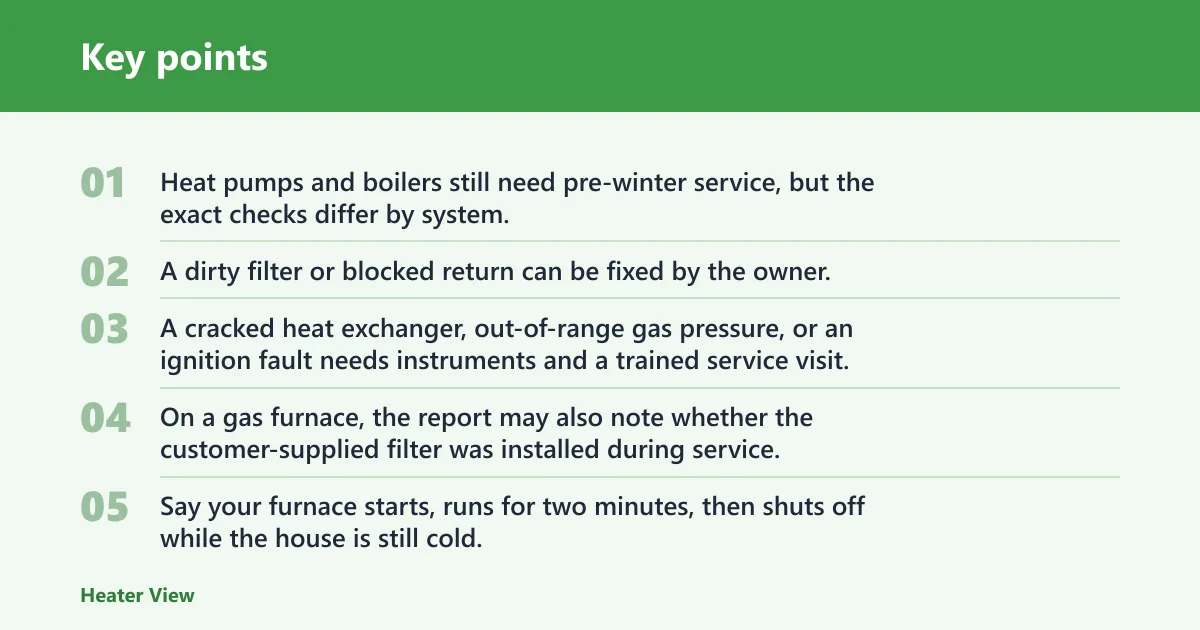


A winter tune-up is a pre-season service visit that checks safety, airflow, ignition, venting, and normal operation before sustained cold weather. For gas furnaces, that usually includes burner cleaning, flame sensor cleaning, ignition testing, vent inspection, and a carbon monoxide test. Heat pumps and boilers still need pre-winter service, but the exact checks differ by system.
Homeowner checks versus technician-only checks
Homeowner checks cover the visible, safe items: the filter, thermostat settings, supply and return openings, vents, drain area if present, and any rust, noise, or odor that changed since last season. Technician-only checks usually cover combustion, gas pressure, internal electrical parts, blower measurements, heat exchanger inspection, and carbon monoxide testing.
That split matters. A dirty filter or blocked return can be fixed by the owner. A cracked heat exchanger, out-of-range gas pressure, or an ignition fault needs instruments and a trained service visit.
What a service report should list
A proper report should not just say “passed.” It should list pass/fail items, measured values, cleaning performed, any parts that are near a repair threshold, and what should be watched before the next visit. On a gas furnace, the report may also note whether the customer-supplied filter was installed during service.
Say your furnace starts, runs for two minutes, then shuts off while the house is still cold. That is not a filter-only problem by default. It can point to a dirty flame sensor, ignition trouble, or an airflow issue, and the report should show which check failed.
When should you schedule heater service?
Schedule heater service in early fall, before the first freeze arrives. A good target is October or November, before the first cold night, so there is time to fix a failed part before the heater is under daily demand. Once freezing weather starts, service delays become much harder to manage.
Best timing before the first freeze
The safest timing is before you actually need the system every day. Fall gives the technician room to test ignition, airflow, venting, and safety controls without emergency pressure. It also gives you time to replace a filter or approve a repair before the house cools off.
A furnace tune-up can take 30 to 60 minutes when nothing is wrong, but repairs add time. That is another reason not to wait for the first cold night.
Signs the appointment should move up
Move the appointment up if the heater is short-cycling, making new noises, smelling unusual, failing to warm the house evenly, or showing a pilot or ignition problem. Any combustion odor, repeated shutdown, or suspected venting issue means the visit should happen now, not later.
- Book before freezing weather. Put the visit on the calendar in early fall if possible. Waiting until the first cold snap often means longer delays and fewer repair options.
- Advance the visit for new symptoms. If the heater is shutting off early, making scraping or rumbling sounds, or failing to start, move service up. Those are signs the checklist may uncover a part that needs repair, not just cleaning.
What can you check before the technician arrives?
Before the technician arrives, check only the items that are safe to see and change: the filter, thermostat settings, supply and return openings, the area around the heater, and visible signs of rust or leaks. Do not open combustion chambers, touch internal wiring, or test gas pressure yourself.
Filter, thermostat, vents, and visible damage
The air filter is the standard homeowner maintenance item. Replace or clean it before the season if it is dirty, because airflow restriction can affect performance. A customer-supplied filter may be installed during service, but the size and direction must match the system.
Check the thermostat for proper operation by raising the set temperature and confirming the heater calls for heat. If the system starts late, stops too soon, or cycles oddly, calibration may be needed. Also clear the area around return grilles, supply vents, and the furnace cabinet.
What to note before the visit
Write down any symptoms that are easy to describe: when the problem started, what the thermostat is set to, whether the fan runs, and whether any vents are blocked. Note visible rust, water, soot, loose panels, or a tripped breaker. That helps the technician test the right section first.
Picture a 1-inch filter that looks gray and matted at the edge of the frame. That is enough to justify replacement before winter, even if the furnace still starts. Restricted airflow can strain the blower and reduce delivered heat.
Technician-only winter checks
The technician portion of a winter tune-up typically focuses on combustion, safety, and electrical operation. That includes the heat exchanger, ignition, flame sensor, blower performance, gas pressure, venting, and carbon monoxide testing. These checks are not homeowner tasks because the failure modes can create a safety hazard.
Heat exchanger and combustion safety
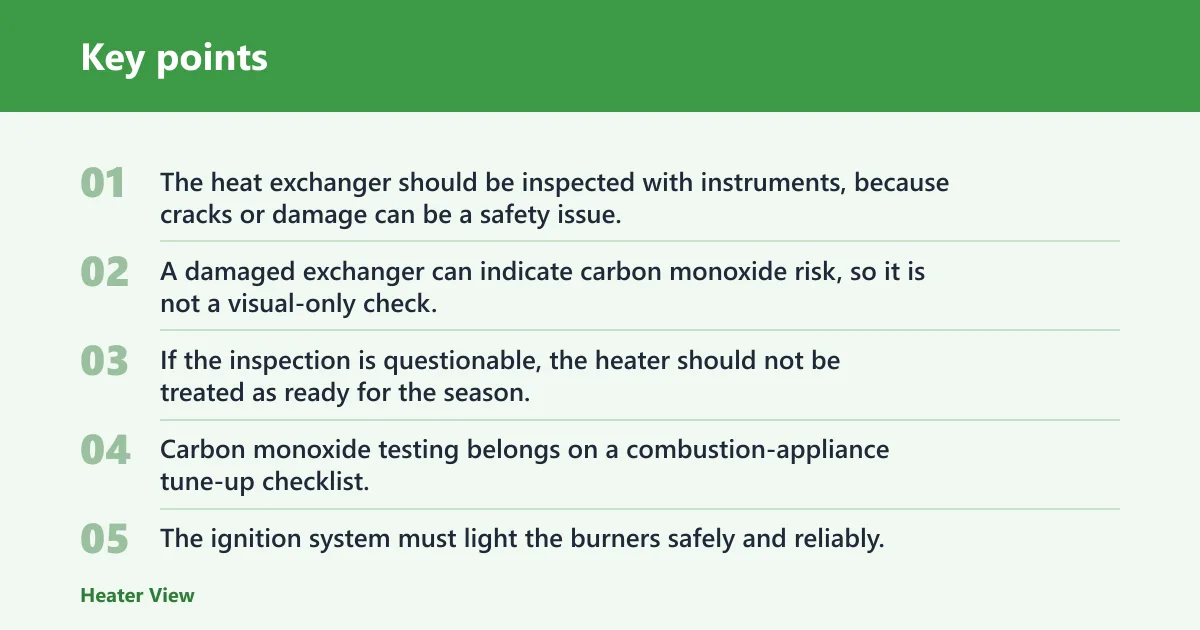
The heat exchanger should be inspected with instruments, because cracks or damage can be a safety issue. A damaged exchanger can indicate carbon monoxide risk, so it is not a visual-only check. If the inspection is questionable, the heater should not be treated as ready for the season.
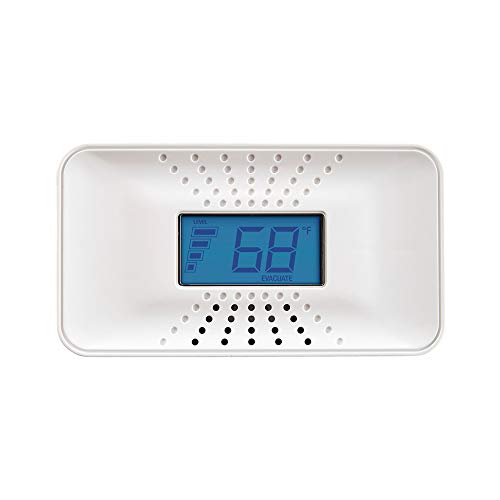
Carbon monoxide testing belongs on a combustion-appliance tune-up checklist. Some service checklists include it on every visit because safety verification depends on it, not just on whether the heater appears to run.
Ignition, flame sensor, blower, and gas checks
The ignition system must light the burners safely and reliably. If it fails, the problem may be the igniter or another ignition fault. The flame sensor is also checked, and cleaning it is a standard tune-up step because dirt can cause short-run shutdowns.
The blower motor should be checked for current draw or voltage, since dust and wear can affect performance. High amperage can mean repair is needed. Gas pressure and leaks should also be checked at the connections, because out-of-range pressure is safety-critical during heating service.
Carbon monoxide and venting tests
Combustion vents or exhaust venting should be inspected for proper venting and cleaned when needed. Venting problems affect safety first, then performance. The technician should also test for carbon monoxide during the visit and confirm that exhaust is moving the way the appliance was designed to move it.
On some tune-up checklists, the thermostat is tested for proper operation and calibration during the same service call. That matters because an inaccurate thermostat can make a heater start too late, stop too early, or run longer than needed.
Winter heater checklist table
This checklist separates what you can do safely from what belongs to a technician. Use the timing column to plan the visit before the first freeze, and use the safety flag to decide whether the heater should be shut down now or simply scheduled for service soon.
| Homeowner check | Technician-only check |
|---|---|
| Air filter: Replace or clean if dirty, blocked, or bent. Pass: clean filter in correct size and airflow direction. Fail: heavy dust, visible collapse, or airflow restriction. Timing: 1 to 2 weeks before first freeze. Stop using the heater now: No, unless the unit is overheating or shutting down from airflow problems. | Heat exchanger: Inspect with instruments for cracks or damage. Pass: no crack indication, no unsafe findings. Fail: damage, suspected crack, or unsafe reading. Timing: before first freeze, at annual service. Stop using the heater now: Yes, if damage or a CO concern is found. |
| Thermostat: Confirm call-for-heat behavior and correct settings. Pass: heater starts and stops normally. Fail: delayed start, short cycling, or wrong readings. Timing: 1 to 2 weeks before first freeze. Stop using the heater now: No, unless the system will not shut off or will not respond. | Flame sensor: Clean if dirty and verify safe operation afterward. Pass: stable flame, no short-run shutdowns. Fail: repeated shutdown after ignition or sensor contamination. Timing: annual fall tune-up. Stop using the heater now: Yes, if shutdowns repeat and the burner will not stay lit. |
| Vents and cabinet area: Clear debris, storage, and blocked registers. Pass: open airflow and clean access around the unit. Fail: blocked return, closed registers, or visible soot. Timing: before first freeze. Stop using the heater now: Yes, if you see soot, smoke staining, or a fuel odor. | Ignition system: Test safe and proper burner lighting. Pass: smooth ignition and stable flame. Fail: no ignition, delayed ignition, or repeated lockout. Timing: annual service before cold weather. Stop using the heater now: Yes, if burners fail to light safely. |
| Visible damage: Look for rust, corrosion, loose panels, or water near the cabinet. Pass: no new damage. Fail: active rust, water, or loose access doors. Timing: before first freeze. Stop using the heater now: Yes, if you smell gas, see scorch marks, or see active leaking. | Blower motor: Check current draw and voltage, plus dust and wear. Pass: readings within spec and normal operation. Fail: high amperage, noisy bearings, or overheating signs. Timing: annual visit. Stop using the heater now: Yes, if the motor overheats or repeatedly trips protection. |
| Humidifier water panel: Replace before seasonal use if your system has one. Pass: fresh panel installed and water flows correctly. Fail: clogged, mineral-loaded, or overdue panel. Timing: fall, before winter use. Stop using the heater now: No, but a failed panel can reduce comfort and should be fixed soon. | Gas pressure and leaks: Check at connections and adjust if needed. Pass: no leak and in-range pressure. Fail: leak, odor, or out-of-range pressure. Timing: every annual gas appliance service. Stop using the heater now: Yes, any leak or gas odor is immediate shutdown territory. |
| Combustion venting: Note blocked exterior terminations or debris near intake and exhaust. Pass: clear openings. Fail: ice, nests, or blocked pipe ends. Timing: before first freeze. Stop using the heater now: Yes, if vent termination is blocked and the heater is producing odor or shutting down. | Carbon monoxide test: Verify safe operation on combustion appliances. Pass: safe reading and normal combustion behavior. Fail: abnormal reading or confirmed CO risk. Timing: every visit on many tune-up checklists. Stop using the heater now: Yes, if the test is abnormal. |
When should you stop using the heater now?
Stop using the heater now if you smell gas, see soot or scorch marks, have a failed carbon monoxide test, suspect a cracked heat exchanger, or notice repeated ignition failure. Those are not “watch and wait” items. They point to safety or combustion problems that need service before the unit runs again.
Safety flags that mean shut it down
Immediate shutdown is generally the right call for gas odor, carbon monoxide alarm activity, visible damage in the burner area, or a venting failure that keeps the heater from exhausting properly. If the system keeps tripping on ignition or flame failure, do not keep resetting it and hoping it clears.
A common first-timer mistake is treating a short-cycle complaint as a thermostat problem only. If the thermostat calls for heat but the furnace lights and then drops out, the issue may be the flame sensor, ignition system, airflow, or venting.
Which findings can wait for a scheduled repair?
A dirty filter, a weak thermostat battery, a dusty blower compartment, or a humidifier water panel that is overdue usually calls for scheduled service, not emergency shutdown. These problems matter, but they are different from confirmed combustion or leak issues.
What should a tune-up report include?
A good tune-up report should list pass or fail for each safety item, the measurements taken, and any repair threshold that was reached or nearly reached. That means actual numbers where the technician measured them, plus a plain explanation of what was cleaned, tested, adjusted, or left for repair.
Pass or fail for each item
The report should separate the filter, thermostat, ignition, flame sensor, blower, venting, gas checks, heat exchanger, and carbon monoxide test. A simple “system okay” note is too vague. If a furnace has one failed item, the report should identify it clearly and say whether the heater can keep running.
Measurements, repair notes, and next steps
For combustion appliances, the report may include current draw, voltage, pressure readings, venting results, and CO findings. It should also say whether a part was cleaned, whether a customer-supplied filter was installed, and whether the next step is immediate repair or routine monitoring.
Frequently asked questions
What is heater tune up?
A heater tune-up is a pre-season service visit that checks safety, airflow, ignition, venting, and normal operation before winter demand starts. For a gas furnace, it usually includes cleaning, testing, and safety verification. It is not just a filter change, and it should produce a written pass/fail report.
What should be on a heating tune up checklist
A heating tune-up checklist should cover the filter, thermostat, ignition, flame sensor, blower, venting, heat exchanger, gas pressure, leaks, and carbon monoxide testing. It should also show what was cleaned and what was measured. Homeowner checks and technician-only checks should be separated so no one guesses about safety items.
How often should a furnace be tuned up before winter?
Have a furnace tuned up at least once a year, ideally in early fall before the first freeze. If the system has started short cycling, making new noises, or showing ignition trouble, schedule sooner. Annual service gives time to fix problems before the heater is under daily winter load.
What does a professional furnace tune-up include?
A professional furnace tune-up usually includes cleaning burners and the flame sensor, testing ignition, checking thermostat operation and calibration, inspecting the heat exchanger, checking exhaust venting, and running a carbon monoxide test. Many visits also include blower checks and gas pressure or leak testing, depending on the equipment.
What can I check on my heater before winter starts?
You can safely check and replace the air filter, confirm thermostat response, clear vents and returns, and look for rust, corrosion, water, or soot around the cabinet. Do not open the burner area or test internal electrical or gas components. Those checks belong to a technician with the right instruments.
What are signs my heater needs service before winter?
Schedule service early if the heater short cycles, struggles to start, smells unusual, makes new noises, blows weak heat, or trips repeatedly on ignition. Also move fast if you see soot, rust, a blocked vent, or a carbon monoxide alarm. Those signs can point to combustion or safety problems.