Electric Furnace Troubleshooting Basics
Start with the thermostat, breaker, filter, blower door switch, and furnace reset. If those checks pass but the furnace still blows cold or trips again, the fault is usually in the sequencer, limit switch, heating elements, or wiring. Ignoring it can leave you with no heat, repeated breaker trips, overheated parts, or a damaged control board. This guide separates safe homeowner checks from meter-only diagnostics and maps common symptoms to the parts most likely at fault.
Safety checks before opening the panel
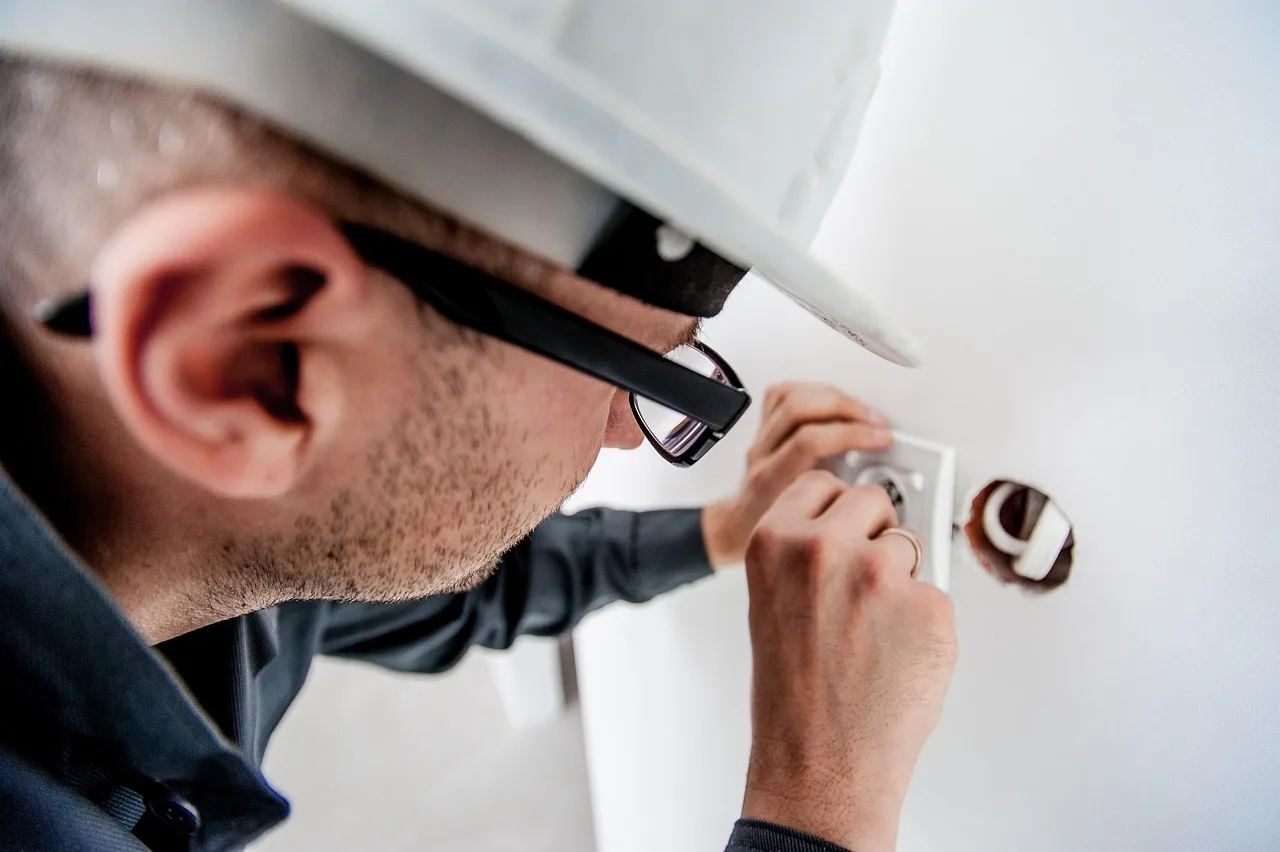


Electric furnaces carry lethal voltage, so shut off power at the breaker before you remove panels or touch internal parts, then wait a few minutes for components to cool. Electrical and heater safety guidance from the National Fire Protection Association and manufacturer installation instructions consistently treat access panels, disconnects, and overheating signs as stop points, not normal troubleshooting steps. If you see burnt odor, melted insulation, scorch marks, or a breaker that trips again right away, stop and call a technician.
What to check first
- Set the thermostat correctly. Set it to Heat and raise the setpoint several degrees above room temperature. A low setpoint or wrong mode can mimic a furnace failure.
- Check the breaker and reset. Check for a tripped double-pole breaker and reset it once. If it trips again, do not keep resetting it; repeated trips can indicate an electrical fault or short.
- Inspect the blower door switch. Make sure the access panel is fully seated so the safety switch closes. A loose panel can keep the furnace dead even when everything else is fine.
- Replace or inspect the filter. A plugged filter can cut airflow and trigger overheating. This is the safest and most common homeowner check before deeper troubleshooting.
- Look for visible damage. Check for burned terminals, melted plastic, or darkened wires near the cabinet opening. If you see that kind of heat damage, leave the panel closed and get help.
Electric furnace troubleshooting matrix
| Symptom | Likely cause | Safe homeowner check | Meter-required check | Escalation level |
|---|---|---|---|---|
| Unit dead / no blower | Tripped breaker, bad thermostat call, open limit, open fuse, failed sequencer, open heat element, loose panel switch | Check thermostat mode, breaker, blower door switch, filter, and furnace reset | Test for 24V control signal, continuity through limit and fuse, and element resistance | High if breaker trips or burning is visible |
| No heat | Tripped breaker, bad thermostat call, open limit, open fuse, failed sequencer, open heat element | Check thermostat mode, breaker, blower door switch, filter, and furnace reset | Test for 24V control signal, continuity through limit and fuse, and element resistance | High if breaker trips or burning is visible |
| Partial heat | Some heating stages not closing, one or more open elements, airflow restriction | Inspect filter and supply registers; confirm warm air improves after a new filter | Check each element circuit and sequencer output | Medium to high |
| Blower runs with no heat | Sequencer contacts not closing heat strips, off-delay timer or fan relay fault, open elements | Confirm heat call is present and panel is seated | Check sequencer timing and element continuity | High |
| Heat cycles off early | Restricted airflow, limit switch opening, loose terminals heating up and opening intermittently | Check filter, returns, and supply vents for blockage | Test limit behavior and inspect terminal voltage drop under load | Medium to high |
| Breaker trips immediately | Shorted element, shorted wiring, failed sequencer, damaged terminal block, ground fault | Do not reset repeatedly; turn the breaker off and look for scorch marks only from outside the cabinet | Check for short-to-ground, element insulation failure, and wiring continuity | Immediate technician call |
| Burning smell/scorch marks | Loose wiring, failing limit, stuck limit, blocked airflow, damaged connector | Stop use, shut off power, and look only from outside the cabinet | Inspect terminals, fuse status, and heat damage before any restart | Immediate technician call |
| Visible overheating signs | Loose wiring, failing limit, stuck limit, blocked airflow, damaged connector | Stop use, shut off power, and look only from outside the cabinet | Inspect terminals, fuse status, and heat damage before any restart | Immediate technician call |
Why is the furnace not heating?
If the furnace will not heat at all, start with airflow, then move to the staged heat parts. A plugged filter or closed register can overheat the cabinet and trip the limit, while a failed sequencer, open limit, open fuse, or burned element leaves the blower running without warm air.
How electric heat is staged
Electric furnace heating elements are resistance heaters made with nichrome wire and powered by 240V circuits. Many units use multiple stages, and the number of heating stages and the wattage of each element vary by furnace model rather than following one universal rating. Sequencers bring those stages on in order so the electrical load does not hit all at once.
Safe homeowner checks for no heat
- Check airflow first. Replace a dirty filter and open blocked registers and returns. Poor airflow from plugged filters can cause overheating, which can shut the furnace down before heat reaches the rooms.
- Verify thermostat demand. Make sure the thermostat is calling for heat and the fan setting is on Auto unless the unit requires otherwise. A bad call can make a healthy furnace look dead.
- Confirm the furnace reset. Some units have a reset button or manual safety that must be restored after an overheat event. If it trips again, do not force repeated resets.
Where meter checks matter
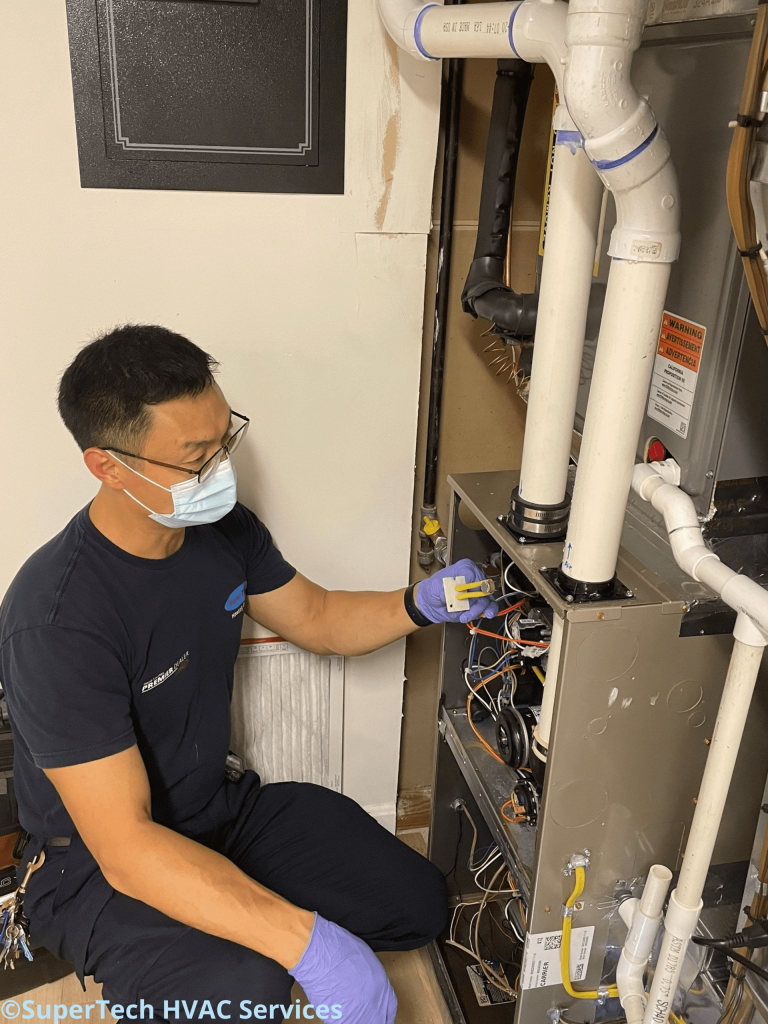
After those checks, the next faults are usually electrical. A technician can test whether the sequencer is sending power to the heat strips, whether the high temperature limit is open, whether the high temperature fuse has opened permanently, and whether a heat element is open. Those tests require a meter and access to live-rated circuits.
Suppose the filter is packed with dust and the furnace runs for ten minutes, then goes cold. That pattern points first to restricted airflow and a limit opening on heat, not to a failed thermostat. If the filter is clean and the unit still gives no heat, the sequencer or an open element moves higher on the list.
Why does the blower run with no heat?
When the blower runs but the air stays cool, the fan part of the furnace may be working while the heat circuit is not. That often points to a sequencer that never closes the heat strips, an off-delay timer or fan relay issue on newer units, or one or more open heating elements. Industry installation guidance for electric furnaces generally treats the blower, heat strips, and safeties as separate diagnostic paths, which is why blower-only operation needs a targeted check instead of guesswork.
Sequencer problems
A sequencer is a time-delay switch. It uses low-voltage 24V heaters to warm bimetal discs that time the heat stages on and off. If the heater side fails, the disc sticks, or the contacts burn, the blower can start while the heat strips stay off.
Newer fan controls
Some newer electric furnaces use an off delay timer for the fan. That part controls how long the blower keeps running after a call for heat ends. If it misbehaves, the fan can run without the expected heat timing, which can look like a failed furnace even when the elements are not the only problem.
What to do next
- Check the heat call. Confirm the thermostat is still asking for heat when the blower starts. That narrows the problem to control timing or the heat circuit.
- Inspect visible terminals. Look for burn marks at the sequencer, terminal blocks, or element connections. Loose connections in a high-amperage circuit can overheat and fail before a breaker trips.
- Schedule meter testing. Ask for continuity and voltage checks on the sequencer, elements, and limits. Those are the parts most often behind blower-only operation.
What causes heat to cycle off early?
Short heat cycles often mean the furnace may be overheating and shutting itself down for protection. The first suspects are a dirty filter, blocked return, or closed registers. If airflow is fine, a limit switch that opens too soon, or a loose terminal that heats up under load, moves to the top of the list.
Limit switch behavior
High temperature limits are model-dependent and are commonly found in a range rather than at one universal setting; some units use limits around 145 degrees F, while others are higher or lower depending on the furnace design. The limit opens when temperature exceeds its set point and resets automatically on some models after the unit cools. A limit that fails open can stop the furnace too soon, while a limit that sticks closed can let the unit overheat until another safety opens.
Airflow and wiring checks
Restricted airflow from a plugged filter can cause overheating. Loose terminals and damaged wiring can also add resistance, build heat, and create intermittent shutdowns. If the furnace runs, stops, and restarts with a hot electrical smell, treat that as an electrical fault, not a filter-only issue.
A common first-timer mistake is to swap the filter and assume the problem is fixed immediately. If the unit still cycles off after a clean filter and open returns, the next suspect is usually the limit path or a wiring problem at the heat strip circuit.
Overheating signs and unsafe wiring
Visible heat damage changes the job from troubleshooting to hazard control. Burned wires, melted connectors, and darkened insulation usually mean the furnace has been running hot in a high-amperage circuit. A high temperature fuse is a permanent safety device that opens if the limit sticks closed, and that opening should be treated as a warning, not a nuisance.
What overheating can damage
Overheating can stress the blower motor, warp terminal blocks, and burn the insulation around heating elements and sequencers. It can also leave the furnace with intermittent faults that come and go as parts cool. If you see discoloration near the elements, the sequencer, or the main terminals, do not keep trying resets.
When to stop immediately
- Shut off power. Turn off the breaker as soon as you see melted plastic, scorched wire jackets, or repeated tripping. That stops further damage.
- Leave the panel closed. Do not probe loose wiring or try to restore power for a “quick test.” A live 240V fault can arc and worsen the damage.
- Call for service. Ask for inspection of the limit, fuse, sequencer, and any burned terminals. Those parts often fail together after an overheat event.
Frequently asked questions
How to troubleshoot a home furnace
For a home furnace, begin with the symptom and work toward the component most likely to cause it. No heat points to power, control, or heat-strip faults. Short cycling points to airflow or limit problems. Blower-only operation points to sequencer timing, fan control, or open heating elements.
How to troubleshoot a gas furnace
A gas furnace uses a different heat path than an electric furnace. For gas units, the safer homeowner checks usually focus on thermostat settings, power to the furnace, the air filter, and whether the gas supply is on. Gas valve, igniter, flame sensor, pressure switch, and burner issues are different from sequencer and heat-strip faults, so do not apply electric-furnace steps to a gas furnace without checking the fuel type first.
Why won’t my electric furnace turn
An electric furnace may not turn on because the breaker is tripped, the blower door switch is open, the limit has opened after overheating, or the sequencer is not closing the heat circuit. If the breaker trips again or you notice burning, stop there and call a technician rather than cycling power repeatedly.
Electric furnace not heating enough
Weak heat usually means some, but not all, heat stages are working. Check the filter and registers first, because restricted airflow can make the furnace overheat and drop stages. If airflow is fine, the next likely causes are a weak sequencer, an open heat element, or a limit that opens too early.
Troubleshooting an electric furnace
Treat electric furnace troubleshooting as a path from symptom to component. No heat often starts with airflow and power checks, then moves to the limit, fuse, sequencer, and elements. Blower-only faults and short cycling usually need meter-based testing, especially when burn marks, melted parts, or loose terminals are present.