Aquarium Heaters: Are They Expensive to Run Daily?
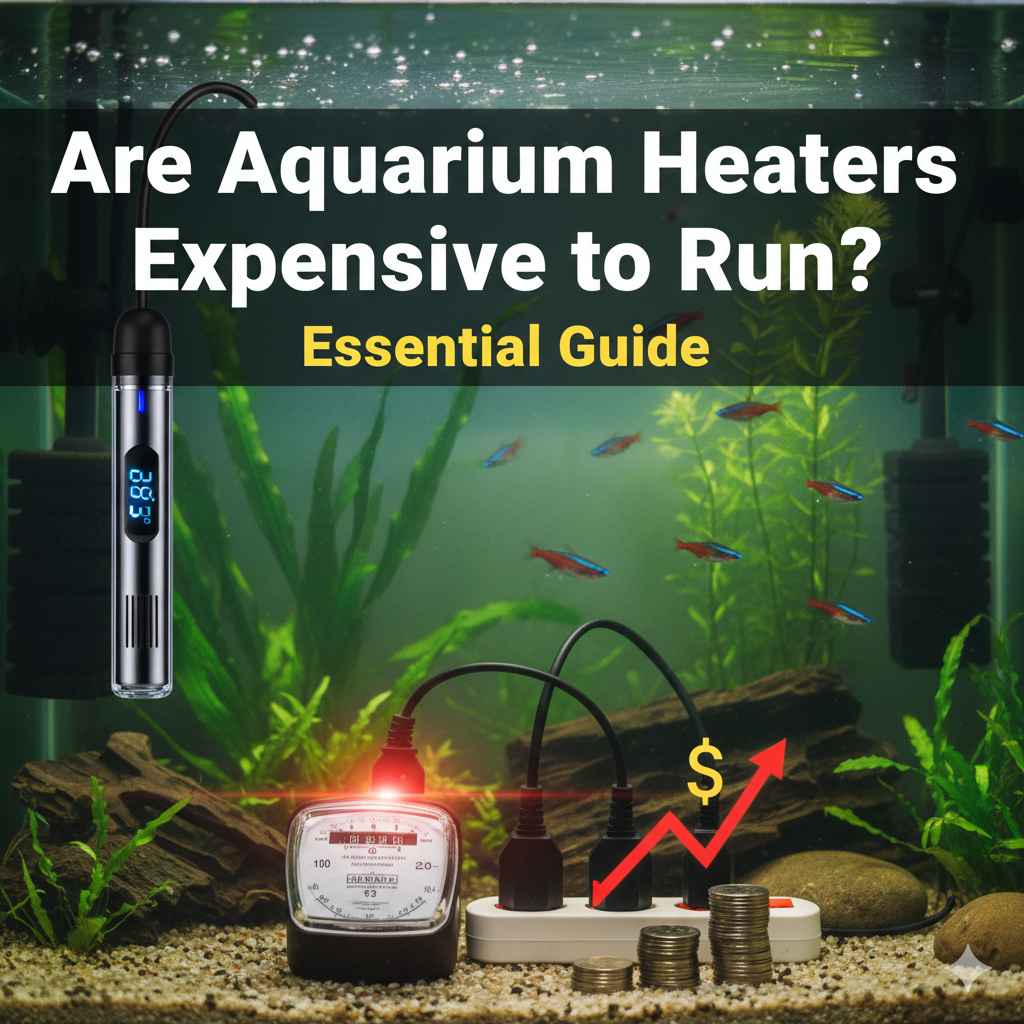
Aquarium heaters are generally not expensive to run, consuming less electricity than many common household appliances. Their cost depends mainly on wattage, tank size, and ambient room temperature. With smart choices and proper maintenance, you can keep your fish comfortable without a significant impact on your energy bill.
Thinking about adding a heater to your aquarium but worried about your electricity bill? It’s a common concern for many fish keepers! Many beginners wonder, “Are aquarium heaters expensive to run?” The good news is, for most home aquariums, the answer is a resounding no. These devices are designed to be efficient, and their running costs are often much lower than people imagine. Let’s dive into what affects their energy use and how you can keep your aquatic friends happy and warm without breaking the bank. This guide will break down everything you need to know to make an informed decision.
Understanding Aquarium Heater Costs: What You Need to Know
Keeping your aquarium at the right temperature is crucial for your fish’s health and well-being. Just like we need a comfortable home environment, our aquatic pets thrive within specific temperature ranges. This is where an aquarium heater comes in. However, the thought of an appliance running 24/7 can understandably lead to questions about its impact on your energy consumption. Let’s demystify this by looking at the key factors that influence how much your aquarium heater will cost to operate.
The Main Factors Affecting Running Costs
Several elements play a role in determining how much electricity your aquarium heater uses. Understanding these will help you estimate and manage costs effectively.
- Wattage: The power rating of your heater, measured in watts (W), is the biggest factor. Higher wattage means more power consumption, but it also means the heater can heat a larger volume of water or heat it more quickly.
- Tank Size: Larger tanks require more energy to heat than smaller ones. The heater needs to work harder to maintain temperature in a greater volume of water. Finding the right wattage for your tank size is essential for efficiency.
- Ambient Room Temperature: How warm is the room where your aquarium is located? If the room is already quite warm, the heater won’t need to turn on as often. In a colder room, it will cycle on and off more frequently to maintain the set temperature.
- Thermostat Accuracy: A well-calibrated thermostat ensures the heater only runs when necessary. If the thermostat is faulty, it might overheat the water or fail to reach the set temperature, leading to wasted energy.
- Heater Type: While most common aquarium heaters are submersible, there are other types like in-line or substrate heaters, each with slightly different energy profiles and installation needs.
How Much Electricity Does a Typical Aquarium Heater Use?
Let’s put some numbers to it. Most aquarium heaters range from 25 watts (for small tanks) to 300 watts (for large tanks). A common size, like a 100-watt heater for a 20-30 gallon tank, will consume energy only when it’s actively heating. A heater doesn’t run constantly; it cycles on and off to maintain the desired temperature. This cycling is key to its efficiency.
To estimate the cost, we can use a simple formula:
Cost = (Wattage / 1000) Hours of Use Electricity Price per Kilowatt-hour (kWh)
Let’s break this down with an example. Assume:
- You have a 100-watt heater.
- It runs for 8 hours a day (this is a generous estimate; it will likely be less).
- Your electricity costs $0.15 per kWh.
First, convert wattage to kilowatts: 100 watts / 1000 = 0.1 kW.
Then, calculate daily cost: 0.1 kW 8 hours $0.15/kWh = $0.12 per day.
This means the daily cost is about 12 cents. Monthly, this would be around $3.60 (0.12 30 days). Even with a larger 300-watt heater, running for 10 hours a day at $0.15/kWh, the monthly cost would be approximately $13.50 ( (300/1000) 10 $0.15 30). Compared to other appliances like refrigerators or even some LED lights that run 24/7, this is very modest.

Choosing the Right Heater Size: Efficiency Starts Here
The single most important step to ensure your aquarium heater isn’t expensive to run is to select the correct wattage for your tank size. Over-sizing a heater means it will consume more power than necessary, while under-sizing it will cause it to run too often and might struggle to maintain the target temperature. This can stress your fish.
General Wattage Guidelines
A good rule of thumb is to use 3 to 5 watts per gallon of water. This provides a reliable baseline, but remember to adjust based on the factors mentioned earlier.
| Aquarium Size (Gallons) | Recommended Wattage Range (Watts) |
|---|---|
| 5 – 10 | 25 – 50 |
| 10 – 20 | 50 – 75 |
| 20 – 30 | 75 – 100 |
| 30 – 40 | 100 – 150 |
| 40 – 55 | 150 – 200 |
| 55 – 75 | 200 – 250 |
| 75 – 100 | 250 – 300 |
| 100+ | 300+ (Consider multiple smaller heaters) |
For example, if you have a 55-gallon aquarium in a cooler room, you might opt for the higher end of the recommended range (e.g., 200 watts) or even consider two 100-watt heaters. Conversely, if your room is warm, you might lean towards the lower end (e.g., 150 watts).
External Factors to Consider
- Room Temperature: If your room consistently stays around 70-75°F (21-24°C), you can generally use the lower end of the wattage recommendation. For rooms that dip below 65°F (18°C), aim for the higher end.
- Lid/Cover: An aquarium lid insulates the water, reducing heat loss and requiring the heater to run less. If your tank is open-top, expect slightly higher energy use.
- Water Flow: Good water circulation, provided by a filter or powerhead, helps distribute heat evenly. This prevents the heater from having to overcompensate for cold spots and can improve efficiency by allowing it to heat the water more uniformly.
Types of Aquarium Heaters and Their Efficiency
While most aquarium heaters operate on similar principles, understanding the different types can help you make an informed choice for efficiency and safety.
Submersible Heaters
These are the most common type. They are fully submersible (though power cords should remain dry) and come with adjustable thermostats. They are generally efficient and reliable when properly sized. Brands like Aqueon, Fluval, and Eheim offer popular submersible models.
Hang-On-Back (HOB) Heaters
These are less common but are designed to sit entirely outside the tank, with a heating element submerged and the rest of the unit hanging on the filter output or a rim. They can be easier to access for adjustment without getting your hands wet. Their efficiency is comparable to submersible heaters.
In-Line Heaters
These heaters are installed in-line with your filter’s plumbing. They are ideal for larger tanks or for those who want a less visible heating solution. Because they heat water as it passes through, they can be very effective and efficient, especially in large sumps or canister filter systems. Brands like Eheim and Hydor offer high-quality in-line units.
Substrate Heaters
These are essentially heating cables or mats placed under the gravel or substrate. They provide gentle, indirect heat that rises through the water column. While they can be beneficial for planted tanks or tanks with bottom-dwelling fish, they are generally not the primary heating source for most aquariums and may be less energy-efficient for maintaining ambient water temperature compared to submersible heaters.
Maximizing Efficiency and Minimizing Costs
Beyond choosing the right size, there are several practical steps you can take to ensure your aquarium heater operates as efficiently as possible and keeps your energy bills in check.
1. Proper Placement is Key
The location of your heater within the tank matters.
- Near Water Flow: Position the heater near your filter outflow or a powerhead. This ensures that the heated water is circulated throughout the tank quickly and evenly, preventing the heater from having to cycle on and off as frequently.
- Avoid Direct Sunlight: Never place the heater where it will be exposed to direct sunlight. Sunlight can rapidly heat the water and cause the heater to shut off prematurely or even overheat, which is bad for the heater and the fish.
- Submersion: Ensure the heater is fully submerged according to the manufacturer’s instructions. If only partially submerged, it can overheat and fail.
2. Regular Maintenance and Checks
A well-maintained heater is an efficient heater.
- Cleanliness: Periodically clean any algae or debris that might accumulate on the heater’s glass or casing. This ensures optimal heat transfer.
- Thermostat Functionality: Regularly check that the heater is maintaining the correct temperature. You can use a reliable aquarium thermometer for this. If you notice significant fluctuations, the thermostat might need calibration or replacement.
- Cord Safety: Always ensure the power cord is routed in a “drip loop” (forming a U-shape below the outlet) to prevent water from running down the cord into the electrical socket. This is a crucial safety measure.
3. Insulate Your Tank
Reducing heat loss from the aquarium is a simple yet effective way to decrease your heater’s workload.
- Use an Aquarium Lid or Hood: A good lid traps heat and reduces evaporation. This is one of the most effective insulation methods.
- Consider Backgrounds: While not directly related to the heater, ensuring your tank is against a solid wall or has a black background can help retain heat compared to being in a drafty or exposed location in a room.
4. Double-Check Your Settings
Ensure the thermostat on your heater is set to the precise temperature required for your fish species. Overheating the water by even a few degrees can significantly increase running time and energy consumption.
5. Consider Running Multiple Smaller Heaters
For larger aquariums (though the table above often suggests a single larger heater for up to 100 gallons), especially those over 75 gallons, running two smaller heaters can be more energy-efficient and safer. If one heater fails, the other can often maintain a minimum survivable temperature. They also distribute heat more evenly. For a 100-gallon tank, two 150-watt heaters might be more efficient than one 300-watt unit, especially if the room temperature fluctuates.
Cost Comparison: Aquarium Heaters vs. Other Necessities
To further put the cost into perspective, let’s compare a typical aquarium heater’s energy consumption to other common household items.
Consider these examples (approximate daily energy use):
- 100-watt Aquarium Heater (running 8 hours/day): 0.8 kWh (approx. $0.12 at $0.15/kWh)
- Old Refrigeration Unit: Can consume 3-5 kWh per day.
- Desktop Computer (on for 8 hours/day): Can consume 1-2 kWh per day.
- LED Television (on for 4 hours/day): Can consume 0.5 kWh per day.
- Coffee Maker (used for 15 min/day): Around 0.5 kWh per day if used daily.
As you can see, the aquarium heater, when properly sized and maintained, falls within a very reasonable range of energy consumption compared to many appliances that are essential for daily life. The peace of mind knowing your fish are in a stable, healthy environment often outweighs the minimal operational cost.
Energy-Efficient Heater Technology
Many modern aquarium heaters are designed with energy efficiency in mind. Look for features such as:
- Accurate Digital Thermostats: These provide precise temperature control, preventing overheating and reducing unnecessary run times.
- Durable Heating Elements: High-quality elements heat more efficiently and last longer.
- Safety Features: Automatic shut-off mechanisms prevent overheating if the water level drops, which also contributes to overall system efficiency and longevity.
Investing in a reputable brand with good reviews can ensure you get a heater that is both safe and energy-conscious. For instance, brands like Eheim Jäger heaters are often praised for their build quality and reliable temperature control, contributing to efficient operation and longevity.

Frequently Asked Questions (FAQ)
Here are some common questions about aquarium heater costs and usage:
What is the average wattage for a small aquarium heater?
For small aquariums (5-10 gallons), a 25-watt or 50-watt heater is typically sufficient. These low wattages are very economical to run.
How can I tell if my aquarium heater is working correctly?
You can tell your heater is working by observing your aquarium’s thermometer. The temperature should consistently stay within the desired range for your fish. Most heaters have an indicator light that turns on when the heating element is active.
Does a heater make my aquarium water cloudy?
No, an aquarium heater itself should not make your water cloudy. Cloudiness is usually caused by algae blooms, bacterial issues, or insufficient filtration. If you notice cloudiness along with a heater malfunction, it’s likely a separate problem.
Is it safe to leave an aquarium heater on all the time?
Yes, it is not only safe but necessary to leave an aquarium heater on all the time to maintain a stable temperature. They are designed to cycle on and off automatically to regulate the water temperature.
Can I use a space heater instead of a dedicated aquarium heater?
No, you should never use a space heater to warm your aquarium. Space heaters are not designed for water immersion and pose a severe safety risk, including electrocution. They also lack the precise temperature control needed for fish health.
What happens if my aquarium heater breaks?
If your heater breaks, the water temperature will begin to drop to room temperature. For tropical fish, this can be incredibly stressful and even fatal if the temperature drops too quickly or too low. It’s crucial to monitor your aquarium thermometer regularly and have a backup plan or a spare heater for emergencies, especially for sensitive species.
Do saltwater aquariums use more or less energy for heating?
The energy consumption for heating a saltwater aquarium is similar to a freshwater aquarium of the same size, provided the desired temperature is the same. The main difference lies in the specific temperature requirements for different marine species and the potential need for additional equipment like protein skimmers or specialized lighting, which have their own energy demands.
Conclusion
When it comes to keeping your aquarium at a steady, comfortable temperature, the question “Are aquarium heaters expensive to run?” thankfully has a reassuring answer: no. By understanding the factors that influence energy consumption—primarily wattage, tank size, and ambient room temperature—and by making informed choices like selecting the correct heater size and implementing simple efficiency tips, you can ensure your aquatic friends thrive without a significant impact on your wallet.
Regular maintenance, proper placement, and using an aquarium lid are all easy steps that contribute to lower energy bills and a more stable environment for your fish. Compared to many other common household appliances, an aquarium heater’s operating cost is remarkably modest. So, invest in the right equipment, maintain it well, and enjoy the peace of mind that comes with providing a healthy, warm home for your beloved aquatic pets. Happy fishkeeping!