Direct Vent Wall Heaters with 80-90% AFUE
Absolutely! Direct vent wall heaters are highly efficient heating solutions, often achieving AFUE ratings of 80-90% or higher. They draw combustion air from outside and vent exhaust gases externally, preventing heat loss and maintaining indoor air quality. This sealed system minimizes energy waste, making them a smart, cost-effective choice for zoned heating in your home.
If cost, wattage, or efficiency matters, Are Ceramic Wall Heaters Energy Efficient? Savings adds a useful comparison before choosing a heater.
If cost, wattage, or efficiency matters, Are Convection Wall Heaters Energy Efficient? Tested Results! adds a useful comparison before choosing a heater.
If cost, wattage, or efficiency matters, Are Ceramic Wall Heaters Energy Efficient: Brilliant Savings adds a useful comparison before choosing a heater.
Choosing the right heating system for your home can feel like navigating a maze. With so many options, it’s easy to get lost in technical terms and conflicting advice, leaving you wondering if you’re making the best choice for your comfort and wallet. You want a heater that’s not just warm, but also smart about energy. If you’re considering a direct vent wall heater, you’re likely asking: are they truly efficient? Good news! We’re going to break down the proven facts in a simple, straightforward way, showing you exactly how these heaters work and why they stand out. By the end, you’ll have all the clarity you need to decide with confidence.
What Exactly is a Direct Vent Wall Heater?
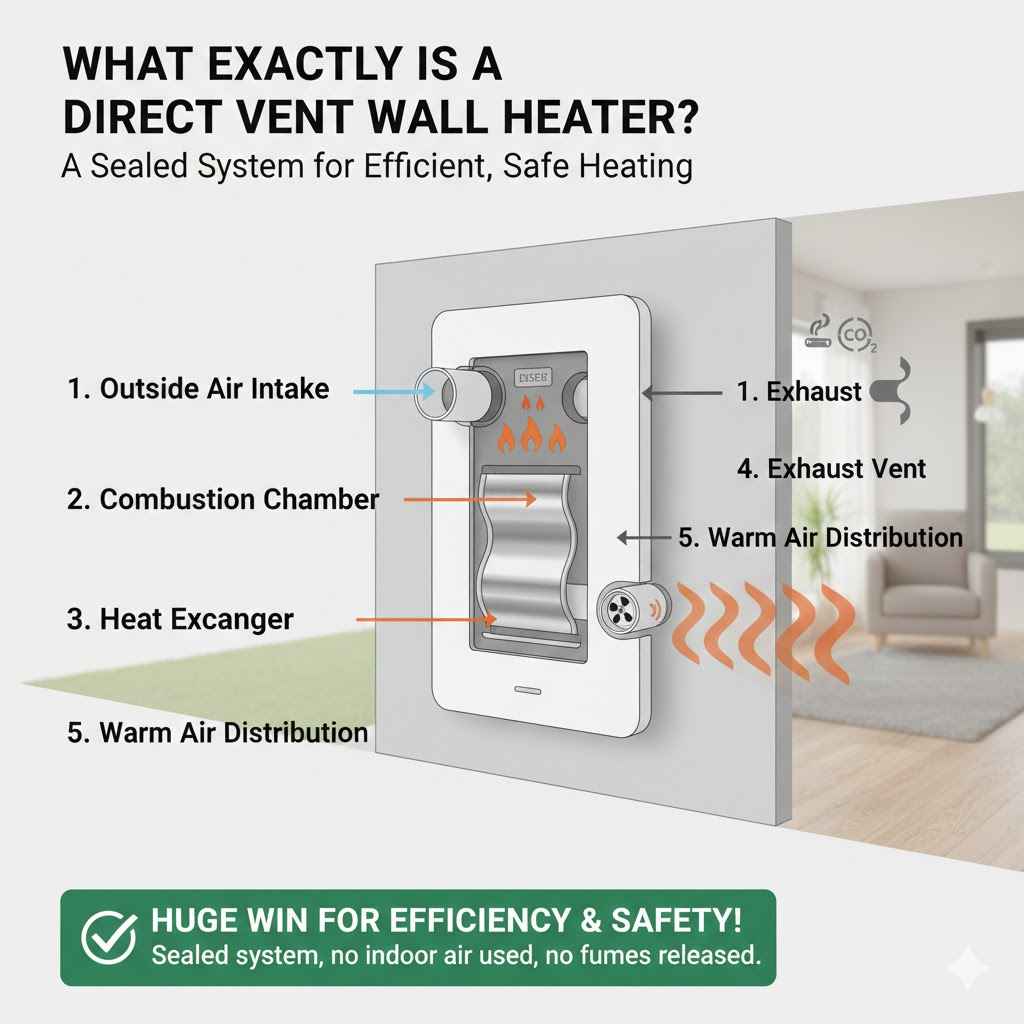
Let’s start with the basics. Imagine a heating system that brings in fresh air from outside to burn fuel, and then sends all the exhaust gases right back outside without ever mixing with your indoor air. That’s essentially what a direct vent wall heater does! It’s a self-contained unit, often mounted on an exterior wall, that uses a special pipe called a “vent” that goes directly through the wall to the outdoors.
Here’s how it works in simple steps:
- Outside Air Intake: A small pipe draws in fresh air from outdoors. This air is used for the combustion process, meaning it’s what helps burn the natural gas or propane fuel.
- Combustion Chamber: The fuel burns within a sealed chamber. This chamber is completely isolated from your living space, keeping combustion byproducts like carbon monoxide safely contained.
- Heat Exchanger: As the fuel burns, it heats a metal component called a heat exchanger. Your room air then circulates around this hot exchanger, absorbing the warmth.
- Exhaust Vent: A separate pipe within the same vent system carries all the exhaust gases (like carbon dioxide and water vapor) back out of your home.
- Warm Air Distribution: A fan or natural convection then circulates the warmed air into your room.
Because it operates as a sealed system, it doesn’t use any of your precious indoor air for combustion, and it doesn’t release any fumes indoors. This is a huge win for both efficiency and safety!
Understanding Efficiency: What Do the Numbers Mean?
When we talk about heater efficiency, we’re really talking about how much of the fuel’s energy gets turned into useful heat for your home, versus how much is lost. For gas-fired heating systems like direct vent heaters, the key measurement is the Annual Fuel Utilization Efficiency (AFUE) rating.
What is AFUE?
AFUE is expressed as a percentage. Simply put, an AFUE of 80% means that 80 cents of every dollar you spend on fuel goes directly to heating your home, while the remaining 20 cents is lost through the exhaust or other inefficiencies. The higher the AFUE percentage, the more efficient the heater is, and the more money you’ll save on your energy bills.
Most modern direct vent wall heaters boast AFUE ratings typically ranging from 80% to over 90%. For comparison, older, traditional atmospheric-vented furnaces often have AFUE ratings in the 60-70% range. This difference might seem small, but it adds up significantly over a heating season!
To learn more about how AFUE is calculated and what efficiency really means for your home, you can visit the ENERGY STAR website, a great resource for understanding energy-efficient products.
The Proven Facts: Why Direct Vent Heaters Are Efficient
Now, let’s dive into the core reasons why direct vent wall heaters are recognized for their efficiency. It’s all thanks to their smart design and how they handle combustion and ventilation.
1. Sealed Combustion System
This is arguably the biggest efficiency booster. As we discussed, direct vent heaters have a completely sealed combustion chamber. Why does this matter for efficiency?
- No Indoor Air Loss: Unlike traditional heaters that draw heated indoor air for combustion and then expel it outside as exhaust, direct vent systems use outside air. This means your carefully heated indoor air isn’t being sucked out of your home and replaced by cold outside air. This significantly reduces heat loss, saving energy.
- Consistent Performance: Because the combustion air source is constant and clean from outside, the combustion process is more stable and efficient, leading to better heat output.
2. Direct External Venting
The “direct vent” part isn’t just a name; it’s a design feature that maximizes efficiency.
- No Chimney Needed: Traditional heating systems often require a chimney or flue to vent exhaust. These chimneys can become pathways for heat to escape from your home even when the heater isn’t running, known as “standby heat loss.” Direct vent heaters eliminate this, as their short, direct vent pipe minimizes heat loss through the venting system.
- Efficient Exhaust: The dual-pipe vent system (one for intake, one for exhaust) is designed for efficient expulsion of combustion gases without compromising indoor temperatures.
3. Zoned Heating Capability
While not a direct mechanical efficiency, the ability to zone your heating significantly impacts overall home energy use. Direct vent wall heaters are perfect for this.
- Heat Only Where You Need It: Instead of heating your entire house when you’re only using a few rooms, you can install direct vent heaters in specific zones or rooms (like a living room, bedroom, or addition). This allows you to turn down the central thermostat and only heat the occupied areas, drastically reducing overall energy consumption.
- Targeted Comfort: You get warmth where and when you need it, avoiding the waste of heating empty spaces.
4. Advanced Controls and Thermostats
Many modern direct vent heaters come equipped with sophisticated thermostats and controls.
- Precise Temperature Management: Digital thermostats allow for more accurate temperature settings, preventing overheating and unnecessary energy use.
- Programmability: Timers and programmable settings mean the heater can turn on and off automatically based on your schedule, ensuring you’re only heating when necessary.
Beyond Efficiency: Added Benefits of Direct Vent Heaters
While efficiency is a primary concern, direct vent wall heaters offer several other advantages that contribute to a comfortable and healthy home environment.
Enhanced Safety
The sealed combustion system is a huge safety advantage. Because combustion byproducts like carbon monoxide are never released into your living space, the risk of accidental poisoning is virtually eliminated. This provides significant peace of mind, especially for families.
Improved Indoor Air Quality
Since the heater doesn’t draw indoor air for combustion, it doesn’t affect your home’s oxygen levels or introduce moisture or fumes. This maintains healthier indoor air quality, which is particularly beneficial for individuals with allergies or respiratory sensitivities. The Environmental Protection Agency (EPA) emphasizes the importance of good indoor air quality for health.
Flexible Installation
Direct vent heaters don’t require a chimney or complex ductwork. As long as you have an exterior wall where the vent can pass through, they can be installed in almost any room. This flexibility makes them ideal for additions, garages, basements, or rooms that your central heating system struggles to reach.
Quiet Operation
Many models operate very quietly, especially those that rely on natural convection to distribute heat. This makes them less intrusive than some forced-air systems, contributing to a more peaceful home atmosphere.
Comparing Direct Vent with Other Heating Options
To truly appreciate the efficiency of direct vent wall heaters, it’s helpful to see how they stack up against other common heating methods. Let’s look at a simple comparison:
| Heating Type | Typical AFUE/Efficiency | Key Efficiency Factor | Safety Feature | Best Use Case |
|---|---|---|---|---|
| Direct Vent Wall Heater (Gas/Propane) | 80-90%+ (AFUE) | Sealed combustion, no indoor air loss, direct exhaust. | No indoor combustion fumes (CO risk eliminated). | Zoned heating, additions, difficult-to-heat rooms. |
| Traditional Gas Furnace | 60-80% (older) / 80-97%+ (newer) (AFUE) | Draws indoor air for combustion, chimney heat loss. | Properly vented to chimney; CO detectors crucial. | Whole-house heating with ductwork. |
| Vent-Free Gas Heater | 99.9% (Efficiency) | No venting required; all heat stays indoors. | Releases combustion byproducts (moisture, CO) directly into room; ODS sensor. | Supplemental heat in well-ventilated areas. |
| Electric Resistance Heater | 100% (Efficiency) | Converts all electricity to heat; no combustion byproducts. | No fumes; hot elements can be a burn hazard. | Small room spot heating, areas without gas lines. |
| Heat Pump | 200-400%+ (COP/HSPF) | Moves heat rather than generating it; highly efficient in moderate climates. | Electrical safety; no combustion fumes. | Whole-house heating/cooling, mild-to-cold climates. |
A Note on Vent-Free Heaters:
You might see “vent-free” heaters advertised with 99.9% efficiency. While technically true that almost all the heat stays in the room because there’s no vent, it’s crucial to understand they also release all combustion byproducts (water vapor, carbon dioxide, and trace amounts of carbon monoxide) directly into your living space. This can impact indoor air quality and humidity. Direct vent heaters, by contrast, vent all combustion byproducts safely outside, making them a much safer choice for continuous, long-term heating.
Factors Affecting Real-World Efficiency
While direct vent heaters are inherently efficient by design, their real-world performance can be influenced by several factors. Knowing these can help you maximize your savings and comfort.
1. Proper Sizing
Just like Goldilocks, you want a heater that’s “just right.”
- Too Small: A heater that’s too small will run constantly, struggling to heat the space, leading to higher energy use and a cold home.
- Too Big: An oversized heater will cycle on and off too frequently (short-cycling), which is inefficient, causes temperature swings, and can lead to premature wear and tear.
A qualified HVAC professional can help you determine the correct BTU (British Thermal Unit) output needed for your specific room size, insulation levels, and climate. The Department of Energy offers guidance on proper furnace sizing, which applies generally to space heaters as well.
2. Professional Installation
The saying “measure twice, cut once” really applies here. A proper installation is key to safe and efficient operation.
- Correct Venting: The direct vent pipe must be installed correctly, with proper seals and clearances, to ensure no leaks or blockages.
- Gas Line Connection: If it’s a gas-powered unit, the gas line connection must be secure and leak-free.
- Electrical Wiring: For units with fans or electronic controls, correct electrical wiring is essential.
Don’t try to DIY complex installations if you’re not experienced. A certified technician will ensure everything is up to code and operating optimally.
3. Regular Maintenance
Even the most efficient machines need a little TLC to keep running smoothly.
- Cleanliness: Dust and debris can build up on components, reducing heat transfer and making the heater work harder.
- Vent Inspection: Periodically check the outdoor vent for blockages from leaves, bird nests, or snow. A blocked vent is a safety hazard and will reduce efficiency.
- Professional Tune-up: An annual check-up by a technician can spot minor issues before they become major problems, ensuring your heater operates at peak efficiency for years to come.
4. Home Insulation and Sealing
Your heater can only do so much if your home isn’t holding onto the heat. Good insulation and air sealing are crucial partners in efficiency.
- Insulation: Walls, ceilings, and floors should be properly insulated to prevent heat from escaping.
- Air Sealing: Seal gaps around windows, doors, and electrical outlets to stop drafts that let warm air out and cold air in.
A well-insulated and sealed room will retain heat better, meaning your direct vent heater won’t have to work as hard, saving you energy.
| Factor | Impact on Efficiency | How to Optimize |
|---|---|---|
| Heater Sizing (BTU) | Too small = constant running; too large = short-cycling, wasted energy. | Consult HVAC professional for accurate BTU calculation based on room size, insulation. |
| Installation Quality | Poor venting, gas line, or electrical connections lead to inefficiency & safety risks. | Hire a certified technician for professional installation. |
| Maintenance Schedule | Dust, debris, blocked vents reduce heat transfer and force unit to work harder. | Regular cleaning, annual professional tune-ups, inspect outdoor vent for blockages. |
| Home Insulation/Sealing | Poor insulation/drafts allow heat to escape, requiring heater to run more often. | Improve wall/ceiling/floor insulation; seal cracks/gaps around windows & doors. |
Is a Direct Vent Wall Heater Right for Your Home?
Now that we’ve explored the facts about efficiency, safety, and operation, you might be wondering if a direct vent wall heater is the best fit for your specific needs. Here are some questions to consider:
Do you need zoned heating?
If you only want to heat specific rooms or areas, a direct vent heater is an excellent choice. It avoids the expense of heating your entire home when only a few spaces are occupied.
Do you have a room that’s always cold?
Additions, finished basements, sunrooms, or rooms at the far end of your house often struggle to stay warm with central heating. A direct vent heater can provide supplemental, targeted warmth.
Is an exterior wall available?
Since these heaters require a vent pipe to go directly through an exterior wall, you’ll need a suitable spot for installation. This is typically easier than needing a chimney or extensive ductwork.
Are you concerned about indoor air quality and safety?
If a sealed combustion system and the elimination of indoor combustion byproducts are priorities for you, then direct vent heaters offer significant peace of mind.
Are you looking for an energy-efficient heating solution?
Given their high AFUE ratings and the ability to heat specific zones, direct vent heaters are indeed a highly efficient option, especially when compared to older, less efficient heating methods.
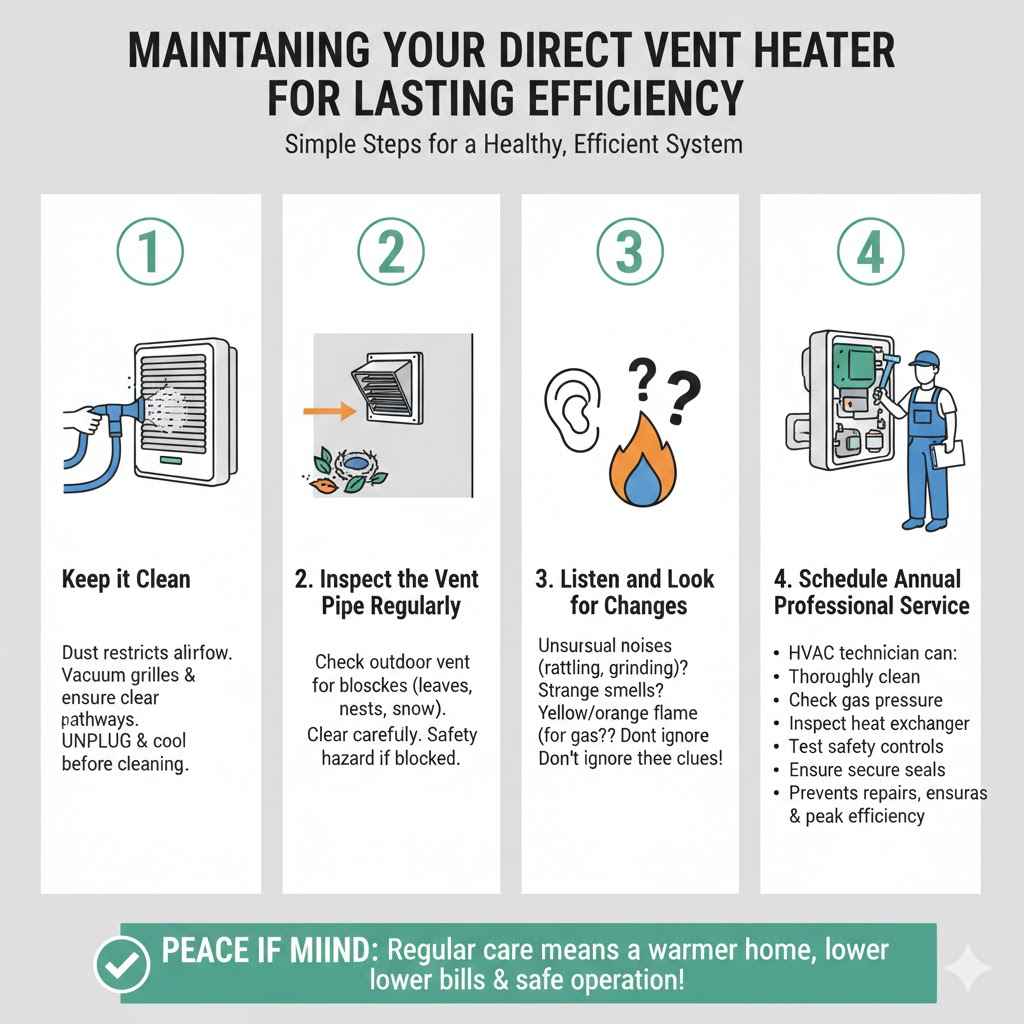
Maintaining Your Direct Vent Heater for Lasting Efficiency
Keeping your direct vent heater in top shape isn’t complicated, but it’s essential for maintaining its efficiency and extending its lifespan. Think of it like taking care of your car – a little regular attention goes a long way.
1. Keep it Clean
Dust is the enemy of efficiency. Over time, dust and lint can accumulate on the heater’s vents, heat exchanger, and fan (if it has one). This buildup can restrict airflow, making the unit work harder and consume more energy to heat the same space. Gently vacuum around the heater’s grilles and ensure clear airflow pathways. Always make sure the unit is completely cool and unplugged (if electric) before cleaning.
2. Inspect the Vent Pipe Regularly
The outdoor vent cap can sometimes become obstructed. Leaves, bird nests, spiderwebs, or even snow and ice in colder months can block the exhaust and intake pipes. A blocked vent is not only an efficiency concern but also a safety hazard. Visually inspect the vent from the outside a few times a heating season, especially after heavy winds or snow. Carefully clear any obstructions.
3. Listen and Look for Changes
You know the normal sounds and appearance of your heater. If you start to notice unusual noises (grinding, rattling), strange smells, or a change in the flame color (it should be mostly blue for gas units, with just a hint of yellow at the tips), it’s a sign that something might be off. Don’t ignore these clues; they could indicate a problem that’s affecting efficiency or safety.
4. Schedule Annual Professional Service
This is perhaps the most important tip. Even if everything seems fine, an annual check-up by a qualified HVAC technician is invaluable. They can:
- Clean internal components more thoroughly.
- Check gas pressure and burner operation for optimal combustion.
- Inspect the heat exchanger for cracks (a serious safety concern).
- Test safety controls, like the thermostat and igniter.
- Ensure all seals and connections are secure and leak-free.
A professional tune-up can catch minor issues before they become expensive repairs, keep your heater running at its peak efficiency, and give you peace of mind that it’s operating safely.
Frequently Asked Questions About Direct Vent Wall Heaters
Q1: Are direct vent wall heaters expensive to run?
A1: Compared to traditional electric resistance heaters or constantly running a central furnace for a single room, direct vent heaters are generally very cost-effective. Their high AFUE ratings (80-90%+) and ability to provide zoned heating mean less wasted energy and lower fuel bills.
Q2: Can I install a direct vent wall heater myself?
A2: While some handy homeowners might consider it, professional installation is strongly recommended. It involves working with gas lines, electrical connections, and ensuring proper venting through an exterior wall. A certified technician will ensure it’s installed safely, correctly, and up to code, maximizing efficiency and preventing hazards.
Q3: Are direct vent heaters truly safe for indoor use?
A3: Yes, they are considered very safe. The sealed combustion system means that all combustion gases, including potentially harmful carbon monoxide, are vented directly outside. This prevents any fumes from entering your living space, making them much safer than vent-free alternatives.
Q4: What’s the main difference between direct vent and vent-free heaters?
A4: The key difference is how they handle exhaust. Direct vent heaters pull air from outside for combustion and vent all exhaust gases back outside through a sealed pipe. Vent-free heaters, on the other hand, use indoor air for combustion and release all combustion byproducts directly into your room. While vent-free units are technically efficient at keeping heat indoors, they can negatively impact indoor air quality and are not recommended for continuous use in unventilated areas.
Q5: Can a direct vent wall heater heat an entire house?
A5: Typically, no. Direct vent wall heaters are designed for zone heating, meaning they effectively warm a specific room, addition, or area. While you could install multiple units, they are not usually a primary whole-house heating solution like a central furnace. They excel at providing targeted, efficient warmth where your central system might fall short.
Q6: How often do I need to maintain my direct vent heater?
A6: Regular light cleaning (dusting, checking outdoor vent) should be done a few times during the heating season. For optimal efficiency and safety, an annual professional tune-up by a qualified technician is highly recommended. This ensures all components are working correctly and extends the lifespan of your unit.
Q7: Do direct vent heaters make a lot of noise?
A7: Most modern direct vent wall heaters are designed for quiet operation. Many models use natural convection to circulate heat, making them almost silent. Units with integrated fans will produce a gentle hum, but generally, they are much quieter than a central furnace or a window AC unit.
Conclusion: Confident in Your Heat
So, are direct vent wall heaters efficient? The proven facts clearly show they are. Their ingenious sealed combustion system and direct venting ensure that valuable heat stays in your home, not up a chimney, and that fresh, healthy air is maintained indoors. With typical AFUE ratings of 80-90% or more, they represent a smart investment in comfort and energy savings.
By understanding how they work, choosing the right size, ensuring professional installation, and committing to simple, regular maintenance, you can maximize their efficiency and enjoy consistent, safe warmth for years to come. Whether you’re looking to heat a chilly addition, supplement your existing system, or embrace zoned heating, a direct vent wall heater offers a confident path to a cozier, more energy-conscious home. With this guidance, you can feel reassured in your decision to bring efficient warmth to your living spaces.