Best Water Heater for a Vacation Home
A gas tankless water heater is usually the best fit for a vacation home, unless you need a low-cost replacement or the house stays warm year-round, in which case a small insulated tank or heat pump can make more sense. Bad sizing or the wrong freeze strategy wastes energy, raises repair risk, and can leave the house without hot water. This guide compares tank, tankless, heat pump, and point-of-use options by how long the home sits empty, how cold the utility space gets, what fuel is already on site, and how much upkeep you can tolerate.
Best water heater for a vacation home
The best water heater for a vacation home is the one that fits vacancy length, freeze exposure, and the fuel already in the house. For many part-time homes, gas tankless wins because it has low standby loss and does not keep a full tank hot all week. If the house sees short trips, a well-sized tank can still be the simplest choice.
Why part-time use changes the decision
A full-time house rewards fast recovery and large storage. A vacation home rewards low idle loss, predictable restart behavior, and fewer service calls after weeks of sitting still. That changes the tradeoff. A unit that looks efficient on paper can be the wrong fit if it sits in an unheated crawlspace, depends on undersized electric service, or needs a vent path the house does not have.
Quick picks
- Best for short trips: conventional tank water heater with gas fuel, because it is simple to leave on and recover fast after a weekend of showers.
- Best for seasonal homes: gas tankless water heater, if the flow rate fits the fixtures and the unit can be installed with proper venting.
- Best for low-usage cabins: point-of-use or small insulated tank, especially where plumbing runs are short and hot water demand is light.
- Best for efficiency-minded owners in conditioned space: heat pump water heater, if the area stays above 40°F and has enough airflow.
Top pick by vacancy pattern
For a home that sits empty for weeks, a gas tankless heater is the strongest default choice because it avoids storing hot water when nobody is there. For a home used on frequent weekends, a conventional tank can still be practical if you want low complexity. For a home that stays warm year-round and has space for it, a heat pump unit can lower operating cost.
| Option | Occupancy pattern | Freeze risk | Recovery speed | Standby loss | Maintenance burden | Best-fit property type |
|---|---|---|---|---|---|---|
| Conventional tank | Frequent weekend use or short trips | Moderate if kept heated; higher if in unconditioned space | Fast for gas, slower for electric | Higher, because water stays hot in storage | Moderate | Cabin with simple fuel access; replacement on a budget |
| Tankless | Seasonal vacancy or long gaps between visits | Lower stored-water risk, but piping still needs freeze protection | On demand, no tank recovery cycle | Low | Moderate to higher, depending on scale and inlet water quality | Beach house, rental, or seasonal home with gas and proper venting |
| Heat pump | Occupied long enough to benefit from efficiency | Better in conditioned space; poor fit in cold, damp rooms | Slower than gas tank units | Low | Moderate | Mild-climate vacation home with room to spare |
| Point-of-use | Very low demand or remote sink use | Depends on local piping and placement | Fast at the fixture, limited total volume | Very low | Low to moderate | Guest bath, sink, or light-use cabin addition |
Simple rule: for short trips, keep a tank; for seasonal vacancy, choose gas tankless if the house supports it; for long-empty homes, shut down and drain where freeze risk is real, then restart before arrival or choose a system with minimal stored water.
Conventional tank water heater
A conventional tank water heater stores hot water, usually in 40 to 80 gallons. It works well for burst demand, such as showers followed by laundry, and it is still the easiest swap when the old unit already uses the right fuel and vent path. Typical conventional tank water heater life is often around 8-15 years.
When stored hot water makes sense
Tank units fit vacation homes that need simple operation and predictable hot water after a weekend arrival. Gas models recover faster than electric ones, about 30-40 minutes versus 60-80. That recovery speed matters when a family arrives, showers, and runs a load of towels before dinner.
Sizing with first hour rating
Use the first hour rating, not tank size alone, when the house may stack showers and laundry. The A.O. Smith Signature 50-Gallon Natural Gas Heater offers 81 gallons in the first hour, which is the kind of number that matters when two showers and a washer overlap. A smaller tank can be fine if peak use is light.
Fuel and venting limits
Tank heaters come in gas or electric, but gas replacement can be more complex because venting requirements affect where the unit can sit. A tight closet, a sealed room, or an older vent path can turn a simple swap into a larger project. If the home uses propane, the same issue applies, and the venting and regulator setup must match the unit.
Tankless water heater
Tankless water heaters heat on demand, so they avoid the standby loss of storing a full tank at temperature. That makes them a strong fit for a vacation home that spends a lot of time empty. The catch is flow. A unit that cannot cover the simultaneous fixtures will disappoint fast.
Flow rate and simultaneous use
Gas tankless water heaters can deliver 8-11 GPM, while electric tankless units typically deliver 2-5 GPM. Those numbers are not interchangeable. A shower, dishwasher, and laundry fill can pull more water than a small electric unit can supply, especially in a cold inlet-water season.
Gas vs. electric output
Gas tankless units usually fit larger homes better because they supply higher flow. Electric units often work best for a sink, a remote bath, or a small cabin with modest hot-water demand. For a whole-house vacation property, electric tankless can be undersized unless the usage is very light.
Where tankless fits best
A beach house that sits empty for weeks, a rental with unpredictable turnover, or a mountain cabin with limited hot-water demand can all favor tankless if gas and venting are available. This Old House lists a Rinnai gas tankless model at 6.5 GPM, and that number is a reminder to check the actual fixture load before you buy. A low-usage cabin with one bath may need less than a larger rental.
Say your two-bedroom rental has one shower, a dishwasher, and a laundry room. If all three can run at once, a low-flow electric tankless unit will likely fall short. A gas tankless with enough GPM is the safer fit.
Heat pump water heater decision matrix
A heat pump water heater can be a strong choice for a vacation property that stays in a warm, conditioned space and values lower operating cost. It is less attractive in cold utility rooms or unheated garages. The bigger the temperature swing, the less comfortable the fit becomes.
Occupancy pattern
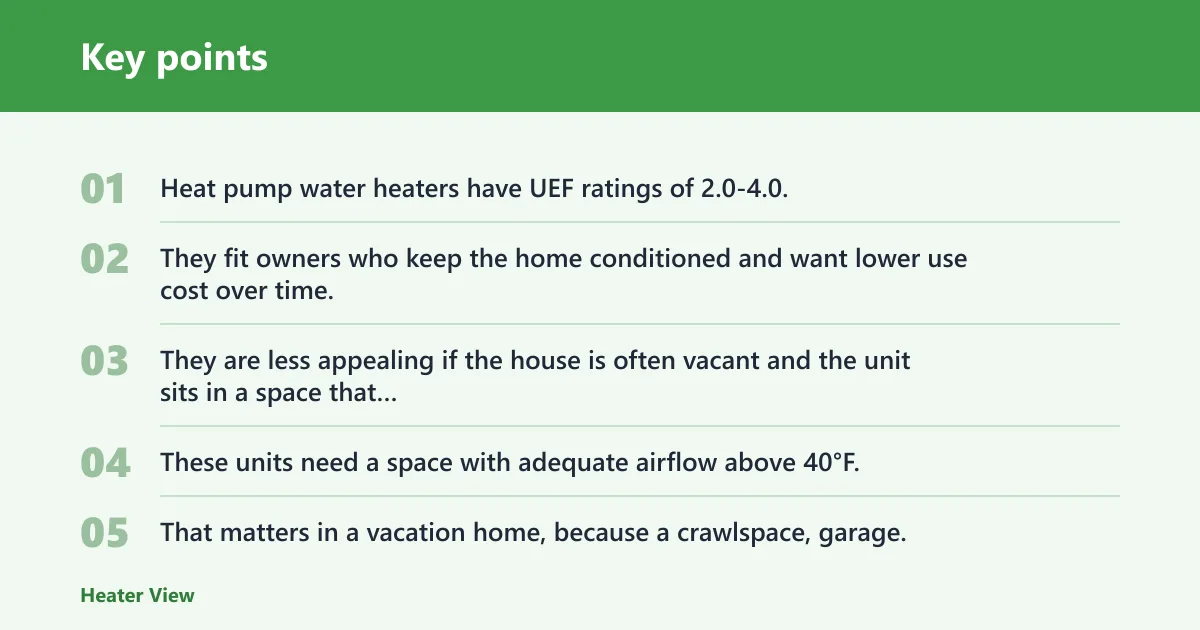
Heat pump water heaters have UEF ratings of 2.0-4.0, which points to strong efficiency on paper. They fit owners who keep the home conditioned and want lower use cost over time. They are less appealing if the house is often vacant and the unit sits in a space that cools off too much between visits.
Freeze risk
These units need a space with adequate airflow above 40°F. That matters in a vacation home, because a crawlspace, garage, or detached utility room can fall below that level in winter. In those settings, the freeze risk is not just about the tank; piping and drain lines also need protection.
Recovery speed
Heat pump units are generally slower to recover than gas tank models, so they are not the best answer for heavy burst demand. If the home needs several hot showers in a row after arrival, a gas tank or gas tankless unit will usually be more forgiving.
Standby loss and maintenance burden
Heat pump units reduce operating cost by using less energy to keep water hot, but they still store water and need enough room and airflow to work correctly. The higher upfront cost can be worth it in a mild-climate vacation home, especially when rebates or tax credits are available. Check those incentives before replacing a working unit.
| Vacancy scenario | Recommended rule | Best match |
|---|---|---|
| Short trips, home used every week | Keep a tank if the current setup is sound and recovery is adequate | Gas tank or efficient electric tank |
| Seasonal vacancy, house empty for weeks | Choose tankless if fuel and venting allow it | Gas tankless |
| Long-empty home with real freeze exposure | Drain or fully winterize, then restart on arrival | Low-storage or point-of-use setup, depending on layout |
How do you choose the right size?
Size a vacation-home heater around the pattern of use, not the largest possible house load. For tanks, first hour rating is the better guide. For tankless, flow rate in GPM is the number that must cover simultaneous fixtures. Oversizing can waste money; undersizing creates the exact hot-water failure people notice after arrival.
Use first hour rating for tanks
Match the first hour rating to the likely peak window: one or two showers, then maybe laundry. For a weekend house with a family arrival pattern, that rating matters more than the label gallons alone. Gas tanks recover faster, so a moderate tank can still work if demand is spread out.
Use GPM for tankless
Add the flow of the fixtures that may run together, then choose a tankless model that can meet that load in cold inlet conditions. A shower plus dishwasher is one test. A shower plus washer plus another tap is harder. Electric tankless units in the 2-5 GPM range are often better for light use than whole-house duty.
Match size to showers and laundry overlap
Picture a cabin with two bathrooms and a single laundry closet. If guests shower back-to-back and a wash cycle starts, a small electric tankless can fall behind even though the house is vacant much of the year. A well-sized gas tank or gas tankless unit is a cleaner fit.
Should you use vacation mode?
Yes, but only if the heater and climate support it. Vacation mode is useful when the house will sit empty for several days and you want lower energy use without fully shutting the system down. For longer absences or freezing conditions, lowering the thermostat may not be enough; full shutdown or winterization may be safer.
Turn the thermostat down or off
For a brief trip, turn the water heater down rather than leaving it at peak settings. That lowers energy use without changing the plumbing state. If the home is in a cold zone, check whether the setting still protects the unit and nearby piping from freezing. Do not assume every heater handles winter the same way.
When to drain the tank
Drain the tank when the home will be empty long enough for freeze risk, power loss, or stagnant water concerns to outweigh the convenience of leaving it hot. A common first-timer mistake is leaving a full tank in an unheated cabin and assuming the lowest setting is enough. In a hard freeze, it may not be.
What to do before a long vacancy
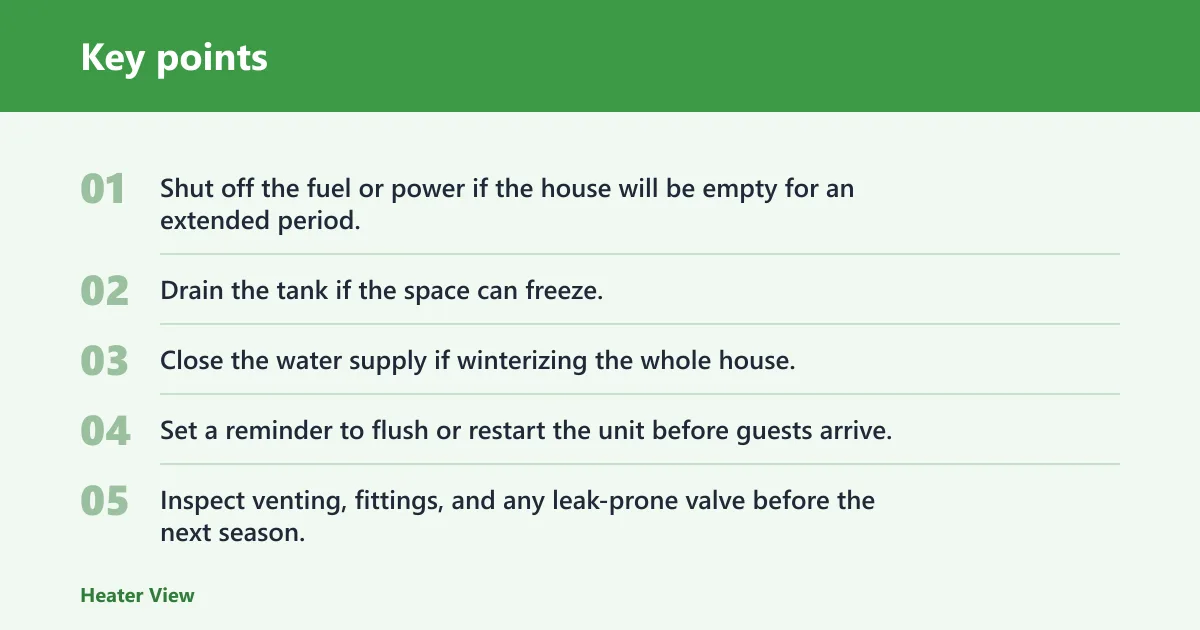
- Shut off the fuel or power if the house will be empty for an extended period.
- Drain the tank if the space can freeze.
- Close the water supply if winterizing the whole house.
- Set a reminder to flush or restart the unit before guests arrive.
- Inspect venting, fittings, and any leak-prone valve before the next season.
Suppose a mountain home sits empty for two months and the utility room is unheated. Leaving the tank at a low setting still leaves water inside. Draining and winterizing is the safer choice, because freeze damage costs more than a restart.
What fuel type works best?
Fuel type matters as much as the heater type. Natural gas is often the easiest path for a gas tank or gas tankless replacement where service already exists. Electric is often simpler to install in some homes, but output and recovery can be limited. Propane is common in remote properties, yet it adds tank supply and delivery planning.
Natural gas versus electric
Natural gas usually supports faster recovery and stronger tankless output. Electric can be the cleanest swap where venting changes are difficult or gas service is absent, but the recovery profile is weaker for a big household. For a vacation home, that difference matters most when guests all arrive at once.
Propane homes and replacement limits
What if your vacation home has propane instead of natural gas? The choice narrows to units approved for propane and sized for the real load. That can still be a gas tank or gas tankless setup, but the installer must account for supply pressure, storage, and venting. Portable propane picks exist, and Bob Vila includes one among its recommendations.
Venting and installation constraints
Gas units need venting, and that can decide whether a replacement is simple or messy. A new tankless unit may need a different vent route than the old tank. Heat pump units avoid combustion venting, but they need room and airflow. Installation limits should shape the purchase, not the other way around.
Frequently asked questions
What is the best water heater for a vacation home?
A gas tankless water heater is usually the best overall fit because it lowers standby loss and works well when the house is empty for long stretches. A conventional tank can still be right for short trips or low-budget replacement, and a heat pump unit fits warm, conditioned spaces where efficiency matters most.
Should I put my water heater on vacation mode?
Use vacation mode for short absences or when you want to lower the thermostat before a trip. For long vacancy periods, especially in cold climates, vacation mode alone is not enough. Drain or winterize the system if freeze risk is real, because a low setting still leaves water in the tank and pipes.
What do I do with the hot water heater while on vacation?
For a short trip, turn it down and confirm the setting will not leave the house vulnerable to freezing. For a longer absence, shut off the supply if needed, drain the tank in a freeze-prone home, and make sure the restart plan is clear before the next arrival. The right step depends on climate and duration.
Is it better to keep the water heater on all the time?
For a frequently used vacation home, yes, keeping it on is often simpler and avoids restart delays. For a long-empty house, keeping it on all the time can waste energy and increase freeze exposure if the space is unconditioned. The better answer depends on vacancy length, not habit.
Should a vacation home use a tank or tankless water heater?
Use tankless when the home spends long periods empty and gas service plus venting are available. Use a tank when you want low replacement complexity, faster recovery after arrival, or the house already has a good setup. The best choice depends on the vacancy pattern more than on the label itself.
Is a heat pump water heater a good choice for a vacation property?
Yes, if the unit sits in a space with adequate airflow and stays above 40°F. It is best for a mild-climate vacation home where efficiency matters and the utility area is conditioned. It is a weaker choice in unheated garages, crawlspaces, or cabins that cool off hard in winter.