How to Compare Water Heater Warranties: Clause Checklist
Compare water heater warranties clause by clause, not by years alone: check coverage, exclusions, labor, prorating, transfer rules, and proof requirements before you buy. Skip the fine print, and you may pay for labor, shipping, or a prorated tank sooner than expected. This guide shows how to compare each clause so headline warranty lengths do not mislead you.
What a water heater warranty really covers
A real comparison starts with the contract language, not the marketing summary. Manufacturer warranties cover defects in the unit itself, while home warranties cover wear-and-tear breakdowns after a service call and a fee, which changes how claims are handled and what you may owe.
Manufacturer warranty vs. home warranty
A manufacturer warranty is tied to the product and the written terms for that model. It usually centers on parts of the heater, such as the tank, anode rod, heat exchanger, thermostat, or burner. Coverage can be limited to replacement parts only, with labor excluded.
A home warranty is a service contract for system breakdowns in the home. The trigger is often wear-and-tear breakdowns, and the plan may require a service fee before dispatch. That means the claim path, cost to you, and timing can differ from a manufacturer claim.
Tank, parts, and labor coverage
Compare tank coverage separately from parts coverage. Tank protection matters most for storage models because a failed tank often means replacing the heater, while parts coverage can apply to smaller components that fail earlier. Labor is often excluded unless the document says otherwise.
Look for whether the warranty pays for the part only, part plus shipping, or part plus labor. A long parts term is less useful if the labor clause shifts most of the repair cost back to you.
Why the headline years can mislead you
Two models can both advertise a 10-year warranty and still offer very different protection. One may cover only the tank for 10 years and parts for 1 year, while another may prorate the tank after a few years or require registration within a short window.
Which warranty terms matter most when you compare models
The most useful comparison asks four questions: what is covered, for how long, what is excluded, and what proof is required. If a brand lists a long term but narrows the claim rules, the real value can be much lower than the headline suggests.
Tank coverage versus parts coverage
Tank coverage protects the vessel that holds and heats water. Parts coverage protects replaceable components such as thermostats, gas valves, heating elements, burners, or heat exchangers. A strong warranty separates those categories instead of using one number for everything.
Labor, deductible, and service fee language
Labor exclusion language is common, so check who pays for removal, installation, diagnosis, and return visits. In home warranty contracts, service fees can apply each time a technician comes out; in the reviewed plans, fees ranged from $65 to $125 per claim. That fee can erase part of the value on smaller repairs.
Transferability and residential-use limits
Some warranties transfer to a later owner, but only if the transfer is filed correctly and on time. Others end with the first homeowner. Also check whether the warranty applies only to residential use, because rental, commercial, or multi-family use can void coverage or shorten the term.

How water heater type changes warranty value
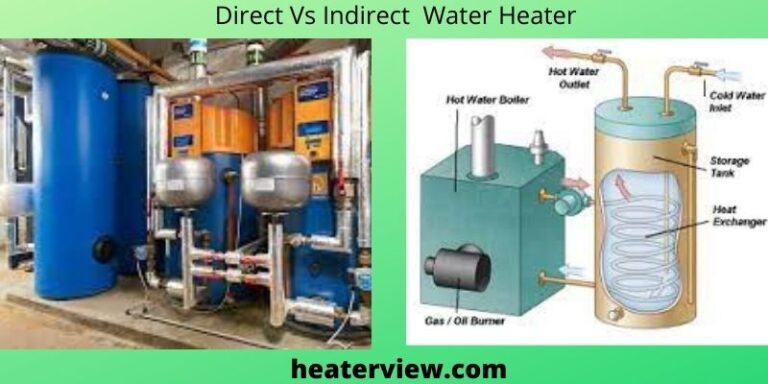
Water heater type changes the risk profile and the warranty comparison. Storage tank units usually have shorter life spans than tankless, heat pump, or indirect systems, so a “good” term length depends on the unit type and the clauses attached to it.
Storage tank water heaters
Storage tank water heaters typically last eight to 12 years. For that reason, a tank warranty that matches the expected life may be useful, but only if exclusions are narrow and the claim does not require expensive owner-paid labor. Regular flushing sediment can extend tank life.
Tankless water heaters
Tankless water heaters last 15–20 years. Compare heat exchanger coverage closely, because that component is central to the unit. If the contract shortens parts coverage after registration delays or excludes scale-related damage, the headline years can overstate protection.
Heat pump and indirect water heaters
Heat pump water heaters range from 10 to 20 years, and indirect water heaters can last 15–20 years. For these units, compare compressor or coil language, tank coverage, and any part-specific limits. A warranty with a long term but narrow component list can leave major failures uncovered.
What exclusions can erase coverage?
Exclusions can reduce or erase coverage even when the warranty term looks long. The most common problems are sediment, hard water, improper installation, maintenance neglect, and wear-item limits that apply to components the owner expects to be covered.
Sediment and hard-water exclusions
Sediment damage is a common exclusion, especially where flushing is not documented. Hard water can shorten a water heater’s life span, and some warranties exclude scale or mineral buildup entirely. If your area has hard water, this clause matters as much as the warranty length.
Improper installation and maintenance neglect
Improper installation can void coverage if the unit was not installed to code or not installed by a qualified professional when required. Maintenance neglect is another frequent denial point. Keep proof of flushing, anode-rod service, pressure relief checks, and any other required maintenance.
Wear items and component-specific limits
Some contracts limit coverage for parts that naturally wear out, such as anode rods, thermostats, heating elements, or burner assemblies. If the document calls a part a wear item, read whether the owner pays for the part, the labor, or both.
Say your 50-gallon storage tank starts leaking at year 6. A tank-only warranty may help only if the leak is tied to a covered tank defect, not sediment damage or installation error. If the labor clause excludes removal and replacement, the repair bill can still be substantial.
How do you verify a warranty before you buy?
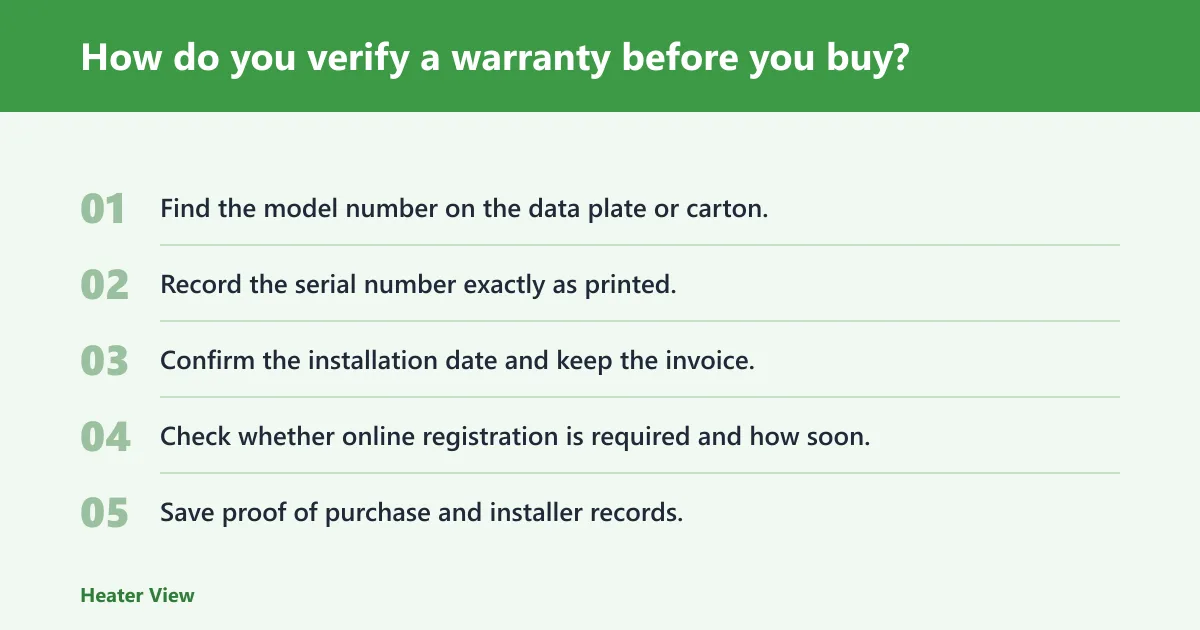
Verify the exact model, serial number, install date, and registration rule before purchase or installation. Those details control whether the term starts on the sale date or install date, whether coverage is reduced, and whether a claim can be filed at all.
- Find the model number on the data plate or carton.
- Record the serial number exactly as printed.
- Confirm the installation date and keep the invoice.
- Check whether online registration is required and how soon.
- Save proof of purchase and installer records.
- Read claim steps, service fees, and response timing.
Registration deadlines and proof rules
Manufacturer warranty registration often asks for proof of purchase, serial number, and installation date. Some brands may require online registration within a certain time after installation. Miss that deadline and the coverage can shorten, change to a basic term, or require extra proof later.
Claim process and response timing
Claim rules matter because speed affects repair cost and downtime. One highlighted plan listed availability in 48 states, and one highlighted plan listed response time up to 48 hours. A faster dispatch window can help, but only if the coverage terms also fit the failure.
Suppose a tankless unit stops heating during winter. If the contract requires a service visit, then approval, then a replacement part shipment, the outage can last longer than the headline warranty term suggests. The practical question is how quickly the claim moves from report to repair.
Use this warranty comparison checklist
Score each offer against the same 10 items so you are not comparing a long warranty with a narrow one. A plan with fewer years can still be better if it covers labor, accepts timely registration, and avoids broad exclusions.
| Checklist item | What to look for | Score 0 | Score 1 | Score 2 |
|---|---|---|---|---|
| Years of tank coverage | Length for the tank or vessel | Short or unclear | Moderate term | Clear, long term |
| Years of parts coverage | Separate term for components | Not stated | Limited parts term | Clear parts term |
| Labor inclusion | Whether labor is paid | Excluded | Partial | Included |
| Leak coverage | Whether leaks from covered failure qualify | Excluded | Limited | Explicitly covered |
| Sediment/hard-water exclusions | Limits for scale, sediment, mineral buildup | Broad exclusions | Some limits | Clear, narrow limits |
| Registration deadline | How soon you must register | Unclear | Short window | Simple, generous window |
| Transferability | Can coverage move to a new owner? | No | With conditions | Yes, clearly stated |
| Deductible/service fee | Out-of-pocket charge per claim | High | Moderate | Low or none |
| Required maintenance proof | Receipts or service logs needed | Strict and unclear | Some proof | Easy, specific proof |
| Claim process speed | Steps and response timing | Slow or vague | Standard | Clear and fast |
How to check brand-specific warranty coverage
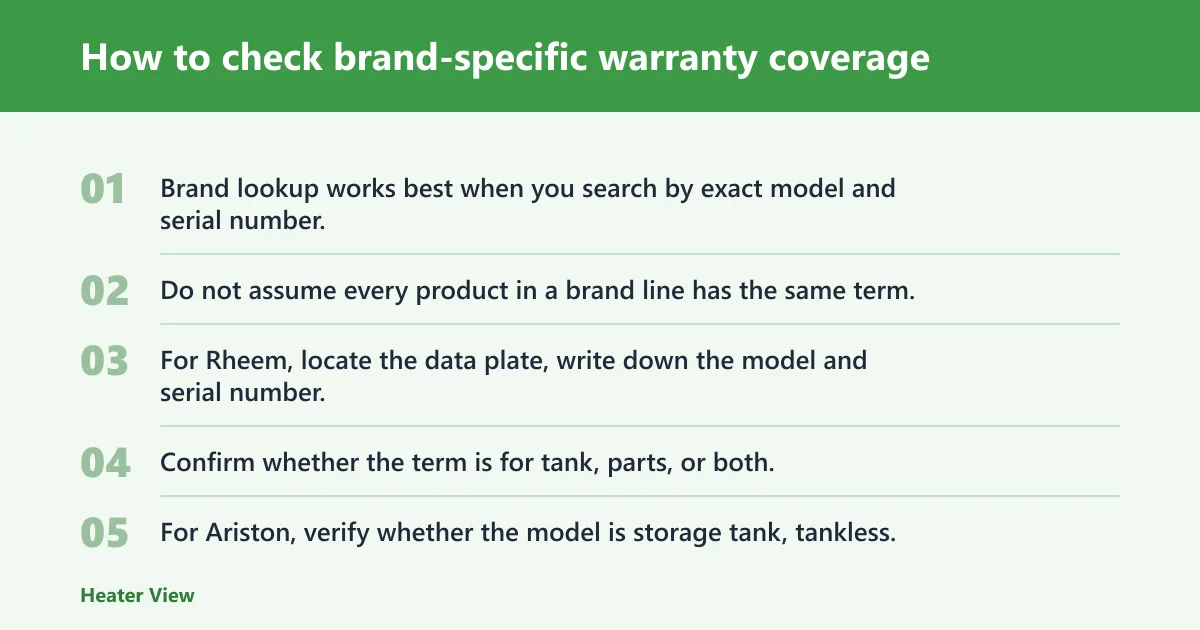
Brand lookup works best when you search by exact model and serial number, then read the warranty PDF for that unit. Do not assume every product in a brand line has the same term, because coverage can change by series, fuel type, and installation class.
Rheem warranty lookup steps
For Rheem, locate the data plate, write down the model and serial number, and find the unit’s warranty document for that exact model line. Confirm whether the term is for tank, parts, or both, and check whether registration changes the base coverage.
Ariston warranty lookup steps
For Ariston, verify whether the model is storage tank, tankless, or another category before comparing terms. Read the section on maintenance and water conditions carefully, because exclusions tied to scale, installation, or component wear can change the real value of the coverage.
Whirlpool warranty lookup steps
For Whirlpool, match the serial number to the warranty booklet for the exact product family. Check whether labor is excluded, whether the tank term differs from the parts term, and whether proof of purchase is needed if the unit has been transferred or replaced.
AO Smith and Bradford White warranty lookup steps
For AO Smith and Bradford White, start with the model-specific document rather than a brand summary page. Confirm the residential-use limit, registration deadline, and maintenance proof requirements, then compare tank, parts, and labor terms against the unit type and expected service life.
When a better warranty is worth paying for
A better warranty is worth paying for when the clause set matches the heater’s expected life and installation conditions. A long term with broad exclusions is weaker than a shorter term that covers the failure mode you are most likely to face.
Match coverage to expected lifespan
Use lifespan as the backdrop, not the only deciding factor. Storage tank units typically last eight to 12 years, while tankless, heat pump, and indirect models can last much longer. The best fit depends on whether the warranty term reaches the years when the unit is most likely to fail.
Weigh maintenance requirements against risk
Regular flushing sediment can extend tank life, and maintenance records can support a claim. If the warranty demands documented service, compare that burden against the savings from the longer term. A generous term is less useful if the proof rules are difficult to meet.
Choose based on the clause details, not the logo
Compare tank failure, leak failure, and component failure separately. Then ask whether the contract covers the part, the labor, the service fee, and the transfer rule that applies to your situation. That is the most reliable way to judge real protection.
Frequently asked questions
how to check water heater warranty
Find the model number, serial number, proof of purchase, and install date, then read the exact warranty document for that unit. Check whether registration is required, whether labor is included, and whether the term changes after transfer or missed maintenance. The model-specific paperwork matters more than a brochure summary.
how to check rheem water heater warranty
Use the exact Rheem model and serial number, then match them to the warranty terms for that product line. Confirm tank and parts coverage separately, note any registration deadline, and read the exclusions for installation, sediment, and maintenance. Do not assume every Rheem unit has the same term.
how to check ariston water heater warranty
Check the Ariston model label, serial number, and product category first, because the warranty can differ by unit type. Read the sections on covered parts, water-quality exclusions, and maintenance proof. If registration is required, complete it on time and keep the purchase and install records with the unit file.
how to check whirlpool water heater warranty
Start with the Whirlpool model and serial number, then open the warranty document for that exact heater. Look for tank versus parts language, labor exclusions, and any limits tied to residential use. If the unit has been moved or sold, verify whether transfer rules still allow coverage.
how to check ao smith water heater warranty
Use the AO Smith model number and serial number to find the matching warranty statement, not a general brand summary. Check whether the tank term differs from the parts term, whether installation proof is required, and whether hard water, scale, or maintenance neglect can void coverage.
which water heater has the best warranty
The best warranty is the one that covers the failure you are most likely to face with the fewest exclusions and the clearest claim steps. Compare tank, parts, labor, maintenance proof, and transfer rules by model. A longer headline term is not automatically better if the clause set is narrow.
how to check bradford white water heater warranty
Look up the exact Bradford White model and serial number, then read the warranty document attached to that product line. Confirm the coverage period, what counts as a covered part, whether labor is excluded, and whether ownership transfer or missing maintenance records can reduce protection.