How to Winterize a Water Heater in a Vacation Home
Winterize a vacation-home water heater by matching the time away to freeze risk: for very short absences, lower the thermostat; for several days, shut off power or gas and drain if the space may freeze; for longer absences in very cold climates, fully drain the tank and plumbing. Skip it, and a frozen tank or burst line can mean flooding, damaged floors, and a costly replacement bill. I use the vacancy length, the room temperature, and the heater type to decide the next step, then I drain tank and tankless units differently.
How to decide whether to winterize or keep the heater on
My decision starts with three things: how long the house sits empty, whether the heater room will stay above freezing, and whether the unit is tank or tankless. A heated house can sometimes keep a water heater in standby, but an unheated or partially heated vacation home needs a far harder shutdown plan.
Choose by vacancy length
Short visits and quick turnarounds are one thing. Seasonal shutdowns are another. A short-trip plan can be as simple as lowering heat and checking that the heater area stays warm. A longer vacancy needs drain and shutdown steps. A full winter closure usually usually means thorough drainage, valve checks, and close attention to exposed piping.
Use climate and unheated-space risk to set the plan
If pipes run through a crawlspace, garage, attic, or utility room that loses heat first, I treat the water heater as freeze-exposed even if the main living area has some heat. The main danger is often the thaw, not the freeze itself, because cracked piping and tanks can fail after water expands and then starts moving again.
Pick heat-on or heat-off based on freeze exposure
Keeping heat on at a low setpoint can be the right choice when the property is visited often and the plumbing stays inside conditioned space. If the house will be dark for weeks, or if outages are common, the safer plan is usually to shut the system down and remove water from the heater and nearby lines.
What type of water heater do you have?
Tank and tankless heaters do not winterize the same way. A hot water tank stores water in place, so it can crack if that water freezes. A tankless unit holds less water, but it may still need draining and the right purge steps, especially in an unheated room.
Tank water heater: storage water, drain valve, and freeze risk
A tank water heater keeps a reservoir of water ready for use. That stored water is the first freeze concern. The tank drain valve is used to empty the vessel before leaving, and the water heater shutoff valve near the heater should be closed to stop incoming water before draining begins.
Tankless water heater: purge and manufacturer-specific steps
A tankless water heater needs a different shutdown sequence. Many units require a drain-and-purge process that clears the heat exchanger and internal passages. Some also need service valves opened and closed in a specific order, so the maker’s winterizing instructions matter more here than on a basic tank unit.
Gas versus electric shutdown differences
Gas heaters usually need the gas shutoff set according to the winter plan after water removal or standby decisions are made. Electric heaters are managed at the breaker. Winterization should include turning off circuit breakers to check electrical connections, then leaving the unit in the correct off position if the home will be vacant and unheated.
The decision table for vacancy length, heater type, and freeze risk
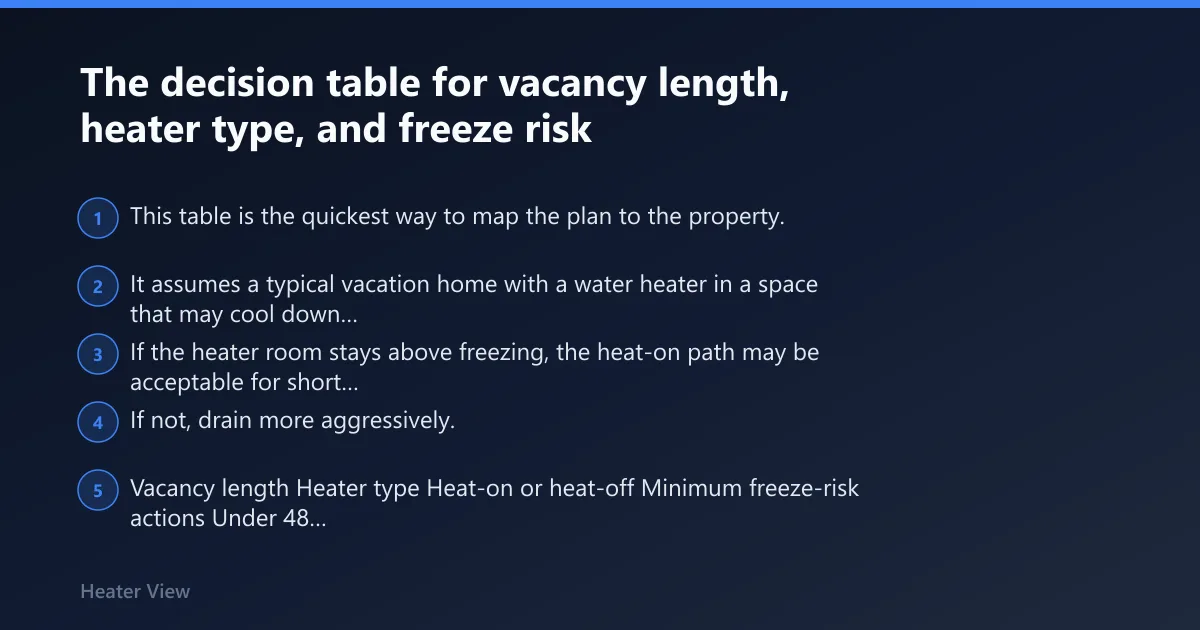
This table is the quickest way to map the plan to the property. It assumes a typical vacation home with a water heater in a space that may cool down during cold weather. If the heater room stays above freezing, the heat-on path may be acceptable for short vacancies. If not, drain more aggressively.
| Vacancy length | Heater type | Heat-on or heat-off | Minimum freeze-risk actions |
|---|---|---|---|
| Under 48 hours | Tank | Heat on at a low setpoint if the home stays above freezing | Check exposed piping, confirm the shutoff valve is open, and verify no drafts reach the heater room |
| Under 48 hours | Tankless | Heat on if the unit is indoors and the space stays conditioned | Leave the unit operating normally, protect exposed supply and drain piping, and confirm power or gas remains stable |
| 2–7 days | Tank | Heat off if the space may cool below freezing | Close the water heater shutoff valve, drain the tank through a safe discharge path, and set the breaker or gas shutoff for vacancy |
| 2–7 days | Tankless | Heat off if the room may freeze | Run the maker’s drain and purge steps, clear water from accessible lines, and insulate exposed piping |
| More than 7 days | Tank | Heat off in hard-freeze climates | Drain the tank fully, verify the shutoff valve is closed, protect the drain route, and leave the relief valve untouched |
| More than 7 days | Tankless | Heat off in hard-freeze climates | Follow manufacturer-specific draining, purge all internal water, and protect exposed supply and drain piping with insulation |
| Any vacancy with outage risk | Tank or tankless | Heat off unless backup heat is reliable | Assume a power outage could turn a warm house cold; drain vulnerable water-containing systems and inspect the broader vacant-house winterization checklist |
How do I winterize a water heater in a vacation home?
Winterizing a vacation-home water heater means shutting down water flow, emptying the heater if freezing is possible, and matching the electrical or gas state to the vacancy plan. The exact steps change with tank versus tankless units, and they change again if the house stays heated.
Pre-departure checklist for a vacation home
- Confirm the water heater shutoff valve near the heater is located and can be closed.
- Decide whether the house will stay above freezing or be fully shut down.
- If draining is part of the plan, connect a safe discharge path for water before opening the tank drain valve.
- Turn off the breaker or gas shutoff according to the winter plan.
- Check the temperature and pressure relief valve and leave it alone; do not block or alter it.
- Inspect supply and drain piping for exposed above-ground sections and add foam pipe insulation where needed.
- Review the broader vacant-house winterization checklist so plumbing, HVAC, windows, and outdoor systems are handled in sequence.
How do I winterize a tank water heater step by step?
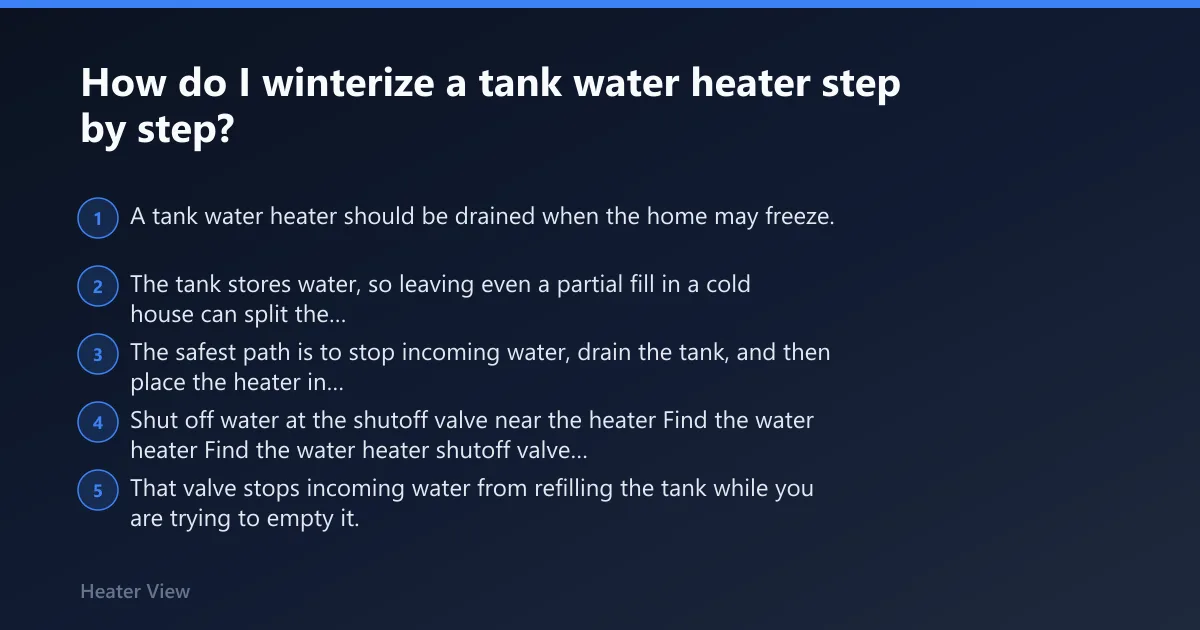
A tank water heater should be drained when the home may freeze. The tank stores water, so leaving even a partial fill in a cold house can split the vessel or crack connected piping. The safest path is to stop incoming water, drain the tank, and then place the heater in the correct off state.
Shut off water at the shutoff valve near the heater
Find the water heater shutoff valve near the unit and close it before draining. That valve stops incoming water from refilling the tank while you are trying to empty it. If it does not close fully, the tank may continue to refill from pressure in the line.
Drain the tank through the drain valve to a safe discharge path
Use the tank water heater drain valve to empty the storage vessel. The discharge needs a safe path for water, such as a floor drain or approved hose route, because hot water or sediment-laden water can damage surfaces. Drain until the tank is empty enough to reduce freeze risk.
Set the breaker or gas shutoff for vacancy
Once the tank is drained, place the electrical breaker or gas shutoff in the position that matches the winter plan. Electric units should not be left energized in a vacant house if the tank is empty. Gas units should not remain in a mode that could try to fire an empty heater.
Check the relief valve and leave it alone
The temperature and pressure relief valve is part of the safety system on the tank. It should not be blocked or altered. A winterization check should confirm it is accessible and not pinned shut, wrapped, or modified, because that can create a dangerous condition when the house is reopened.
How do I winterize a tankless water heater in a vacant house?
A tankless water heater needs draining, purging, and line protection, but the details depend on the model. Many units have service valves and internal passages that can retain water. If the house will sit unheated, those trapped pockets can still freeze even without a storage tank.
Follow the maker’s drain and purge steps
Start with the manufacturer’s shutdown sequence. That usually includes isolating the unit, draining internal water, and clearing the heat exchanger. Tankless units vary enough that guessing here is risky. If the instructions call for a service kit or purge sequence, use it exactly as written.
Clear water from supply and drain lines
Even after the unit itself is drained, supply and drain piping can still hold water. Above-ground sections are the highest risk. Drain what you can, then insulate exposed runs with foam pipe insulation so any remaining water is less likely to freeze fast in a cold snap.
Protect exposed piping and the installation space
Tankless units are often mounted where air movement is strong, such as on exterior walls or in utility areas. Seal drafts around the room and insulate cold surfaces near the heater. A tank wrap helps with nearby cold spots on storage-style units, but it is not a substitute for draining a tankless system correctly.
How do I prevent pipes from freezing around a water heater?
Pipe protection matters as much as the heater itself. Supply and drain piping can freeze if water remains inside, especially in above-ground sections and exposed bends. Foam pipe insulation is the first line of defense, and cold-air control around the heater room reduces the chance of a freeze pocket.
Insulate exposed supply and drain piping
Wrap exposed piping with foam pipe insulation, especially on runs that pass through unheated spaces. This is most useful on above-ground sprinkler piping and on heater-adjacent lines in garages, crawlspaces, and exterior closets. Insulation slows heat loss, but it does not protect a water-filled pipe in extreme cold by itself.
Use tank wrap or blanket where appropriate
A tank blanket or wrap can help on a storage heater in a cool space, but it should not cover controls, vents, or the relief valve area. It is an insulation aid, not a freeze cure. If the room itself drops well below freezing, draining the tank still matters more than wrapping it.
Reduce drafts and cold air around the equipment area
Check weather stripping, gaps around penetrations, and any open access panels near the heater. Drafts can turn a marginal room into a freeze-risk zone. A house that will stay occupied only intermittently should get special attention around utility rooms, because repeated door opening and closing can pull in cold air fast.
What maintenance should I do before winterizing a vacation home?
Before closing the house, treat the water heater as one piece of a larger vacant-house winterization checklist. HVAC should be inspected before cold weather arrives, thermostat tests should confirm the heater responds properly, and electrical connections should be checked when breakers are turned off for winter prep.
Include plumbing, HVAC, windows, and outdoor systems
Drain garden faucets first because exterior water is vulnerable. Outdoor sprinkler systems should be drained after shutting off the water, and any water trapped in sprinkler pipes can freeze during winter months. Above-ground sprinkler piping should be wrapped in foam insulation, and hot tubs should be drained before winterizing.
Keep emergency items and service contacts ready
Stock what the property actually needs during a shutdown period: flashlights, batteries, a working sump or leak alarm if fitted, and a plan for power loss. A priority service partner should be on-call for winter emergencies if the house is unattended for long stretches or sits in a hard-freeze zone.
How do I know if my water heater is at risk of freezing?
A water heater is at risk when the room around it can drop below freezing, when the unit sits on an exterior wall, or when any part of the supply or drain piping is exposed above ground. A vacation home with partial heat, intermittent visits, or outage risk deserves the same caution as a fully vacant house.
Clues that raise the risk
If the heater is in a garage, crawlspace, attic, or utility closet with weak insulation, the freeze risk climbs quickly. Long vacancies, thermostat setbacks without reliable backup heat, and uninsulated pipe runs are all warning signs. A tankless unit in an unheated space needs extra attention because its internal passages can still hold water.
Should I call a plumber to winterize my water heater?
Call a plumber when the setup is uncertain, the heater is tankless, the drain route is awkward, or the house has already had freeze problems. A technician is also a good choice when the owner wants the system fully drained and shut down with the gas or electrical side checked at the same time.
When professional help makes sense
Complex systems deserve a pro, especially if the water heater ties into recirculation, multiple shutoff points, or hard-to-access piping. If you are unsure whether the house will stay above freezing, hire help before the first cold snap. That is cheaper than fixing a split tank or hidden burst line.
Frequently asked questions
Should I drain the water heater before leaving for winter?
Drain it if the house may freeze, the heater sits in an unheated space, or the vacancy will last more than a few days in a hard-freeze climate. If the home stays reliably warm, some owners keep the heater on low. The safer choice is always the one that removes freeze risk from water-filled parts.
Do I shut off the water heater or leave it on vacation mode?
Vacation mode works only when the home remains above freezing and the heater is designed for that setting. If the property will be unattended through cold weather, shut the heater down according to its type. Do not rely on a low setting in a room that can lose heat during an outage.
What systems in a vacation home should be drained before winter?
Drain outdoor sprinkler systems, hot tubs, and any plumbing that will sit unused in a freeze zone. Garden faucets should be handled early because exterior water is vulnerable. The water heater, nearby piping, and sometimes low-use fixtures need the same attention if the home will not stay heated.