You Shouldn’t Use a Torpedo Heater Indoors
Generally, no, you should not use a standard torpedo heater indoors without proper ventilation. These powerful heaters are designed for large, open spaces. Indoor use without adequate airflow poses serious risks like carbon monoxide poisoning and fire. This guide will explain why and what precautions are absolutely necessary if you’re even considering it in a rare, specific situation.
Discovering a chilly room in your home can be frustrating, especially when you’re looking for a quick fix beyond your central heating. Many people consider powerful heaters like torpedo heaters for their rapid heating capabilities. However, the question of whether you can use a torpedo heater indoors isn’t a simple yes or no. These heaters pack a punch, which is why understanding their limitations and safety requirements is crucial. Improper use can lead to dangerous situations, and that’s something we want to help you avoid. This guide will break down exactly what you need to know, so you can stay warm and, most importantly, safe.
We’ll explore why these heaters are typically used in specific settings, the risks involved in bringing them inside, and the absolute, non-negotiable safety measures required if you must use one in a non-ideal situation. Let’s get you informed so you can make the best, safest choice for your home heating needs.
What Exactly is a Torpedo Heater?
Before we dive into where you can and can’t use them, let’s get acquainted with the torpedo heater itself. Often called salamander heaters, they are a type of forced-air heating unit. Their namesake shape – long and cylindrical like a torpedo – is a clue to their design. They work by igniting a fuel source (usually kerosene or propane) and then a fan blows air over the hot combustion chamber, expelling large volumes of warm air. This makes them incredibly effective for heating large spaces quickly.
Think garages, workshops, construction sites, or open-air events. Their primary purpose is to rapidly heat areas where central heating isn’t available or practical. They are known for their high heat output and portability, making them a go-to for temporary or supplementary heating in specific environments.
Why Torpedo Heaters Are Usually NOT Recommended for Indoor Home Use
The power that makes torpedo heaters so effective in other settings is precisely why they are generally unsuitable and dangerous for enclosed living spaces like bedrooms, living rooms, or basements. The core issue is the combustion process and the byproducts it produces.
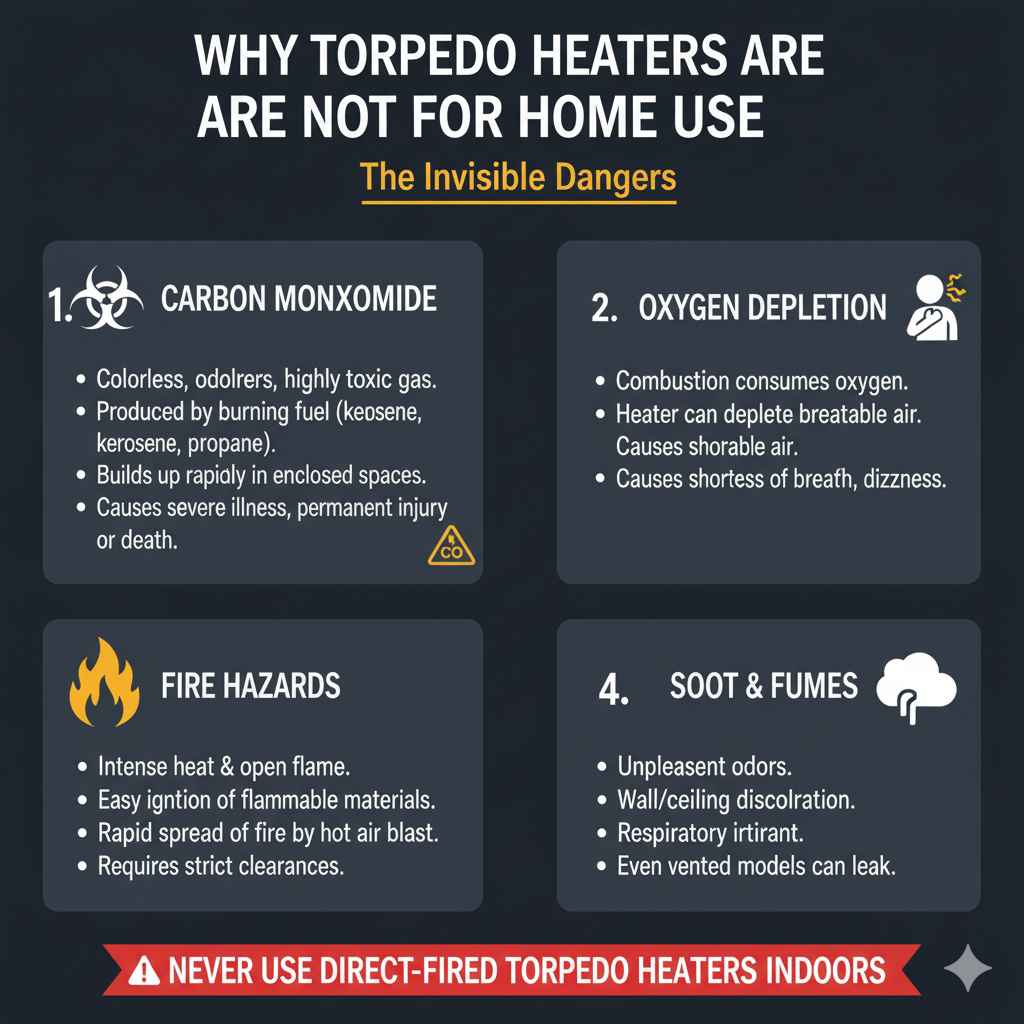
Carbon Monoxide: The Invisible Danger
When fuels like kerosene or propane burn, they produce carbon monoxide (CO). This is a colorless, odorless gas that is highly toxic. In a well-ventilated space, the CO disperses into the air and is not a risk. However, in an enclosed indoor environment, CO can build up to dangerous levels very quickly. Breathing in carbon monoxide can lead to severe illness, permanent injury, or even death. Symptoms can include headache, dizziness, nausea, and confusion, which can be mistaken for the flu, delaying recognition of the true danger.
According to the Consumer Product Safety Commission (CPSC), carbon monoxide poisoning is a serious threat, and improper use of fuel-burning appliances is a leading cause of incidents. Torpedo heaters, especially direct-fired models which send exhaust gases into the heated space, are particularly risky indoors.
Oxygen Depletion
Combustion also consumes oxygen. In a tightly sealed indoor space, a running torpedo heater can deplete the available oxygen, leading to shortness of breath, dizziness, and other physiological distress. This is another reason why ample ventilation is critical for these units.
Fire Hazards
Torpedo heaters produce intense heat and have open flames or very hot surfaces during operation. If placed too close to flammable materials like curtains, furniture, paper, or even stored items in a garage or workshop, they can easily start a fire. Their powerful blast of hot air can also spread flames rapidly if a small fire does ignite.
Soot and Fumes
Even if they are called “vented” models (which can be used indoors but require a vent to remove exhaust), some fumes or soot can still escape. In a living space, this can lead to unpleasant odors, walls and ceiling discoloration, and can be a respiratory irritant for occupants and pets.
Types of Torpedo Heaters and Their Indoor Suitability
It’s important to understand that not all torpedo heaters are created equal, and this distinction is crucial when considering any kind of indoor use.
Direct-Fired Torpedo Heaters
These are the most common type. They burn fuel and blow the heated air, along with combustion byproducts, directly into the space. They are highly efficient for heating but absolutely NOT SAFE for indoor residential use due to the CO and oxygen depletion risks.
Vented Torpedo Heaters
Vented models are a step up in terms of indoor safety but still require specific installation. They are designed to pipe the exhaust gases produced during combustion outside the heated space, similar to a furnace or boiler. This means only the clean, warm air enters the room. However, they still require a proper venting system, which needs to be installed correctly and safely to prevent leaks or backdrafts.
Even with a vented model, careful consideration of the following is essential:
- Proper Venting: The vent pipe must be the correct diameter, made of appropriate material (like stainless steel), and installed with a downward slope to prevent condensation buildup and ensure proper exhaust flow. It must also be securely fastened and sealed.
- Manufacturer Instructions: Always follow the specific installation and operation manual provided by the manufacturer.
- Carbon Monoxide Detectors: Even with a vented unit, it’s wise to have working CO detectors in the area.
It’s crucial to note that even “vented” can sometimes get complicated. Some are designed for temporary job sites with a simple exhaust hose, while others mimic permanent heating systems. For residential indoor use, a fully integrated, professionally installed heating system is always the safest bet.
When Might You Consider Using a Torpedo Heater Indoors (with extreme caution)?
The short answer is: almost never for living spaces. However, there are very specific, limited scenarios where a torpedo heater might be considered, but this requires a deep understanding of ventilation and safety.
1. Unfinished Garages or Workshops with Superior Ventilation
These are spaces that are not considered “living areas” and have large, open doorways or windows that can be kept at least partially open. Even then, a vented model is strongly preferred. If using a direct-fired model, this should only be for very short durations, keeping the space exceptionally well-ventilated. Think of it as an emergency workaround, not a primary heating solution.
2. Construction or Renovation Sites (Temporary, Monitored Use)
On a construction site, these heaters are common. However, there are typically multiple workers present, and the spaces are often under construction, meaning doors and windows might be wide open. Safety protocols on job sites often include CO monitoring and specific rules for heater use. This is a professional environment, not a home.
3. Emergency Situations (with extreme risk assessment)
In a rare emergency where your primary heating fails during extreme cold, and you have a vented torpedo heater that can be safely vented outdoors, it might be a temporary option. This would involve carefully running the vent pipe through an open window or a specially made hole, ensuring no exhaust can re-enter the home, and maintaining at least one other escape route for air.
Table: Torpedo Heater Use Case Comparison
| Heater Type | Typical Use Location | Indoor Residential Living Space Suitability | Key Considerations |
|---|---|---|---|
| Direct-Fired Torpedo Heater | Open-air construction sites, large warehouses, unventilated workshops | Absolutely Not Recommended | High CO risk, oxygen depletion, fire hazard. Only for highly ventilated or outdoor areas. |
| Vented Torpedo Heater | Construction sites needing exhaust removal, large workshops with venting | Requires extreme caution and proper external venting | Must be expertly vented outdoors. Still requires CO detectors and adherence to manual. Not a substitute for designed home heating. |
Essential Safety Steps: If You Must Use One Indoors
If you find yourself in one of the extremely rare situations where a torpedo heater is being considered for an indoor application (and again, we strongly advise against it for living spaces), the following safety measures are non-negotiable. This is about minimizing risk, not eliminating it.
1. Choose the Right Heater Type
As discussed, if you are even contemplating indoor use, it must be a vented torpedo heater. Direct-fired models should never be used indoors where people live or spend significant time.
2. Ensure Proper External Venting
This is the most critical step for any vented unit used indoors. The exhaust gases MUST be expelled outside. This means:
- Use the correct type and size of vent pipe specified by the manufacturer.
- Ensure the vent pipe is made of heat-resistant material and is properly sealed to prevent leaks.
- Route the vent pipe directly outside through a window, door, or a dedicated opening. The pipe should have a downward slope towards the outside to prevent water and exhaust from backing up into the space.
- Never vent into a chimney or flue designed for another appliance if it’s not explicitly approved by the manufacturer and local codes.
- Ensure the vent pipe is securely fastened and insulated where it passes through walls or openings.
For more information on safe venting practices, consult resources from organizations like The National Fire Protection Association (NFPA), which provides guidelines for safe installation and use of heating appliances.
3. Provide Ample Ventilation
Even with a vented unit, you need fresh air. Keep at least one window or door slightly open to ensure a fresh air supply and to prevent the buildup of any potential residual fumes or oxygen depletion. For direct-fired units (which again, are not recommended indoors), you would need significant airflow, far more than a typical room provides.
4. Install and Maintain Carbon Monoxide Detectors
This is an absolute must. Install working carbon monoxide detectors in the same room as the heater and on each level of your home. Test them regularly and ensure the batteries are fresh. A CO detector is your immediate line of defense against the invisible threat of carbon monoxide. Remember, CO alarms can sound if CO levels become dangerous.
5. Maintain a Safe Clearance
Torpedo heaters get extremely hot. Always maintain a clearance of at least 3 feet (approximately 1 meter) around the heater from any combustible materials. This includes furniture, curtains, rugs, bedding, clothing, wood, paper, and any stored items. Place the heater on a stable, non-combustible surface like concrete or metal.
6. Never Leave Unattended
A running torpedo heater, especially one indoors, should never be left unattended. This is true for any heater, but particularly for high-output units like these. If you need to leave the room or go to sleep, turn the heater off.
7. Keep Children and Pets Away
The exterior surfaces of a torpedo heater can become extremely hot, posing a burn risk. Ensure children and pets cannot get close to the unit. Use barriers if necessary.
8. Fuel Safety
Store fuel (like kerosene or propane) in approved containers in a well-ventilated area away from heat sources and any open flames. Refuel only when the heater is completely cool and turned off. Never refuel near an open flame or pilot light.
9. Proper Storage After Use
Once you’re finished, allow the heater to cool down completely before storing it. Store it in a dry, well-ventilated area.
10. Understand Operational Limits
Follow the manufacturer’s guidelines regarding runtime and operating conditions. Torpedo heaters are designed for specific applications and should not be run continuously for days on end in a home environment, even if vented.
Choosing Safer Indoor Heating Alternatives
Given the significant risks associated with using torpedo heaters indoors, it’s wise to explore safer, more suitable alternatives for keeping your home warm and cozy.
1. Electric Space Heaters
Electric space heaters are generally much safer for indoor use. They don’t produce combustion byproducts like CO. Options include:
- Ceramic Heaters: Portable, good for small to medium rooms.
- Oil-Filled Radiators: Provide gentle, sustained heat, quiet operation.
- Infrared Heaters: Heat objects directly, good for making an area feel warmer quickly.
- Fan Heaters: Circulate warm air, best for quick heating of smaller spaces.
Always ensure they have safety features like tip-over protection and overheat shut-off. For more on selecting safe electric heaters, the U.S. Department of Energy’s Energy Saver website offers excellent advice.
2. Radiant Panel Heaters
These wall-mounted or portable units provide a gentle, consistent heat without moving air, which can be beneficial for people with respiratory issues. They are energy-efficient and very safe.
3. Your Central Heating System
The most reliable and safest way to heat your home is through your existing central heating system (furnace, boiler, heat pump). If your system isn’t performing well, it’s best to have it serviced by a qualified HVAC technician.
4. Wood-Burning Stoves or Pellet Stoves
If properly installed and vented according to local building codes, these can be effective and efficient heating sources. They require regular maintenance and proper fuel handling but are designed for indoor use.
5. Propane or Natural Gas Heaters (Vented and Professionally Installed)
Heaters that run on natural gas or propane, such as wall furnaces or space heaters, are designed for indoor use but must be professionally installed and correctly vented to the outside. They require a dedicated gas line and proper clearances. A qualified installer will ensure the appliance is safe and meets all local codes.
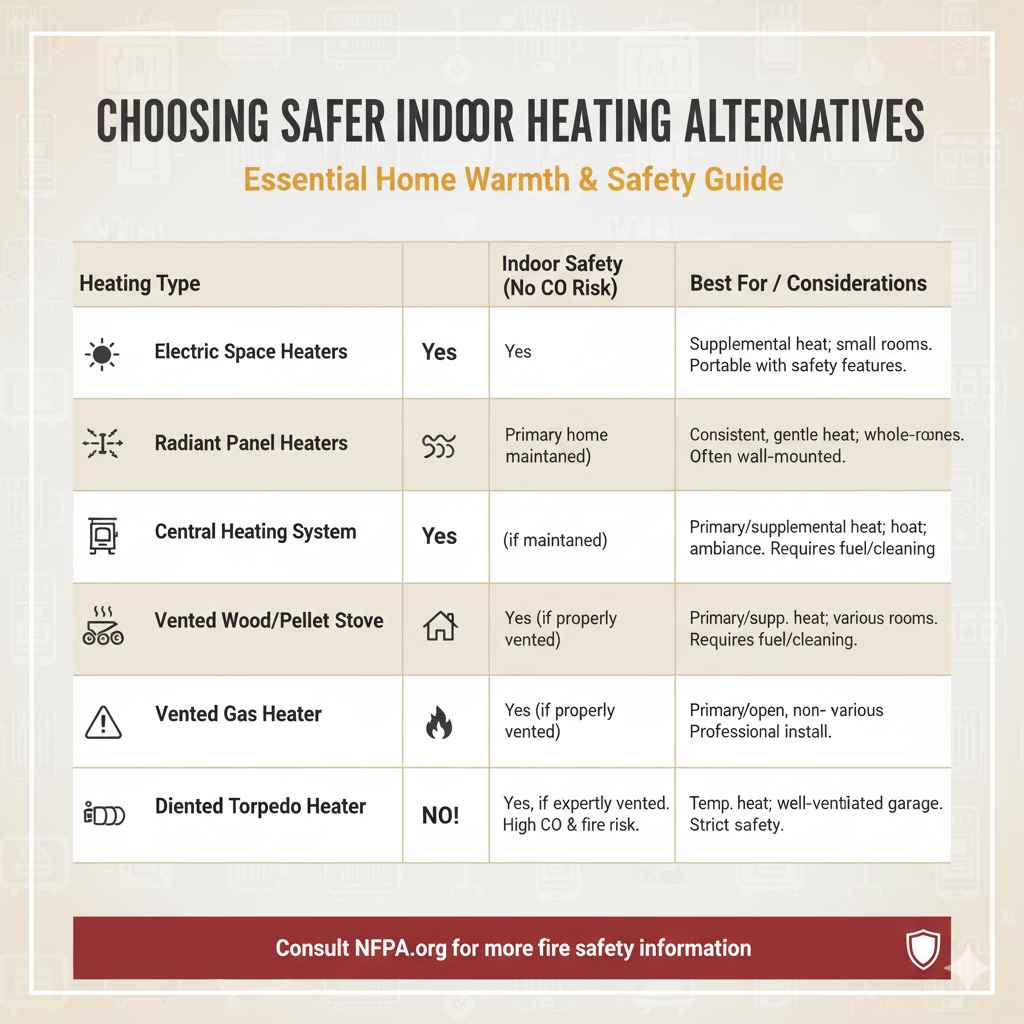
Table: Comparison of Indoor Heating Options
| Heating Type | Indoor Safety (No CO Risk) | Best For | Considerations |
|---|---|---|---|
| Electric Space Heater | Yes | Supplemental heat for small to medium rooms | Can increase electricity bills; ensure safety features are present. |
| Radiant Panel Heater | Yes | Consistent, gentle background heat; whole-room or zone heating | Slower to heat up; often wall-mounted. |
| Central Heating System | Yes (if properly maintained) | Primary home heating for all areas | Requires professional installation and maintenance; initial cost can be high. |
| Vented Wood/Pellet Stove | Yes (if properly vented) | Primary or supplemental heat for larger areas; ambiance | Requires fuel storage, regular cleaning, and proper chimney/venting installation. |
| Vented Gas Heater (Professionally Installed) | Yes (if properly vented) | Primary or supplemental heat for various room sizes | Requires gas line installation, professional setup, and regular checks. |
| Direct-Fired Torpedo Heater | No | Large, open, unheated spaces (e.g., warehouses, outdoor events) | Significant CO, fire, and oxygen risks; never for living spaces. |
| Vented Torpedo Heater (with external vent) | Yes, if expertly vented outdoors | Temporary supplemental heat in well-ventilated non-living spaces (e.g., large garage, construction site) | Requires strict adherence to venting and safety protocols; still a higher risk than other options. |
Frequently Asked Questions (FAQ)
Q1: Can I use a kerosene torpedo heater in my basement?
It is strongly advised against using a kerosene torpedo heater in a basement. Basements are enclosed spaces where carbon monoxide (CO) can build up to dangerous levels. Unless it’s a specifically designed, professionally vented, and installed gas furnace, or you are using a vented torpedo heater with a secure and proper external exhaust system, the risk of CO poisoning or fire is too high.
Q2: What is the difference between a vented and unvented torpedo heater?
An unvented (direct-fired) torpedo heater releases all its exhaust gases, including carbon monoxide and water vapor, directly into the air of the space it’s heating.