Compare Dyson Heaters by Model and Room Size
Looking to compare Dyson heaters? Dyson offers innovative, intelligent heating solutions that combine powerful warmth with air purification and cooling. Their focus is on creating a comfortable, healthier environment, not just heating a room. We’ll break down their key models to help you find the perfect genius warmth essential for your home.
Feeling that first chill in the air and dreading the search for a new heater? It’s a common worry! Finding a heater that’s not only effective but also safe, energy-smart, and easy to use can feel like a puzzle. You want warmth, but you also want peace of mind. Maybe you’ve heard about Dyson heaters and their advanced features but aren’t sure where to start. Don’t worry, I’m here to help clear things up. We’ll explore how Dyson heaters work and compare their standout models so you can confidently choose the right one for your cozy haven. Let’s get started!
Why Consider a Dyson Heater for Your Home?
Dyson heaters are more than just devices that blow hot air. They are designed with advanced technology to provide a more refined and comfortable heating experience. What sets them apart is their intelligent design, which often includes features beyond just heating, like air purification and even cooling. This makes them a versatile choice for year-round comfort.
When you think about heating your home, especially in the colder months, comfort is usually the top priority. We all want our living spaces to feel warm and inviting. But sometimes, traditional heaters can feel a bit… clunky. They might be noisy, uneven, or even a safety concern, especially with little ones or pets around. Dyson aims to solve these everyday frustrations with smart, efficient, and safe heating technology.
Their commitment to innovation means you get a product that’s not just functional but also a smart addition to your home. Imagine a heater that can evenly heat a room, purify the air you breathe, and do it all with a sleek, modern look. That’s the Dyson promise. Let’s dive into what makes them so special and how they compare.
Understanding Dyson Heater Technology: What Makes Them “Genius”?
Dyson doesn’t just make heaters; they engineer solutions for your home environment. The “genius” in Dyson heaters comes from a combination of smart features designed to deliver precise temperature control, efficient heating, and a healthier living space. Instead of simply blasting heat, Dyson focuses on circulating warm air evenly and intelligently.
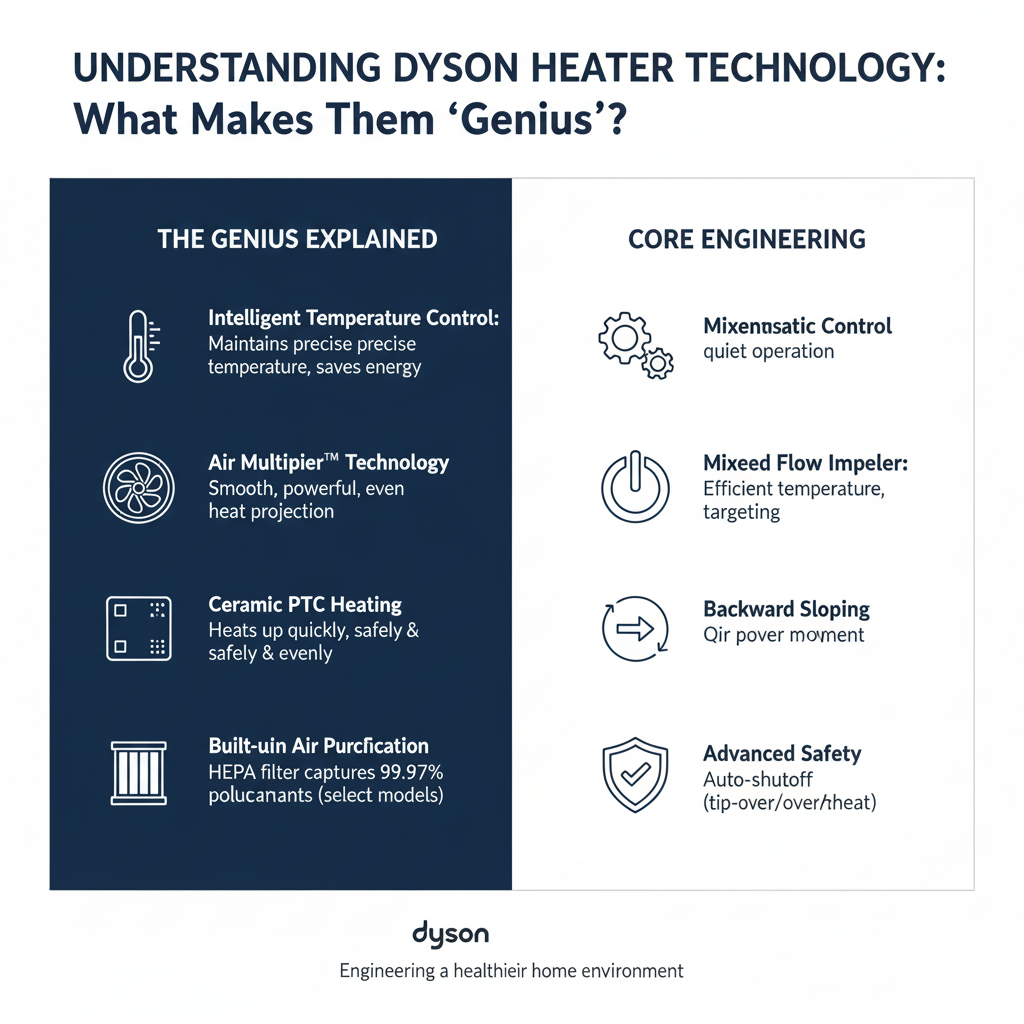
Here’s a quick look at some of the core technologies you’ll find:
- Intelligent Temperature Control: Dyson heaters can sense the room temperature and adjust the heat output accordingly. This means they maintain your desired temperature without overheating, saving energy and keeping you consistently comfortable. No more constantly fiddling with the dial!
- Air Multiplier™ Technology: You might know this from their bladeless fans. This technology helps to project a powerful, unbroken stream of warm air for even room heating. It’s quiet and efficient, distributing warmth without the buffeting you might get from a traditional fan.
- Ceramic PZT Heating Elements: Some Dyson models use these advanced ceramic plates that heat up quickly and evenly. They are designed to last and maintain consistent performance.
- Backward Sloping Impeller: This is another clever piece of engineering that helps to move air efficiently, contributing to quiet operation and effective heat distribution.
- Built-in Air Purification: Many Dyson heaters double as powerful air purifiers. They can capture 99.97% of allergens and pollutants as small as 0.3 microns, thanks to sealed HEPA filtration systems. This means you get warmth and cleaner air simultaneously – a huge plus for allergy sufferers and anyone concerned about indoor air quality. For more on indoor air quality, the U.S. Environmental Protection Agency (EPA) offers fantastic resources.
- Thermostatic Control: Beyond just sensing, Dyson heaters feature precise thermostatic control. You set your target temperature, and the heater works to achieve and maintain it precisely.
- Safety Features: Dyson heaters typically include features like auto-shutoff if they tip over or overheat, providing peace of mind, especially important in busy households.
These technologies work together to create a heating experience that’s not only effective but also more comfortable, personalized, and healthier for you and your family.
Meet the Dyson Heater Family: Key Models Compared
Dyson offers a range of heating solutions, often combining heating with cooling and air purification into versatile machines. While specific model names and features can evolve, the core functionality remains focused on intelligent comfort. Let’s explore the types of Dyson “genius warmth essentials” you’re likely to encounter and how they stack up.
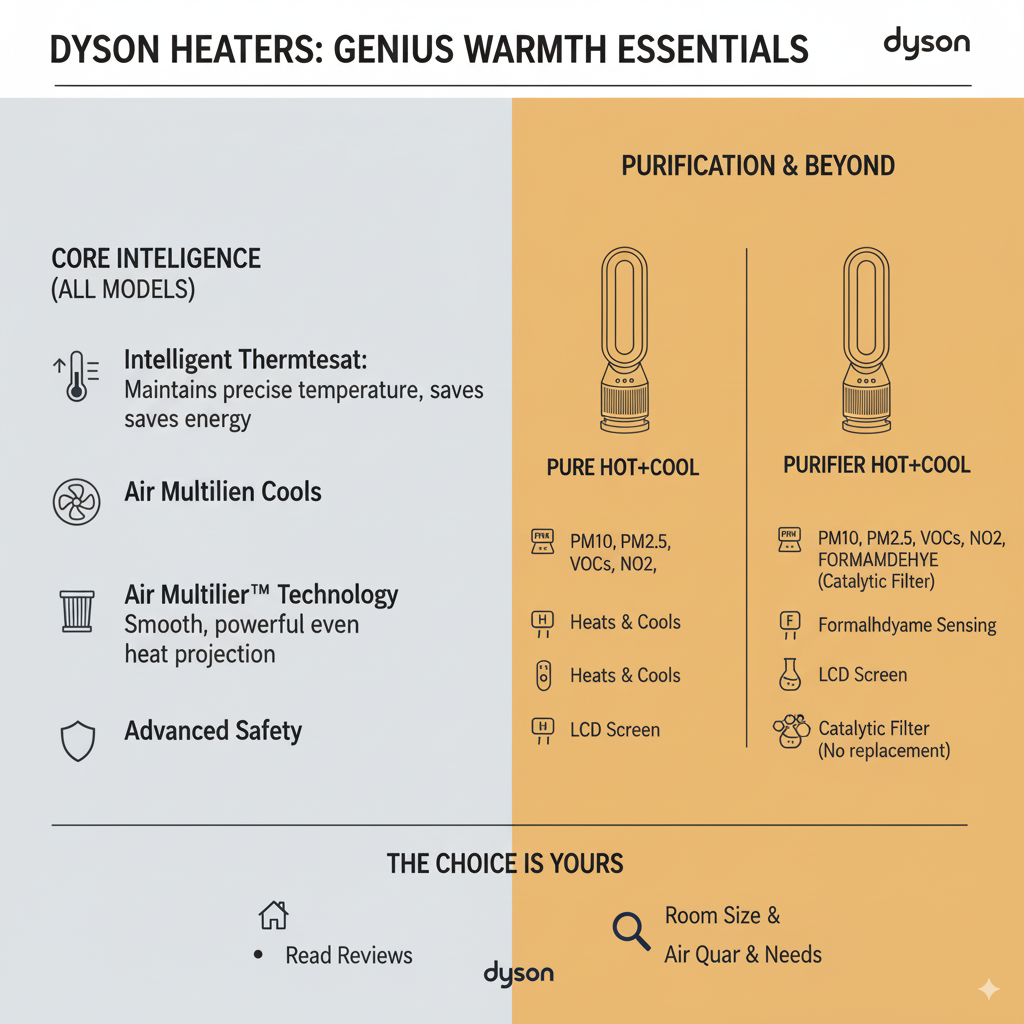
The All-Rounder: Dyson Purifier Heats + Cool Formaldehyde
This is one of Dyson’s most advanced machines, designed for year-round use. It heats, cools, and purifies the air, detecting and destroying formaldehyde and other allergens and pollutants. The ‘Formaldehyde’ variant specifically tackles this harmful gas, which can off-gas from furniture and household products.
Key Features:
- Heats a whole room quickly and evenly.
- Provides powerful, cooling airflow for warmer months.
- Captures 99.97% of particles 0.3 microns in size and filters out 99.9% of bacteria and viruses.
- Detects and destroys formaldehyde using a catalytic converter.
- Sealed HEPA and activated carbon filtration.
- Dyson Link app for remote control and monitoring.
- Quiet operation.
Best For: Those who want a single device for all-season comfort, prioritizing air quality and advanced features. It’s an investment in comprehensive home environmental control.
(Note: The effectiveness against bacteria, viruses, and pollutants may vary and is dependant on environmental factors. Always refer to Dyson’s official specifications for precise claims.)
The Versatile Performer: Dyson Purifier Hot+Cool™ (Various Models)
These are the workhorses of the Dyson heating lineup. They excel at heating a room effectively and efficiently, while also offering fan cooling and significant air purification capabilities. Different versions might have slightly different designs or specific sensor technologies, but the core function remains the same: heating, cooling, and cleaning your air.
Key Features:
- Fast, even heating.
- Personal cooling fan.
- HePA and activated carbon filters capture allergens and pollutants.
- Can oscillate up to 70 degrees to circulate air.
- Remote control for easy operation.
- Thermostatic control to maintain target temperature.
- Tip-over safety features.
Best For: Homes where a reliable heater is needed for cold snaps, but versatility for cooling and air purification is also a priority. It’s a great compromise for shared spaces or bedrooms.
The Compact Comfort: Dyson Pure Cool™ (and similar smaller models)
While primarily known as air purifiers and fans, some Dyson Pure Cool™ models can also provide a gentle, diffused warmth. These are typically more compact and often focus on personal comfort or smaller spaces. They might not heat an entire room as rapidly as a dedicated heater, but they contribute to a comfortable ambiance while purifying the air.
Key Features:
- Excellent air purification for small to medium rooms.
- Smooth, powerful fan cooling.
- Some models offer a gentle heating function for personal comfort.
- Sleek, modern design.
- Low energy consumption.
Best For: Individuals looking for superior air purification and cooling, with the added bonus of some supplemental warmth for personal spaces like a home office or bedside table. They are ideal for those prioritizing air quality over rapid room heating.
Dyson Heater Comparison Table
To make your choice even easier, here’s a table that highlights some of the key differences between typical Dyson heater functionalities. Remember that specific model numbers will have detailed differences, but this gives you a good overview of what to expect from their intelligent heating solutions.
| Feature / Model Type | Dyson Purifier Heats + Cool Formaldehyde | Dyson Purifier Hot+Cool™ (Standard) | Dyson Pure Cool™ (with supplemental heat) |
|---|---|---|---|
| Primary Function | Heating, Cooling, Air Purification (Specialized Formaldehyde Destruction) | Heating, Cooling, Air Purification | Air Purification, Cooling (with supplemental gentle heat) |
| Heating Power | High – designed for whole room heating | High – designed for whole room heating | Lower – more for personal comfort/seasonal warmth |
| Cooling | Yes – powerful airflow | Yes – powerful airflow | Yes – powerful airflow |
| Air Purification | Yes – HEPA + Activated Carbon + Formaldehyde Destruction | Yes – HEPA + Activated Carbon | Yes – HEPA + Activated Carbon |
| Smart Features / App Control | Yes – Dyson Link App, advanced sensors | Yes – Dyson Link App, sensors | Yes – Dyson Link App (may vary by model) |
| Energy Efficiency | Intelligent heating, variable fan speeds | Intelligent heating, variable fan speeds | Focus on air purification efficiency, supplemental heat uses less power |
| Design | Sleek, modern, unique Dyson aesthetic | Sleek, modern, unique Dyson aesthetic | Sleek, modern, often more compact |
| Ideal Use Case | Year-round environmental control, allergen/pollutant reduction, formaldehyde concerns | All-season home comfort, versatile heating/cooling, air quality improvement | Primary focus on air quality and cooling, with gentle warmth boost |
Choosing the Right Dyson Heater for Your Needs
Deciding which Dyson heater is right for you involves considering your specific needs and priorities. Here’s a straightforward way to think about it:
Step 1: Identify Your Primary Need
Ask yourself: What is the main reason I’m looking for a heater?
- Pure Heat: If your only goal is to heat a room quickly and efficiently, and you don’t need cooling or advanced purification, a dedicated Dyson heater might be overkill. However, if you want that heat to be intelligent, safe, and evenly distributed, Dyson’s heating technology is a strong contender.
- All-Season Comfort: Do you want a device that works reliably in both cold and hot weather? Then a Dyson model that offers both powerful heating and effective cooling (like the Hot+Cool™ or Heats + Cool models) is likely your best bet.
- Health and Air Quality: Is improving your indoor air quality with advanced filtration paramount? If allergies, pet dander, or general air freshness are concerns, prioritize models with robust HEPA and activated carbon filters, and look for specialized features like formaldehyde destruction if that’s an issue in your home.
Step 2: Consider Your Space
Think about where the heater will be used:
- Whole Room Heating: For larger living areas or bedrooms, you’ll want a heater designed for effective room heating. Dyson models with high heating power and Air Multiplier™ technology are built for this.
- Personal Comfort/Office: For a desk, bedside table, or a small home office, a more compact unit, or one that offers personalized, diffused warmth, might be more suitable.
- Aesthetic: Dyson heaters are known for their modern, minimalist designs. Consider how the unit will fit into your home’s decor.
Step 3: Evaluate Advanced Features
Beyond the basics, what extra benefits do you want?
- Smart Home Integration: Do you want to control your heater via an app or voice commands? Most Dyson heating units offer extensive app control.
- Noise Levels: Dyson designs aim for quiet operation, especially compared to some traditional fan heaters. If quiet is a must, this is a key benefit.
- Budget: Dyson products are an investment. Be prepared for a premium price point, but consider the long-term value of multi-functionality and advanced technology.
By following these steps, you can narrow down the Dyson heater family to the perfect match for your home and lifestyle.
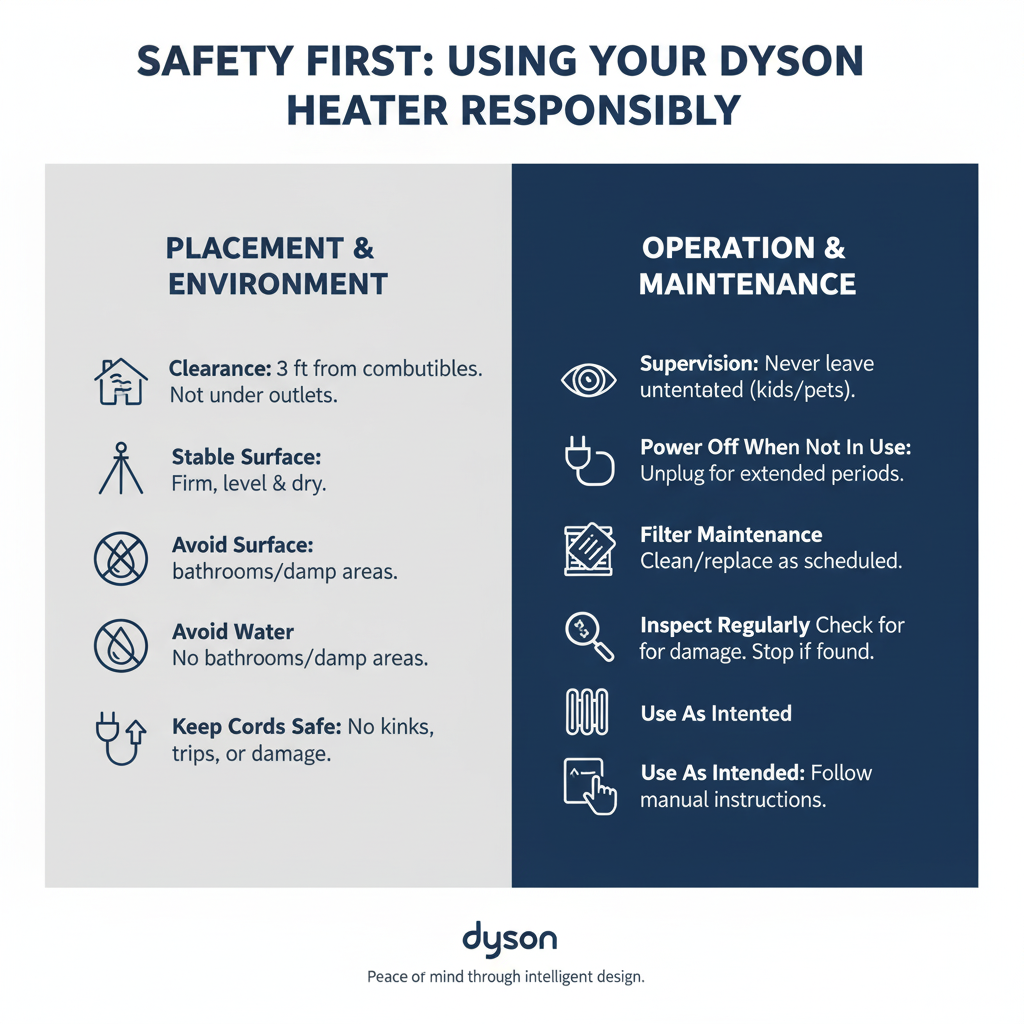
Safety First: Using Your Dyson Heater Responsibly
While Dyson heaters have built-in safety features, responsible usage ensures the best performance and protects your home and family. Here are some key safety tips:
Placement and Environment
- Clearance: Always ensure adequate space around the heater. Keep it at least a few feet away from curtains, furniture, bedding, and other combustible materials. Check the user manual for specific clearance recommendations.
- Stable Surface: Place the heater on a firm, level, and dry surface to prevent it from tipping over.
- Avoid Water: Never use your heater in bathrooms, laundry rooms, or any other damp areas where it might come into contact with water. This is crucial for preventing electric shock. For more on electrical safety, resources from organizations like the National Fire Protection Association (NFPA) can be very helpful.
- Keep Cords Upright: Ensure the power cord is not kinked, stretched, or in a position where it could be tripped over or damaged.
Operation and Maintenance
- Supervision: Never leave a heating appliance unattended, especially if children or pets are present.
- Power Off When Not In Use: Turn off and unplug the heater when you leave the room for an extended period, and always before cleaning.
- Filter Maintenance: For models with air purification, follow the recommended schedule for cleaning or replacing filters. Clogged filters reduce efficiency and can be a fire hazard.
- Inspect Regularly: Periodically check the heater, power cord, and plug for any signs of damage. If you find any, stop using the appliance immediately and contact Dyson support or a qualified technician.
- Use as Intended: Always operate your Dyson heater according to the manufacturer’s instructions for its intended purpose – heating, cooling, and purifying air.
Dyson’s own safety features, like automatic shut-off if the unit tips or overheats, are excellent safeguards, but they work best in conjunction with mindful user practices.
Frequently Asked Questions (FAQs) About Dyson Heaters
Here are some common questions beginner homeowners have about Dyson heaters:
Q1: Are Dyson heaters energy-efficient?
Yes, Dyson heaters are designed with energy efficiency in mind. They use intelligent temperature control to reach and maintain your desired temperature without constantly running at full power, which saves electricity. Features like precise thermostatic control and energy-saving modes contribute to their efficiency.
Q2: Can Dyson heaters heat a large room?
Many Dyson models, particularly the Purifier Hot+Cool™ and Purifier Heats + Cool series, are designed to heat an entire room effectively. Their Air Multiplier™ technology helps distribute purified warm air evenly throughout the space.
Q3: How do Dyson heaters clean the air?
Dyson heaters that include air purification use a combination of a sealed HEPA filter (to capture 99.97% of particles as small as 0.3 microns, including allergens and pollutants) and an activated carbon filter (to capture gases like VOCs and odors). Some specialized models also have catalytic converters to destroy formaldehyde.
Q4: Are Dyson heaters safe for children and pets?
Dyson heaters are designed with safety in mind. They feature no exposed heating elements, and many models have automatic shut-off functions if they overheat or are tipped over. The bladeless design also makes them safer around curious hands and paws. However, as with any heating appliance, adult supervision and proper placement are always recommended.
Q5: Do Dyson heaters make a lot of noise?
Dyson heaters are engineered to operate quietly. They use efficient motor technology and aerodynamic design to minimize noise, especially when compared to traditional fan heaters. This makes them suitable for bedrooms and living spaces where noise can be a concern.
Q6: How do I control my Dyson heater?
You have several options. Most Dyson heaters come with a sleek, magnetized remote control that stores neatly on the unit. Additionally, if your model supports it, you can download the Dyson Link app on your smartphone or tablet to control all functions remotely, set schedules, and monitor your home environment from anywhere.
Q7: How often do I need to replace the filters in my Dyson heater/purifier?
The lifespan of Dyson filters varies depending on usage and the air quality in your environment. Dyson typically recommends replacing the HEPA and activated carbon filters annually, though the Dyson Link app will alert you when it’s time. Specialized filters, like catalytic converters, may last longer or be integrated into the machine’s design.
Conclusion
Choosing the right home heating solution is an important decision, and comparing Dyson heaters reveals their commitment to intelligent design, efficiency, and a healthier living environment!