

Convection vs. Hydronic Baseboard Heaters: The Essential Guide for a Cozy Home
Choosing between convection and hydronic baseboard heaters can feel tricky, but it doesn’t have to be! This guide breaks down exactly what each one is, how they work, and which might be best for keeping your home warm and comfortable. We’ll explore their pros and cons in a way that’s easy to understand, so you can make a confident decision for your heating needs. Let’s get your home toasty!
Convection vs. Hydronic Baseboard: Essential Guide
Hello there! Tanim here, your friendly home heating guide. Deciding on the right heating system for your home can feel like a big job, especially when you’re faced with different options. Two popular choices for supplemental or primary heating are convection and hydronic baseboard heaters. Both have their unique ways of warming your space, and understanding the difference is key to making a choice that fits your needs, your budget, and your comfort. Don’t worry, we’ll walk through it step-by-step, making it super simple!
This guide is designed for you, the homeowner or renter, who wants clear, practical advice. We’ll avoid the confusing technical terms and focus on what really matters: how these heaters perform, how safe they are, and how they can make your home a more comfortable place. By the end, you’ll feel ready to choose the perfect baseboard heating solution.
What Are Baseboard Heaters?
Baseboard heaters are heating units installed along the base of walls in a room. They are typically long, slender units that run underneath your windows. Their primary purpose is to provide localized heat and can be used as a primary heating source in smaller spaces or as a supplemental heat source in larger homes. They are often electrically powered, though some older systems may connect to a central boiler for hot water circulation.
How Do Convection Baseboard Heaters Work?
Convection baseboard heaters work by heating the air around them directly. Think of them like a gentle fan that pushes warm air up and out into the room. Here’s a quick breakdown:
- Heating Element: Inside the unit, there’s an electric element that gets hot.
- Air Intake: Cool room air is drawn into the bottom of the heater through vents.
- Heating the Air: As the cool air passes over the hot element, it heats up.
- Air Output: The now-warm air rises and is released from the top of the heater, circulating into the room.
- Thermostat Control: Most convection baseboard heaters have a built-in thermostat or can be connected to a room thermostat to regulate the temperature.
This process creates a continuous cycle of warm air rising, cooler air falling, and the heater warming it up again. This is why they are called “convection” heaters – they rely on the movement of air (convection) to distribute heat.
Pros of Convection Baseboard Heaters:
- Fast Heating: They can heat a room relatively quickly once turned on.
- Easy Installation: Generally straightforward to install, often just requiring a dedicated electrical circuit.
- Cost-Effective Purchase: The initial purchase price for individual units is often lower than hydronic models.
- Zone Heating: Excellent for heating specific rooms or areas as needed, potentially saving energy.
- No Water Needed: Unlike hydronic systems, they don’t involve circulating water, reducing the risk of leaks.
Cons of Convection Baseboard Heaters:
- Can Be Noisy: Some models can make clicking or popping sounds as they heat up and cool down.
- Air Circulation Dryness: They can sometimes dry out the air in a room.
- Uneven Heating: While they circulate air, heat can sometimes feel concentrated near the unit.
- Higher Energy Bills: If used as a primary heat source for larger areas, electricity costs can add up quickly.
- Dust Movement: The circulating air can sometimes stir up dust.

How Do Hydronic Baseboard Heaters Work?
Hydronic baseboard heaters, often called hot water baseboard heaters, are part of a larger central heating system. Instead of an electric element, they use hot water heated by a boiler to warm the room. Here’s how it works:
- Boiler Heats Water: A central boiler, powered by gas, oil, or electricity, heats water.
- Circulating Pump: A pump pushes this hot water through pipes that run to each baseboard heater in your home.
- Heater Coil: Inside the hydronic baseboard unit, there’s a series of pipes filled with hot water and often surrounded by metal fins.
- Heat Transfer: As the hot water flows through the pipes, it transfers its heat to the metal fins.
- Convection and Radiation: These fins then heat the air around them (convection), and also radiate some heat directly into the room.
- Return Loop: As the water cools, it travels back through the pipes to the boiler to be reheated, completing the cycle.
The temperature of a hydronic system is generally controlled by the boiler and thermostat connected to it, managing the water temperature or flow rate.
Pros of Hydronic Baseboard Heaters:
- Quiet Operation: They are typically very quiet as there are no fans or electrical elements making noise.
- Consistent, Even Heat: They tend to provide a more gentle and evenly distributed heat throughout the room.
- Less Air Movement: This means less dust is circulated, and the air doesn’t feel as dry.
- Energy Efficiency Potential: When powered by an efficient boiler (like a high-efficiency gas boiler), they can be more cost-effective for heating larger areas than electric resistance heat.
- Long Lifespan: Hydronic systems, when properly maintained, can last for many years.
Cons of Hydronic Baseboard Heaters:
- Slower to Respond: It takes time for the boiler to heat the water and for that water to reach the baseboards, so the room warms up more slowly.
- Higher Initial Cost: Installing a whole hydronic system (boiler, pipes, baseboards) is a significant investment.
- Requires a Boiler: You need a central boiler as the heart of the system.
- Risk of Leaks: Although rare with proper installation and maintenance, leaks can occur and cause water damage.
- Maintenance is Crucial: Regular maintenance of the boiler and system is necessary to ensure efficiency and prevent issues.
Convection vs. Hydronic: Key Differences at a Glance
Let’s put the core distinctions side-by-side to help you see the differences clearly. This table highlights the main points for comparison.
| FeatureConvection Baseboard HeatersHydronic Baseboard Heaters | ||
|---|---|---|
| Heating Method | Electric element heats air directly; circulates via natural convection. | Hot water from a boiler circulates through pipes; transfers heat to air. |
| Power Source | Electricity for heating element. | Boiler (gas, oil, electric) heats water; pump circulates water. |
| Heat Distribution | Air rises and falls; can be faster but sometimes uneven. | Gentle, even heat; slower to warm up, but more consistent. |
| Noise Level | Can be noisy (clicking, popping). | Very quiet. |
| Air Quality Impact | Can dry air and stir dust. | Less air movement, less drying, less dust stirred. |
| Installation Complexity | Relatively simple, often for individual units. | Complex system requiring boiler, piping, and unit installation. |
| Initial Cost | Lower per unit. | Higher for the whole system. |
| Operating Cost | Can be high for primary heating (electricity costs). | Potentially lower for large areas if boiler is efficient. |
| Water Involvement | None. | Yes, hot water circulation. |
| Lifespan | Varies; individual units may need replacement over time. | Longer lifespan for the system if well-maintained. |
Which Type is Right for Your Home?
The best choice between convection and hydronic baseboard heaters depends entirely on your home, your existing system, and your priorities. Here’s a guide to help you decide:
Consider Convection Baseboard Heaters if:
- You need supplemental heat: If your main heating system works well but has some cold spots, convection units are perfect for targeted warmth.
- You’re renting: They are often a great option for renters as they are self-contained and easy to install or remove.
- You need to heat a small, specific area: A single room, a sunroom, or a basement that isn’t regularly used can benefit from their zone-heating capabilities.
- Your budget for upfront costs is limited: The lower initial cost of individual convection units makes them more accessible.
- You don’t have or want a central boiler system: If you’re looking for a simple, all-electric solution.
Consider Hydronic Baseboard Heaters if:
- You’re looking for a primary heating system: Hydronic systems excel at providing consistent, whole-house heat.
- You want quiet, even warmth: If you or your family are sensitive to noise or prefer a consistent temperature without drafts, hydronic is a great choice.
- You live in a very cold climate: The steady heat output can be more effective in keeping larger or poorly insulated spaces warm.
- You value long-term efficiency and comfort: With a modern, efficient boiler, this system can be cost-effective to run for heating your entire home over many years.
- You are building or undertaking a major renovation: This is the ideal time to install a new hydronic system.
Installation and Safety Considerations
No matter which type you choose, proper installation and safety are paramount. Always consult with a qualified electrician or heating professional. They can ensure your system is installed correctly to meet local building codes and safety standards.
For Convection Baseboard Heaters:
- Electrical Needs: These heaters require a dedicated electrical circuit. Overloading circuits is a serious fire hazard. A qualified electrician will know the proper wire gauge and breaker size required for the heater’s wattage. Learn more about how to safely plan your home’s electrical circuits on the U.S. Department of Energy’s Energy Saver website.
- Clearance: Always ensure there’s adequate clearance around the unit. Manufacturer instructions will specify how much space is needed above, below, and in front of the heater to prevent overheating of nearby materials like curtains or furniture.
- Thermostat Placement: If using a central thermostat, ensure it’s placed appropriately away from heat sources or direct sunlight for accurate readings.
- Regular Cleaning: Dust buildup on the heating elements or fins can reduce efficiency and pose a fire risk. Vacuum them regularly.
For Hydronic Baseboard Heaters:
- Professional Installation: Installing a hydronic system is a complex job that should always be done by a certified HVAC professional. This includes connecting to the boiler, running pipes, and ensuring the system is properly filled and bled (air removed).
- Boiler Maintenance: The boiler is the heart of the system. Regular annual maintenance by a professional is crucial for safety, efficiency, and longevity. This includes checking for carbon monoxide leaks, which can be deadly. The Occupational Safety and Health Administration (OSHA) provides resources on carbon monoxide safety.
- Pipe Insulation: Proper insulation of pipes, especially those running through unheated spaces like attics or crawl spaces, is essential for energy efficiency.
- Expansion Tanks: These systems require an expansion tank to safely handle the expansion of water as it heats up.
- Leak Checks: While rare, keep an eye out for any signs of leaks around the baseboards or pipes.
How to Use Your Baseboard Heaters Effectively
Once installed, using your baseboard heaters wisely can help you stay comfortable and manage your energy bills. Here are some tips:
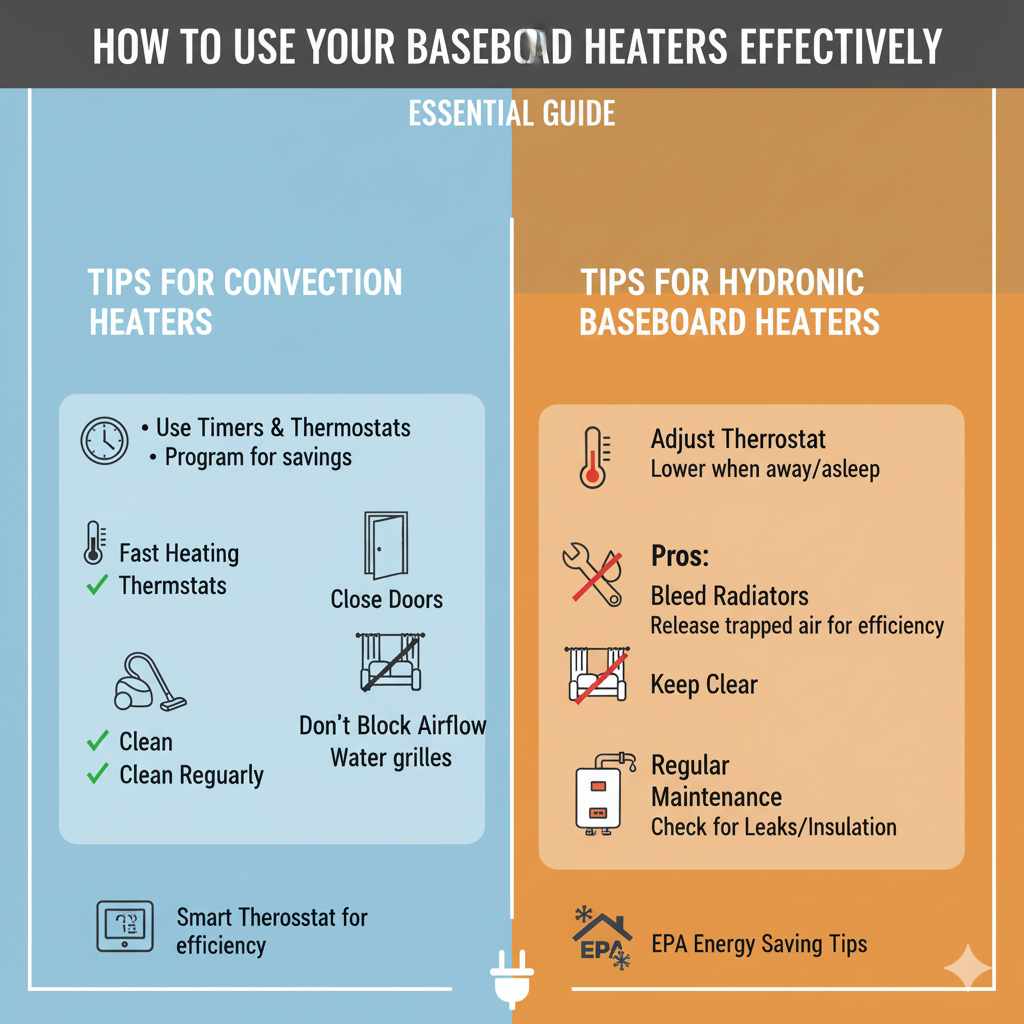
Tips for Convection Heaters:
- Use Timers and Thermostats: Program timers to turn heaters on before you need them and off when you don’t, especially in rooms that are not in constant use.
- Close Doors: Keep doors to rooms you are heating closed to prevent warm air from escaping.
- Furniture Placement: Don’t block the heater with furniture or curtains, as this impedes airflow and can be a safety hazard.
- Clean Regularly: Dust the intake and outlet grilles, and vacuum the fins periodically.
- Consider a Smart Thermostat: For rooms with electric baseboards, smart thermostats can learn your habits and optimize heating schedules for energy savings.
Tips for Hydronic Heaters:
- Adjust Thermostat Settings: Lowering the thermostat when you are away or sleeping can save significant energy. Many modern hydronic systems can be easily controlled with programmable or smart thermostats.
- Bleed the Radiators: Periodically, especially at the start of the heating season, “bleed” the air out of your baseboard heaters using a radiator key. This ensures the hot water fills the entire unit, making it more efficient. If you hear any sputtering or gurgling, it’s likely time to bleed.
- Keep Them Clear: Avoid placing furniture or long curtains directly in front of hydronic baseboards, as this obstructs the natural flow of heat into the room.
- Regular Boiler Maintenance: As mentioned, this is key for efficiency. A well-maintained boiler uses less fuel to heat the water. The Environmental Protection Agency (EPA) offers general tips on home energy savings.
- Check for Insulation: Ensure pipes are well-insulated, especially in unheated areas, to minimize heat loss before the water even reaches the baseboards.
Frequently Asked Questions (FAQ)
Q1: Can I paint my baseboard heaters?
Yes, you can paint both convection and hydronic baseboard heaters, but it’s important to do it correctly. Use a high-quality, heat-resistant spray paint specifically designed for metal surfaces. For convection heaters, remove the cover and any internal components you can safely access, and paint them separately. For hydronic heaters, you may need to drain a section of the system or work carefully in place. Always ensure the paint is fully dry and cured before turning the heat on, and avoid painting over the thermostat controls on convection units.
Q2: Which type of baseboard heater is more energy-efficient?
This depends on the application. For whole-house heating, a well-maintained hydronic system powered by an efficient boiler (especially natural gas or propane) is often more energy-efficient and cost-effective than electric convection heaters, as electricity is typically more expensive per unit of heat than natural gas. For heating a single room or providing supplemental heat, electric convection heaters can be very efficient because you only use energy when and where you need it, avoiding the standby losses of a large central boiler system.
Q3: How often should I clean my baseboard heaters?
For both types, it’s good practice to dust and vacuum the grilles and fins at least once a year, ideally before the start of the heating season. For convection heaters, more frequent cleaning might be needed if you notice dust buildup on the heating element itself. For hydronic systems, especially if you have pets or allergies, cleaning a couple of times a year can be beneficial for air quality and heat efficiency.
Q4: My convection heater is making clicking noises. Is this normal?
Yes, clicking or popping noises are relatively common with electric convection baseboard heaters. This usually happens due to the expansion and contraction of the metal components as the heater heats up and cools down. While some noise is normal, if the sounds are excessively loud or frequent, it might be worth having a professional check the unit for any potential issues.
Q5: Can I install baseboard heaters myself?
Electric convection baseboard heaters can be installed by a competent DIYer if they have experience with household electrical wiring and are comfortable working with a breaker panel. However, it is strongly recommended to hire a qualified electrician to ensure the installation is safe, up to code, and properly sized for your home’s electrical system. Hydronic baseboard heaters are part of a complex water-based heating system that requires professional installation by a licensed HVAC technician or plumber. This involves working with water pressure, piping, boilers, and safety valves, which are not DIY-friendly tasks.
Q6: What temperature should I keep my hydronic system on?
The ideal temperature depends on your personal comfort and the outside climate. For optimal energy savings, consider setting your thermostat to around 68°F (20°C) when you are home and awake, and lower it to 60-62°F (15-17°C) when you are sleeping or away from home. Many modern programmable or smart thermostats can automate this for you. Consult resources from organizations like The American Council for an Energy-Efficient Economy (ACEEE) for more detailed energy-saving tips.
Making Your Home Comfy: The Final Word
Navigating the world of home heating can seem complex, but by breaking down the differences between convection and hydronic baseboard heaters, you’re now well-equipped to make an informed decision. Whether you choose the quick, targeted warmth of convection or the steady, quiet comfort of hydronic, the goal is the same: a cozy, safe, and welcoming home.
Remember, convection heaters are fantastic for adding localized warmth or as a budget-friendly solution for smaller spaces, while hydronic systems shine when it comes to providing consistent, whole-house heat. Always prioritize professional installation and regular maintenance to ensure your system operates safely and efficiently for years to come. Your comfort is key, and with the right guidance, you can achieve it!