How to Dispose of Storage Heaters Safely
Getting rid of old storage heaters can feel a bit tricky, especially if you’ve never done it before. These units are bulky and contain materials that need careful handling to keep everyone and everything safe. It’s a common question for many homeowners looking to upgrade or clear out their old heating systems.
Don’t worry, we’ll walk you through How to Dispose of Storage Heaters Safely with easy steps that anyone can follow. We’ll cover everything you need to know to make this process smooth and simple.
Understanding Storage Heaters and Disposal Needs
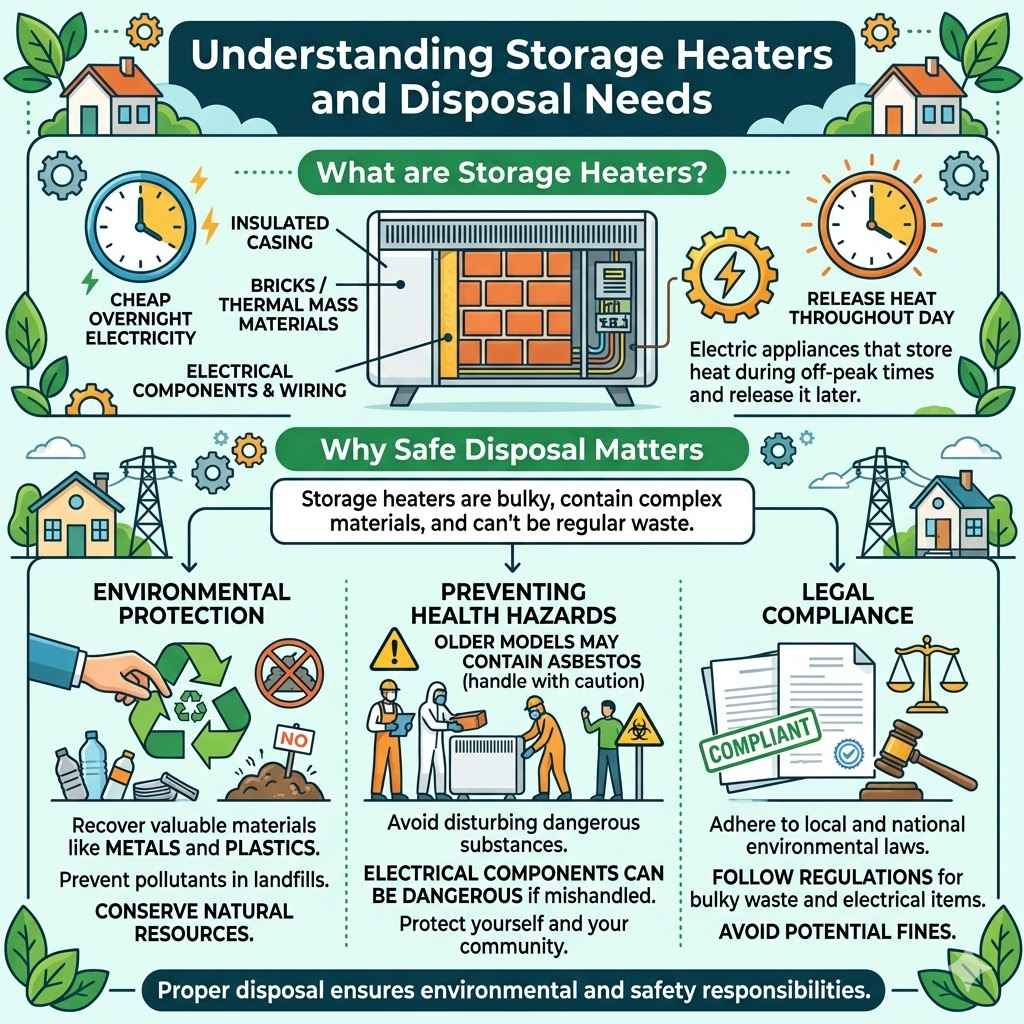
Storage heaters are electric heating appliances that store heat when electricity is cheap, usually overnight, and release it throughout the day. They are made up of bricks or thermal mass materials inside an insulated casing, and often contain electrical components and wiring. Because of their size and the materials they contain, they cannot simply be thrown away with regular household waste.
Proper disposal is essential for environmental protection and to ensure that hazardous components, if present, are managed correctly. Many people find disposal challenging because they aren’t sure about the regulations or the best methods for removal. This section will explain why proper disposal is important and what makes it a unique task.
Why Safe Disposal Matters
Safe disposal is crucial for several reasons, primarily environmental and safety concerns. Storage heaters, especially older models, might contain materials that can be harmful if not handled correctly. For instance, some older units could contain asbestos, although this is less common in modern appliances. Even without asbestos, the electrical components need to be recycled properly to recover valuable materials and prevent pollutants from entering landfills.
Improper disposal can lead to environmental contamination and potential health risks. It’s about being a responsible owner and ensuring that old appliances don’t negatively impact our planet or our communities.
Environmental Protection
Storage heaters are large appliances, and their materials should not end up in general landfills. Proper disposal ensures that recyclable components are recovered and that hazardous substances are dealt with responsibly. This helps conserve natural resources and reduce pollution.
For example, metals and plastics can be recycled, reducing the need for new raw materials.
Preventing Health Hazards
Some older storage heaters might contain materials like asbestos, which can cause serious health problems if disturbed. Even if asbestos isn’t present, the electrical parts can be dangerous if handled incorrectly. Safe disposal processes ensure these potential risks are managed by professionals who know how to handle such materials safely.
This protects both the individuals disposing of the heater and the wider community.
Legal Compliance
There are regulations in place regarding the disposal of bulky waste and electrical items. By disposing of storage heaters correctly, you ensure you are complying with local and national environmental laws. This avoids potential fines and demonstrates responsible citizenship.
Many local councils have specific guidelines for bulky waste collection or recycling centres that accept such items.
How to Dispose of Storage Heaters Safely
When you need to get rid of an old storage heater, there are several safe and responsible ways to do it. The main goal is to avoid simply putting it out with your regular rubbish. This usually involves contacting your local council for bulky waste collection, taking it to a recycling centre, or hiring a specialist removal service. Each option has its own process, and understanding them will help you choose the best method for your situation. This guide will break down these options clearly.
Local Council Bulky Waste Collection
Most local councils offer a bulky waste collection service for large items like old storage heaters. This is often the most convenient and cost-effective method for many people. You usually need to book a collection in advance and place the item at your kerbside on a specified day. The council will then collect and dispose of it responsibly, often taking it to a licensed recycling facility.
Booking a Collection
The first step is to visit your local council’s website or call them to find out about their bulky waste collection service. You’ll typically need to provide your address and details about the item you wish to have collected. Some councils offer free collections for a certain number of items per year, while others charge a small fee.
Preparing the Heater
Before the collection day, ensure the storage heater is disconnected from the mains electricity supply by a qualified electrician. It’s also a good idea to ensure it has cooled down completely. Some councils may require you to remove certain parts if they are easily detachable, but always check their specific instructions.
Collection Day
On the scheduled collection day, place the storage heater in a location where it is easily accessible for the collection crew, usually at your front boundary or kerbside. Make sure it doesn’t block pathways or public access. The council’s team will handle the lifting and transport.
Recycling Centres and Waste Transfer Stations
Taking your old storage heater directly to a local recycling centre or waste transfer station is another excellent option. These facilities are equipped to handle various types of waste, including electrical appliances and bulky items. You will need to transport the heater yourself, so ensure you have a suitable vehicle and a way to secure the item safely during transit.
Finding Your Nearest Centre
Search online for “recycling centres near me” or “waste transfer stations” in your local area. Most council websites will have a list of these facilities, along with their opening times and the types of waste they accept. Some centres may require proof of residency.
Transporting the Heater
Storage heaters are heavy. If you are transporting it yourself, ensure you have help to lift it safely. Use a sturdy vehicle like a van or a trailer.
Secure the heater properly with ropes or straps to prevent it from shifting during the journey. It’s advisable to wear protective gloves and sturdy footwear.
Disposal at the Centre
Upon arrival, staff at the recycling centre will direct you to the appropriate area for disposing of large electrical items or bulky waste. Follow their instructions carefully. They will ensure the heater is processed for recycling or proper disposal according to environmental regulations.
Many centres have designated bays for different materials.
Hiring a Waste Removal Service
If you prefer a hassle-free solution, hiring a professional waste removal service is a great choice. These companies specialize in removing all types of unwanted items, including bulky appliances. They offer a convenient service where they come to your home, collect the storage heater, and take it away for disposal or recycling.
Choosing a Reputable Service
Look for licensed waste carriers in your area. Check their reviews and accreditations. Reputable services will provide a quote upfront and can often schedule a collection quickly.
Ensure they are committed to responsible disposal and recycling practices. Ask them directly about their disposal methods.
The Removal Process
When the service arrives, they will handle the entire removal process. This includes safely carrying the heater out of your home and loading it onto their vehicle. You don’t need to worry about lifting or transport.
They will ensure the item is taken to an authorized waste management facility.
Cost Considerations
Waste removal services typically charge based on the volume and type of waste they remove. While it might be more expensive than using council services, the convenience and peace of mind can be well worth the cost, especially if you have multiple items to dispose of or limited mobility.
Preparing Your Storage Heater for Disposal
Before your storage heater is collected or taken away, there are a few important steps to take to ensure it’s ready for safe disposal. These steps mainly involve making sure the appliance is safe to handle and transport. Proper preparation can also help recycling centres process the item more efficiently.
Disconnection and Cooling
The most critical step before moving a storage heater is to ensure it is completely disconnected from the mains electricity supply. This should only be done by a qualified and certified electrician. Attempting to disconnect it yourself can be extremely dangerous and may lead to electric shock. Once disconnected, allow ample time for the heater to cool down completely, as the internal components can retain heat for some time.
A qualified electrician will safely isolate the storage heater from your home’s electrical system. They will turn off the relevant circuit breaker and then physically disconnect the wiring. This is not a DIY job.
For those unsure about the process, it is always best to hire a professional. The cost of an electrician for this task is a small price to pay for safety.
Emptying the Heater
Most storage heaters contain thermal bricks or materials designed to absorb and store heat. In some cases, it may be possible to empty these materials before disposal. However, this is often not straightforward and might require specialist knowledge. Many disposal services or recycling centres prefer to handle the heater as a whole unit.
Always check with the specific disposal service or recycling centre about their requirements for emptying the heater. If you are instructed to empty it, ensure you know what materials are inside and how to handle them safely, especially if there’s any suspicion of older, potentially hazardous substances.
Securing Loose Parts
Storage heaters may have external casing panels or electrical covers that can become loose. Before moving the heater, check for any parts that are not securely attached. These can be taped down firmly with strong packing tape or removed entirely if they are easily detachable and you have been instructed to do so. This prevents them from falling off during transport, which could cause damage or injury.
Understanding the Materials Inside
Storage heaters are composed of several key components that contribute to their function and weight. Knowing these can help in understanding why they require special disposal. The main parts include the heating elements, insulation, and the thermal mass material.
Thermal Mass Materials
The core of a storage heater consists of special bricks or composite materials that absorb and store heat. These are designed to retain thermal energy efficiently. While generally inert, their sheer weight contributes significantly to the heater’s bulk. Some older models might have used materials that are no longer considered ideal due to environmental or health concerns, though this is rare with modern units.
Electrical Components
Like any electrical appliance, storage heaters contain wiring, heating elements, thermostats, and control boards. These are made of various metals and plastics. Responsible disposal allows for the recovery of these valuable materials through specialized recycling processes. Improper disposal can lead to these metals and plastics entering the environment.
Insulation
To maintain the stored heat, storage heaters are surrounded by layers of insulation. Historically, materials like vermiculite or even asbestos were used in some appliances for insulation. Modern heaters use safer, non-hazardous insulation materials like mineral wool or fiberglass. It’s important to be aware of the possibility of older materials when dealing with very old units.
What About Old or Damaged Heaters
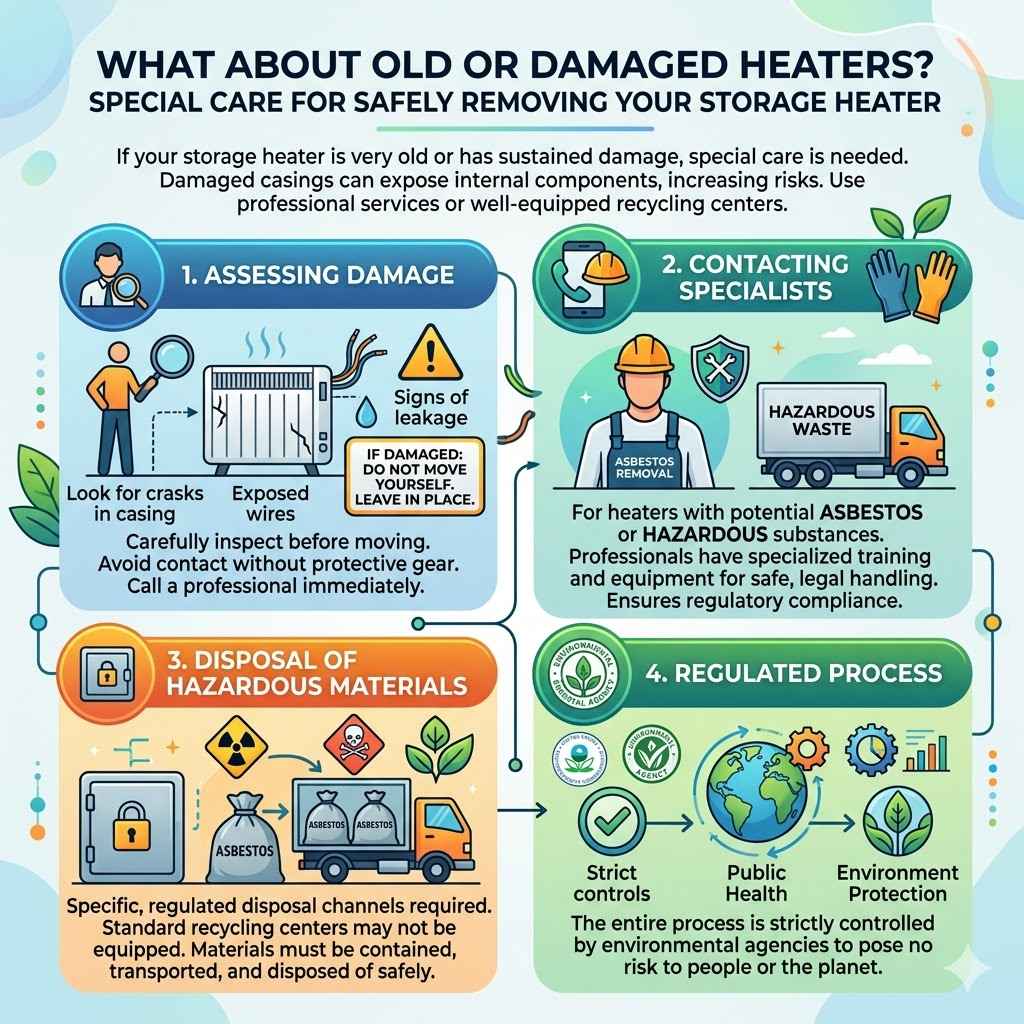
If your storage heater is very old or has sustained damage, special care might be needed. Damaged casings could expose internal components, increasing the risk of injury or exposure to potentially hazardous materials. In such cases, it is even more important to use professional removal services or ensure the recycling centre is well-equipped to handle damaged items.
Assessing Damage
Before attempting any movement, carefully inspect the heater for any cracks in the casing, exposed wires, or signs of leakage. If you discover any damage, do not attempt to move the heater yourself without appropriate protective gear and knowledge. It is safer to leave it in place and call a professional removal service immediately.
Contacting Specialists
For damaged heaters, especially those that might contain asbestos or other hazardous substances, it is essential to contact a specialist asbestos removal company or a licensed hazardous waste disposal service. These professionals have the training and equipment to handle such materials safely and legally. They will ensure that the disposal process meets all regulatory requirements.
Disposal of Hazardous Materials
If a storage heater is found to contain hazardous materials like asbestos, it must be disposed of through a specific, regulated channel. Standard recycling centres may not be equipped to handle this. Specialist companies will ensure these materials are contained, transported, and disposed of in a manner that poses no risk to public health or the environment.
This process is strictly controlled by environmental agencies.
Frequently Asked Questions
Question: Can I dispose of a storage heater in my regular bin?
Answer: No, you cannot dispose of a storage heater in your regular household bin. They are bulky waste items and often contain materials that require special handling and recycling, so they need to be disposed of through designated channels like council bulky waste collections or recycling centres.
Question: Do I need an electrician to disconnect a storage heater?
Answer: Yes, it is essential to have a qualified electrician disconnect the storage heater from the mains electricity supply. This is a safety critical step to prevent electric shock or damage to your home’s electrical system. Do not attempt to do this yourself.
Question: Are storage heaters dangerous to dispose of?
Answer: Storage heaters can be heavy and contain electrical components, so they require careful handling. Older models might potentially contain hazardous materials like asbestos, although this is uncommon in modern units. Always ensure they are disconnected by an electrician and handled by trained personnel or disposed of through approved routes.
Question: Can I sell or give away an old storage heater?
Answer: If your storage heater is still in good working order, you might be able to sell it or give it away to someone who needs it. Listing it on local online marketplaces or community groups could be an option. However, ensure it is safe and fully functional before offering it to others.
Question: How long does it take for a storage heater to cool down after disconnection?
Answer: After disconnection from the power supply, a storage heater can take several hours to cool down completely, as the thermal bricks inside retain heat for a long time. It’s best to wait at least 24 hours to ensure it’s safe to handle.
Conclusion
Properly disposing of storage heaters is essential for safety and the environment. By following simple steps such as ensuring electrical disconnection by a qualified professional and utilizing local council services or recycling centres, you can manage this task effectively. Remember to check for damage and get expert help if needed. You’ve learned the key ways to handle old heaters responsibly.