How to Fix Ventless Heaters at Home
Ventless heaters are handy for warming up spaces without needing complex ductwork. But sometimes, they stop working right, and figuring out why can seem tricky, especially if you’re new to home repairs. Don’t worry, though.
For a related repair path, Convert Water Heater Pilot Light To Electronic Ignition can help readers narrow down the next troubleshooting step.
For a related repair path, How To Check a Heater’s Pilot Light can help readers narrow down the next troubleshooting step.
For a related repair path, Do All Heaters Have a Pilot Light? Discover the can help readers narrow down the next troubleshooting step.
You can often sort out common problems yourself with a little guidance. This guide will show you exactly how to fix ventless heaters at home, step by step, so you can get your warmth back without a fuss. Let’s get started on making your heater work like new again.
Common Ventless Heater Problems and Solutions
Ventless heaters, while convenient, can develop issues that affect their performance. Understanding these common problems is the first step to fixing them yourself. Many issues stem from simple things like blockages, power supply problems, or sensor malfunctions.
Knowing what to look for can save you time and money on professional repairs. This section will cover the most frequent complaints and guide you through fixing them.
Pilot Light Issues
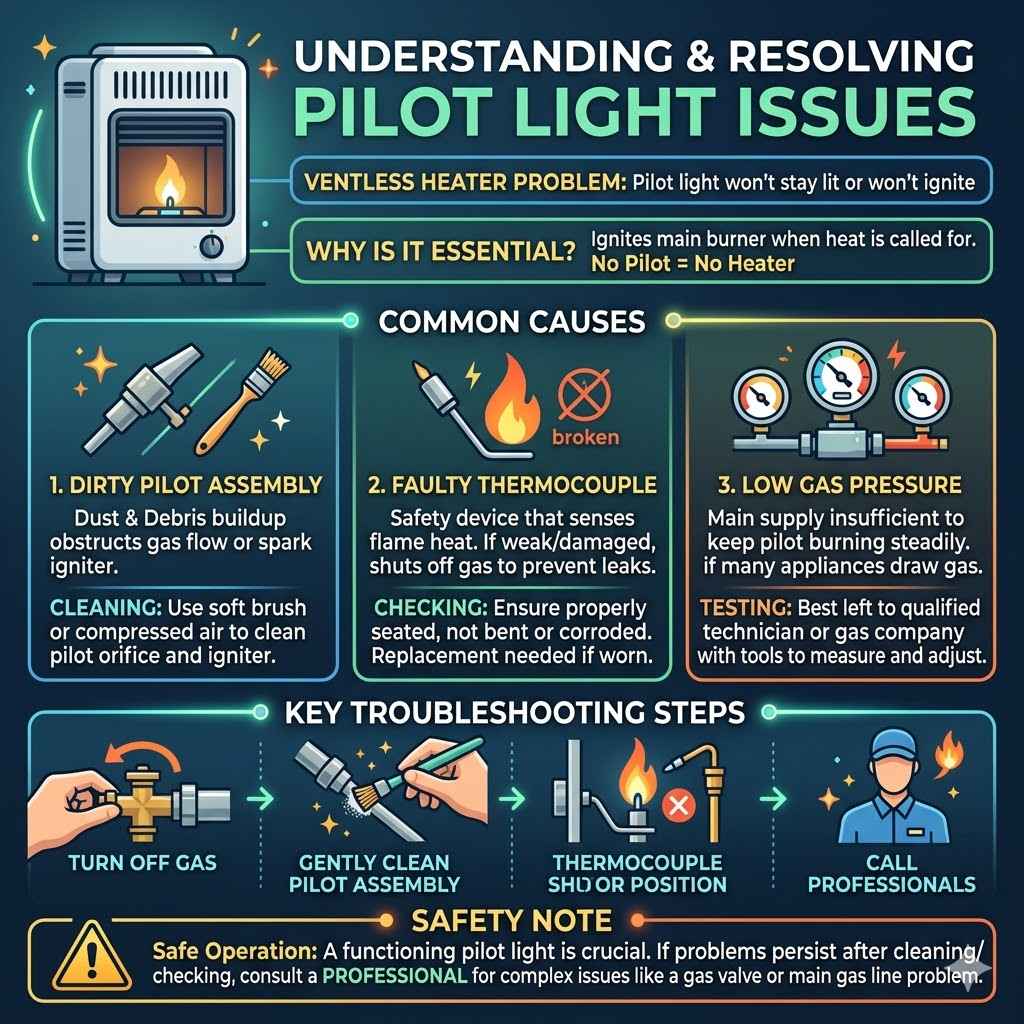
A common ventless heater problem is a pilot light that won’t stay lit or won’t ignite at all. This can be due to several factors, including a dirty pilot assembly, a faulty thermocouple, or low gas pressure. The pilot light is essential because it ignites the main burner when the thermostat calls for heat.
If it’s out, your heater simply won’t turn on.
Dirty Pilot Assembly: Over time, dust and debris can build up in the pilot assembly. This buildup can prevent the gas from flowing correctly or obstruct the spark igniter. Cleaning it involves carefully removing any visible debris.
Faulty Thermocouple: The thermocouple is a safety device that senses the pilot flame. If it’s not detecting heat, it will shut off the gas supply to prevent leaks. A weak or damaged thermocouple needs to be replaced.
Low Gas Pressure: If your main gas supply is low, it might not be enough to keep the pilot light burning steadily. This is less common for a single appliance but can happen if other gas appliances in your home are drawing a lot of gas.
- Cleaning the Pilot Assembly: First, turn off the gas supply to the heater at the shut-off valve. Carefully use a soft brush or a can of compressed air to gently clean around the pilot orifice and the igniter. Be sure not to dislodge any components.
- Checking the Thermocouple: The thermocouple is a small metal rod positioned near the pilot flame. Ensure it is properly seated and not bent or damaged. If it looks corroded or worn, it likely needs replacement. You can find replacement thermocouples at most hardware stores.
- Testing Gas Pressure: If you suspect low gas pressure, it’s best to consult your gas company or a qualified technician. They have the tools to safely measure and adjust the pressure.
A properly functioning pilot light is crucial for safe operation. If you’ve cleaned the pilot assembly and checked the thermocouple and the pilot still won’t stay lit, there might be a deeper issue with the gas valve or the main gas line, which would require professional help.
Burner Problems
When the main burner doesn’t ignite or burns unevenly, it points to issues with the burner itself or the gas flow to it. Inconsistent flame patterns, such as yellow or flickering flames instead of a steady blue, indicate incomplete combustion and can be a safety hazard. This often relates to obstructions in the burner ports or problems with the gas-air mixture.
Blocked Burner Ports: The burner has small holes, called ports, where the gas mixes with air and ignites. If these ports become clogged with soot or debris, the flame will not be uniform. This can lead to inefficient heating and incomplete combustion, producing carbon monoxide.
Gas-Air Mixture: Ventless heaters need the right mix of gas and air to burn efficiently and safely. If the air shutter is not adjusted correctly, or if there’s an obstruction in the air intake, the mixture will be off. This can result in a weak flame, incomplete combustion, or even a flashback.
Ignition System Issues: If the burner doesn’t ignite at all, the problem could be with the igniter or the spark electrode. This is similar to pilot light ignition issues but affects the main burner.
- Cleaning Burner Ports: With the gas supply turned off, carefully remove the burner assembly if possible. Use a thin wire, such as a paperclip straightened out, to gently clear each burner port. Compressed air can also help blow away loose debris. Make sure to reconnect the burner assembly correctly afterward.
- Adjusting the Air Shutter: Many ventless heaters have an adjustable air shutter. This controls the amount of air entering the burner. If the flame is too yellow, it usually means not enough air. If it’s too noisy or prone to lifting off the burner, there might be too much air. You’ll need to consult your heater’s manual to locate and adjust this shutter. Small adjustments can make a big difference in flame quality.
- Checking the Igniter: Inspect the spark electrode for any damage or carbon buildup. Clean it gently with a soft cloth or fine-grit sandpaper. Ensure it is properly positioned to create a spark near the gas ports.
If you notice soot buildup or a strong smell of gas, turn off the unit immediately and call a professional. These can be signs of more serious issues like carbon monoxide production. Proper combustion is key to safe operation.
Ventilation and Airflow Problems
Ventless heaters, by design, don’t have traditional vents to the outside. However, they still require adequate airflow to operate safely and efficiently. Problems with airflow can lead to overheating, incomplete combustion, and reduced heating performance.
These heaters release combustion byproducts into the room, so ensuring proper air circulation is vital.
Blocked Air Intakes: Ventless heaters have air intakes that pull in room air for combustion. If these intakes are blocked by dust, furniture, or other obstructions, the heater can’t get enough air. This can cause it to overheat or shut down.
Inadequate Room Ventilation: While “ventless” doesn’t mean “no air needed,” it means combustion happens directly in the living space. These units are designed to release small amounts of water vapor and other byproducts. However, they still consume oxygen and produce heat, so the room needs some minimal ventilation.
If the room is too tightly sealed, oxygen levels can drop, affecting combustion and potentially causing safety issues.
Overheating: If the heater’s safety sensors detect it’s getting too hot, it will shut down. This can happen if airflow is restricted or if the heater is running for extended periods in a poorly ventilated space.
- Clearing Air Intakes: Locate the air intake grilles on your heater. Use a vacuum cleaner with a brush attachment or a soft brush to remove any dust or debris that may be accumulated on and around them. Ensure there is at least a few feet of clear space around the heater at all times.
- Ensuring Room Ventilation: Most ventless heaters require a minimum room size and occasional ventilation. Check your owner’s manual for specific requirements regarding room volume and ventilation frequency. Opening a window or door for a short period each day can help replenish oxygen and remove excess moisture.
- Checking Safety Sensors: If the heater repeatedly shuts off due to overheating, there might be a faulty sensor or a persistent airflow issue. Do not attempt to bypass safety sensors. If you suspect a sensor problem, it’s time to call a professional.
These heaters are designed with safety features to shut down if conditions aren’t optimal. Respecting these limits and ensuring clear airflow prevents most airflow-related issues. Always follow the manufacturer’s guidelines for installation and operation.
Thermostat and Ignition Control Issues
The thermostat and ignition control systems are the brains of your ventless heater. They tell the heater when to turn on and off and manage the ignition sequence. If these systems malfunction, the heater may not start, may run continuously, or may not shut off properly.
Troubleshooting these components can be more technical, but some common fixes are possible for homeowners.
Faulty Thermostat: The thermostat might not be sensing the room temperature correctly, or its internal components might be failing. This can cause the heater to not turn on when it’s cold or to run much hotter than intended.
Ignition Control Module: This electronic component manages the spark for ignition and controls the gas valve. If it fails, the heater won’t spark, or the gas won’t be released correctly. This is often the culprit if the pilot light or main burner won’t ignite even with good gas flow.
Wiring Problems: Loose or damaged wiring between the thermostat, ignition control module, and gas valve can disrupt the signals and prevent the heater from working.
- Testing the Thermostat: If your heater has a separate thermostat unit, ensure it is powered correctly and set to the desired temperature. Some thermostats have batteries that need replacing. You can also try gently cleaning any dust from its sensors. If it’s a built-in control panel, ensure all settings are correct.
- Checking Wiring Connections: With the gas and electricity turned off, visually inspect all wiring connections. Look for any loose wires, frayed insulation, or corrosion. Gently tighten any loose connections. If you find damaged wires, they may need to be repaired or replaced by a qualified technician.
- Resetting the Ignition Control: Some ignition control modules have a reset button or a sequence of actions to reset them. Consult your heater’s manual to see if this is applicable. If the module is faulty, it will need to be replaced. This often requires a professional.
For complex electrical issues or if you are unsure about handling electrical components, it is always safest to call a certified HVAC technician. They have the specialized knowledge and tools to diagnose and repair these critical control systems safely and effectively.
Gas Flow and Valve Problems
The correct flow of gas is essential for any gas appliance, including ventless heaters. Issues with the gas supply line, pressure regulator, or the unit’s gas control valve can prevent the heater from operating. These problems can be serious and should be handled with care.
Low Gas Pressure: As mentioned before, insufficient gas pressure from your main supply can cause weak flames or prevent ignition. This could be an issue with your gas provider or a problem with your home’s main regulator.
Gas Shut-off Valve: Ensure the manual gas shut-off valve on the heater’s gas line is fully open. Sometimes these can be accidentally bumped or turned partially closed.
Faulty Gas Control Valve: The gas control valve on the heater itself regulates the flow of gas to the pilot and main burner. If this valve is dirty or malfunctioning, it can restrict gas flow or fail to open properly, preventing the heater from working.
- Verifying Gas Supply: Check if other gas appliances in your home are working. If they are also having issues, the problem likely lies with your main gas supply or regulator. Contact your gas company for assistance.
- Opening the Shut-off Valve: Locate the manual gas shut-off valve on the pipe leading to your heater. Ensure it is in the “on” position. It should typically be parallel to the gas pipe.
- Cleaning the Gas Control Valve (Advanced): Attempting to clean or repair a gas control valve is generally not recommended for homeowners due to the risks involved with natural gas. If you suspect the valve is faulty, it is best to have a qualified technician inspect and replace it. They can safely disconnect and reconnect the gas line.
Working with natural gas requires extreme caution. If you smell gas, immediately leave the area, do not operate any electrical switches, and call your gas company or 911 from a safe location. Never try to fix gas leaks yourself.
How to Fix Ventless Heaters at Home Example Scenarios
Let’s look at a couple of real-world situations to make these troubleshooting steps clearer.
- Scenario 1: The Heater Won’t Light At All.
Mr. Henderson’s ventless gas heater suddenly stopped working. He checked his gas supply, and other appliances were fine. He followed the steps for pilot light issues. First, he turned off the gas. Then, he used compressed air to clean the pilot assembly. He also checked the thermocouple, making sure it was positioned correctly. When he turned the gas back on and tried to light it, the pilot ignited and stayed lit. The main burner then came on when he turned the thermostat up. The problem was just a bit of dust blocking the pilot. - Scenario 2: The Heater Shuts Off Frequently.
Ms. Garcia’s heater would run for about 20 minutes and then shut off. She thought it might be overheating. She looked at her heater and saw that the air intake grilles were covered in a thick layer of dust. She used a vacuum cleaner with a brush attachment to thoroughly clean them. She also noticed a stack of boxes leaning against the heater, blocking airflow. After moving the boxes and cleaning the intakes, the heater ran without shutting off, indicating an airflow problem was the cause.
Maintaining Your Ventless Heater for Longevity
Regular maintenance is key to preventing problems and extending the life of your ventless heater. It also ensures safe and efficient operation. Many issues that require professional repair could be avoided with simple, routine checks.
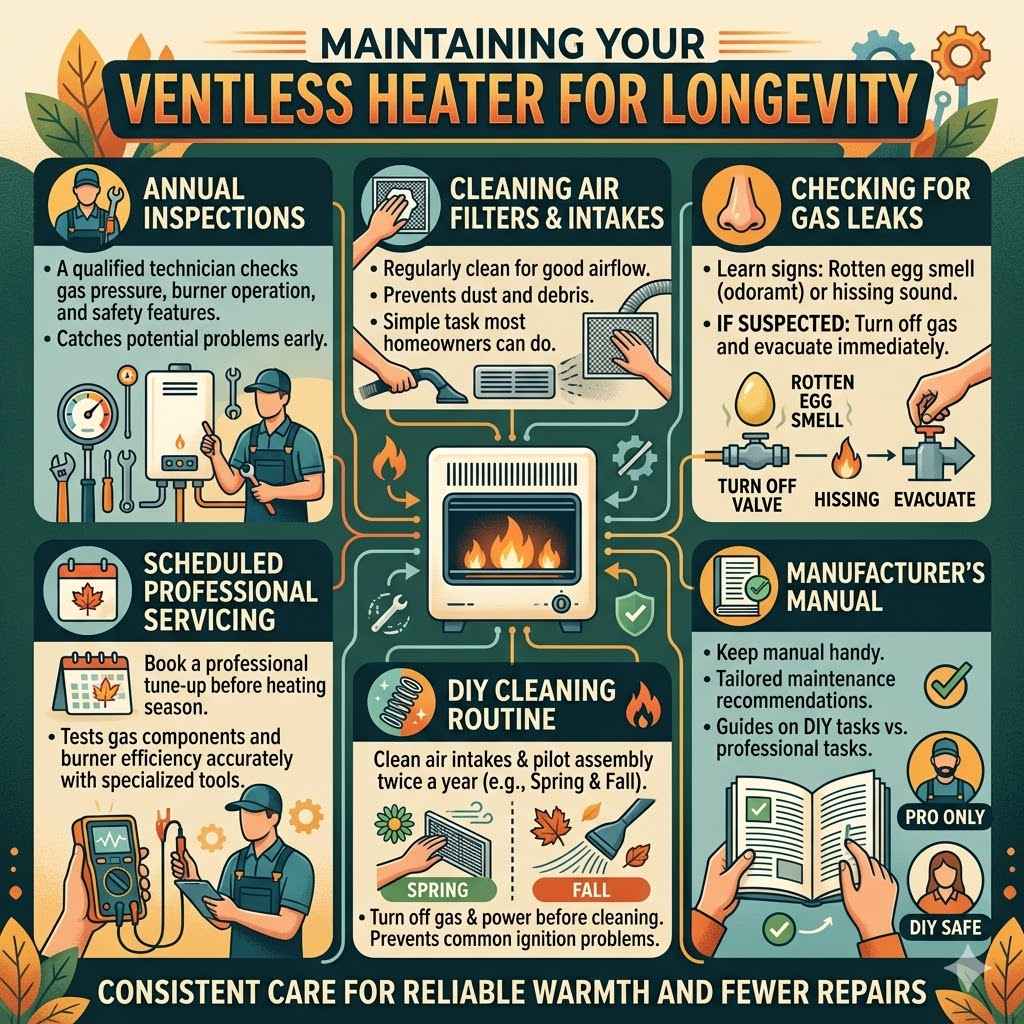
Annual Inspections: It’s wise to have your ventless heater inspected by a qualified technician once a year. They can catch potential problems early. This includes checking gas pressure, burner operation, and safety features.
Cleaning Air Filters and Intakes: Dust and debris are the enemies of efficient heating. Regularly cleaning air filters and intake vents ensures good airflow. This is a simple task most homeowners can do.
Checking for Gas Leaks: Learn how to detect gas leaks. A hissing sound or a rotten egg smell (due to an added odorant) are signs. If you suspect a leak, turn off the gas and evacuate immediately.
- Scheduled Professional Servicing: Consider scheduling a professional tune-up before the heating season begins. This ensures your unit is ready to perform optimally and safely when you need it most. Technicians have specialized tools to test gas components and burner efficiency accurately.
- DIY Cleaning Routine: Set a reminder to clean the air intakes and pilot assembly at least twice a year, perhaps in the spring and fall. This simple cleaning can prevent many common ignition and airflow problems. Always turn off the gas and power before cleaning.
- Manufacturer’s Manual: Keep your owner’s manual handy. It contains specific maintenance recommendations tailored to your model. It will also guide you on what tasks are safe for a homeowner to perform and what requires a professional.
Consistent care makes a big difference. By performing simple maintenance, you can avoid many costly repairs and ensure your ventless heater provides reliable warmth for years to come.
Frequently Asked Questions
Question: How often should I clean my ventless heater’s air intakes?
Answer: You should clean your ventless heater’s air intakes at least twice a year, ideally in the spring and fall, or more often if you notice dust buildup.
Question: What should I do if I smell gas near my ventless heater?
Answer: If you smell gas, immediately leave the area, do not turn any lights or appliances on or off, and call your gas company or 911 from a safe distance.
Question: Can I convert my ventless heater to a vented unit?
Answer: No, ventless heaters are designed specifically for unvented use and cannot be safely converted into vented units. Attempting to do so can be dangerous.
Question: My ventless heater is making strange noises. What could it be?
Answer: Strange noises can indicate various issues, such as poor gas-air mixture causing a noisy flame, or a fan or blower problem if your unit has one. It’s best to have it inspected by a technician.
Question: Is it safe to use my ventless heater in a small room?
Answer: Ventless heaters have specific room size requirements for safe operation to ensure adequate ventilation and prevent oxygen depletion. Always check your owner’s manual for these guidelines.
Summary
Learning how to fix ventless heaters at home can save you time and money. We explored common issues like pilot light problems, burner malfunctions, and airflow blockages. Simple cleaning and checks can often resolve these.
Remember to always prioritize safety by turning off gas and power before working on your unit. Regular maintenance is key to a reliable and safe heater.