How to Maintain a Hybrid Heat Pump Water Heater
Maintain a hybrid heat pump water heater by keeping about 2 feet of clearance around it, cleaning the filter every 1-3 months, checking the condensate drain, and testing the backup elements and settings about once a year. Skip upkeep and the unit can draw more power, make less hot water, leak, or switch to resistance heat more often. This guide covers airflow, drainage, controls, and backup-element checks homeowners can do without special tools.
Operating modes and efficiency basics


A hybrid heat pump water heater moves heat from surrounding air into the tank, then uses backup electric resistance elements when demand is high or recovery slows. It works best in spaces with enough air volume and open clearance, because the heat pump component depends on room air, not on making heat from electricity alone.
How the parts share the load
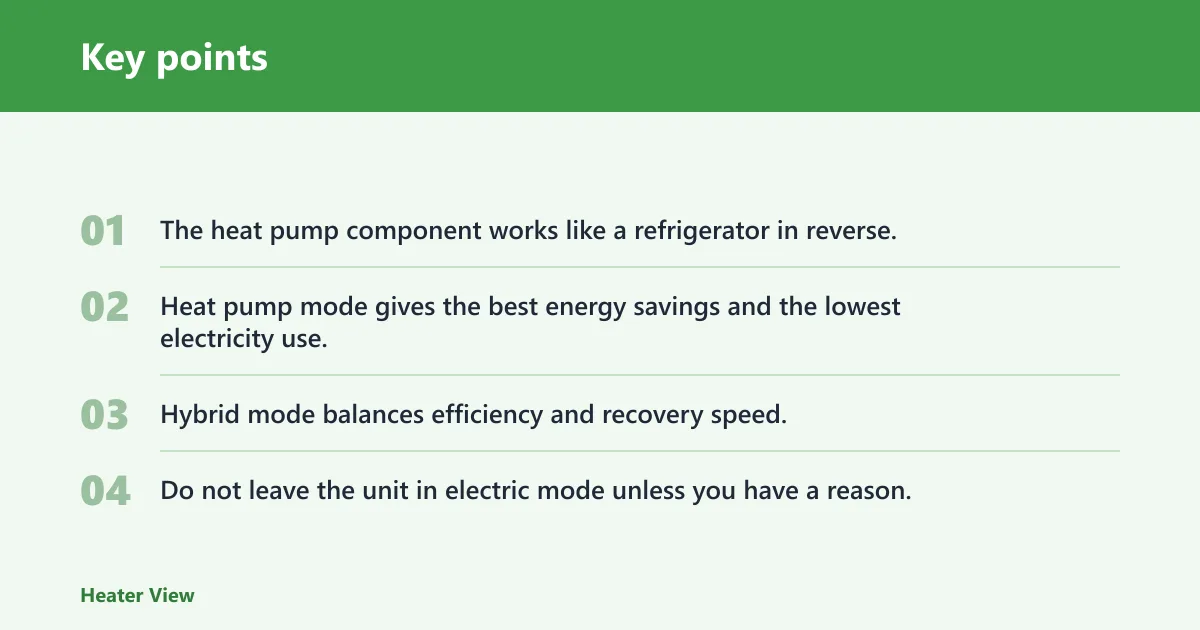
The heat pump component works like a refrigerator in reverse. It pulls warmth from ambient air, and the tank stores that heat as hot water. When hot water use rises, or when the surrounding air is too cool for quick recovery, the electric elements can take over for support.
That split is why maintenance matters. If airflow is blocked, the condensate drain clogs, or the control stays in the wrong mode, the unit may rely on resistance heat more often and lose the savings that made it attractive in the first place.
Which operating mode to use?
Heat pump mode gives the best energy savings and the lowest electricity use. Hybrid mode balances efficiency and recovery speed. Electric mode heats faster, but it uses more electricity and should be reserved for periods when hot water demand is unusually high or the unit is struggling to recover in a colder room.
Do not leave the unit in electric mode unless you have a reason. A control left on the wrong setting can hide a maintenance problem, because the tank may still produce hot water while the heat pump portion does little of the work.
Hybrid heat pump maintenance map
This map keeps the focus on the parts that most affect performance: air movement, drainage, controls, and warning signs. Use it as a quick reference before the longer checklists below.
| Task | Inspection interval | What normal looks like | When to call a pro |
|---|---|---|---|
| Airflow around the tank | Monthly | Open space on all sides, at least 2 feet of clearance, no boxes or shelving blocking intake or discharge | Persistent blocked airflow, cramped placement, or repeated performance complaints after the area is cleared |
| Filter cleaning | Every 1-3 months | Light dust only, filter seats firmly after cleaning, airflow sounds steady | Torn filter, damaged housing, or dust that returns quickly enough to suggest a room air problem |
| Condensate drain | Monthly and after heavy use | No standing water, drain path clear, pan dry or only slightly damp during operation | Water on the floor, recurring blockage, algae buildup, or a leak that continues after the drain is cleared |
| Operating mode check | Monthly and after power interruptions | Mode matches your goal: heat pump for savings, hybrid for balance, electric for temporary fast recovery | Unit keeps reverting to electric mode, shows an error, or ignores mode changes |
| Temperature setting | Every 3-6 months | Set point matches household use, commonly around 120°F for many homes unless a plumber or local code says otherwise | Setting changes on its own, water is too hot, or the unit cycles unusually often |
| Noise and recovery behavior | Every use, with a closer check after changes | Sound resembles a refrigerator, recovery is steady, no new vibration, no long delays after normal use | Louder fan or compressor noise, new rattling, slow recovery, icing, repeated backup-element use, or error codes |
How often should you maintain it?
Check a hybrid heat pump water heater monthly, give it a deeper seasonal look, and inspect the controls and backup behavior at least once a year. The most useful schedule is simple: quick visual checks often, filter and drain attention on a regular rhythm, and a full settings review before heavy-use seasons.
Monthly checks
-
Clear the air path. Confirm that nothing is pressed against the cabinet or intake area. Dust, boxes, paint cans, and laundry baskets can all reduce airflow, especially in a garage or utility room.
-
Look for leaks and dust. Check the floor under the unit, the drain line, and the surrounding floor for moisture. A light film of dust is normal; thick buildup around the intake or filter is not.
-
Listen for changes. The compressor and fan usually sound like a refrigerator running. A sudden rattle, a stronger hum, or a high fan note can point to airflow trouble or a failing component.
Seasonal checks
-
Clean the filter. Remove and clean it every 1-3 months, or sooner if the room is dusty. A clogged filter makes the heat pump work harder and can push the unit toward backup resistance heating.
-
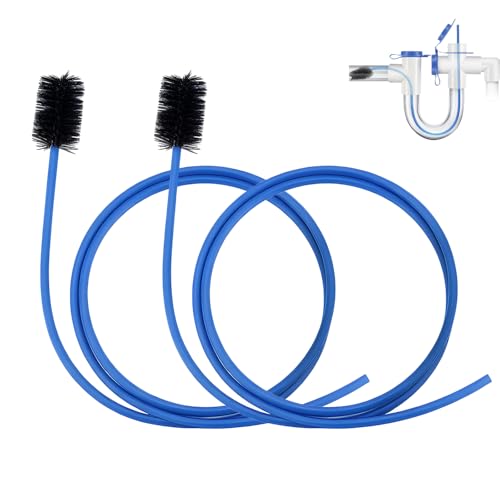
Inspect the condensate drain. Make sure the drain pan and line are clear and that water is moving away from the unit. Standing water often means a blockage, poor slope, or a disconnected line.
-
Check room conditions. Seasonal temperature swings in garages and utility rooms affect performance. The heat pump works best above 40 degrees Fahrenheit, so a colder room can slow recovery and make the electric elements engage more often.
Annual checks
-
Verify the operating mode. Confirm that the unit is set for the household’s current needs. Heat pump mode favors savings, hybrid mode balances speed and efficiency, and electric mode should be used only when recovery speed matters more than efficiency.
-
Review the temperature setting. Make sure the set point has not drifted. A setting that is too high raises standby losses, while a setting that is too low can shorten the useful supply of hot water.
-
Test recovery behavior. After a normal hot-water draw, notice whether the unit returns to temperature at a steady pace. Slow recovery, frequent backup heat, or error codes deserve service.
What should you inspect in the room around the tank?
Start with the space, not the tank. A hybrid heat pump water heater needs about 1,000 cubic feet of air volume from most manufacturers, plus clearance on all sides, so the room itself is part of the system. Garages and dedicated mechanical rooms often work well when they are not overcrowded or too cold.
Airflow and clearance
Keep the area open enough for free air circulation. The unit should not be boxed in by storage shelves, hanging tools, or stacked items that block the intake or discharge. Even partial blockage can reduce the amount of warm air available to the heat pump component.
Picture a 50-gallon unit in a garage with a bicycle parked inches from the grille. The tank may still run, but the heat pump has less air to pull from, so the compressor runs longer and the electric backup may step in more often.
Dust, lint, and blocked intake paths
Dust and lint are small problems with large effects. A dirty filter or intake path makes the fan work harder and can reduce the amount of ambient heat the system captures. If the room stores cardboard, sawdust, pet hair, or laundry fibers, check the filter more often than the minimum schedule.
Garage and utility-room temperature
Ambient temperature matters because the heat pump portion performs best above 40 degrees Fahrenheit. In colder garages or utility rooms, the unit may still work, but recovery can slow and resistance heat may carry more of the load. If the space repeatedly drops too low, that is a service or placement issue, not a maintenance one you can solve by changing a setting.
Suppose the water heater is in a garage that stays near 38 degrees Fahrenheit on winter mornings. The tank may switch to electric mode more often, and that pattern is a clue to inspect room temperature, clearances, and the drain before assuming the heater itself has failed.
Which settings should you check on the control panel?
The control panel can hide a lot of useful clues. Check mode, temperature, and any error display, because the wrong setting can make a healthy unit look faulty and a worn unit look normal for too long. A quick monthly review takes little time and helps preserve the efficiency advantage.
Operating mode
Make sure the unit is in the mode that fits the household pattern. Heat pump mode is best when hot water demand is ordinary and efficiency matters most. Hybrid mode is often the best everyday choice because it balances savings and faster recovery. Electric mode is useful after unusually heavy use or when quicker recovery is temporarily more important.
Water temperature setting
Check the target temperature every few months and after any power interruption. If someone changed the setting during a short hot-water shortage, the unit may now use more electricity than needed. A reasonable set point helps avoid both waste and nuisance tripping into backup heat.
Recovery behavior and backup-element use
If the unit is using the backup elements often, ask why. High demand can explain occasional use, but frequent switching can also point to blocked airflow, a cold room, a clogged filter, or a condensate issue. That pattern matters because the resistance elements are a fallback, not the main efficiency feature.
When noise, recovery, or drainage needs attention
Normal sound from a hybrid heat pump water heater is often similar to a refrigerator. The compressor and fan are expected to make some noise, and typical output is between 40 and 50 decibels. A change from the usual sound is more important than the sound itself.
Fan and compressor noise changes
Inspect the unit if the fan becomes louder, the compressor starts cycling sharply, or the cabinet begins to rattle. New noise can come from dust buildup, a blocked intake, loose parts, or a problem that needs a technician. Do not treat every sound as harmless just because the unit is on.
Slow hot water recovery
Slow recovery often appears after a long shower, multiple loads of laundry, or a room-temperature drop. If it happens often without a clear reason, check the filter, the operating mode, and the room air first. Continued slow recovery after those checks suggests service is needed.
Condensate drain and standing water
Condensate is part of normal operation, but it should leave the unit cleanly. Standing water, a damp floor, or a drain that backs up can lead to shutdowns, leaks, and corrosion. Clear the line if you can reach it safely; call a pro if the blockage returns or the leak does not stop.
What problems can reduce heat pump water heater efficiency?
Several common problems can cut efficiency without fully stopping the water heater. The biggest are blocked airflow, a dirty filter, a cold room, a clogged condensate drain, the wrong operating mode, and frequent backup-element use. A unit can still produce hot water while using more electricity than it should.
- Restricted air around the cabinet or intake.
- Dust and lint on the filter or in the air path.
- Ambient temperature below the range where the heat pump performs well.
- Too much reliance on electric resistance heating during normal demand.
- Drain problems that force the unit into a fault or reduce runtime.
- Error codes, icing, or unusual noise that point to a developing fault.
DOE research has found that performance varies by climate region and control scheme. That is one reason maintenance should focus on the control setting, the room around the tank, and the drain path rather than on the tank alone. Laboratory results have also shown up to 64% energy savings potential in many climate zones, but those savings depend on the unit staying in good operating condition. (OSTI)
A hybrid heat pump water heater can reduce water heating bills, and DOE data puts average annual electricity use at 2,195 kWh per year. The point of maintenance is to keep the unit in its efficient operating range so it keeps working like a heat pump instead of acting like a plain electric heater with a fan.
Incentives can help people choose this type of water heater, too. The federal tax credit is 30 percent, up to $2,000 per year, and ENERGY STAR standards are required to qualify for the credit. Some states also offer additional rebates, but those programs are separate from routine maintenance.
Frequently asked questions
How does a hybrid heat pump water heater work?
It moves heat from surrounding air into the water tank, then uses backup electric resistance elements when demand rises or the room is too cool for fast recovery. The heat pump portion does the efficient work, while the resistance elements act as support during peak use or slower conditions.
What is a hybrid heat pump water heater?
It is a water heater that combines a heat pump with electric resistance backup. The design lets the unit heat water more efficiently than a standard electric model when room air is available, while still giving you a fallback for high demand or colder ambient conditions.
How often should I maintain a hybrid heat pump water heater?
Check it monthly, clean the filter every 1-3 months, inspect the drain on the same schedule, and review the mode and temperature setting at least once a year. Add seasonal checks in garages and utility rooms, especially before colder weather arrives.
What does a hybrid heat pump water heater need for airflow?
Most manufacturers specify at least 1,000 cubic feet of air volume, along with clearance on all sides. It works best in a dedicated mechanical room or spacious garage where air can move freely and the intake path stays open and clean.
Can a hybrid heat pump water heater work in a cold garage?
It can work, but performance drops as the room gets colder. These units operate best above 40 degrees Fahrenheit, so a cold garage may cause slower recovery and more frequent use of the backup electric elements. That does not mean failure, but it does mean closer monitoring.
Why is my hybrid water heater making more noise than usual?
The compressor and fan normally sound like a refrigerator and usually fall between 40 and 50 decibels. A louder sound, new rattling, or a sharper fan note can signal dust buildup, blocked airflow, loose parts, or another issue that should be inspected before it worsens.