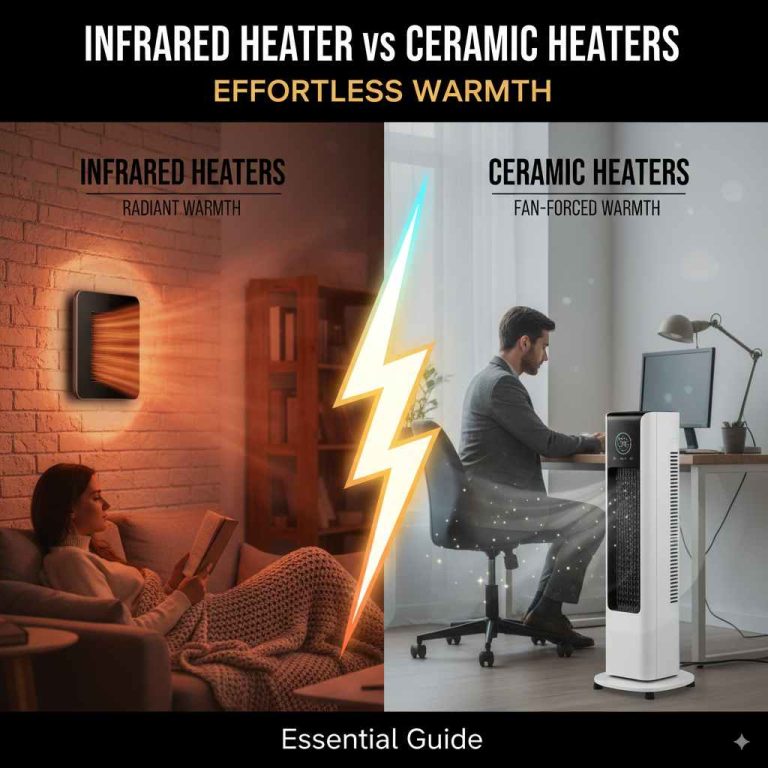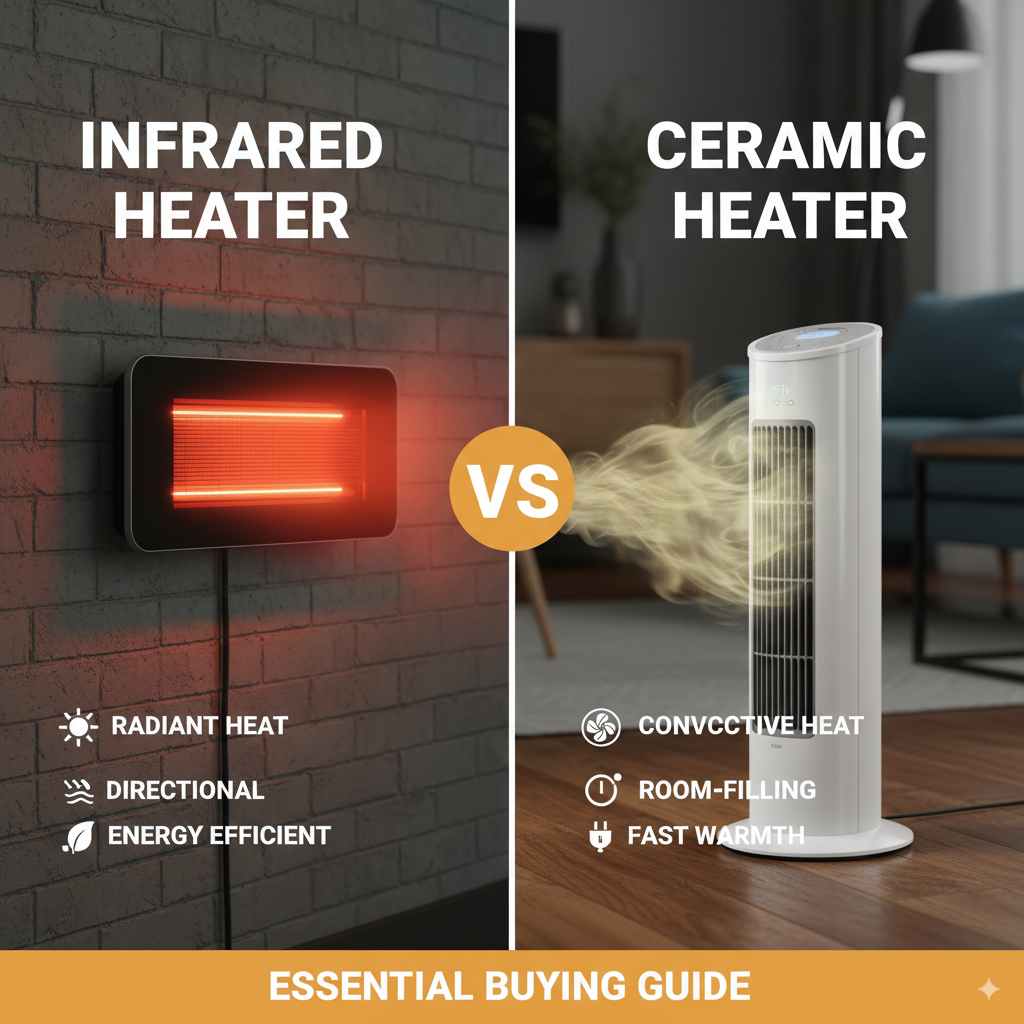
Infrared vs Ceramic Heater: Essential Buying Guide
Need to choose between an infrared and ceramic heater? For simple, direct heat, infrared heaters warm objects and people quickly, making them great for spot heating or larger, drafty spaces. Ceramic heaters offer more even, room-filling warmth and are excellent for maintaining a consistent temperature in smaller to medium-sized rooms. Both are energy-efficient options for supplemental heating.
Feeling a chill in your home? You’re not alone! Many of us look for ways to stay cozy without relying solely on central heating, especially during those in-between seasons or for specific rooms. Choosing the right heater can seem a little confusing with all the different types available. Two popular and effective options are infrared and ceramic heaters. They both heat your home, but they do it in distinct ways that might make one a better fit for your needs than the other. Don’t worry, though! We’ll break down exactly how they work, their pros and cons, and help you decide which one is your perfect heating companion. Let’s find the warmest, most comfortable solution for your home, easily!
Infrared vs Ceramic Heater: Your Ultimate Buying Guide
Deciding between an infrared heater and a ceramic heater can feel a bit like choosing between two good friends – both can help, but they have different strengths! As your home heating guide, Tanim, I’m here to make this choice clear and simple for you. We’ll look at how they heat, where they work best, and what to consider before you buy. By the end, you’ll feel confident picking the heater that will make your home perfectly comfortable.
How Do They Heat? The Key Difference
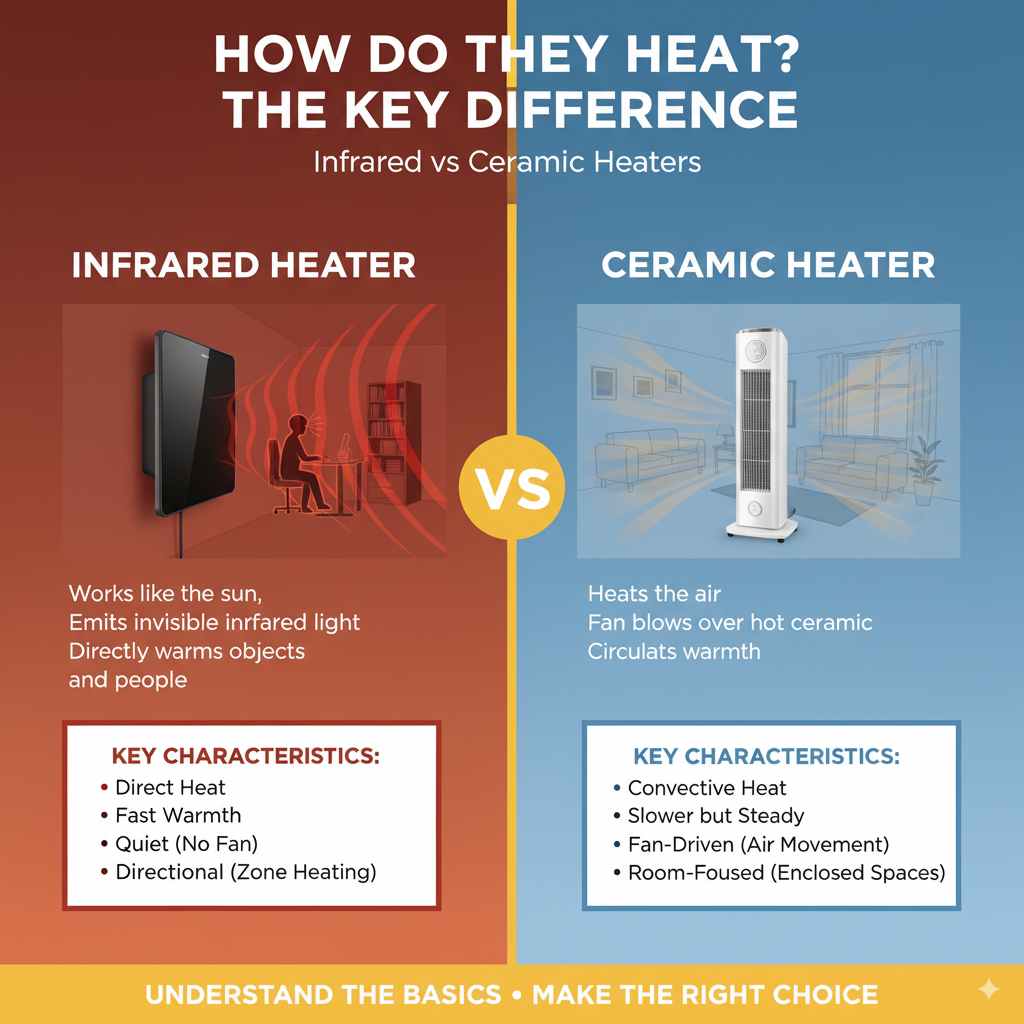
The biggest difference between infrared and ceramic heaters lies in their heating method. Understanding this is the first step to making the right choice.
1. Infrared Heaters: The Ray of Warmth
Infrared heaters work a lot like the sun. They emit invisible infrared radiation, which is a type of light wave. When this radiation hits objects, surfaces, and people in the room, it warms them directly. Think of it like standing in a sunny spot – you feel warm even if the air around you isn’t very hot. They don’t heat the air continuously; instead, they focus their warmth on whatever they “see.”
Key Characteristics of Infrared Heating:
- Direct Heat: Warms people and objects, not the air itself.
- Fast Warmth: You feel the heat almost instantly.
- Less Air Movement: Doesn’t rely on fans, so it’s quiet and doesn’t blow dust around.
- Directional: Best for heating specific areas or people.
2. Ceramic Heaters: The Cozy Blanket
Ceramic heaters, on the other hand, heat the air. Inside, they have a ceramic element that gets hot. A fan then blows air over this hot ceramic, circulating warm air throughout the room. This is similar to how a traditional furnace works, but on a smaller scale. Because they heat the air, the whole room gradually becomes warmer and stays that way more consistently.
Key Characteristics of Ceramic Heating:
- Radiant & Convective Heat: Heats the air which then circulates for even warmth.
- Slower but Steady: Takes a little longer to feel the heat, but it’s consistent.
- Fan-Driven: Uses a fan to distribute warm air, which can create some noise and air movement.
- Room-Focused: Excellent for warming up an entire enclosed space.
When to Choose an Infrared Heater
Infrared heaters are fantastic for specific situations where you need warmth fast or want to heat a larger, less controlled space. They’re energy-efficient because they don’t waste energy heating empty air, and they provide that lovely, direct warmth.
Great for:
- Spot Heating: Perfect for warming just you and your spot on the couch, or your workspace at a desk.
- Drafty or Open Areas: Excellent for garages, workshops, patios, or large living rooms where keeping the entire air temperature high would be difficult and costly. They warm you directly, bypassing drafts.
- Quick Warmth: If you hate waiting to feel warm, infrared is your go-to.
- Allergy Sufferers: Since they don’t circulate air with fans, they don’t kick up dust, pet dander, or allergens.
- Quiet Operation: Most infrared heaters are very quiet, often silent, making them ideal for bedrooms or offices.
Pros of Infrared Heaters
- Instant, direct warmth
- Energy-efficient for spot heating
- Quiet operation (no fan noise)
- Doesn’t dry out the air as much
- Helps maintain natural humidity
- Good for people with allergies or respiratory issues
Cons of Infrared Heaters
- Doesn’t heat the entire room evenly
- Warmth is directional; if you move out of the beam, you’ll feel cooler
- Can be less effective in very large, open outdoor spaces without careful placement
When to Choose a Ceramic Heater
If you’re looking to make a smaller to medium-sized room consistently comfortable, a ceramic heater is often the best choice. They excel at raising and maintaining the overall temperature of an enclosed space.
Great for:
- Heating Small to Medium Rooms: Bedrooms, home offices, bathrooms, or living rooms typically benefit most.
- Consistent Room Temperature: If you want the whole room to feel warm and stay that way, ceramic is ideal.
- Supplemental Heating: Works well to take the edge off a chilly room without turning up the main thermostat.
- Safety Features: Many models come with tip-over protection and overheat shut-off, making them a safer choice for busy households.
A good example of how useful these can be is in a bathroom. You can turn it on a few minutes before stepping out of the shower to ensure a warm, comfortable environment. The U.S. Department of Energy suggests that using localized heating can be more energy-efficient if you only need to heat a small area.
Learn more about energy-efficient heating and cooling from the U.S. Department of Energy.
Pros of Ceramic Heaters
- Heats an entire room evenly
- Maintains consistent temperatures
- Often compact and portable
- Many models include safety features like tip-over switches and overheat protection
- Good for small to medium enclosed spaces
Cons of Ceramic Heaters
- Heating the whole room takes time
- Fan can create noise and circulate dust
- Can dry out the air more than infrared
- Less effective for large or open areas
Key Features to Look For in Any Heater
Regardless of whether you lean towards infrared or ceramic, several features are important for safety, convenience, and efficiency. When you’re browsing, keep an eye out for these:
- Thermostat Control: This is crucial for efficiency. A thermostat allows the heater to automatically turn on and off to maintain a set temperature, preventing overheating and saving energy.
- Adjustable Heat Settings: High, low, and even eco-modes give you flexibility to dial in the perfect comfort level and conserve energy.
- Safety Features:
- Overheat Protection: Automatically shuts off the heater if it gets too hot.
- Tip-Over Switch: Shuts off the heater if it’s accidentally knocked over. Essential for homes with pets or children.
- Cool-Touch Exterior: The outside of the heater stays relatively cool, reducing the risk of burns.
- Timer Function: Allows you to set the heater to turn on or off at specific times, perfect for waking up to a warm room or ensuring it’s off when you leave.
- Portability: Look for models with sturdy handles, wheels, or a lightweight design if you plan to move it between rooms.
- Cord Length and Storage: A long enough cord can be very convenient, and some heaters offer built-in cord storage for tidiness.
- Coverage Area: Check the manufacturer’s recommended room size for the heater to ensure it’s appropriate for your space.
- Energy Efficiency Certifications: Look for seals like ENERGY STAR if available, though not all portable heaters are eligible for this.
Infrared vs Ceramic Heater: A Quick Comparison Table
To help you see the differences side-by-side, here’s a handy table:
| Feature | Infrared Heater | Ceramic Heater |
|---|---|---|
| How it Heats | Emits infrared radiation to warm objects/people directly. | Heats air with a ceramic element, then a fan circulates warm air. |
| Primary Use | Spot heating, quick warmth, drafty areas, open spaces. | Whole-room heating, maintaining consistent temperatures in enclosed spaces. |
| Speed of Heat | Instantaneous. | Takes a few minutes to warm up the room. |
| Room Coverage | Directional; warms what it points at. | Even, whole-room warmth. |
| Noise Level | Very quiet, often silent. | Fan noise is usually present. |
| Air Quality Impact | Doesn’t circulate dust; good for allergies. | Fan can circulate dust; may dry out air. |
| Energy Efficiency | Very efficient for direct heating. | Efficient for heating entire rooms evenly. |
Installation and Usage: Simple Steps for Both Types
One of the great things about both infrared and ceramic heaters is how easy they are to set up and use. You don’t need an expert – just a few minutes and an electrical outlet!
Setting Up Your Heater (It’s Easy!)
Once you’ve decided which type of heater is best for you, the setup is straightforward:
- Unpack and Inspect: Carefully remove the heater from its packaging. Check for any damage that might have occurred during shipping.
- Read the Manual: Even though these are simple appliances, quickly glance at the owner’s manual. It will highlight specific features and safety instructions for your model.
- Choose a Safe Location:
- Place the heater on a stable, flat, hard surface. Never put it on a rug, carpet, or furniture that could block airflow or be a fire hazard.
- Ensure a safe clearance around the heater – check the manual, but typically at least 3 feet (about 1 meter) from walls, curtains, bedding, furniture, and other combustible materials. This is vital for preventing fires.
- Keep it away from water sources like sinks, bathtubs, or showers.
- Plug It In: Plug the heater directly into a wall outlet. Avoid using extension cords if possible, as they can sometimes be a fire risk if not rated properly for the heater’s wattage. If you must use one, ensure it’s a heavy-duty cord designed for high-wattage appliances, as recommended by the National Fire Protection Association (NFPA).
- Turn It On: Use the control buttons or dials to turn on your heater and set your desired temperature or heat level and timer (if applicable).
Tips for Efficient and Safe Usage
Using your new heater effectively and safely is just as important as choosing the right one.
- Use in Appropriate Spaces: Remember that infrared is best for direct, spot heating, and ceramic is best for enclosed rooms. Don’t try to heat your entire drafty garage with a small ceramic heater – it’s not designed for that!
- Thermostat is Your Friend: Always use the thermostat. Set it to a comfortable temperature and let the heater do the work. Constantly fiddling with it can waste energy.
- Don’t Block Airflow: For ceramic heaters, ensure nothing is blocking the air intake or outlet vents. For infrared heaters, keep objects out of the direct path of the heat if you want it to reach its intended target efficiently.
- Regular Cleaning: Dust can accumulate on heating elements and fan blades, reducing efficiency and posing a fire risk. Unplug the heater and use a soft brush or vacuum attachment to gently clean it periodically.
- Never Leave Unattended: This is a golden rule for all portable heaters. Always turn them off and unplug them when you leave the room or go to sleep, unless the unit is specifically designed for continuous operation with all safety features active.
- Check Cords: Periodically inspect the power cord for fraying or damage. If you notice any issues, discontinue use immediately and have it repaired or replaced.
- Understand Wattage: Higher wattage generally means more heat output, but also higher energy consumption. Choose a wattage appropriate for the size of the space you need to heat. A general guideline for a well-insulated room is 10 watts per square foot.
Cost Considerations: Purchase Price vs. Running Costs
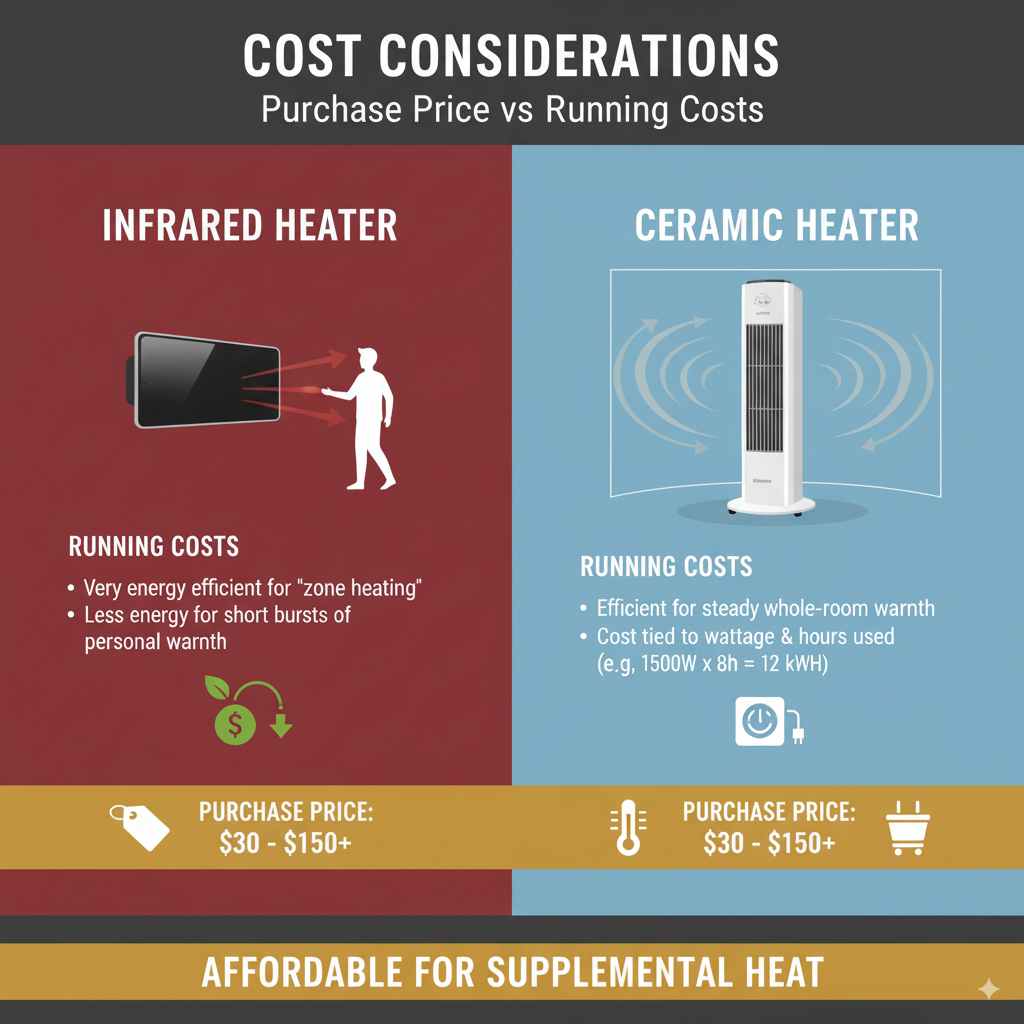
When thinking about buying a heater, it’s wise to consider both the upfront cost (the price you pay for the unit) and the ongoing cost (how much it costs to run). Both infrared and ceramic heaters are generally quite affordable, both to buy and to operate, especially when used for supplemental heating.
Purchase Price
Generally, both infrared and ceramic heaters can be found at a similar price point, ranging from around $30 to $150 for basic to mid-range models. High-end or feature-rich units might go up to $200 or more.
- Basic Models: Simple, no-frills infrared or ceramic heaters are very budget-friendly.
- Mid-Range Models: These often include more advanced features like better thermostats, timers, multiple heat settings, and more robust safety features.
- Premium Models: May offer smart controls, specific design aesthetics, or advanced infrared technology for faster, more efficient heating.
There isn’t a consistent price difference that makes one type inherently cheaper than the other at the point of purchase; it depends more on brand, features, and build quality.
Running Costs
This is where the heating method makes a more noticeable difference:
- Infrared Heaters: Tend to be very cost-effective for their intended use. Because they heat objects and people directly, you feel the warmth quickly without waiting for the air to heat up. This makes them efficient for short bursts of personal warmth or heating a specific zone. If you only need to warm yourself while sitting at your desk, an infrared heater uses less energy than one trying to warm the entire room.
- Ceramic Heaters: Are also energy-efficient, especially when used correctly. Their efficiency comes from their ability to maintain a consistent temperature in an enclosed space using a thermostat. Running costs are tied to their wattage and how long they run. For example, a 1500-watt ceramic heater running for 8 hours will consume roughly 12 kWh of electricity. The actual cost depends on your local electricity rates. The U.S. Energy Information Administration (EIA) provides electricity price data you can use to estimate your costs.
Key takeaway: For quick, personal warmth or heating a zone, infrared often uses less energy. For steadily warming a small to medium room, a ceramic heater with a good thermostat is efficient.
Frequently Asked Questions (FAQ)
Q1: Which heater is safer, infrared or ceramic?
Both are generally safe when used correctly according to the manufacturer’s instructions and safety guidelines. Ceramic heaters often come with more built-in safety features like tip-over protection and overheat shut-off, which are crucial for busy households. Infrared heaters are also safe but require careful placement away from flammable materials due to their heat output.
Q2: Can I use a portable heater in a bathroom?
Yes, but with extreme caution. Only use heaters specifically designed for damp or wet environments, and never place them near water sources like bathtubs or sinks. Ensure adequate ventilation. Ceramic heaters are often preferred for their steady warmth in a small space, but always check the product’s suitability. Never use an extension cord in a bathroom.