

Oil columns and convection heaters both effectively warm your home, but an oil column offers a more consistent, quiet, and lasting heat by retaining warmth longer, making it a genius choice for sustained comfort without noisy fan operation. Convection heaters heat up faster.
Choosing the right heater can feel like a puzzle, especially when you’re trying to keep your home warm and cozy without breaking the bank or dealing with complicated setups. Many of us have faced chilly rooms on cold mornings and wondered, “Which heater is best for me?” It’s a common concern, and thankfully, it doesn’t have to be frustrating. Today, we’ll break down two popular options: oil column heaters and convection heaters. You’ll discover their unique ways of working and learn which one will be your home’s best friend this winter. Get ready to make a smart, simple choice for ultimate comfort!
Understanding Your Heating Options: Oil Column vs. Convection Heaters
When looking to add warmth to a room, two common types of heaters you’ll encounter are oil-filled column heaters and convection heaters. While both aim to make your space more comfortable, they do so using different methods, leading to distinct advantages and user experiences. Think of them as two different approaches to solving the same problem – a cool room.
An oil column heater, often called an oil-filled radiator, looks like a traditional radiator. It’s filled with a special oil that heats up when electricity flows through a heating element inside. This heated oil then warms the metal fins of the column, which in turn radiates heat into the room. The neat thing is, the oil holds onto heat even after the heater is turned off, providing a gentle warmth that lingers. This makes it great for maintaining a steady temperature throughout the night or in rooms that need consistent coziness.
On the other hand, a convection heater works by drawing in cool air from the room, heating it up internally, and then releasing the warm air back into the space. This process creates a natural air current, or convection current, that circulates the warm air. Convection heaters are known for heating a room relatively quickly because they directly heat the air. They often have a fan to help push the warm air out, making the heating process speedier.
Choosing between them often comes down to your specific needs: do you need quick heat, or sustained, gentle warmth? Are you concerned about noise? How quickly do you want the room to feel toasty? By understanding these basic differences, you’re already on your way to making a “genius choice” for your home comfort.
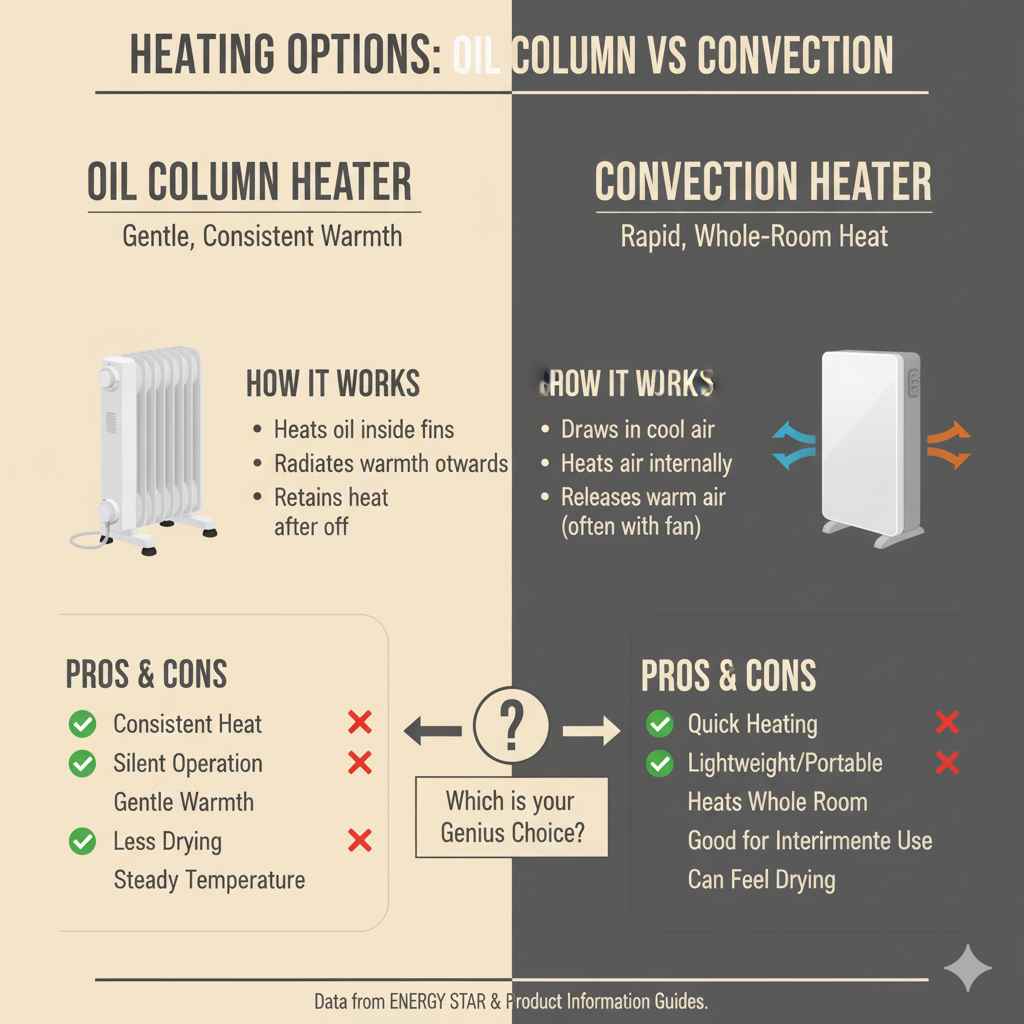
How an Oil Column Heater Works
Oil column heaters are designed to provide a steady, gentle warmth that lasts. They are a fantastic choice for those who value consistent comfort and a quieter heating experience. Let’s dive into how they achieve this.
The Science Behind the Sizzle (Without the Sizzle!)
Inside each column of an oil heater, you’ll find a special thermal oil. This oil is sealed permanently and never needs refilling or replacement. When you switch on the heater, an electric element at the base heats up. This element warms the oil surrounding it.
As the oil heats, it becomes less dense and rises within the column. Cooler oil from the top of the column then sinks to take its place, creating a continuous, silent cycle of convection within the heater itself. This internal circulation ensures that the heat from the element spreads evenly throughout the entire oil-filled column.
Once the oil is hot, it heats the metal fins of the oil column. These fins then radiate heat outwards into the room. This is a form of radiant heat, similar to how the sun warms you, but also combined with gentle convection as the warm fins heat the air around them. The key benefit here is that oil is excellent at retaining heat. Even after you turn the heater off, the oil slowly releases its stored warmth, providing a comfortable temperature for an extended period.
Key Features of Oil Column Heaters
Oil column heaters come with several user-friendly features designed for convenience and safety:
- Thermostat Control: Most models include an adjustable thermostat. You can set your desired room temperature, and the heater will automatically switch on and off to maintain it. This helps prevent overheating and saves energy.
- Adjustable Heat Settings: You’ll typically find multiple power settings (e.g., low, medium, high) allowing you to control the intensity of the heat output.
- Tip-Over Protection: For added safety, oil column heaters are equipped with a safety switch that automatically shuts off the unit if it’s accidentally knocked over.
- Overheat Protection: A thermal cut-off feature will switch off the heater if the internal temperature gets too high, preventing damage and potential hazards.
- Silent Operation: Unlike fan heaters, oil column heaters operate almost silently, as they don’t rely on a fan for heat distribution.
- Portability: Many are designed with wheels or casters, making them easy to move from room to room.
These features make oil column heaters a practical and safe choice for everyday use, especially in bedrooms or living areas where a quiet and consistent warmth is desired.
How a Convection Heater Works
Convection heaters offer a quick and efficient way to heat a space. They work by directly warming the air, making them ideal for situations where you need to feel the heat quickly.
The Airflow Advantage
Convection heaters are designed to create a natural cycle of air movement. When you turn the heater on, an electric element heats the air that is drawn into the unit. This happens because cool air, being denser, sinks and is pulled into the bottom of the heater.
As the air passes over the heated element, it warms up. Warm air is less dense than cool air, so it naturally rises. The heater is designed to release this warm air from the top. As the warm air rises and escapes, it pushes the cooler air in the room downwards and sideways, where it is then drawn into the heater to be warmed. This creates a continuous loop of air circulation, known as a convection current.
Some convection heaters also use a fan to accelerate this process. This fan actively blows the warm air out of the unit and circulates it more quickly around the room. This “fan-assisted convection” can make a room feel warm much faster than a natural convection heater.
The Speed Factor
The primary advantage of convection heaters is their speed. Because they directly heat the air and can circulate it rapidly (especially with a fan), they can bring a room up to your desired temperature much quicker than other heating methods. This makes them excellent for rapidly warming up a chilly space when you first enter it, or for rooms that are used intermittently.
Key Features of Convection Heaters
Convection heaters vary in design, but many share these common features:
- Adjustable Thermostat: Like oil heaters, they usually have a thermostat to maintain a set temperature, preventing the room from becoming too hot and saving energy.
- Variable Power Settings: You can typically choose from different wattage settings to control the heat output and speed.
- Fan Boost (Optional): Some models include a fan to speed up heat distribution. You can usually turn this fan off for quieter operation.
- Lightweight and Portable: Many convection heaters are designed to be lightweight and have handles or stands, making them easy to move between rooms.
- Safety Features: Most modern convection heaters include tip-over protection and overheat protection for safe operation.
- Modern Aesthetics: Many convection heaters have sleek, modern designs that can blend well with contemporary decor.
The rapid heating capability of convection heaters makes them a practical choice for those who need to warm up a space quickly and efficiently.
Oil Column vs. Convection Heaters: A Direct Comparison
When deciding between an oil column heater and a convection heater, understanding their differences in performance, efficiency, and suitability for various situations is key. Let’s put them side-by-side.
Heating Method and Speed
Oil Column Heaters: They heat up gradually. The oil needs time to warm, and then the heat is radiated and convected into the room. This means it takes longer for the room to feel warm, but the heat is more sustained and gentle once it’s there. They rely on a steady release of heat.
Convection Heaters: They heat up very quickly. By directly heating and circulating air, they can raise the room temperature in a relatively short amount of time. This is their main strength – rapid heating.
Heat Retention and Longevity
Oil Column Heaters: The oil’s ability to retain heat is a significant advantage. Once the heater is turned off, the stored heat in the oil continues to radiate for some time, keeping the room warm for longer. This provides a lingering, comfortable warmth.
Convection Heaters: Once turned off, convection heaters stop producing heat almost immediately because they don’t store thermal energy in the same way. The room will begin to cool down as soon as the unit stops running.
Noise Level
Oil Column Heaters: They operate virtually silently. The internal convection of oil is so subtle that it’s imperceptible. This makes them ideal for bedrooms, studies, or any quiet living space.
Convection Heaters: Natural convection models are also very quiet. However, if your convection heater has a fan, you will hear a low hum or whirring sound when it’s in operation. This is usually not disruptive, but it’s worth noting if absolute silence is a priority.
Energy Efficiency and Running Costs
Both types of heaters consume electricity based on their wattage and how long they are used. However, their efficiency in how they heat can affect running costs:
Oil Column Heaters: While they take longer to start, their ability to retain heat and the effectiveness of their thermostats can lead to less frequent cycling on and off. This consistent heating can be more energy-efficient for maintaining a target temperature over long periods, especially in well-insulated rooms. You avoid the constant on-off bursts of less efficient systems.
Convection Heaters: Their speed in heating is excellent for intermittent use. If you only need a room warm for a short period, a convection heater can be very efficient because you won’t be running it for long. However, if left running continuously to maintain a temperature, their reliance on constant air circulation might use more energy than a well-regulated oil heater. The U.S. Department of Energy provides helpful tips on improving home energy efficiency, which can apply to heating choices: energy.gov advice on home heating.
Room Size and Suitability
Oil Column Heaters: Best suited for medium to large rooms where consistent, background warmth is desired. They are excellent for providing a comfortable ambient temperature, especially overnight or in living areas. Their gentle heat is also good for people who find direct heat drying or uncomfortable.
Convection Heaters: Ideal for smaller to medium-sized rooms, or for spaces used periodically. Their rapid heating makes them great for quickly warming up a bathroom before a shower, a home office during work hours, or a living room for an evening. Fan-assisted models spread heat more effectively over a wider area.
Safety Features
Both types of heaters share critical safety features:
- Tip-Over Switch: Automatically cuts power if the unit is tilted or knocked over.
- Overheat Protection: Shuts down the heater if it gets too hot internally.
It’s always wise to consult the Consumer Product Safety Commission for general safety guidelines on portable heaters.
| Feature | Oil Column Heater | Convection Heater |
|---|---|---|
| Heating Method | Radiant & Convection (oil heated) | Convection (air heated) |
| Heat-Up Time | Slow | Fast |
| Heat Retention | Excellent (oil holds heat) | Poor (stops when off) |
| Noise Level | Silent | Quiet (silent without fan, low hum with fan) |
| Best For | Sustained, gentle warmth; sleeping areas; large rooms | Quick, rapid heating; intermittent use; small rooms |
| Energy Use | Efficient for maintaining temps; can cycle less | Efficient for short bursts; fan can increase draw |
| Air Feel | Gentle, moist heat | Can be drying if fan is used heavily |
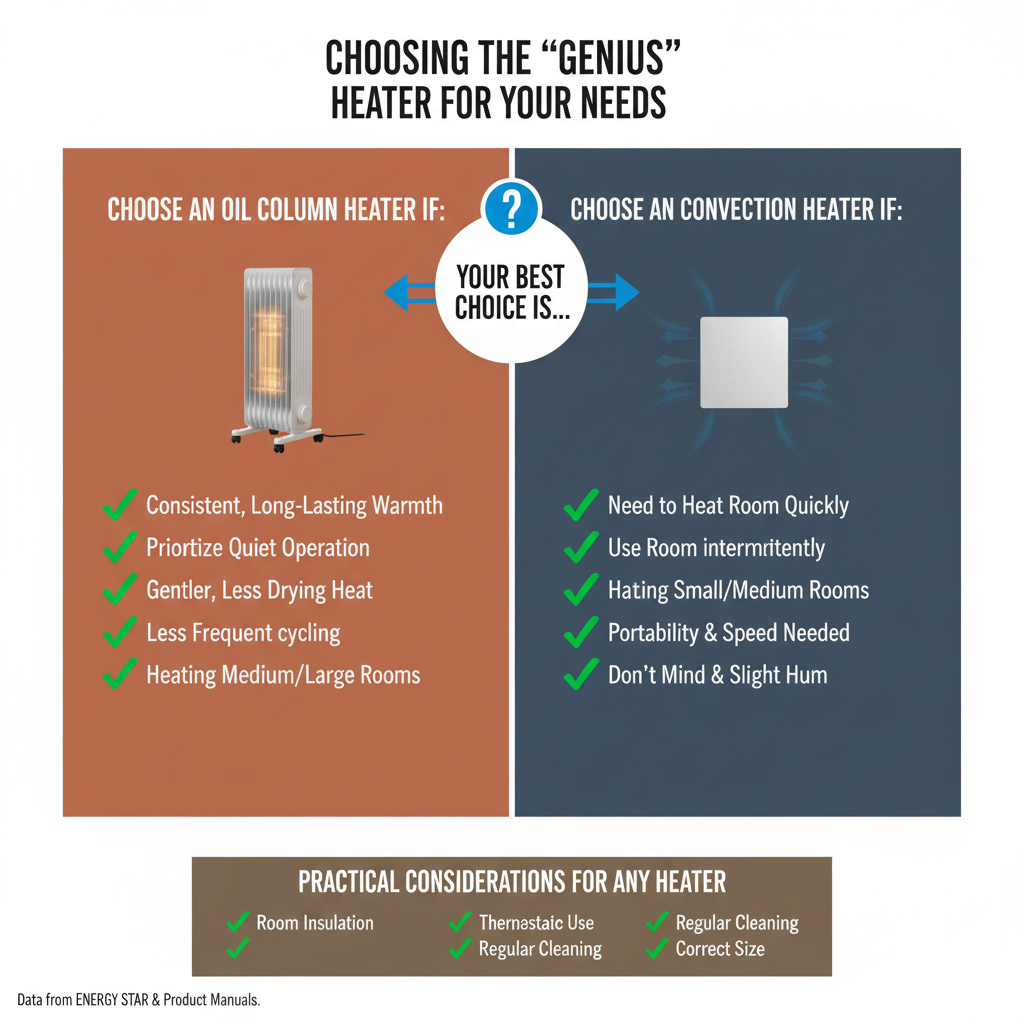
Choosing the “Genius” Heater for Your Needs
The “genius choice” between an oil column heater and a convection heater really hinges on understanding your personal heating habits and the specific rooms you intend to warm. There isn’t a single “best” for everyone, but there’s definitely a best for you.
When is an Oil Column Heater the Genius Choice?
Consider an oil column heater if:
- You need consistent, long-lasting warmth: For example, to keep a bedroom at a comfortable temperature all night without needing to stir.
- You prioritize quiet operation: If any noise is disruptive to your sleep or work, the silent nature of oil heaters is a huge plus.
- You want a gentler, more humid heat: The radiant heat from oil heaters can feel less drying than the quick convection of air from some heaters.
- You prefer less frequent cycling: The way oil heaters maintain heat can mean fewer on-off cycles compared to other heaters trying to achieve the same sustained temperature.
- You’re heating a medium to large room: Their steady heat output is excellent for maintaining ambient temperatures in larger spaces.
Oil column heaters are brilliant for creating a cozy, reliable atmosphere that makes a house feel like a home, even on the coldest days, without drawing unnecessary attention to themselves. Their ability to maintain warmth after being switched off is a key differentiator for sustained comfort.
When is a Convection Heater the Genius Choice?
Opt for a convection heater if:
- You need to heat a room quickly: For instance, warming up a bathroom before you get out of bed or a home office during the workday.
- You use a room intermittently: If you only need heat for short periods, a convection heater’s rapid heating is more efficient than a slow-starting heater.
- You’re heating a small to medium room: They excel at quickly raising the temperature in smaller spaces.
- Portability and speed are paramount: They are often lighter and quicker to feel effective.
- You don’t mind a slight hum: If you choose a fan-assisted model and a little ambient noise isn’t an issue.
Convection heaters are your go-to for instant warmth and targeted heating. They are the workhorses that can swiftly transform a cold space into a comfortable haven precisely when you need it.
Practical Considerations for Any Heater
Regardless of which type you choose, always remember these practical tips:
- Room Insulation: The better insulated your room is (e.g., double-glazed windows, good door seals), the more effectively any heater will work and the less energy it will consume. Check resources like ENERGY STAR for insulation tips: ENERGY STAR Weatherization Advice.
- Thermostat Use: Always use the thermostat. Setting it to a comfortable temperature (typically 68-72°F or 20-22°C) and letting the heater regulate itself is more energy-efficient than running it on high continuously.
- Placement: Place heaters away from furniture, curtains, and other flammable materials. Ensure they have adequate space around them for air circulation.
- Regular Cleaning: Dust can accumulate on heating elements or fins, reducing efficiency and potentially posing a fire risk. Unplug the heater and wipe it down periodically.
- Size Matters: Ensure the heater’s wattage is appropriate for the room size. A heater that’s too small will struggle, and one that’s too large might be inefficient or cycle too much. Manufacturers often provide guidance on this.
By weighing these factors, you can confidently make the “genius choice” that best suits your home and lifestyle.
Frequently Asked Questions About Oil Column vs. Convection Heaters
Here are answers to some common questions beginners have about these popular heater types.
Q1: Which heater is more energy-efficient, oil column or convection?
A1: This depends on usage. Oil column heaters can be more energy-efficient for maintaining a steady temperature over long periods due to their heat retention and thermostat regulation.