How to Shut Off Water and Gas to a Water Heater
Turn off the gas at the shutoff on the supply pipe before the heater, close the cold-water shutoff valve on the pipe above the tank, and cut power at the breaker if it is electric. If a valve is missing or stuck, shut the main water supply off and call a plumber or gas pro. A bad shutoff can flood the area, leave gas leaking, or damage the heater fast. This guide gives the exact isolation order for gas and water, plus the emergency steps when a shutoff is missing, stuck, or won’t hold.
What you’ll need
- Flashlight for tracing the cold-water line, gas line, and electrical disconnect
- Adjustable wrench or pliers for a stiff valve handle, if needed
- Garden hose for draining from the drain valve at the bottom of the tank
- Towels or a shallow pan for drips near valves or the drain outlet
- Catch pan if the heater has leak detection or an automatic shut-off valve
According to DIY Water Heater Installation — Water heaters tend to last seven to 15 years.
What to do first when you need to isolate a water heater
Start by identifying the heater type and the immediate goal: stop water only, stop fuel or power only, or fully isolate the tank. That choice changes the order. On gas units, close gas first, then water. On electric units, cut power first, then shut off the water supply.
- Read the data plate or look for a gas line, flue, or electrical disconnect.
- Decide whether you need water-only shutdown, full shutdown, or drain prep.
- Clear the floor around the heater so you can reach the valves quickly.
- Set a flashlight, towels, and hose where you can grab them without moving the unit.
What is the fastest way to shut it down safely?
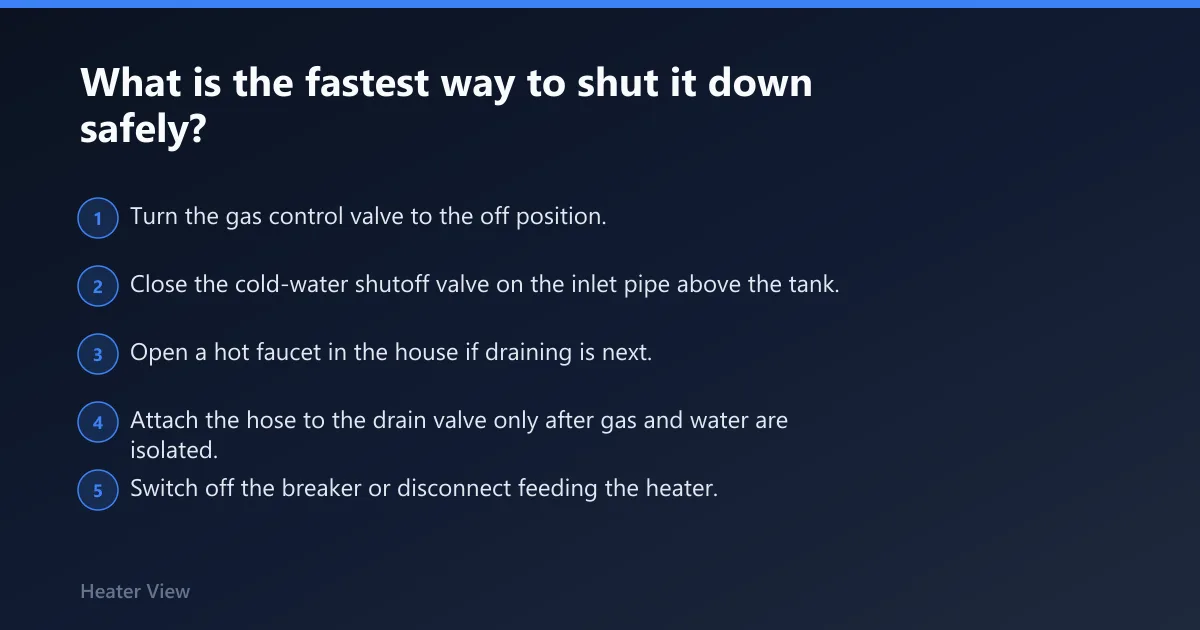
A practical fast sequence is to identify the heater type, close the correct supply first, and confirm the tank is isolated before touching the drain valve. For gas water heaters, shut off the gas supply first, then the cold-water feed. For electric heaters, shut off the breaker or disconnect first.
Gas heater shutdown
- Turn the gas control valve to the off position.
- Close the cold-water shutoff valve on the inlet pipe above the tank.
- Open a hot faucet in the house if draining is next.
- Attach the hose to the drain valve only after gas and water are isolated.
Electric heater shutdown
- Switch off the breaker or disconnect feeding the heater.
- Close the cold-water shutoff valve on the inlet pipe.
- Open a hot faucet to relieve pressure if the tank will be drained.
- Attach the hose to the drain valve and route it to a safe drain point.
How do I shut off the water to a water heater?
Find the cold-water shutoff valve on the supply pipe above the tank and turn it clockwise until it stops. That valve closes the inlet line by hand before service or draining. If it is missing, stuck, or won’t hold, use the home’s main shutoff as the fallback path.
Locate the right valve
The cold-water shutoff is often on the pipe entering the top of the heater. Some newer models may use automatic shut-off protection instead, but there is still a manual valve on the supply line.
If the valve is missing or stuck
- Shut off the main water supply to the home.
- Open a nearby hot faucet to bleed pressure.
- Do not force the stem with pliers if it twists or cracks.
- Replace the failed valve before draining the heater.
How do I shut off the gas or power?
Gas water heaters use a manual gas supply valve that must be closed before disconnecting or draining. Electric water heaters must be switched off at the breaker or disconnect before draining so the elements cannot dry-fire. Water shutoff alone does not make either unit safe.
Gas supply valve
- Locate the manual gas shutoff on the pipe before the heater.
- Turn it to the off position until the handle is no longer aligned with the pipe.
- Confirm the burner cannot fire before moving to the water side.
Electrical disconnect
- Switch off the breaker or service disconnect labeled for the water heater.
- Verify the unit has no live power before draining.
- Leave the breaker off until the tank is full again after service.
Which valve do I close first on a gas water heater?
Close the gas supply valve first, then close the cold-water shutoff. That order reduces the risk of gas flow while you are handling the tank and keeps the burner from firing if the water level drops. If you plan to drain it, open a hot faucet before attaching the hose.
Gas heater sequence
- Close the gas supply valve.
- Close the cold-water shutoff valve above the heater.
- Open a hot faucet in the house.
- Attach the garden hose to the drain valve at the bottom of the tank.
- Route the hose to a drain point that can handle hot water.
Why this order matters
Closing water first on a gas heater leaves the burner and gas train active. That is the wrong order for a drain or repair stop. Gas heaters can also stay hot enough to keep cycling, so the gas valve should be off before any disconnect or drain work.
What should I do before draining a water heater?
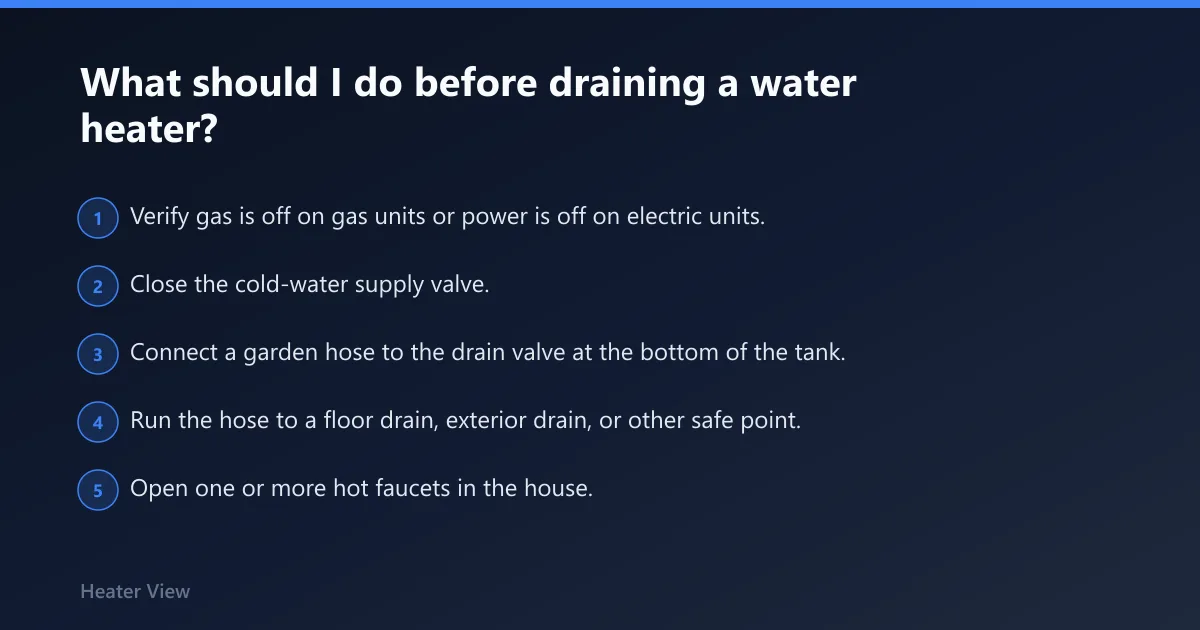
Before draining, isolate the heater, attach a hose to the drain valve at the bottom of the tank, and open hot water faucets in the house to break the vacuum in the piping. That lets the tank empty more completely and keeps pressure from fighting the drain.
Drain prep checklist
- Verify gas is off on gas units or power is off on electric units.
- Close the cold-water supply valve.
- Connect a garden hose to the drain valve at the bottom of the tank.
- Run the hose to a floor drain, exterior drain, or other safe point.
- Open one or more hot faucets in the house.
Catch pan and auto shut-off
Place a catch pan under the heater if an automatic shut-off system is in use or if the floor needs leak detection. Some new-model water heaters have an automatic shut-off valve on the cold-water supply pipe, and that valve uses a float sensor in a pan beneath the heater. It requires electricity to work.
Emergency shutdown checklist and 1-minute verification
Use the branch that matches the heater type. The goal is to confirm water, gas, and power are isolated in under a minute, then stop before draining or disconnecting anything else. If any step fails, use the fallback path instead of guessing.
Gas branch
- Close the gas supply valve.
- Close the cold-water shutoff valve.
- Open a hot faucet.
- Attach the hose to the drain valve only if draining is needed.
Electric branch
- Switch off the breaker or disconnect.
- Close the cold-water shutoff valve.
- Open a hot faucet.
- Attach the hose to the drain valve only if draining is needed.
| Item to verify | What “off” looks like | Time target |
|---|---|---|
| Cold-water supply | Handle turned clockwise and no refill sound at the tank | 15 seconds |
| Gas supply | Shutoff handle turned to off position on gas units | 15 seconds |
| Electrical power | Breaker or disconnect switched off on electric units | 15 seconds |
| Drain setup | Hose connected to bottom drain valve and routed safely | 15 seconds |
Valve-location photo checklist
- Cold-water shutoff valve on the inlet pipe above the tank
- Gas shutoff valve on the pipe before the heater, for gas units
- Breaker or disconnect labeled for the heater, for electric units
- Drain valve at the bottom of the tank with hose attached
- Catch pan beneath the heater if leak detection is installed
What happens if you turn off water supply to water heater?
Turning off the water stops refill, but it does not stop heat, gas flow, or electrical power. A gas heater can still fire with a dry tank. An electric heater can still energize its elements and damage them if the tank is empty or partially drained.
If that didn’t work, try this next
- Confirm the cold-water valve is actually closed at the inlet pipe.
- Check for a second shutoff or an automatic shut-off valve on newer systems.
- Shut off gas or power immediately if the unit is still active.
- Use the home main water shutoff if the local valve will not stop flow.
Does a water heater need a shut off valve?
Yes. A working cold-water shutoff valve is part of a proper service setup because it lets you stop the tank without shutting off the whole house. Some heaters also have an automatic shut-off valve on the cold-water line, but that system depends on electricity and a float sensor in a catch pan.
When to add more protection
If a heater has leaked more than once, or if the floor has already been damaged, an automatic shut-off valve with a catch pan is worth considering. It is a backup, not a substitute for the manual valve. The tank should be fully drained before installing the shut-off valve assembly.
Common mistakes
Most bad shutdowns happen because the wrong supply stays live. That leaves the heater able to heat a dry tank, leak gas, or keep feeding water into a failing joint. Slow down at the valve, then verify each line separately.
- Turning off only the water and leaving gas or power active.
- Opening the drain valve before confirming the cold-water line is closed.
- Forcing a stuck handle and breaking the valve stem.
- Skipping the hot faucet step and trapping pressure in the line.
- Assuming an automatic shut-off valve can replace manual isolation.
Prevention
Label the heater’s gas shutoff, breaker, and cold-water valve now, before an emergency. If the local shutoff sticks or the valve is missing, replace it during a planned service call instead of waiting for a leak.
Frequently asked questions
how to turn off water and gas to water heater
Close the gas shutoff valve on the pipe before the heater, then close the cold-water valve on the inlet pipe above the tank. If it is an electric unit, switch off the breaker instead of a gas valve. Confirm both are off before opening the drain valve or disconnecting anything.
can i turn off water and leave water heater on
Do not leave it on if the tank can run dry. A gas heater may keep firing against an empty tank, and an electric heater can damage elements if the water level drops. If water must stay off, shut gas or power off too until the tank is refilled.
what happens if you turn off water supply to water heater
The tank stops refilling, but heat and fuel can still stay active. That can create a dry-firing risk on electric units and a firing or overheating risk on gas units. If the water supply is off for more than a brief check, isolate gas or power as well.
does a water heater need a shut off valve
Yes. A manual shutoff on the cold-water supply line lets you isolate the heater without shutting down the whole house. Newer systems may also have automatic shut-off protection, but that depends on electricity and a pan sensor. The manual valve is still the basic control.
how to turn off water supply to a water heater
Find the cold-water shutoff on the supply pipe above the tank and turn it clockwise until it stops. Then open a hot faucet to relieve pressure if you plan to drain. If the valve is missing or seized, use the home main shutoff and replace the faulty valve later.
how do I shut off the gas to a water heater
Turn the manual gas shutoff on the line before the heater to the off position. Do that before any drain or disconnect work. If you smell gas, leave the area and call the gas utility or a licensed pro rather than trying to service the unit.
which valve do I close first on a gas water heater
Close the gas supply valve first, then close the cold-water shutoff. That order keeps fuel off before you touch the tank and before you drain it. After that, open a hot faucet and connect the hose if draining is next.
what should I do before draining a water heater
Shut off gas or power, close the cold-water supply valve, connect a garden hose to the drain valve at the bottom of the tank, and open a hot faucet in the house. That breaks the vacuum in the piping and lets the heater empty more completely.
is it safe to leave the gas on after turning off water to the heater
No. Water off alone does not stop the burner or gas flow, so the heater can still be active when the tank is empty or partially drained. Close the gas shutoff first on gas units, then close the water supply, and verify both are off before moving on.