What Should You Do Before Turning on a Heater for the Season?
Before turning on a heater for the season, replace or clean the filter, clear space around vents and the furnace, test the thermostat, and stop if you smell gas, see soot, or the unit will not start. Skipping these checks can mean poor heat, higher bills, carbon monoxide risk, or a full no-heat failure on the first cold night. This guide sorts quick DIY checks, safety stop-signs, and problems that need a technician before startup.
What to check before you start
The first startup should begin with fast checks you can do in about 5 minutes, then move to anything that affects safety or airflow. Forced-air furnaces need filter and vent attention first. Boilers, radiators, and baseboard systems need clearance, leak checks, and sound checks. Fuel-burning systems deserve extra caution because combustion problems can create carbon monoxide.
What you’ll need for the first startup
- Replacement furnace filter, or cleaning supplies if your system uses a washable filter
- Vacuum, flashlight, and a dry cloth
- Fresh batteries for any alarm that needs them
- A note with a technician’s number for problems you should not reset at home
What should you do before turning on a heater for the season?
Start by checking the filter, airflow path, thermostat, and alarms before you ask the heater to run. Then look for storage, dust, rust, leaks, or blocked vents around the equipment. For fuel-burning systems, arrange annual professional inspection before the first major cold snap, including the furnace or boiler, chimneys, flues, and vents.
- Replace or clean the furnace air filter before beginning the heating season, and check for a gray, dusty, or clogged condition.
- Set the thermostat to HEAT and raise the setpoint several degrees above room temperature.
- Confirm the system starts within moments and that warm air comes from vents or heat comes from the elements.
- Test every carbon monoxide detector and replace batteries or the unit when the manufacturer requires it.
- Test every smoke alarm, check the expiration date, and keep alarms on every level and near sleeping areas per local code.
- Clear furniture, rugs, curtains, and toys from heating vents and return-air grilles, then vacuum dust and pet hair.
- Check the furnace or boiler area for combustible storage, rust, soot, water, damaged pipes, loose vent connections, and corrosion.
Step 1: Check the filter and airflow
Replace or clean the furnace air filter before beginning the heating season. Many HVAC systems can use a MERV 13 filter, but you should follow manufacturer recommendations. If vents, rugs, curtains, or furniture block airflow, the system can overheat, short cycle, or push weak heat through the house.
Vacuum return grilles, registers, and nearby dust so the first run does not pull debris into the system. A gray or packed filter usually means the heater has been working against restricted airflow. That can make startup smell dusty and can also expose a dirty burner or weak blower problem that needs service.
Step 2: Test the thermostat
Set the thermostat to HEAT and raise the setpoint several degrees above room temperature. A working system should start within moments. If you get no response, or if the fan runs without warm air from vents or heat output from elements, stop and move to the decision table below instead of repeating resets.
Set a forced-air furnace about 4 degrees above room temperature. If the fan starts but the supply air stays cool after a short wait, that points more toward burner, ignition, airflow, or control trouble than a setting problem. A portable heater follows a different path, plug-in units should still be checked for clear intake and outlet space before use.
Step 3: Check alarms and the heater area
Test carbon monoxide alarms before heating season, especially if the home uses fuel-burning furnaces, boilers, fireplaces, water heaters, or wood stoves. Smoke alarms are commonly recommended on every level and near sleeping areas. Keep both alarm types on every level and near sleeping areas.
Then inspect the heater area for rust, soot, water, damaged pipes, loose vent connections, and corrosion. Remove combustible storage nearby and look for rust, soot, water, damaged pipes, loose vent connections, and corrosion. Those signs can point to combustion trouble, leaks, or vent failure. If you smell gas, see soot near a burner, or hear a repeated alarm, stop using the heater until the issue is evaluated.
When should I turn on the heater?
Turn the heater on before the first cold night, rather than waiting until the house is already uncomfortably cold. That gives you time to catch a dirty filter, blocked vent, weak ignition, or alarm issue while the weather is still mild. For fuel-burning systems, schedule inspection before the first major cold snap, not after the first failure.
When to turn on heater for home
If the forecast is dipping low enough that indoor temperatures may feel cold overnight, start the system during the day so you can watch the first cycle. That makes it easier to hear unusual noises, smell dust burn-off, and confirm airflow at vents. Boiler and radiator homes should do the same before the first sustained chill.
When should heating be turned?
Heating should be turned on when the system can be tested with attention, not at midnight when a no-heat call becomes an emergency. If the heater has been idle for months, the first run is the time to find clogged filters, dead batteries, blocked grilles, or a thermostat problem while repair options are still open.
When should you call a technician?
Call a technician for annual service on fuel-burning heating equipment, including furnaces or boilers plus chimneys, flues, and vents. That inspection is especially important before the first major cold snap. You should also stop DIY troubleshooting if the heater trips an alarm, smells strongly of fuel, shows soot, or fails the same startup test twice.
If that didn’t work, try this next
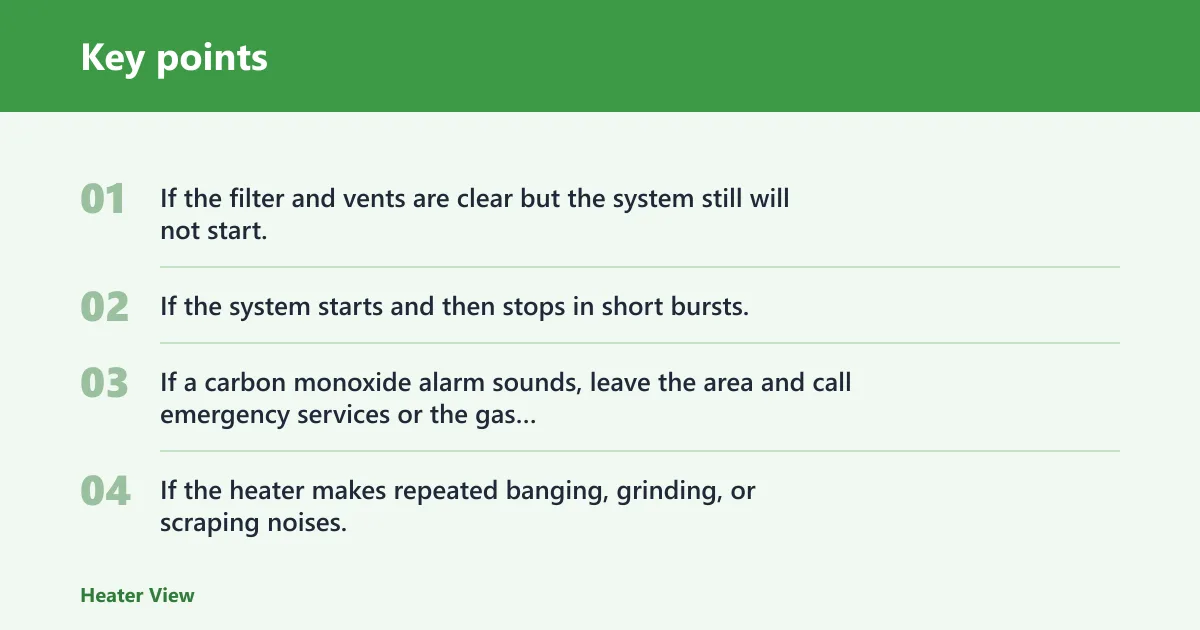
- If the filter and vents are clear but the system still will not start, turn it off at the thermostat and contact service for ignition, control, or burner diagnosis.
- If the system starts and then stops in short bursts, keep it off and request an airflow or limit-switch check.
- If a carbon monoxide alarm sounds, leave the area and call emergency services or the gas utility if local procedure requires it.
- If the heater makes repeated banging, grinding, or scraping noises, shut it down and schedule repair before using it again.
What decision table
| Symptom observed | Safest next step | Stop using the heater until service? |
|---|---|---|
| No heat after setting HEAT and raising the setpoint | Check power, thermostat mode, and filter once; then call a technician if it still does not start | Yes |
| Short cycling | Replace or clean the filter, clear vents, then stop if cycling continues | Yes |
| Burning smell | Light dust smell can fade after the first run; strong, persistent odor means shut it down and inspect for dirt, debris, or overheating | Yes, if it does not fade quickly |
| Blocked airflow | Move furniture, rugs, curtains, or toys away and vacuum the grilles | Not always, but stop if airflow stays weak |
| Alarm activation | Treat carbon monoxide or smoke alarms as a stop signal, leave the area if required, and arrange service or emergency help | Yes |
| Unusual noises | Shut the system off and arrange inspection for loose parts, trapped debris, or pump or blower issues | Yes |
How do I test my thermostat before heating season?
Set the thermostat to HEAT, then raise the setpoint several degrees above the current room temperature. A working system should start within moments. If the fan, boiler, or heating elements do not respond right away, check batteries, mode, and power once, then stop repeating resets and move to service if the problem stays.
For a furnace, watch for warm air at the supply vents. For a boiler, listen for the burner and circulation cycle. For radiators or baseboard heat, feel for heat building gradually and check for gurgling or banging. A common first-timer mistake is turning the setpoint up only 1 degree and deciding nothing happened before the system has had time to respond.
Common mistakes to avoid
Most startup failures come from simple oversights. The fix is usually not a bigger thermostat adjustment. It is a clean filter, open airflow path, working alarms, and a heater area that does not crowd the equipment.
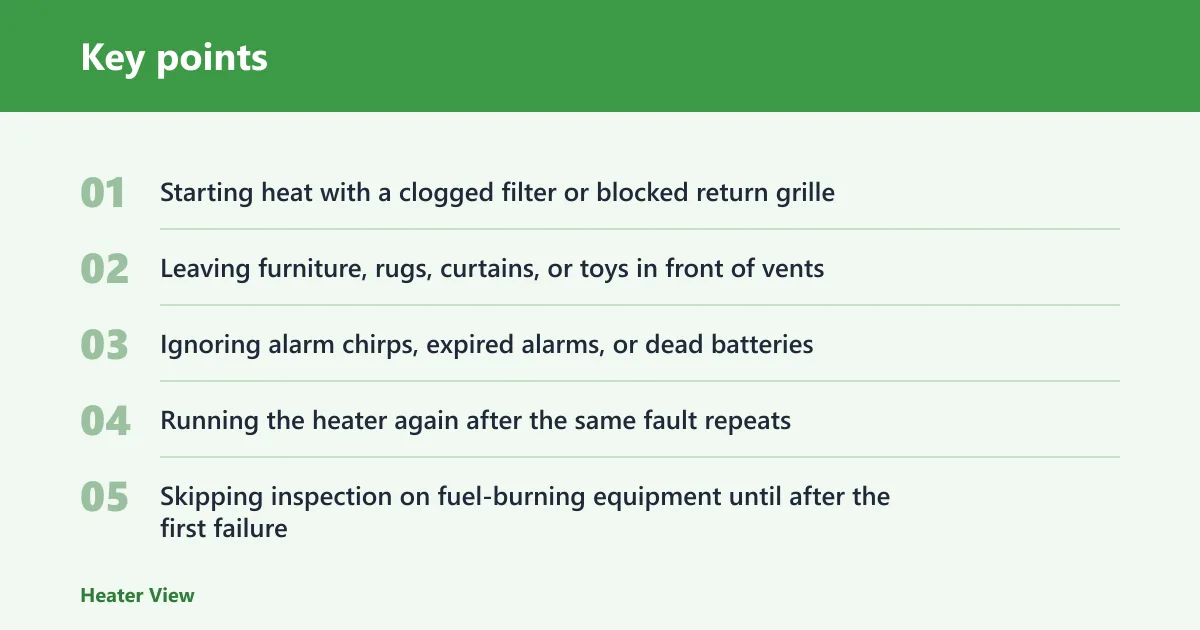
- Starting heat with a clogged filter or blocked return grille
- Leaving furniture, rugs, curtains, or toys in front of vents
- Ignoring alarm chirps, expired alarms, or dead batteries
- Running the heater again after the same fault repeats
- Skipping inspection on fuel-burning equipment until after the first failure
Suppose a boiler starts with a brief bang and then settles down, but the radiator stays partly cold. That can point to trapped air, a pump issue, or a valve problem, not a thermostat problem. Do not keep restarting it; note the symptom and schedule service.
Check radiators and baseboard heat
Move furniture and curtains away from radiators and baseboard units, then vacuum dust from the fins and covers. Look for leaks, corrosion, banging, or gurgling. Those symptoms often mean trapped air, scale, or a circulation issue that deserves a technician before colder weather arrives.
Inspect the chimney and fireplace
If your home uses a chimney or fireplace, inspect it before the first fire. Check for creosote, animal nests, leaves, and debris. Those conditions can block draft or create a fire hazard. Fuel-burning fireplaces should not be treated like decorative heat; they need the same pre-season attention as other combustion equipment.
When is heating season over?
Heating season is usually over when outdoor temperatures stay mild enough that the system no longer needs daily use, but the exact timing depends on local climate and the home’s comfort needs. Before shutting it down for spring, note any startup problems now so they can be fixed before the next cold spell.
Frequently asked questions
When should I turn my heating?
Turn it on when indoor temperatures are starting to feel cold and you can monitor the startup. A heater that has been idle for months should not be trusted on the first freezing night. Run a test first, then leave time for a technician if the system fails.