Best Block Heater Accessories for Winter Use
Start with a heavy-duty outdoor extension cord sized to the heater’s amperage, then add a timer and weatherproof outlet protection; skip cheap indoor power strips and undersized cords. Bad cord choices can overheat, trip breakers, or leave a block heater useless on the coldest morning. This guide ranks the best block heater accessories by vehicle, parking setup, climate severity, and outlet distance, so you can buy the right stack first.
Essential winter add-ons and priority buying guide
The first buy should fix the weakest point, whether that is distance, exposure, or battery load. For most drivers, that means the cord, then a weatherproof plug cover or inlet, then a timer if you do not need nonstop standby power.
Quick picks
- Short driveway parking: Outdoor-rated block heater extension cord, weatherproof cover, optional timer.
- Long outlet runs: Longer cord with a matching amp rating, plus a bumper inlet if the cord stays connected often.
- Freezing rain and snow: Weatherproof bumper plug or inlet, cord with tight plug fit, cover that seals the connection.
- Diesel trucks and fleets: Cord matched to load, timer for pre-start scheduling, inlet or covered plug for repeated use.
- Long storage or standby: Battery maintainer plus corded heater setup, with blanket support in severe cold.
Top pick by use case: Buy the cord first if the outlet is not right beside the vehicle, because reach and fit decide whether the heater can be used safely at all. Add weatherproof hardware next. A timer comes after that, unless your vehicle sits plugged in for long periods and you want a predictable pre-start window.
What to skip until later: decorative cable organizers, cheap indoor-rated splitters, and oversized accessories that do not match the heater’s load or plug type. A cord that fits badly is worse than no cord if it runs hot or leaves a loose connection in snow.
Do you need a timer or extension cord?
Most buyers need a cord before they need a timer. A timer matters when you want a 4-6 hour pre-start window instead of continuous plug-in, while an extension cord matters any time the outlet distance forces a strain on the factory lead or leaves the connection exposed.
When a timer is worth buying
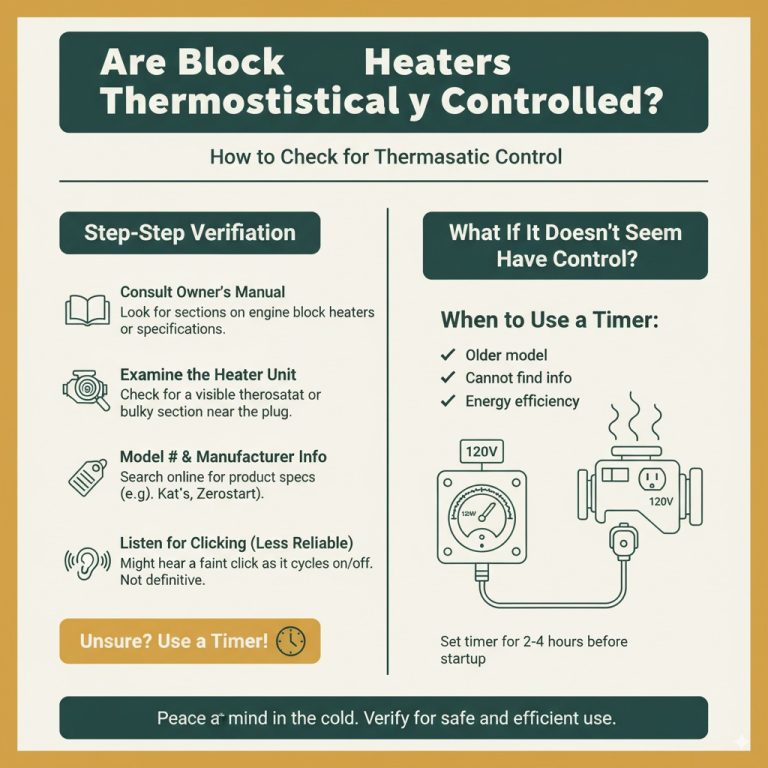
A timer is worth it if the vehicle parks in one place overnight and you want the heater on only before morning start times. PortableGenerators.co suggests a timer set for 4-6 hours before morning start times, which fits common cold-morning scheduling without running the heater all night.
Mechanical timers are simple and easy to set. Digital timers give more precise scheduling and may suit repeat routines better. Use either only with outdoor-rated hardware and a load rating that matches the heater circuit.
When an extension cord matters more
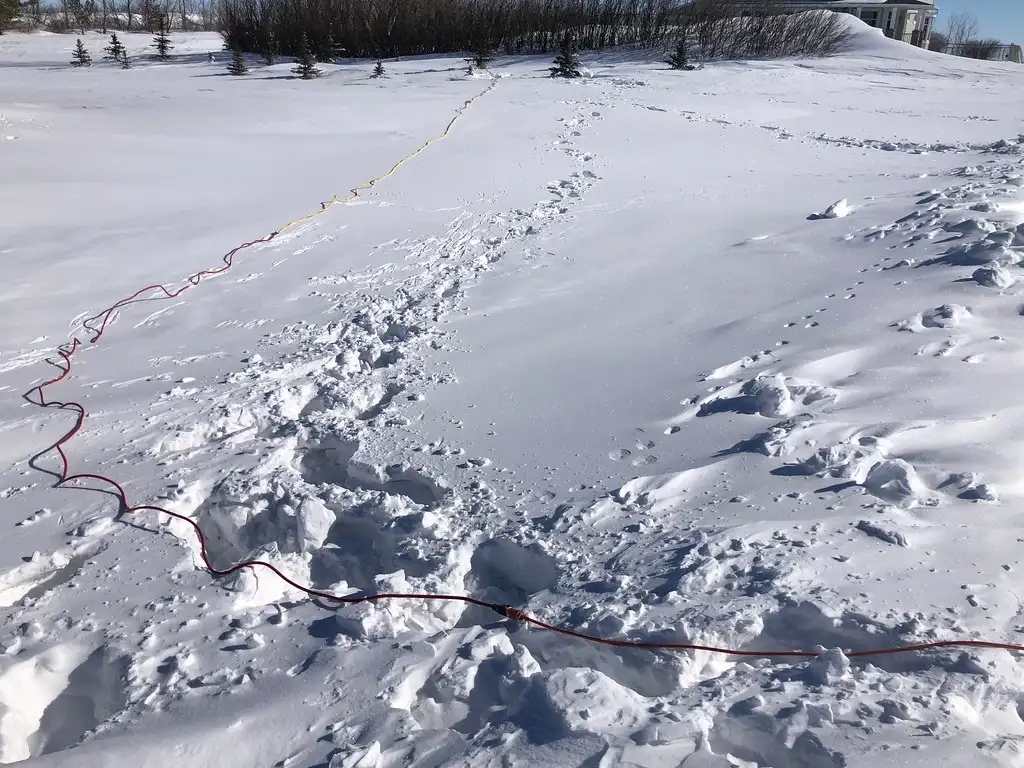
If the outlet is too far away, the cord is the priority. Extension distance affects voltage drop, plug heat, and whether the cord can stay outside without damage. The right length reaches the parking spot without running through door gaps or stretching across wet ground.
Say a sedan parks about 25 feet from the wall outlet, and the only available cord is 10 feet. That setup forces a strained connection or a different parking angle. A properly sized outdoor cord and a weatherproof cover solve the real problem; a timer alone does not.
How climate and parking distance change the answer
In mild cold, a short cord and a basic timer may be enough. In freezing rain, blowing snow, or unheated lots, the weatherproof cover and inlet become higher priority because exposed connectors ice up fast. In fleet parking, you often need both: cord length for reach and a timer for power control.
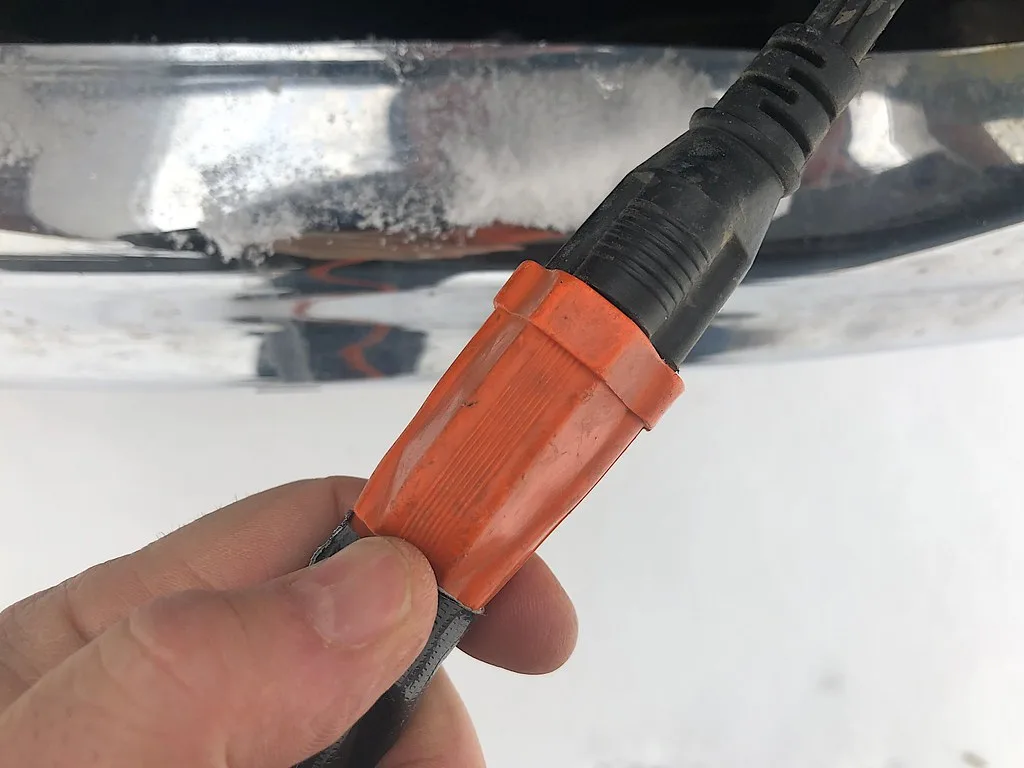
Block heater cords and plugs
Choose the cord around the heater load, not around a generic “winter” label. Outdoor-rated construction, copper conductors, the right plug fit, and enough length for the parking setup matter more than marketing terms.
Choose the right amp rating
Match the cord’s amp rating to the heater load. A 13A heater should not be paired with a bargain cord that cannot carry that current cleanly. MICTUNING lists a unit rated for 13 amps at 125 volts and uses 3x12AWG wires, while the stio inlet is rated at 20A and 125V for shore-power use and uses 12 AWG copper wiring.
For buyers shopping around common loads, 125V AC service is the usual home and yard standard, but the amperage still has to match the accessory. A 15A or 20A circuit needs compatible plugs, receptacles, and wire size. Undersizing is a heat problem, not just a convenience problem.
Match plug and receptacle types
Know the NEMA fit before buying. Common plug and receptacle configurations here include 1-15P, 5-15P, 5-20P, 6-15P, and 6-20P. The point is simple: the plug, inlet, and outlet should belong to the same electrical family, with no adapter guesswork.
One useful check is whether the heater setup is intended for 125V household compatibility or a 20A shore-power style inlet. The stio inlet supports multiple NEMA configurations for broader device compatibility, while the jindouyun option is a 15 amp, 125 volt inlet. Use the configuration that matches the circuit you actually have.
Pick the right length without oversizing
Use the shortest cord that reaches comfortably. Extra length creates clutter, more exposure to slush, and more places for damage. For driveway parking, measure the route from outlet to vehicle and add only enough slack to avoid tension when the steering wheel is turned or the car settles in snow.
That can pinch insulation or let water track into the cabin. A proper outdoor cord stays outside and reaches the plug without improvisation.
Avoid cold-weather cord failures
Look for winter weather resistance, a plug that mates cleanly, and insulation that stays flexible enough for cold mornings. Loose blades, cracked jackets, and brittle molded ends are warning signs. If the cord feels stiff and the connection wiggles, replace it before the first deep freeze.
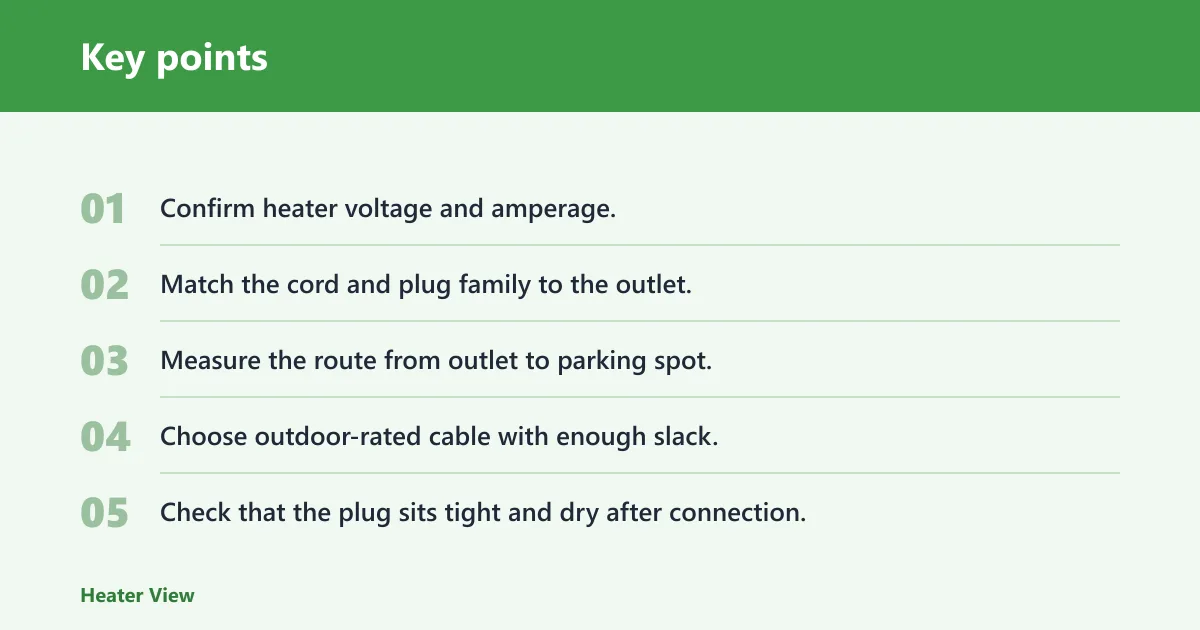
- Confirm heater voltage and amperage.
- Match the cord and plug family to the outlet.
- Measure the route from outlet to parking spot.
- Choose outdoor-rated cable with enough slack.
- Check that the plug sits tight and dry after connection.
Weatherproof bumper plug and inlet
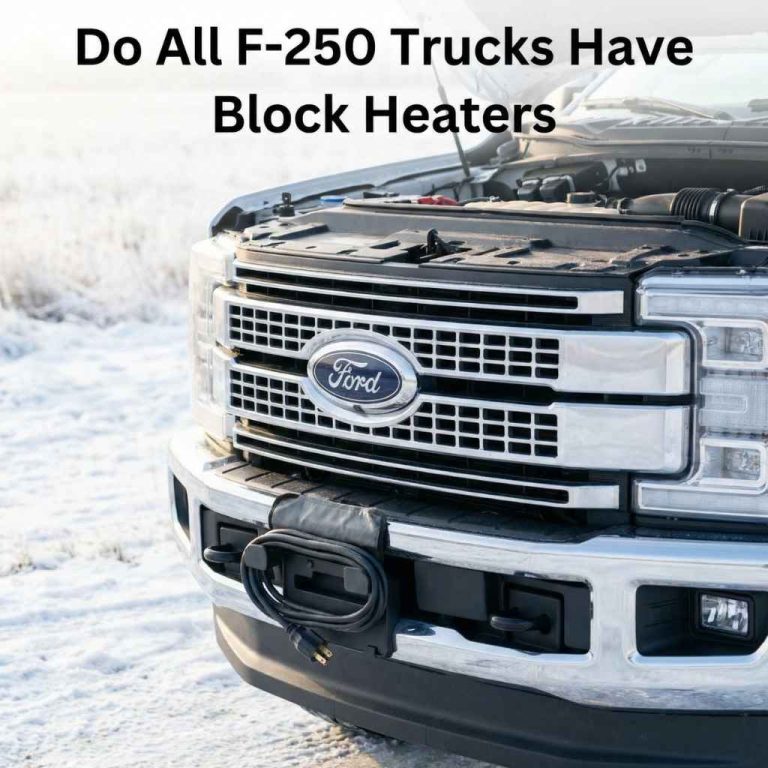
A weatherproof inlet is worth buying when the connection stays outside for repeated use. It helps keep snow, ice, and freezing rain out of the live contact area, which reduces corrosion and the chance of a stubborn, frozen plug on the next cold morning.
Flush versus flanged mounting
Flush mounts sit cleaner against the body panel. Flanged mounts are easier to place where there is more room behind the bumper or panel. The choice depends on access, body shape, and how often the connector will be mated and unmated in winter.
HYDUUU says its inlet is designed with a waterproof cover and uses nickel-plated copper contacts. It is compatible with 12-18 AWG wire gauges. Those details matter because the cover protects the opening and the contact material resists the kind of wear that shows up after repeated winter hookups.
125V, 15A, and 20A fit
Most household block-heater setups are 125V AC. Within that range, 15A and 20A inlets cover many vehicles, generators, and RV shore-power style needs. The key is not picking the biggest number; it is matching the inlet rating to the circuit and the accessory load.
Stio lists a 20A and 125V inlet, plus a 16-inch outdoor extension cord. Jindouyun lists a 15 amp, 125 volt inlet. That split shows the main buying decision: standard household use often falls into 15A, while heavier setups or broader compatibility may call for 20A hardware.
Keeping snow and ice out
A cover is not optional in freezing rain. Use a weatherproof or waterproof cap, make sure the connector closes fully, and keep the inlet oriented so meltwater cannot pool inside. Loose bumper inlets create one of the most common winter failures: a connection that works in the garage and refuses to mate after an ice storm.
Battery support options
Battery accessories do different work from the heater itself. They do not warm the engine block, but they can help the electrical system survive cold starts and long standby periods, which matters when the vehicle sits for days at a time.
Battery blanket for extreme cold
A battery blanket pairs with engine heaters and supports starter battery capacity in cold weather. It is a wraparound insulated design that helps the battery hold usable output when temperatures fall sharply. PortableGenerators.co notes that magnetic heaters are a universal fit option, which fits the same broad-use idea.
This is especially useful for standby, generator, and some vehicle applications where a weak battery can spoil an otherwise good heater setup. Do not treat it as a substitute for engine heating. It supports the battery; it does not warm the block.
Battery maintainer for standby storage
A battery maintainer is an AC-powered charger that keeps a battery charged during standby. It makes the most sense for long storage periods or repeated cold standby, where the battery may sit plugged in alongside heater accessories. It is about charge support, not engine warmth.
If the vehicle stays parked for weeks, a maintainer can add more value than another heater accessory. It protects readiness, especially when a block heater and a battery blanket would otherwise still leave the battery low after storage.
Winter oil and cold-start support
Winter oil is the simplest non-hardware upgrade. Synthetic 5W-30 or 10W-30 can reduce starter strain and support cold-weather startup reliability, depending on what the engine maker allows. This does not replace heater hardware, but it can make the whole system less demanding on the battery and starter.
Block heater accessory table
| Vehicle type | Parking setup and outlet distance | Climate severity | Recommended accessory stack | Cord rating, timer window, weatherproofing |
|---|---|---|---|---|
| Compact car | Driveway parking, outlet within short reach | Light to moderate cold | Outdoor cord, basic cover, optional timer | Match amp rating to heater load; 4-6 hour timer if you want scheduled pre-start; weatherproof cover at the outlet |
| Gas pickup | Longer driveway, outlet across the garage | Moderate to severe cold | Long outdoor cord, weatherproof inlet, timer | Use a cord with suitable plug/receptacle fit; 4-6 hour timer; higher weatherproofing at the bumper or inlet |
| Diesel truck | Lot parking or open yard, frequent hookups | Severe cold | Cord matched to load, inlet with cover, battery blanket | Choose 15A or 20A hardware as needed; timer if the truck sits overnight; high weatherproofing for snow and ice |
| Tractor | Farm shed or outdoor storage, mixed outlet access | Severe cold | Outdoor cord, inlet, battery maintainer during storage | Match 125V service and the correct NEMA fit; timer useful for morning starts; sealed connection preferred |
| Semi or generator | Yard parking, long standby periods | Severe cold | 20A-capable inlet, cord, battery blanket, maintainer | Use the highest correct load match; timer for pre-start windows; strong cover against snow and freezing rain |
| RV | Campground shore power or storage lot | Moderate to severe cold | Inlet, cord, maintainer, optional blanket | Confirm 125V compatibility; choose 5-15P, 5-20P, 6-15P, or 6-20P only if the circuit matches; weatherproof every exposed joint |
How to choose the right setup
Start with the vehicle’s heater load, then work outward to the outlet, parking distance, and weather exposure. If the cord is wrong, nothing else matters. If the connection is exposed, snow and ice will turn a simple routine into a stuck-plug problem.
For cars and light trucks, a cord and weatherproof cover are usually the first buys. For diesel trucks, tractors, semis, generators, and RVs, a covered inlet often becomes more valuable because the setup is used more often and the connection spends more time outside.
Cars, diesel trucks, tractors, semis, generators, and RVs
Cars usually need the least hardware, but they still need the right cord and outlet fit. Diesel trucks and semis place more stress on the system because they often combine bigger electrical needs with harsher parking conditions. Generators and tractors benefit from maintainers and covers when they sit for long periods.
Matching 13A, 15A, and 20A loads
Do not mix a 13A accessory with an outlet path that cannot support the load cleanly. The MICTUNING unit is rated for 13 amps at 125 volts, which sits differently from the jindouyun 15 amp, 125 volt inlet and the stio 20A and 125V inlet. Match the lowest weak point in the chain.
Use the correct wire size too. The stio variant uses 12 AWG copper wiring, and the MICTUNING unit uses 3x12AWG wires. Those references are useful because they show the cable class often chosen for winter heater accessories with meaningful current draw.
Common mistakes to avoid
Do not use indoor power strips outside. Do not leave a plug exposed where meltwater can refreeze inside the connection. Do not run a cord through a cracked door seal. Do not assume a 20A part is automatically better if the rest of the circuit is lighter duty.
Suppose a pickup sits outside in freezing rain with a loose bumper inlet and a thin cord. The plug will not only collect ice; it may also run hot at the weak connection point. Swapping in a covered inlet and a correctly rated outdoor cord fixes the real failure mode.
PortableGenerators.co says engine heaters typically draw 100-500 watts. That range helps explain why continuous plug-in can be acceptable for some standby situations, while a timer is smarter for others. Energy savings matter, but dependable preheat matters more when the forecast drops hard overnight.
Frequently asked questions
What are the best block heater accessories for winter use?
The best first accessory is an outdoor-rated extension cord matched to the heater’s amp draw. Add a weatherproof cover or inlet if the plug sits outside, then consider a timer for a 4-6 hour pre-start window. Battery blankets and maintainers are useful add-ons, not replacements.
How do I use block heater accessories safely in winter?
Use outdoor-rated parts only, match amperage and voltage, and keep every connection dry and fully seated. Avoid indoor strips, damaged jackets, and adapters that do not fit the NEMA configuration. If the plug or inlet is exposed to snow, use a weatherproof cover.
Do I need a block heater timer or extension cord?
If the outlet is too far away, you need the cord first. If the vehicle parks in the same spot overnight and you want limited run time, add a timer next. Many setups work best with both, especially when the heater runs only before morning start.
What size extension cord is safe for a block heater?
Choose a cord whose amp rating matches or exceeds the heater load, with suitable outdoor construction and a clean plug fit. For many winter accessories, 12 AWG wiring is common. The safest choice is the shortest cord that reaches without tension, kinks, or door-seal routing.
How long should I run a block heater before starting?
A common pre-start window is 4-6 hours, especially when you use a timer and want to limit electricity use. PortableGenerators.co suggests that range for morning starts. Very cold weather, engine size, and heater type can change the schedule, so follow the equipment instructions.
Can I use a battery blanket with a block heater?
Yes. A battery blanket pairs well with engine heating because it supports the starter battery in cold weather. It is most useful in severe cold, generator standby, and vehicles that sit outside overnight. It helps the battery; it does not warm the engine block.