How to Maintain a Water Heater Pilot Light
Check the pilot light monthly, clean the burner compartment, and relight only after the label and gas-smell checks pass. If the flame will not stay lit after one safe attempt, stop and call a technician. Poor maintenance can leave you with no hot water, wasted gas, soot at the burner, or a carbon monoxide risk. This guide covers safe pilot-light checks, one careful relighting attempt, cleaning and draft checks, and the signs that mean you should stop.
Why pilot light maintenance matters
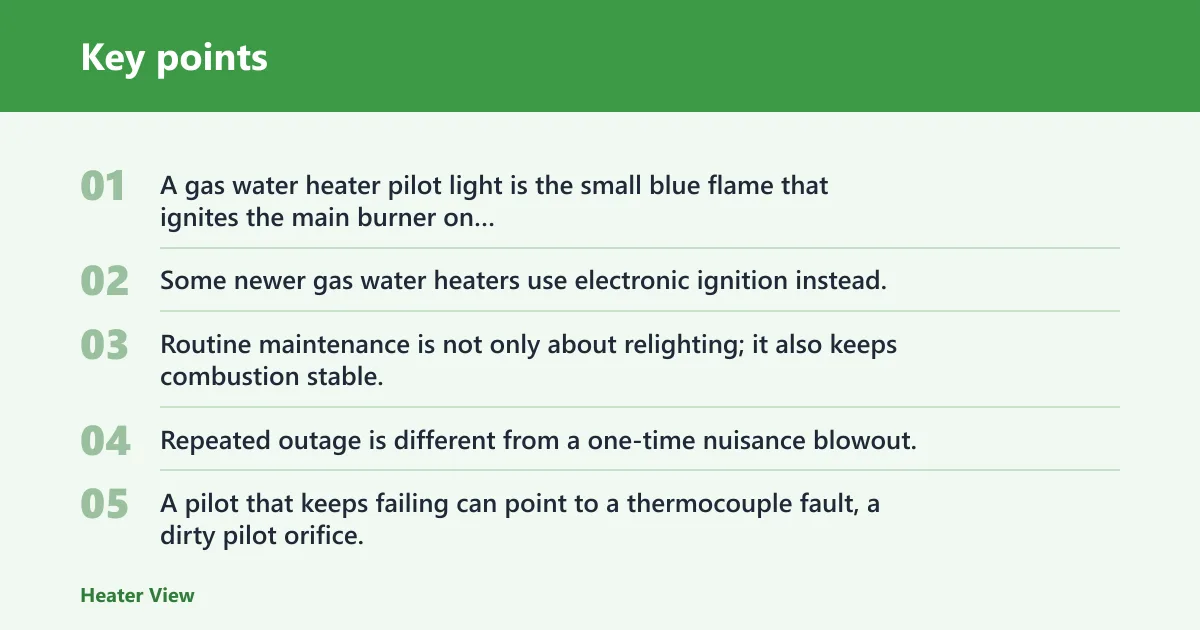
A gas water heater pilot light is the small blue flame that ignites the main burner on units with a standing pilot. Some newer gas water heaters use electronic ignition instead. Routine maintenance is not only about relighting; it also keeps combustion stable, helps you spot draft problems, and catches failures before they leave you without hot water.
Repeated outage is different from a one-time nuisance blowout. A pilot that keeps failing can point to a thermocouple fault, a dirty pilot orifice, airflow trouble, or a gas-control issue that needs a licensed technician.
What you’ll need
- Your water heater manual or the model number from the rating plate
- A flashlight
- A long lighter, if your model requires one
- Compressed air or a soft brush for the exterior burner area only
- A phone or notepad to record what the flame does after relighting
Safety basics and shutoff awareness
Before touching the gas control valve, check for any gas odor. If you smell gas, do not relight anything. Leave the area and follow the gas supplier’s emergency instructions.
Follow the lighting label for your model before relighting. Many relight procedures also call for a five- to 10-minute wait so residual gas can clear from the chamber.
Model number and user manual
Relighting steps vary by brand and gas valve. Look up the model number on the unit label before you start, because some newer model gas water heaters have built-in ignitors while older units may require a long lighter.
Use the manual for the exact control layout and the correct hold time. A common piezoelectric igniter setup uses an igniter button, electrode, and wire.
How do you check the pilot flame?
Look through the sight glass or access opening for a steady blue flame. A healthy pilot flame is bright blue and steady, and it should heat the thermocouple while staying anchored at the pilot opening. If the flame is yellow, weak, or flickering, treat that as a warning sign, not a normal variation.
Look for a small blue flame
The pilot flame should be small, stable, and blue. It should not waver hard, float away from the burner, or sputter at the tip. A yellow pilot often points to dirt at the pilot opening or poor combustion air.
Spot warning signs of instability
Watch for flame lift-off, repeated dropout, soot at the burner, or a pilot that changes when a nearby door closes. Those clues matter because they help separate a simple ignition issue from draft or venting trouble.
How do you relight a water heater pilot?
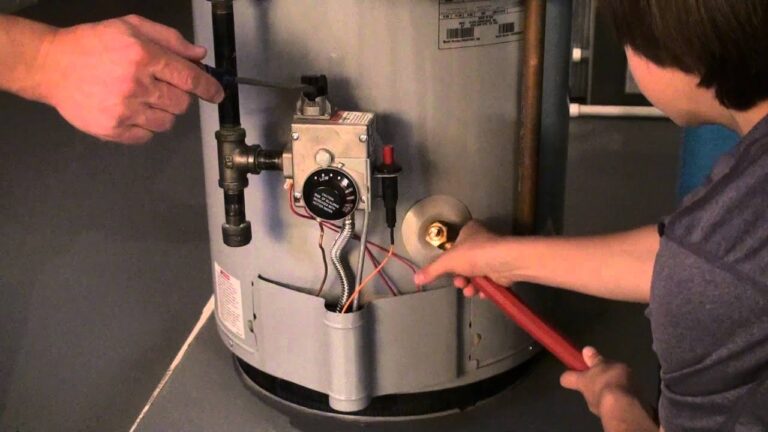
Follow the lighting label for your model, wait the required purge time, then use the igniter or a long lighter as your manual directs. Hold the pilot control for 30 to 60 seconds, then switch to on and verify the flame stays lit. If the knob does not pop up or the pilot fails repeatedly, turn the gas control to off and contact a technician.
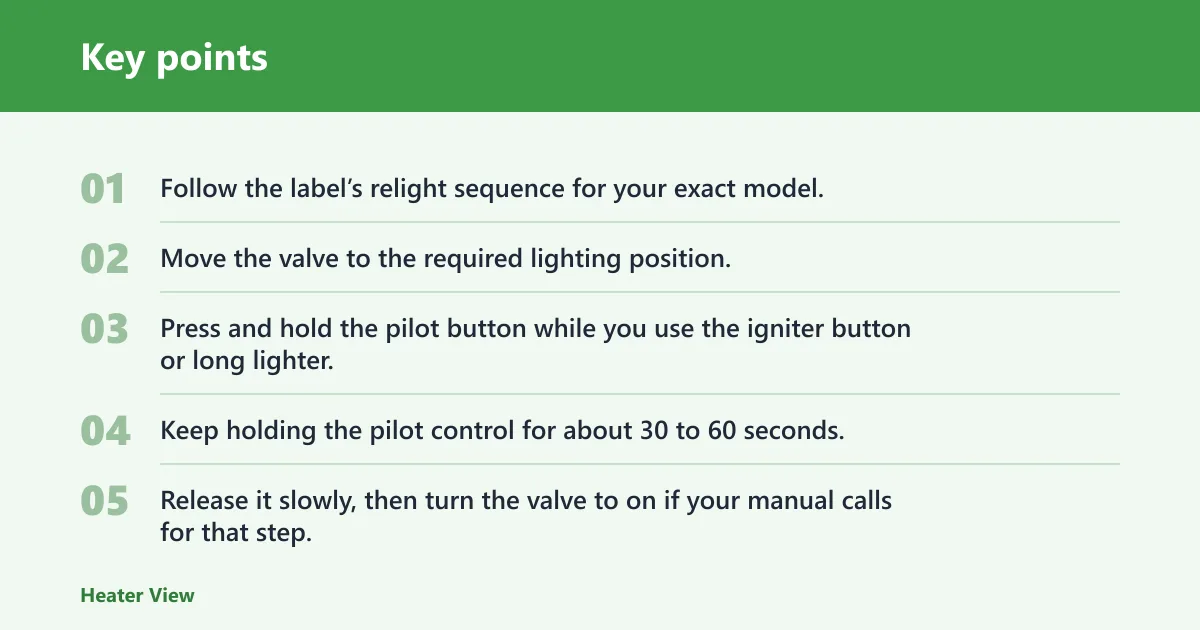
- Follow the label’s relight sequence for your exact model.
- Move the valve to the required lighting position.
- Press and hold the pilot button while you use the igniter button or long lighter.
- Keep holding the pilot control for about 30 to 60 seconds.
- Release it slowly, then turn the valve to on if your manual calls for that step.
- Check for a bright blue, steady pilot and normal burner operation.
Turn the gas control valve to off and wait
This is the first safety step. It gives any trapped gas time to clear before ignition. If the manual gives a different wait time, follow the manual for that model.
Set the valve to pilot
Move the control only to the pilot position. Do not skip straight to on. The pilot flame must be established first so the thermocouple can sense heat and keep gas flowing.
Press the pilot button and spark the igniter
Many modern units use a piezoelectric igniter. Hold the pilot button while sparking, because the gas valve often needs that button depressed for pilot gas to flow. On older units, a long lighter may be required.
Hold the button, then turn to on and verify flame
After ignition, keep holding the control long enough for the thermocouple to heat up. Some guides instruct users to wait up to one minute for that heat transfer. Then set the control to on and confirm the flame remains steady.
Pilot light troubleshooting matrix
| Symptom | Likely cause | Homeowner-safe check | Stop-and-call-pro action |
|---|---|---|---|
| Yellow flame | Dirty pilot opening or poor combustion air | Look for dust, lint, or soot in the burner compartment and confirm vents are open | Turn the gas control to off and call for burner or vent service |
| Weak flickering flame | Drafts, restricted air supply, or partial clogging | Close access panels, check nearby airflow, and look for blocked vents | Stop if the flame still lifts or wavers after one safe relight |
| Pilot will not hold after release | Thermocouple failure or weak heating of the sensor | Repeat the hold only once, for the manual’s time window | If it still drops, turn off gas and call a technician |
| Outage after wind or a door closes | Draft or venting issue | Note whether the outage happens after airflow changes | Do not keep relighting; have the venting checked |
| No spark from the igniter | Failed igniter button, electrode, or wire | Check whether the igniter button clicks and whether the model uses a piezoelectric igniter | Stop and schedule service rather than forcing repeated attempts |
Why does the pilot keep going out?
The most common causes are a weak thermocouple, dirt at the pilot orifice, drafts, venting trouble, or an FVIR safety shutdown. An FVIR system is designed to shut off gas when flammable vapors are present, so a repeated outage can be a warning sign rather than a nuisance.
Thermocouple problems
The thermocouple senses flame heat and tells the gas valve when the pilot is present. If it fails, the valve may shut gas off even after a good light. That is a common failure point when the pilot will not stay lit.
Dirt at the pilot orifice or burner
Dust or debris can weaken the flame and make it unstable. Keep the outside burner area clear, but do not try to disassemble or adjust the gas train. If the flame is yellow or thin after a proper relight, the orifice may need professional cleaning.
Drafts, venting, and blocked air supply
Combustion needs air. A draft can blow out a standing pilot, and blocked vents can make the flame unstable or lazy. Picture a basement utility room where the pilot stays lit until a nearby door closes; that pattern points to airflow, not a bad light-up sequence.
FVIR and gas-supply checks
Modern FVIR-equipped units can shut down if they detect flammable vapor conditions. If the area smells like solvent, gasoline, or paint thinner, stop using the heater and get a professional evaluation.
Common mistakes
Do not relight if you smell gas. Do not shorten the hold time because the flame looks lit; the thermocouple still needs time to heat. Do not keep retrying after repeated failure, because that turns a safe check into a guess-and-hope cycle.
Say your heater lights, but the pilot goes out every time the laundry-room door slams. That pattern points toward a draft problem, so repeated relighting will not solve it. A common first-timer mistake is to keep pressing the igniter without checking whether airflow changed.
Say your unit has a piezoelectric igniter and no spark appears at all. The fix is not to keep cycling the valve; it is to stop, confirm the manual, and arrange service if the igniter button or electrode has failed.
If that didn’t work, try this next
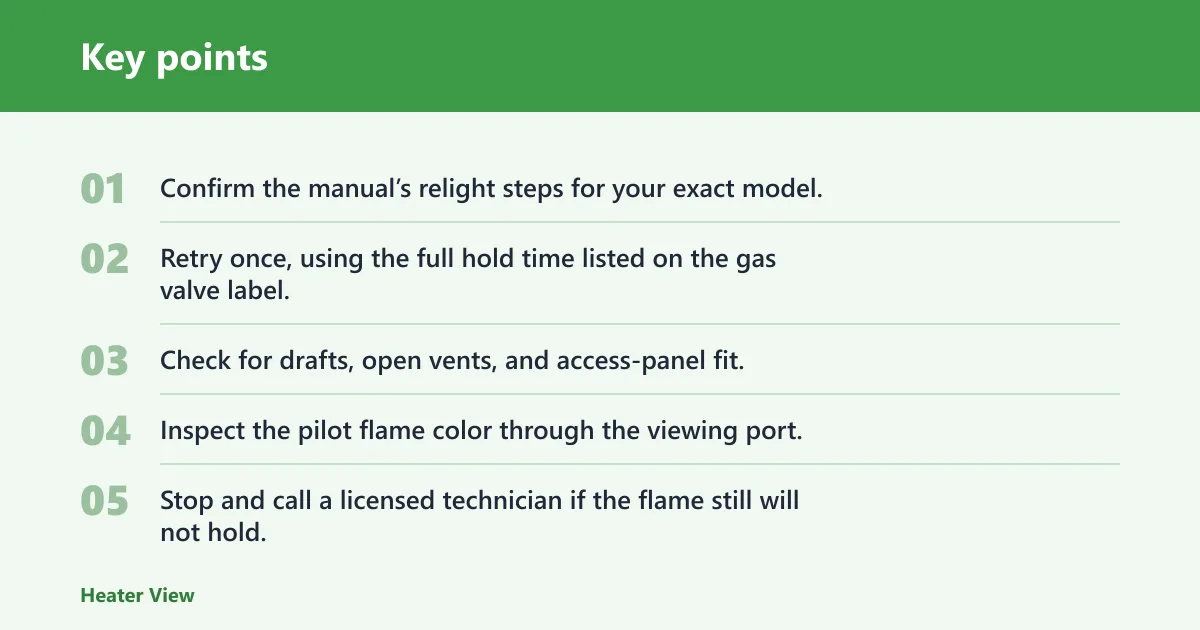
- Confirm the manual’s relight steps for your exact model.
- Retry once, using the full hold time listed on the gas valve label.
- Check for drafts, open vents, and access-panel fit.
- Inspect the pilot flame color through the viewing port.
- Stop and call a licensed technician if the flame still will not hold.
Prevention: check the pilot monthly, keep the burner compartment free of dust, and note any outage pattern after wind, door slams, or vacation shutdowns so you can report it clearly if service is needed.
Frequently asked questions
How to keep a hot water heater pilot light lit
Keep the burner compartment clean, follow the manual’s hold time, and check for drafts or blocked vents whenever the pilot goes out more than once. If the flame remains bright blue and steady after relighting, the system is usually behaving normally. Repeated outage needs service, not repeated guessing.
Should pilot light always be on water heater?
On a standing-pilot gas water heater, yes, the pilot should stay lit during normal operation. Some newer units use electronic ignition instead, so there may be no standing pilot at all. Check the rating label and manual before assuming your unit should have a visible flame.
Why won’t my pilot light stay on on my water heater
A pilot that will not stay on often points to a weak thermocouple, dirt at the pilot opening, drafts, venting trouble, or a gas-control issue. If the flame lights but drops when you release the button, stop after one proper attempt and schedule service.
How do you start a pilot light on a water heater?
Turn the gas control to off, wait five to 10 minutes, move it to pilot, and ignite with the unit’s igniter or a long lighter. Hold the pilot control for about 30 to 60 seconds, then switch to on and confirm the flame remains steady.
When should you call a plumber instead of relighting it yourself?
Call a technician if you smell gas, if the pilot will not hold after one careful attempt, if the igniter gives no spark, or if the flame keeps failing after a door opens or closes. Those patterns usually need diagnosis beyond a homeowner-safe reset.
Can drafts or venting issues blow out a water heater pilot light?
Yes. Drafts can extinguish a standing pilot, and blocked vents can make the flame unstable. If the outage happens when a furnace starts, a door slams, or wind hits the utility area, focus on airflow and venting rather than repeated relighting.
What should a healthy pilot flame look like?
A healthy pilot flame is bright blue and steady. It should stay anchored at the pilot opening and heat the thermocouple without flickering hard or turning yellow. A weak, wavering, or yellow flame is a warning sign that the pilot system needs attention.
Is it safe to relight a pilot light if you smell gas?
No. If you smell gas, do not relight the appliance. Turn the control to off if you can do so safely, leave the area, and follow the gas supplier’s emergency steps. Relighting in the presence of gas vapor is a stop condition, not a troubleshooting step.