Water Heater Maintenance for Sediment-prone Households
After a flush, if you collect less than about a cup of sediment, a common rule of thumb is to repeat the drain and flush yearly; if you get cups of grit or clogging returns quickly, a common rule of thumb is to flush every 3 to 6 months and inspect the tank valve. Left alone, sediment cuts hot-water capacity, slows recovery, and can shorten tank life. This guide covers what to do after a light flush, a heavy flush, and a recurring sediment problem.
What sediment changes in your tank
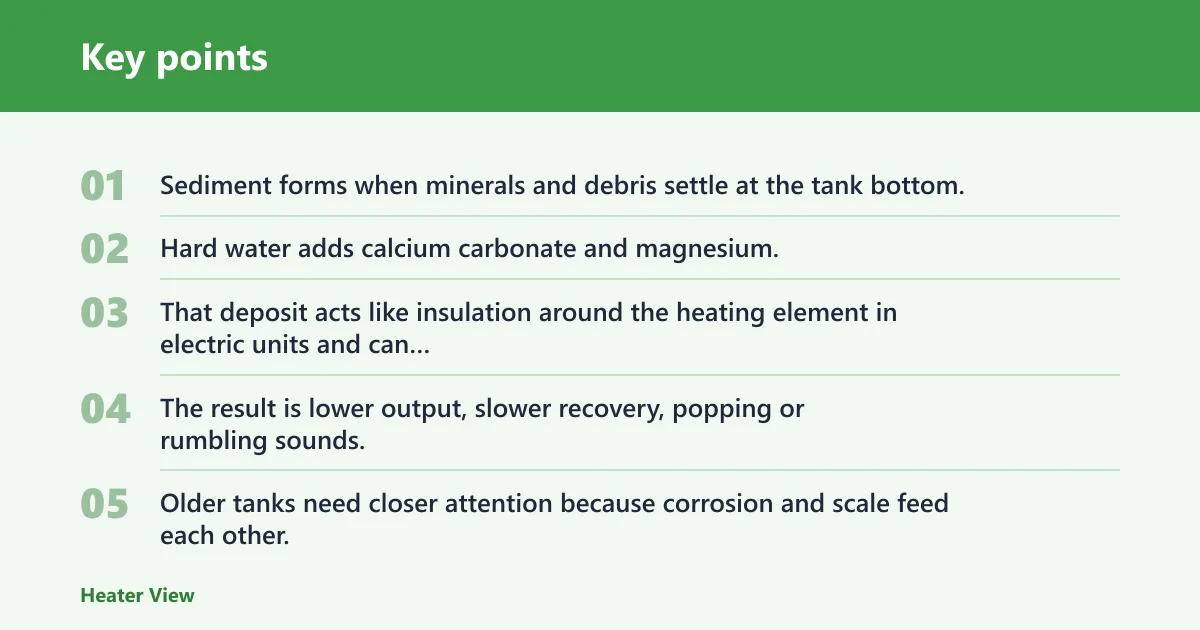
Sediment forms when minerals and debris settle at the tank bottom, where heat is strongest. Hard water adds calcium carbonate and magnesium, which makes buildup more likely and pushes maintenance sooner than a standard annual flush.
That deposit acts like insulation around the heating element in electric units and can make gas burners heat the tank bottom harder than intended. The result is lower output, slower recovery, popping or rumbling sounds, and more wear on the tank.
Older tanks need closer attention because corrosion and scale feed each other. If a home has hard water plus an older heater, a once-a-year flush may be too slow to keep the drain path open or the tank quiet.
How hard water drives mineral buildup
Hard water contains dissolved calcium and magnesium. When the water is heated, those minerals are more likely to come out of solution and collect in the tank, especially at the bottom where water movement is weakest.
Higher temperature speeds that process. A common target is about 120°F or 49°C, which can slow mineral drop-out compared with hotter settings.
Why sediment causes noise and lower output
Sediment can trap heat and make the tank noisy. Popping or rumbling often comes from water flashing through pockets of mineral deposit, and some noisy tanks quiet down after draining and refilling.
Lower output is another clue. When sediment takes up space at the bottom, the heater has less room for hot water and less efficient heat transfer, so the system may run longer for the same demand.
Why older tanks need tighter attention
Older water heaters often have more corrosion, more compacted sediment, and less margin for error. If the tank is already losing heat through mineral buildup, the next maintenance step is not always more flushing; sometimes it is inspection, valve work, or replacement planning.
Sediment maintenance table
Use the amount of sediment after a flush to choose the next step. Light, moderate, and heavy buildup do not call for the same maintenance interval.
| Scenario | Warning signs | Flush frequency | Inspect anode rod? | Add softener or scale inhibitor? | When to call a pro |
|---|---|---|---|---|---|
| Light sediment | Less than a cup after flushing; mild noise; hot water still reaches normal use | Yearly | Yes, during annual inspection | Optional if the home has only modest hardness | Drain flow slows, or the tank keeps making noise after a flush |
| Moderate sediment | Cups of grit; popping returns within weeks or months; recovery feels slower | Every 3 to 6 months | Yes, every maintenance visit | Yes, if mineral deposits keep returning | Weak drain flow, repeated clogging, or uncertain valve operation |
| Heavy sediment | Drain plugs with grit; rumbling persists after flushing; hot water capacity drops fast | Flush, then reassess within months | Yes, and inspect for severe wear | Yes, especially in hard-water homes | Noise persists, flow is weak, or replacement is becoming the better option |
Say your 50-gallon tank drains a few flakes and a little cloudy water, then clears within a short flush cycle. That points to light sediment, so yearly flushing plus an annual inspection is usually enough unless the noise returns early.
Suppose a tank drains cups of grit and the burner still rumbles after refilling. That is a heavy-sediment pattern, and it calls for a shorter flush interval, a valve check, and a hard look at the anode rod and overall tank condition.
How do you flush a sediment-prone water heater safely?
A safe flush means shutting the unit down first, draining through the base valve, and refilling fully before restart. Electric heaters need power off at the breaker. Gas heaters need the control set to pilot or off so the burner does not fire on an empty or partly drained tank.
The drain path matters because sediment settles at the bottom. A hose on the drain valve at the base lets you carry sediment out of the tank, and opening the pressure relief valve during draining admits air so the tank can empty properly.
Electric units
Turn off the breaker before you drain an electric water heater. Do not restore power until the tank is completely refilled and air has been purged from the lines, or the elements can run dry and overheat.
Gas units
Move the gas control to pilot or off before draining a gas heater. That keeps the burner from firing against an empty or partially drained tank, which can damage the heater bottom and create a safety risk.
Drain, clear, and refill steps
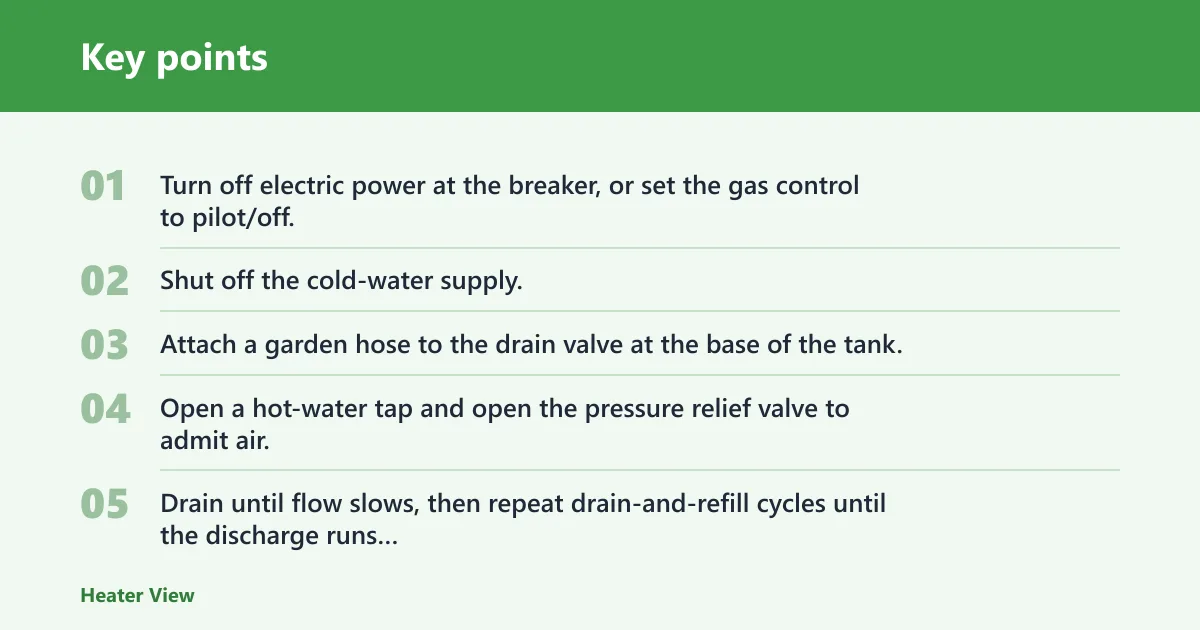
- Turn off electric power at the breaker, or set the gas control to pilot/off.
- Shut off the cold-water supply.
- Attach a garden hose to the drain valve at the base of the tank.
- Open a hot-water tap and open the pressure relief valve to admit air.
- Drain until flow slows, then repeat drain-and-refill cycles until the discharge runs clear.
- Close the drain valve, reseat the pressure relief valve, restore the cold supply, and refill the tank fully.
- Bleed air from hot taps before restoring power to an electric unit or relighting a gas unit.
Cloudy discharge during the first drain is not always a failure sign. Stirred-up sediment can cloud the water as soon as the tank starts moving, so the better test is whether the flow clears after repeated drain-and-refill cycles.
Some tanks need more than one cycle. Conventional sediment removal often means repeated flushing through the drain valve until the water runs clear.
When should you inspect the anode rod?
Inspect the sacrificial anode rod during sediment maintenance, not months later. It protects the tank by corroding first, so a tank that has heavy mineral buildup should also get a look at the rod, especially if the heater is older or the water is hard.
What bad wear looks like
The rod is typically due for replacement if it is heavily pitted, reduced to a thin core wire, or if more than about 6 inches of the original 3/4-inch diameter material is gone in any 24-inch section. That level of wear means the rod has spent most of its service life.
How sediment changes inspection timing
Light sediment still calls for an annual inspection for buildup and corrosion. Moderate or heavy sediment should shorten the interval, because a tank that sheds minerals quickly often puts more stress on both the rod and the tank lining.
When replacement is the next step
If the anode rod is badly worn and the tank still builds sediment fast after flushing, replacement may be a better call than repeating the same maintenance. A tank with recurring corrosion, weak drain flow, or declining output can move past simple service.
Should you use a softener or scale inhibitor?
A water softener is the stronger fix when the home has true hard water and sediment keeps coming back. A scale inhibitor or water heater filter is useful when you want to treat water before it enters the heater, especially for tankless systems that are more prone to mineral build-up.
When a softener is the stronger fix
If calcium and magnesium are driving repeated sediment, a softener attacks the problem before the water reaches the tank. That can reduce how often you need to flush and can make the maintenance interval less aggressive in a hard-water home.
When a scale inhibitor or filter is enough
A scale inhibitor or water heater filter is often the right middle step when hardness is moderate or when you want to slow mineral deposits without a full softening system. Fresh Water Systems notes that these filters are designed to prevent mineral deposits from accumulating.
For cartridge-style filters, replace cartridges every 4 to 6 months if the system calls for them. That keeps the pretreatment from clogging and losing effectiveness.
Why tankless systems need pretreatment more often
Tankless water heaters are more prone to mineral build-up because their higher heat raises scale risk. In hard-water homes, they may need manufacturer-approved pretreatment, such as a scale inhibitor or service cartridge, more often than a tank heater does.
Do not treat tankless maintenance like tank maintenance. A tank heater needs sediment removal at the bottom of the vessel; a tankless unit needs scale control at the inlet and heat-exchanger level.
What if flushing does not fix the problem?
If noise, slow recovery, or weak flow continue after flushing, the problem may be compacted sediment, a failing valve, or tank damage. At that point, more flushing is not always the next best move. A pro inspection can tell you whether the tank is still serviceable.
Weak drain flow and compacted sediment
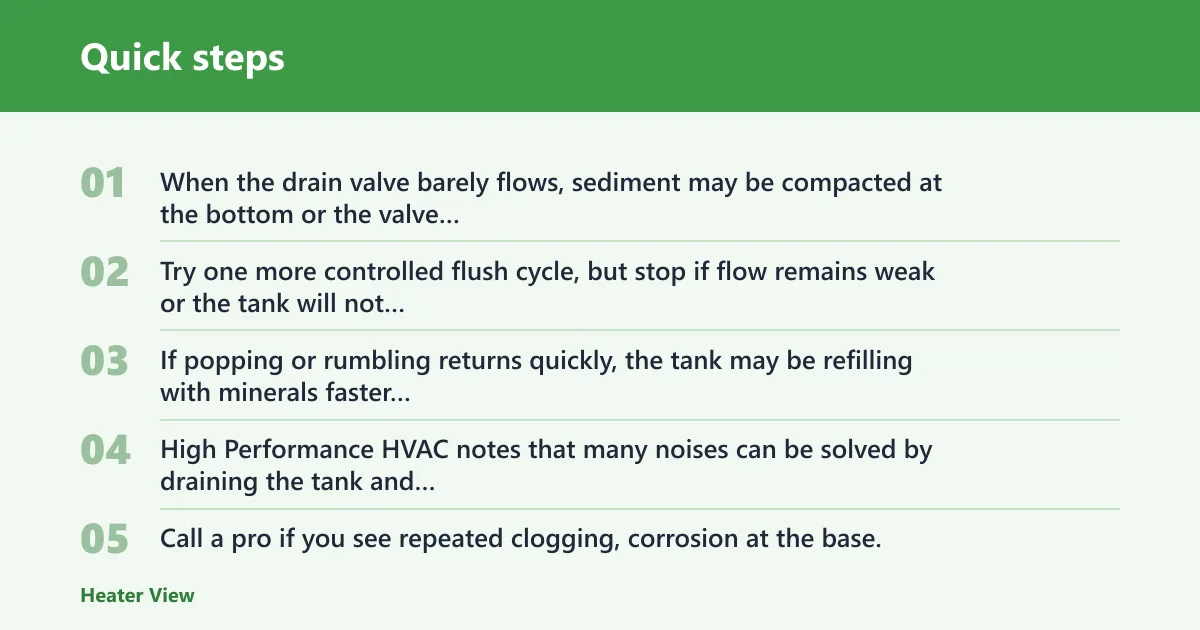
When the drain valve barely flows, sediment may be compacted at the bottom or the valve itself may be restricted. Try one more controlled flush cycle, but stop if flow remains weak or the tank will not drain well enough to clear the bottom.
Noise that returns after a flush
If popping or rumbling returns quickly, the tank may be refilling with minerals faster than a standard interval can handle. High Performance HVAC notes that many noises can be solved by draining the tank and refilling it, but recurring noise after that points to a deeper issue.
Signs the tank needs pro service or replacement
Call a pro if you see repeated clogging, corrosion at the base, a drain valve that will not clear, or a tank that keeps losing performance after service. When sediment is heavy enough to shorten hot-water capacity again within months, replacement may be more practical than another flush.
A common first-timer mistake is treating one noisy tank as a simple flushing problem forever. If the heater is old, the drain is weak, and the anode is heavily worn, the better decision may be to stop spending maintenance time on a tank that is near the end of its life.
Temperature and maintenance settings
Set the thermostat to about 120°F unless the manufacturer says otherwise. That lower setting can slow mineral precipitation, reduce scale formation, and cut the rate at which sediment collects at the tank bottom.
The setting change does not replace flushing. It changes the pace of buildup, so you still need to check the drain, the anode rod, and the pressure relief valve on a schedule that matches the water quality in the home.
What to check after a setting change
After lowering the temperature, watch for slower sediment growth, steadier hot-water performance, and less noise at the tank bottom. If hardness is severe, the heater may still need shorter flush intervals even at 120°F.
Frequently asked questions
How do I maintain a water heater if my house has a lot of sediment?
Start with a safe flush, then use sediment severity to set the next interval. Light buildup usually needs yearly flushing, moderate buildup needs 3- to 6-month flushing, and heavy buildup needs an inspection of the drain valve, anode rod, and overall tank condition.
How often should I flush a sediment-prone water heater?
Annual flushing is fine for light sediment, but hard-water homes often need more frequent service. If you collect cups of grit or the heater starts making noise again quickly, move to every 3 to 6 months and reassess the drain, valve, and anode rod each time.
What causes sediment buildup in a water heater tank?
Sediment builds when minerals and debris settle at the tank bottom. Heat pushes calcium and magnesium out of the water more quickly, and repeated heating cycles make the deposit thicker over time, especially in homes with hard water.
Can hard water make water heater sediment worse?
Yes. Hard water contains calcium carbonate and magnesium, which increase sediment and scale formation. In a hard-water home, the tank often needs flushing more often, and a softener or scale inhibitor can be worth adding if buildup returns quickly.
Should I use a water softener or scale inhibitor for my water heater?
Use a softener when hardness is clearly driving frequent sediment in a tank heater. Use a scale inhibitor or water heater filter when you want pretreatment before the heater, especially for tankless systems that are more prone to mineral build-up and may need cartridge changes every 4 to 6 months.
What are the signs of sediment buildup in a water heater?
Popping or rumbling noises, slower hot-water recovery, reduced capacity, and cloudy discharge during a flush are common signs. If the noise returns after flushing or the drain flow is weak, the tank may have compacted sediment that needs more than a routine rinse.
How do I flush sediment out of a water heater safely?
Turn off electric power at the breaker or set gas control to pilot/off, shut off the cold supply, attach a garden hose to the drain valve at the base, and open the pressure relief valve to admit air. Drain, repeat until clear, then refill fully before restart.
When should I check the anode rod if my water has a lot of minerals?
Check it during annual sediment and corrosion inspections, and sooner if the tank has heavy buildup. Replace the rod if it is heavily pitted, reduced to a thin core wire, or more than about 6 inches of the original 3/4-inch diameter material is gone in any 24-inch section.
Do tankless water heaters need sediment or scale maintenance more often?
Usually yes. Tankless units run hotter at the heat exchanger, which raises scale risk, and they are more prone to mineral build-up than tank heaters. Many need manufacturer-approved pretreatment and regular cartridge changes rather than tank-style flushing alone.
What maintenance steps matter most for older water heaters with sediment?
Older heaters need a flush, anode inspection, drain-valve checks, and a close look at recurring noise or weak flow. If sediment keeps returning quickly, or if corrosion and performance loss are advancing together, replacement can be the more practical choice.