Best Portable Heaters for Van Conversions (2026): We Compared
The best portable heater for a van conversion is usually a vented or catalytic propane heater for off-grid overnight heat; choose electric only if you have shore power or a large battery bank, and use a 12V heated blanket for the lowest draw. Get this wrong and you can drain the battery, burn through fuel, or create a serious carbon-monoxide risk. This guide compares heater types by van setup, safety limits, and overnight operating cost.
Quick comparison
| Product | Badge | Best for | Price | ||
|---|---|---|---|---|---|
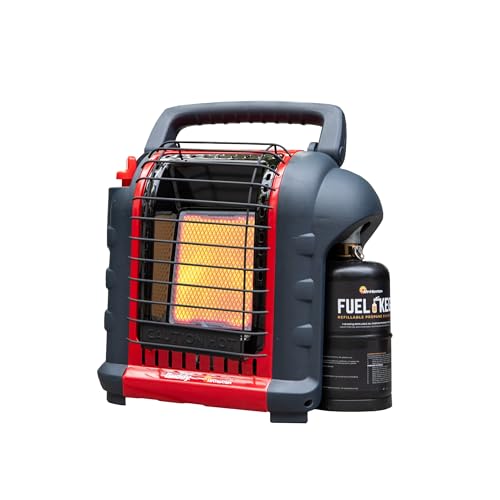 |
Mr. Heater 9,000 BTU Portable Buddy Radiant Propane HeaterMr. Heater | Our pick | 9,000 BTU · propane · radiant | $89.97
Price as of 1 Nov 2026
|
View |
 |
VEVOR 8KW Diesel Heater, 12V/24V All in One Diesel AirVEVOR | Also great | 8kW · 12V/24V · diesel | $171.90
Price as of 1 Nov 2026
|
View |
 |
Eberspacher Espar Airtronic Heater Kit AS3 D2L (Diesel) 12VEberspächer | Upgrade pick | 2kW · 12V · diesel | $1,250.00
Price as of 1 Nov 2026
|
View |
The core trade-off is simple: electric heat is easy but power-hungry, propane heat is cheap to run but needs careful ventilation, and diesel heat fits long off-grid use if you can handle the install. For van life, the right answer depends more on battery bank size and sleeping setup than on raw heat output.
Many pages blur shore power camping and true off-grid overnight living. Those are different problems. A heater that works fine at a campground hookup can be a poor choice for a battery-only van in freezing weather.
How we chose
The comparison below focuses on power source fit, overnight runtime, safety features, operating cost, and installation demands. It also separates temporary portable use from heaters that need ducting, exhaust routing, or fixed mounting.
Heat loss matters too. A small, well-insulated van with window covers needs far less heat than a tall, leaky rig in wind and below-freezing air.
Portable electric heater: best for shore power
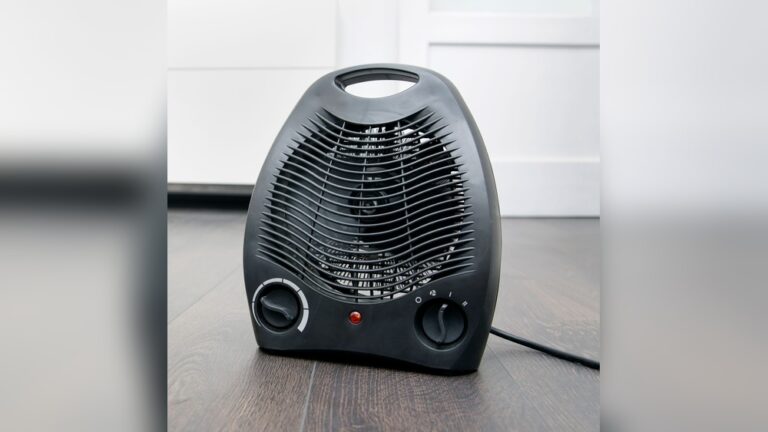
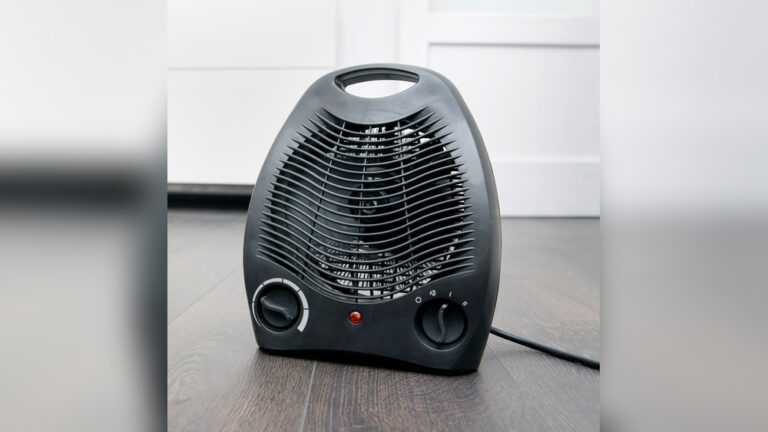
Portable electric heat is the best fit when you have shore power, a generator, or an inverter and battery bank sized for the load. It is simple, clean, and common, but it becomes impractical for long overnight use unless your system can supply several hundred watts for many hours.
What wattage means in a van
Many portable electric heaters draw roughly 750 to 1,500 watts. At 1,500 watts, a 12V battery bank must supply roughly 125 amps before inverter losses, which can be a heavy load for a van. A 1,000-watt heater still pulls roughly 85 amps through the inverter side of the system.
That means battery capacity, inverter wattage, and wire size all matter. A 2,000-watt inverter may run a 1,500-watt heater, but only if the battery bank, cabling, and low-voltage cutoff are sized for sustained current. Without that, the heater may trip the inverter or drain the battery too fast.
Ceramic, oil-filled, or fan-forced
Ceramic and fan-forced heaters warm space quickly and usually include thermostat control, tip-over protection, and overheat protection. Oil-filled heaters hold heat longer and run more quietly, but they are heavier and slower to respond. In a small van, quiet operation often matters as much as heat output.
For overnight use, the thermostat matters more than the housing style. A heater that cycles cleanly is easier to manage than one that blasts full power all night.
What to check on the power cord and protection features
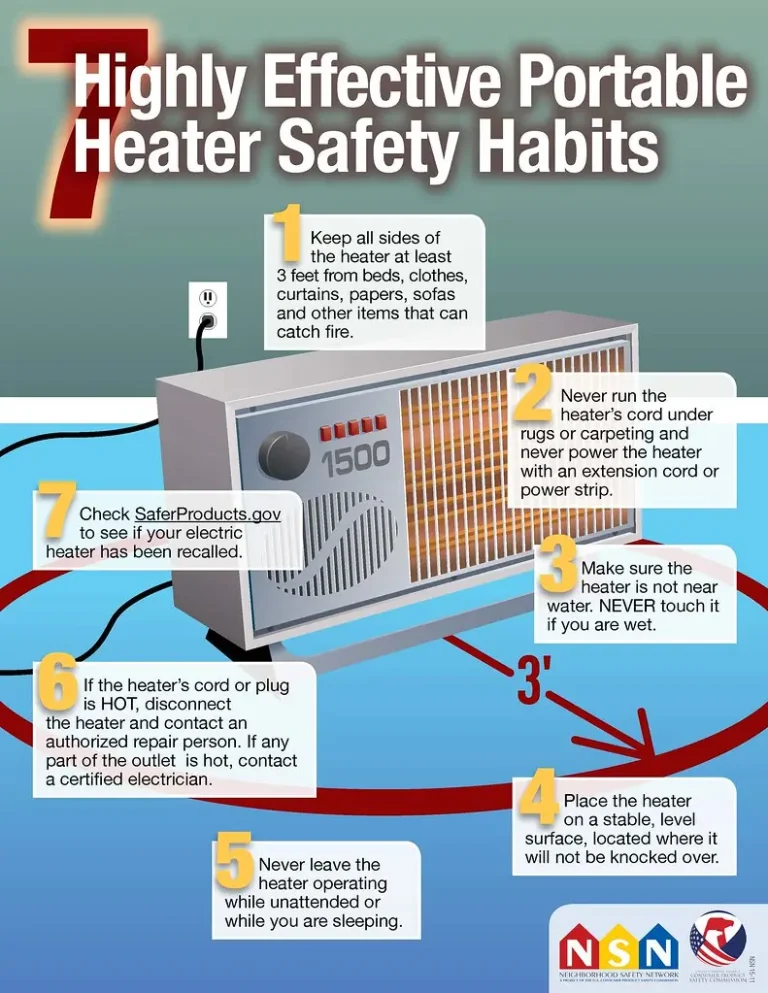
Check the plug, cord rating, and extension cord limits before you buy. Many portable heaters should not be used with a light-duty household extension cord in a van. Look for a dedicated outlet, proper overcurrent protection, and a circuit sized for continuous load.
If you run it from an inverter, confirm continuous wattage, surge rating, battery capacity in amp-hours or watt-hours, and the battery’s low-voltage cutoff. Solar and alternator charging can help, but they do not erase the heater’s draw.
VEVOR 8KW Diesel Heater: best for off-grid heat
- Built-in CO alarm
- Works with 12V or 24V power
- Bluetooth, remote, and panel control
This is the strongest fit for off-grid overnight heating when you want a self-contained diesel air heater with 12V or 24V support. Based on the listed specs, it gives you fast heat, Bluetooth app control, remote control, and a built-in CO alarm, which makes it practical for winter van travel.
The drawback is installation complexity. Diesel air heaters need ducting, exhaust routing, and clean mounting space, and the larger 8 kW output may be more than a small, well-insulated van needs. It is a better match for colder weather or larger interiors than for mild shoulder-season camping.
Fuel use, heat output, and 12V draw
Diesel air heaters are a strong off-grid option because they create heat from fuel, not from the battery bank. Published product details for diesel heaters commonly list fuel consumption in liters per hour and heat output in kW or BTU, while the electrical side usually stays at a modest 12V draw for the fan and control electronics.
That low electrical draw is the key advantage. You still need enough battery for startup and overnight fan operation, but the battery load is far lower than with a large electric space heater.
Altitude and winter performance
Altitude matters because thin air affects combustion. Many diesel heaters perform better near sea level than at high mountain elevations unless they have altitude compensation or a controller that adjusts fuel delivery. If you travel in mountain terrain, that is a real selection point.
In winter, output, duct routing, and insulation quality matter together. A good heater cannot make up for a bare metal box with exposed windows and drafty seams.
Ducting, exhaust, and install constraints
Diesel heaters must exhaust combustion gases outside the van. That means a sealed exhaust path, fresh air intake, and heat ducting that keeps hot parts away from wiring, flooring, and stored gear. Safe clearance around the heater body and exhaust path is non-negotiable.
You also need overcurrent protection on the 12V feed, correct wire gauge for the startup current, and a solid mounting location that will not rattle loose on rough roads.
Mr. Heater 9,000 BTU Portable Buddy: best for backup heat
- Indoor/outdoor approved use
- Two heat settings
- Low-oxygen safety system
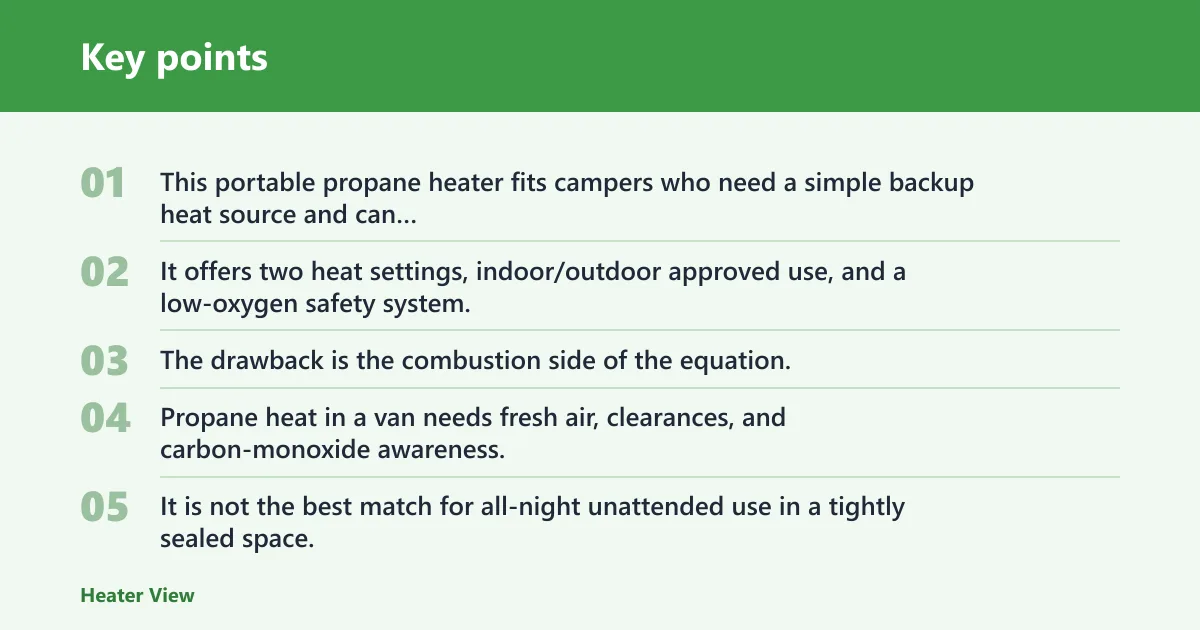
This portable propane heater fits campers who need a simple backup heat source and can manage ventilation carefully. It offers two heat settings, indoor/outdoor approved use, and a low-oxygen safety system, which makes it more flexible than a basic outdoor-only burner.
The drawback is the combustion side of the equation. Propane heat in a van needs fresh air, clearances, and carbon-monoxide awareness. It is not the best match for all-night unattended use in a tightly sealed space.
BTU output and indoor-use limits
BTU output tells you how much heat the unit can produce, but indoor suitability depends on more than output. A propane heater may be approved for indoor or indoor/outdoor use and still require strict ventilation. In a van, that means you should treat the approval label as the starting point, not the full safety plan.
Propane is often attractive because the fuel is easy to store and the heater can run without draining the house battery. That does not remove combustion risk.
CO risk, oxygen depletion, and detector needs
Any combustion heater can create carbon monoxide. Use a carbon monoxide detector with battery backup and a CSA, UL, or equivalent listing. Place it in the sleeping area at the height and location recommended by the detector maker, and keep it powered before you sleep.
Oxygen depletion is another concern in a small van. If the space is tightly sealed, the heater can consume indoor air faster than the van replaces it. That is why low-oxygen shutoff features and real ventilation are both important.
Ventilation and clearance basics
Use a roof vent or cracked window whenever a propane heater runs, and keep a fresh air path open. Control moisture too, because propane combustion adds water vapor to a small metal interior and condensation can turn into damp bedding, wet walls, and frost on windows.
Keep the heater away from curtains, cabinets, bedding, and any item that can catch heat. Follow the manufacturer’s clearance numbers, not a guess.
Eberspacher Espar Airtronic Heater Kit AS3 D2L: best for quiet installed heat
- Compact under-seat design
- Integrated temperature sensor
- Stepless blower for quieter operation
This is the best fit for a van owner who wants a compact, purpose-built diesel air heater with a quieter feel and an under-seat style layout. The listed features include a compact design, integrated temperature sensor, and stepless blower control, which can help with steadier heat control overnight.
The drawback is cost and install commitment. At this price point, it is a serious purchase, and like any diesel heater it still needs correct exhaust, ducting, and safe mounting. It is less plug-and-play than a simple portable heater.
Compact fit and control
Compact heaters are useful in vans where interior space is tight. A stepless blower can help reduce on-off temperature swings, and an integrated sensor can improve temperature control compared with a basic toggle-style unit.
That said, compact does not mean simple. The same combustion rules still apply: exhaust outside, fresh air in, and safe routing for every hot or moving part.
Who it suits
This type of heater suits full-time or frequent winter van use, especially where space is limited and the owner wants a more permanent solution. It is a stronger fit than a portable propane unit when overnight runtime and fuel economy matter most.
If your travels include cold mountain nights, a purpose-built diesel heater is often the more dependable choice than trying to push an electric heater from a small battery bank.
Van heater decision matrix
| Use case | Power source | Overnight hours | Ventilation needs | Likely best heater type |
|---|---|---|---|---|
| Campground with hookup | Shore power or large inverter | 4 to 8 | Normal room ventilation, moisture control | Portable electric heater |
| Weekend off-grid trip | 12V battery bank | 6 to 10 | Roof vent or cracked window if combustion | Diesel air heater or propane backup |
| Full-time winter living | Alternator, solar, or shore charging | 8 to 12 | Continuous fresh air and CO monitoring | Diesel air heater |
| Small battery bank, light use | Limited 12V capacity | 1 to 3 | Depends on heater type | Propane heater or 12V heated blanket |
| Low-budget temporary setup | Existing camp gear | Short sessions only | Manual ventilation and clearances | Propane heater, used carefully |
12V battery runtime estimator
| Battery bank | Usable energy estimate | 500W heater | 1,000W heater | 1,500W heater |
|---|---|---|---|---|
| 100Ah at 12V | About 600Wh before inverter losses | About 1 hour | Under 1 hour | Not practical |
| 200Ah at 12V | About 1,200Wh before inverter losses | About 2 hours | About 1 hour | Under 1 hour |
| 300Ah at 12V | About 1,800Wh before inverter losses | About 3 hours | About 1.5 hours | About 1 hour |
This table is a simple estimate, not a promise. Real runtime depends on inverter efficiency, battery chemistry, low-voltage cutoff, and how often the heater cycles. Alternator or solar charging can extend runtime, but cold weather and inverter losses still reduce usable energy.
Ventilation and safety checklist
- Keep a roof vent open or crack a window when using combustion heat.
- Use a carbon monoxide detector with battery backup and a listed safety certification.
- Keep fresh air intake available near the sleeping area.
- Maintain safe clearances around the heater, exhaust, and any hot ducting.
- Control condensation with window covers, ventilation, and dry bedding.
- Check fuse size, cable gauge, and inverter protection before using electric heat.
Which heater should you buy?
If you have shore power, a portable electric heater is the cleanest and simplest choice. If you sleep off-grid, a diesel air heater is usually the best balance of runtime, heat output, and running cost. If you need a low-cost backup that does not depend on battery capacity, propane can work, but only with real ventilation and CO protection.
Choose portable electric if…
Choose electric if your van sits on hookups, your inverter is rated for the continuous load, and your battery bank can support the draw for the time you need. It is also the easiest option for short, supervised heating.
Choose it less often if you plan to sleep through the night off-grid. Battery drain becomes the main limitation fast.
Choose diesel if…
Choose diesel if you need all-night heat, winter performance, and the lowest practical overnight operating cost among the main van heater types. It is the best fit for frequent cold-weather travel, especially when you can support the installation.
Choose it less often if you want a temporary setup or cannot install exhaust and ducting safely.
Choose propane if…
Choose propane if you want a lower-cost backup heater, already carry propane, and can ventilate the van properly every time it runs. It can be a practical middle ground for short sessions and emergency heat.
Choose it less often if your sleeping setup is tightly sealed or if you want the simplest route to unattended overnight heat.
Suppose your battery bank is small. Suppose you have a 100Ah 12V battery and no shore power. A 1,500-watt electric heater is a poor match because the inverter load is too large and the battery runtime is too short. In that case, a diesel heater or a propane heater with safe ventilation is more realistic.
Say your van is heavily insulated. Say your van is a short wheelbase build with insulated walls, window covers, and a roof vent. Heat loss is lower, so a smaller heater can hold temperature longer. That lets you avoid oversizing the heater and wasting fuel or power.
What is the best heater for a campervan?
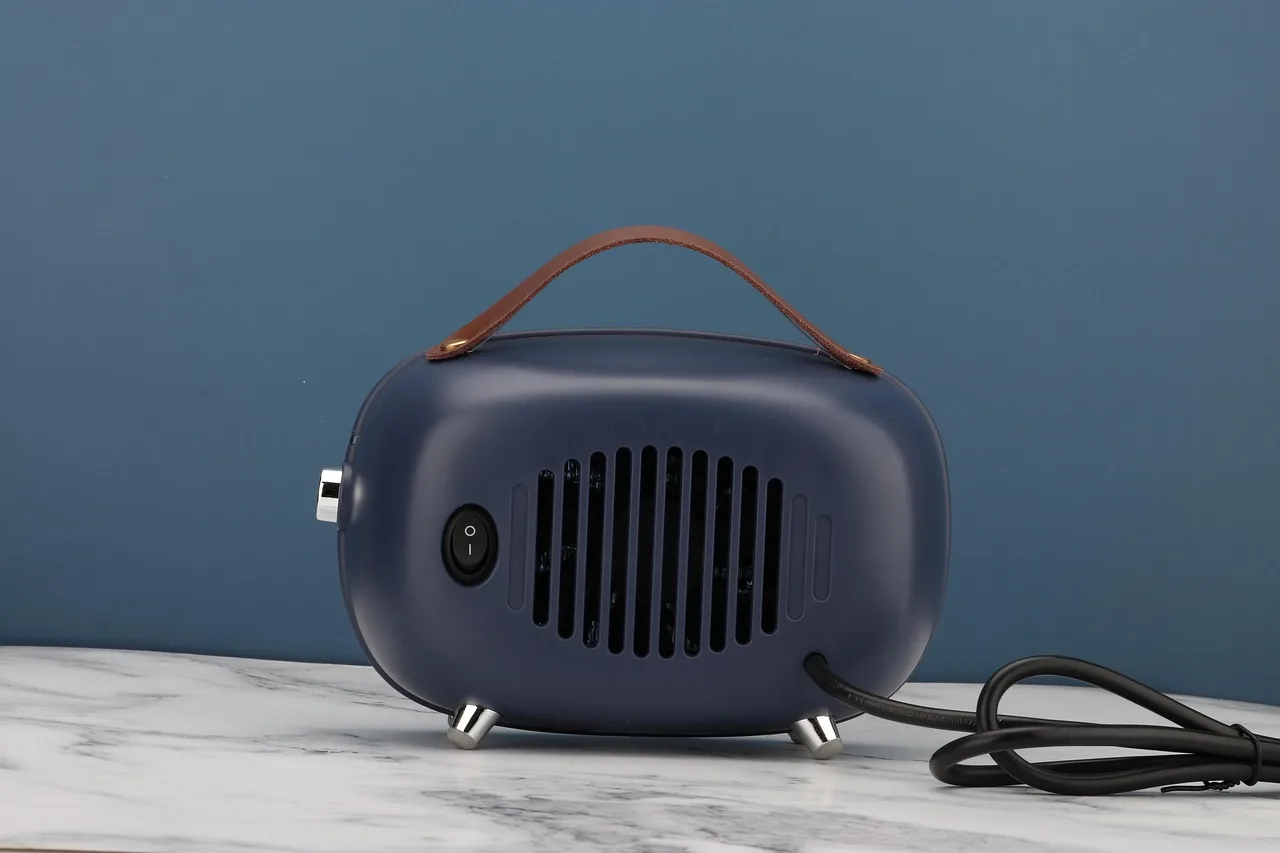
The best heater for a campervan is usually a diesel air heater for off-grid use and a portable electric heater for shore power camping. The right choice depends on whether your van has battery capacity and charging support, or whether it has a campsite hookup. Insulation, outside temperature, and wind exposure all change the answer.
For sleeping, the safest practical setup is the one that matches the van’s power system and ventilation plan. A heater that fits the battery bank and the cabin layout is safer than a bigger unit that is hard to run correctly.
What is the best portable heater for a car?
The best portable heater for a car is usually a small electric unit only when the vehicle is parked with external power available. For a car, battery-only electric heat is usually a poor idea because the system was not built for long, high-draw heating. For emergency warmth, a 12V heated blanket is often a better low-draw option.
For parked car use, check the outlet, fuse, and cord limits before plugging anything in. Never assume the car’s cigarette socket can support a space heater.
Frequently asked questions
How do you heat a van conversion safely?
Use the heater type that matches your power source, then add ventilation, a carbon monoxide detector for combustion heat, and proper overcurrent protection for electric heat. Keep a roof vent or cracked window open with propane or diesel systems, and maintain clearances around hot surfaces and exhaust parts.
Can you use a portable electric heater in a van?
Yes, but usually only if you have shore power or a battery-inverter setup sized for the load. Check the heater’s watt draw, the inverter’s continuous rating, the battery bank capacity in Ah or Wh, and the wiring and fuse size. Do not rely on a small van battery for long overnight heating.
What size heater do I need for a campervan?
Size depends on van size, insulation, outside temperature, wind exposure, and window coverage. A small insulated van may need far less heat than a large, drafty one. For electric heaters, the limiting factor is often electrical capacity, not just heat output. For diesel or propane, match output to the space and conditions.
Is propane or electric better for a van conversion?
Electric is better when you have shore power or a large battery bank. Propane is better when you want off-grid heat without a huge inverter load, but it needs ventilation and carbon monoxide protection. For overnight off-grid use, diesel often beats both on runtime and operating cost.
How much power does a portable heater use in a van?
Most portable electric heaters use 750 to 1,500 watts. At that level, a 12V system can be drained quickly once inverter losses are included. A 1,500-watt heater is a heavy continuous load and usually needs a large battery bank, a properly sized inverter, and solid cabling.
What is the safest heater for sleeping in a van?
For sleeping, a properly installed diesel air heater is usually the safest practical choice for off-grid use because it keeps combustion outside the living space. If you use propane, ventilation and a listed carbon monoxide detector are mandatory. Electric heat is simplest, but only when the power system can support it safely.