Low wattage portable heater: who should buy one, and why?
A low wattage portable heater is a smart buy if you need close-range warmth at a desk, beside a bed, in a dorm nook, or at a cubicle wall, and you care more about quiet, lower-draw operation than heating an entire room. Pick the wrong type, and you can end up cold, while the heater adds noise, clutter, and wasted electricity. This guide explains who low wattage models suit, what wattage range to look for, and where they fall short.
What a low wattage portable heater is
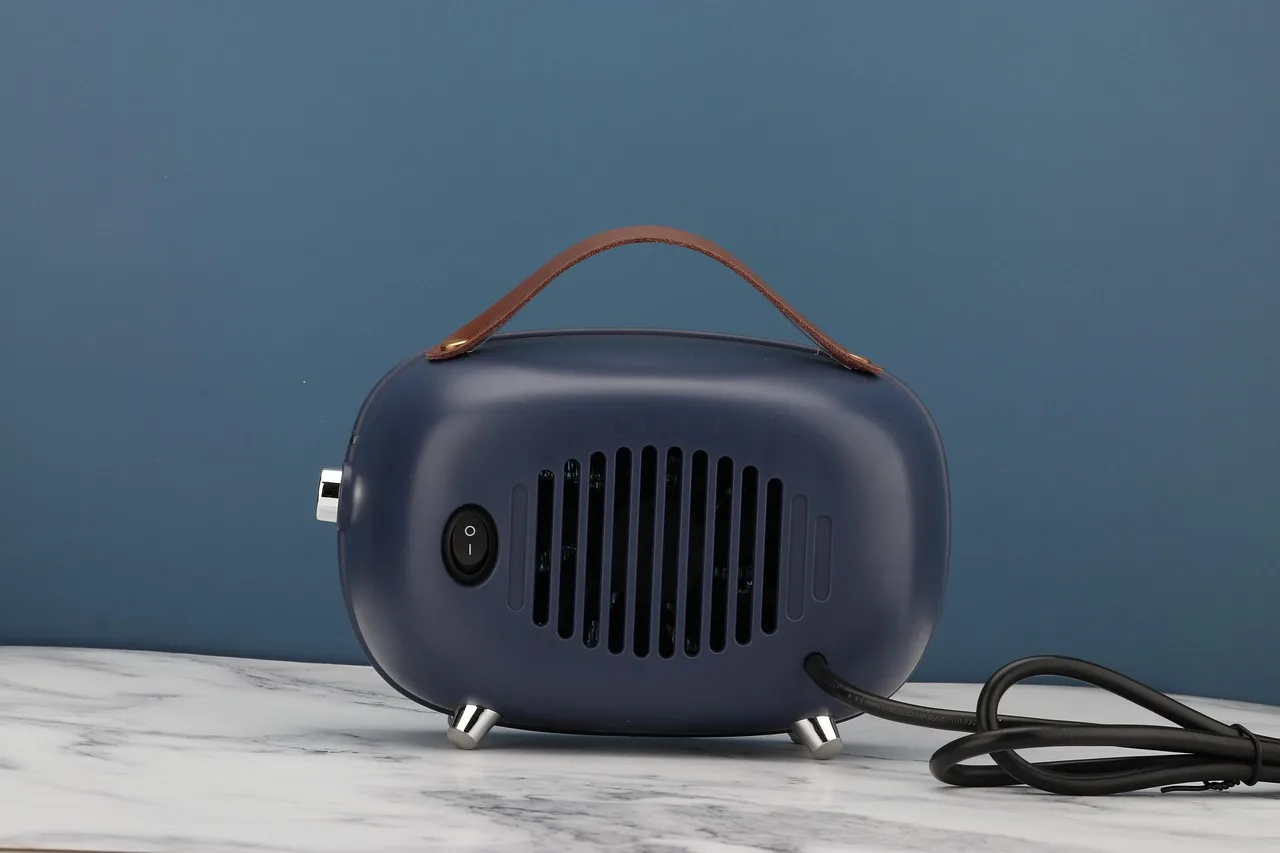
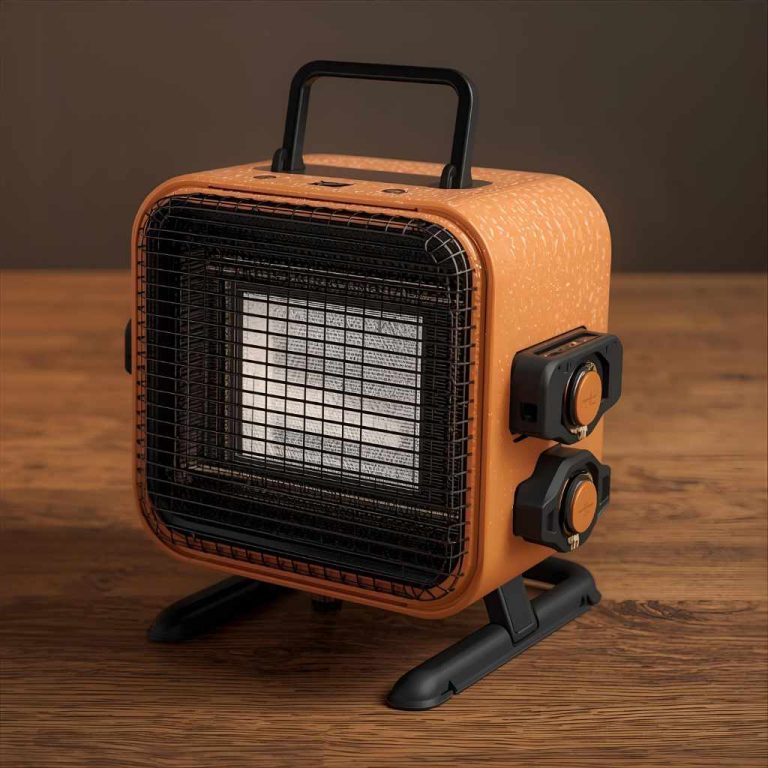
A low wattage portable heater is a small corded electric heater built for personal or spot heating rather than whole-room heating. In practical terms, these models may start at a few hundred watts and sit well below typical room-heater levels, so they draw less power but also move less heat.
Why wattage matters more than size alone
Wattage is a useful proxy for both heat output and energy use. Lower wattage usually means lower electricity draw, less audible fan load in some designs, and shorter reach. It also means less coverage. A compact heater can still feel weak if the output is too low for the distance between you and the unit.
That is why size alone can mislead. A small cabinet-style heater can still be far more powerful than a tiny tabletop unit. The number on the label matters.
How low wattage differs from a 1500W heater
A 1500-watt heater is built to move a lot more heat and is often near the upper end for standard portable room heaters. A 200-watt unit is generally meant for a different kind of use. It is for warming the person or the immediate area around the person, not for raising the temperature of a whole bedroom, office, or open living area.
📊 Honeywell Slim Ceramic Tower HCE311 has two heat settings. Source: Top 7 Best Low-Wattage Portable Heaters [2026 Tested & Reviewed].
Who should buy one?
You should buy a low wattage portable heater if your real goal is targeted warmth at arm’s length or closer, not even heat across a room. The best fit is a person who sits in one place for long stretches and wants a small, low-draw heater on a desk, beside a bed, under a work table, or near a cubicle wall.
Best-fit users by job to be done
Desk workers, bedside users, dorm residents, and cubicle users are the clearest match. The guide says low-wattage heaters suit desks, home offices, and bedside use, and that they can reduce electricity use and noise. That combination makes sense when the heat target is your body, hands, or feet rather than the full room.
Rooms and settings where it makes sense
Use cases that work best share two traits: the heater can sit very near the user, and the surrounding space is fairly small or enclosed. A home office with the door closed is more plausible than an open-plan den. A bedside heater can work for pre-warming the sleeping area or easing a cold draft.
Who should skip it
Skip low wattage if you want quick whole-room heat, if the room is drafty, or if you expect one small unit to warm several people at once. If your expectation is “set it in the corner and heat the room evenly,” this category will disappoint you. It can also waste time if the unit runs constantly and still cannot catch up.
Say your desk sits in a small office, but you want the heater to warm the whole room from across the room. A 200-watt model may feel pleasant at your knees and wrists, yet still leave the far side of the room cold. That is a use-case mismatch, not a defective heater.
Is a low wattage heater enough for your space?
It can be enough only when the space is small, enclosed, and the heater is close to the person who needs warmth. For a bedroom or office, the answer depends less on the room label and more on how far you sit from the heater, how leaky the room is, and whether you want personal heat or room heat.
How room size changes the answer
Room size sets the ceiling. Very low-watt personal heaters may only be useful in a small area, roughly a few dozen square feet. That makes them suitable for a tight nook, a desk zone, or the area beside a bed. It does not make them a good match for a full bedroom, especially one with poor insulation or high ceilings.
Why distance from the heater matters
Distance changes how useful low wattage feels. A heater on a desk can warm your hands and lower legs because you are close. Put the same unit across the room and the effect drops quickly. The farther the heat must travel, the less sense low wattage makes.
When it can work as a supplemental heater
Use it as a supplemental heater when the main heating system already covers most of the space and the portable unit only needs to fix a cold spot. It can help with drafty corners, a chilly seat near a window, or a bedside area that needs a little extra warmth before sleep.
How many watts is a low wattage portable heater?
Low wattage portable heaters usually start around 200 watts and stay well below common 1500-watt room heaters. That gap matters. At the low end, a unit may give very focused warmth for one person. At the high end, a standard portable heater can better support room heating, though it uses more power.
What 200W means in practice
For a concrete example, the Lasko MyHeat uses 200 watts of power and is designed for about 50 square feet. It is a ceramic tabletop heater. That is the kind of output range that signals personal heat, not room-wide output.
A simple wattage rule
Think of wattage as a tradeoff between reach and draw. Lower wattage can save electricity, but only if the heater actually meets the need. If you turn a low wattage unit on all day because it never gets the area warm enough, the savings shrink and the comfort payoff does too.
How much area can it heat?
A very low wattage heater is usually best thought of in square feet only as a rough limit, not a promise. A 200-watt personal heater may be aimed at about 50 square feet, but that works mainly when the person is close to the unit and the area is enclosed enough to hold the warmth.
What 50 square feet really means
Fifty square feet is about the size of a small nook or a compact desk zone, not a normal bedroom. That number is useful because it reminds you that low wattage is about a tight comfort zone, not broad room coverage.
Why open rooms are a poor match
Open rooms leak heat into more air volume, so a small heater loses the race. In a shared office, open living area, or loft-style space, the unit can end up blasting near the heater while leaving the rest of the area cold. That is a poor fit for low wattage.
Which heating type is the better fit?
Ceramic is often the most practical low wattage choice for close-range personal use, while infrared can feel direct and oil-filled units are better known for steadier background heat in a room. Convection heaters move air more broadly, which can help some spaces but may be a poor match at very low wattage.
Ceramic vs infrared for close-range warmth
Ceramic heaters heat air as it passes over a heated element and are common in small desktop models. Infrared heaters send heat directly toward nearby people and objects, which can feel useful when you sit still in one spot. For a desk or bedside setup, either can work if the wattage fits the task.
Convection and oil-filled heaters for different needs
Convection units are better when you want the air in a room to warm more evenly, but they usually need more output than a very small personal heater provides. Oil-filled or radiator-style units are slower to respond, but they can suit steady background heating in a small enclosed room better than a tiny tabletop unit.
When lower wattage is the wrong format
If the goal is to take the chill off a whole bedroom, a higher-watt ceramic heater or an oil-filled radiator is often a better match. The wrong format can be worse than the wrong wattage because even a well-built low-power unit may point heat in the wrong way for the job.
What safety and control features should you look for?
Look for overheat shut-off, tip-over protection, and a housing that stays cool enough to reduce accidental contact risk. Controls matter too. A heater with only a single switch may be fine for a desk, but thermostats, multiple heat settings, and energy saver modes give you more control over comfort and runtime.
Overheat shut-off and tip-over protection
These are basic must-haves. A heater that can shut itself off if it gets too hot or falls over is safer around furniture, bedding, and foot traffic. The Honeywell Slim Ceramic Tower HCE311 is a 1500-watt heater with a 360-degree tip-over switch, which is the kind of safety feature shoppers should look for across this category.
Cool-touch housing and housing design
Cool-touch housing is useful in small spaces because the heater sits close to people, bags, blankets, or furniture. A compact body with stable feet or a broad base lowers the chance of a knockover. The physical design should match the setting, especially on a crowded desk or bedside table.
Thermostats, heat settings, and energy saver modes
Basic controls are simple, but they can waste comfort if the heater runs too hard or not hard enough. Multiple heat settings help you match output to the room. The Honeywell Slim Ceramic Tower HCE311 has two heat settings and includes oscillation. A thermostat or energy saver mode can keep the heater from cycling more than needed, but only if the unit has enough output for the job in the first place.
Decision matrix: should you buy one?
Use this as a quick fit check. If your use case is personal warmth at close distance, the answer is usually yes. If your goal is to heat a room evenly or at a distance, the answer is usually no, with a higher-watt room heater or better insulation as the fallback.
| User type | Room size | Distance from heater | Heating goal | Buy one? | Fallback if no |
|---|---|---|---|---|---|
| Desk worker in a cubicle | Up to about 50 sq ft around the desk | Within arm’s length | Warm hands, lap, and feet | Yes | None needed if the unit is stable and safe |
| Bedside user | Small enclosed bedroom zone | Close to the bed | Short-range comfort before sleep | Maybe | Higher-watt ceramic heater with thermostat |
| Shared office user | Medium room | Several feet away | Warm the whole workspace | No | 1500W ceramic unit or better room insulation |
| Dorm resident with a tight desk nook | Very small, enclosed nook | Close range | Personal heat while studying | Yes | None, if rules allow indoor corded heaters |
| Bedroom user expecting whole-room warmth | Typical bedroom | Across the room | Even room heating | No | Oil-filled radiator or higher-output ceramic heater |
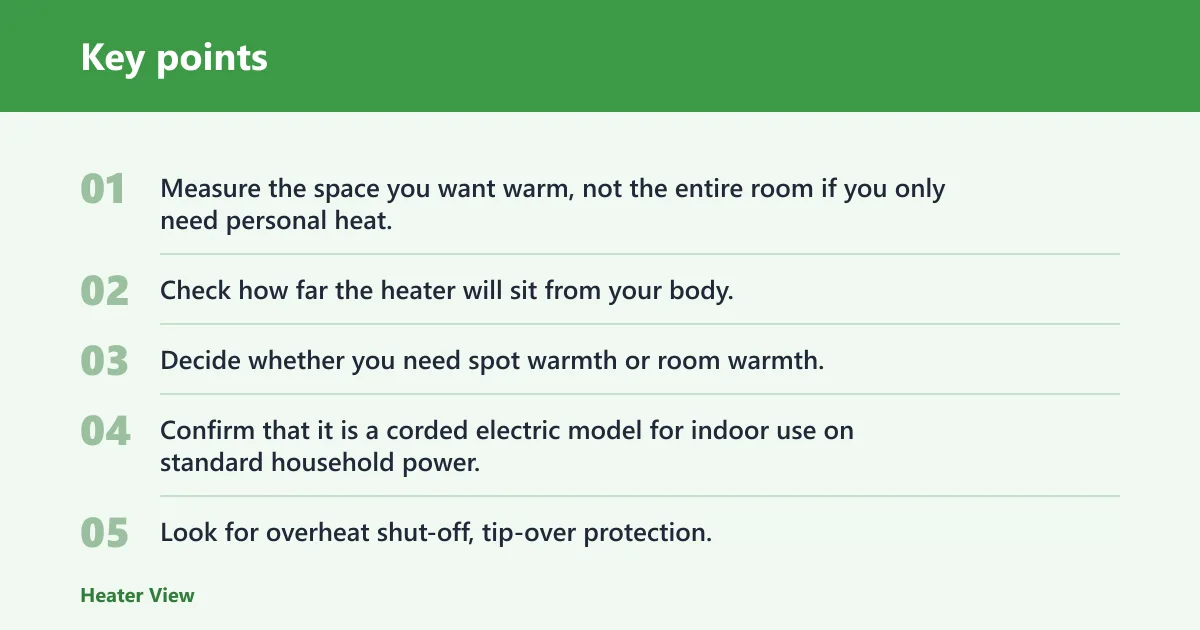
- Measure the space you want warm, not the entire room if you only need personal heat.
- Check how far the heater will sit from your body.
- Decide whether you need spot warmth or room warmth.
- Confirm that it is a corded electric model for indoor use on standard household power.
- Look for overheat shut-off, tip-over protection, and a control set that matches the use case.
Suppose a student in a dorm wants heat for a desk chair six feet from the heater. A low wattage unit may feel weak, cycle constantly, and still leave cold shoulders. Moving to a better-insulated setup or a higher-output heater is the smarter fix.
Frequently asked questions
Is a low wattage heater enough for a bedroom or office?
Sometimes for a very small, enclosed bedroom corner or a chair-side office spot, yes. For the room as a whole, usually no. Distance, drafts, and room volume matter more than the room label. If you need even heat across the space, choose a higher-output unit.
What size room can a 200-watt portable heater heat?
A 200-watt portable heater is best understood as a personal heater, not a room heater. One example is designed for about 50 square feet. That is useful for a desk nook or bedside area, but not for a typical bedroom or open-plan room.
Are low wattage heaters cheaper to run than 1500-watt heaters?
Usually, yes, because they draw less electricity. But the real question is whether they actually warm the space well enough. If a low wattage heater runs constantly and still leaves you cold, the savings can be offset by poor comfort and longer run time.
What safety features should I look for in a low wattage portable heater?
Look for overheat shut-off, tip-over protection, and a cool-touch housing. Those features matter even more in small spaces where the heater sits close to furniture, bedding, or your legs. Controls such as thermostats and multiple heat settings can also help keep operation more controlled.
Are low wattage portable heaters good for desks and bedside use?
Yes, that is one of the best-fit uses. A low wattage heater works well when the heat target is nearby and you want quiet, localized warmth without a large power draw. It is less useful if you expect it to heat the whole room from a distance.
Can a low wattage heater be used as the main heat source?
Generally no. These heaters are built for personal or spot heating, not as the main heat source for a room. The exception is a very small enclosed space with very close placement, and even then the result is limited. For main heat, choose a better-matched room heater.