High wattage portable heater: when it makes sense for rooms
A 1500W portable heater fits drafty rooms, larger spaces, or short heat bursts. In small, insulated rooms, a lower-watt unit or better insulation often works better. Choose the wrong size, and you waste electricity, wait longer for warmth, or still feel cold. This guide explains when high wattage earns its keep, what room and outlet limits matter, and when to choose a smaller heater instead.
What counts as a high wattage portable heater?
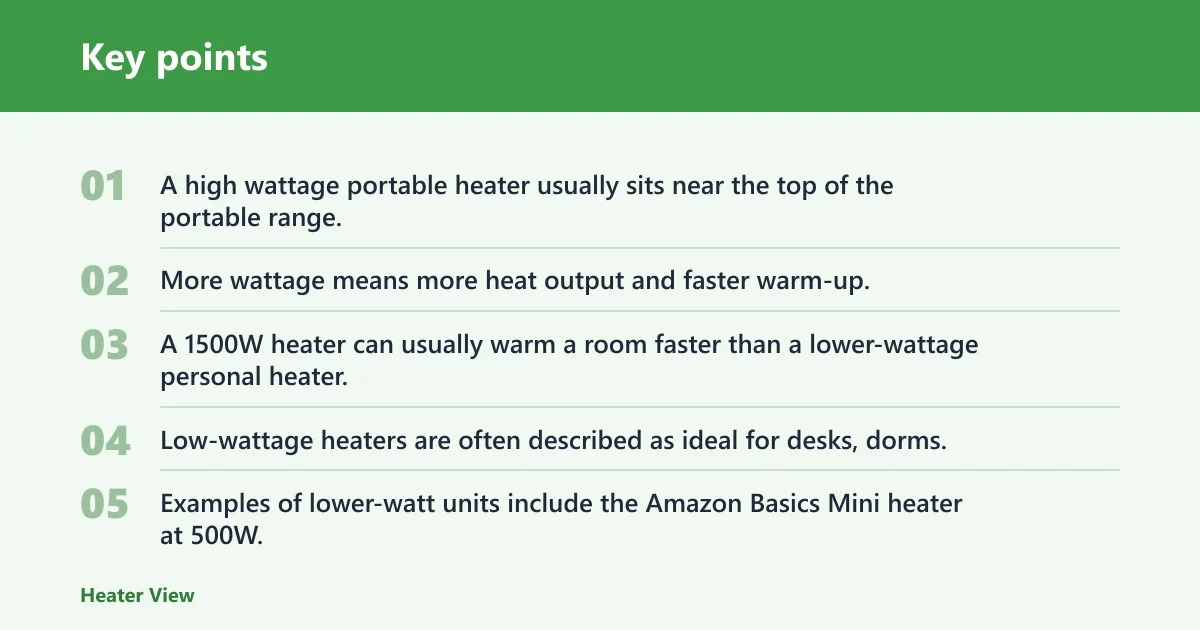
A high wattage portable heater usually sits near the top of the portable range, with 1500W as the common benchmark. More wattage means more heat output and faster warm-up, but it also means a higher amperage draw on the circuit.
That tradeoff matters. A 1500W heater can usually warm a room faster than a lower-wattage personal heater, but it also runs much closer to the limit of a typical household outlet. Low-wattage heaters are often described as ideal for desks, dorms, or supplemental zone heating, while the ENVI panel heater is described as a low-wattage wall-mounted solution for continuous or 24/7 zone heating.
Examples of lower-watt units include the Amazon Basics Mini heater at 500W, the Lerat PTC portable personal heater at 500W, the Performance Tool personal heater at 250W, the Vornado VH202 at 375W on low and 750W on high, and the NewAir under-desk heater at 400 watts.
📊 The Amazon Basics Mini heater is rated at 500W. Source: Best Low-Wattage Space Heaters for Small Rooms and Desks….
When does a high wattage portable heater make sense?
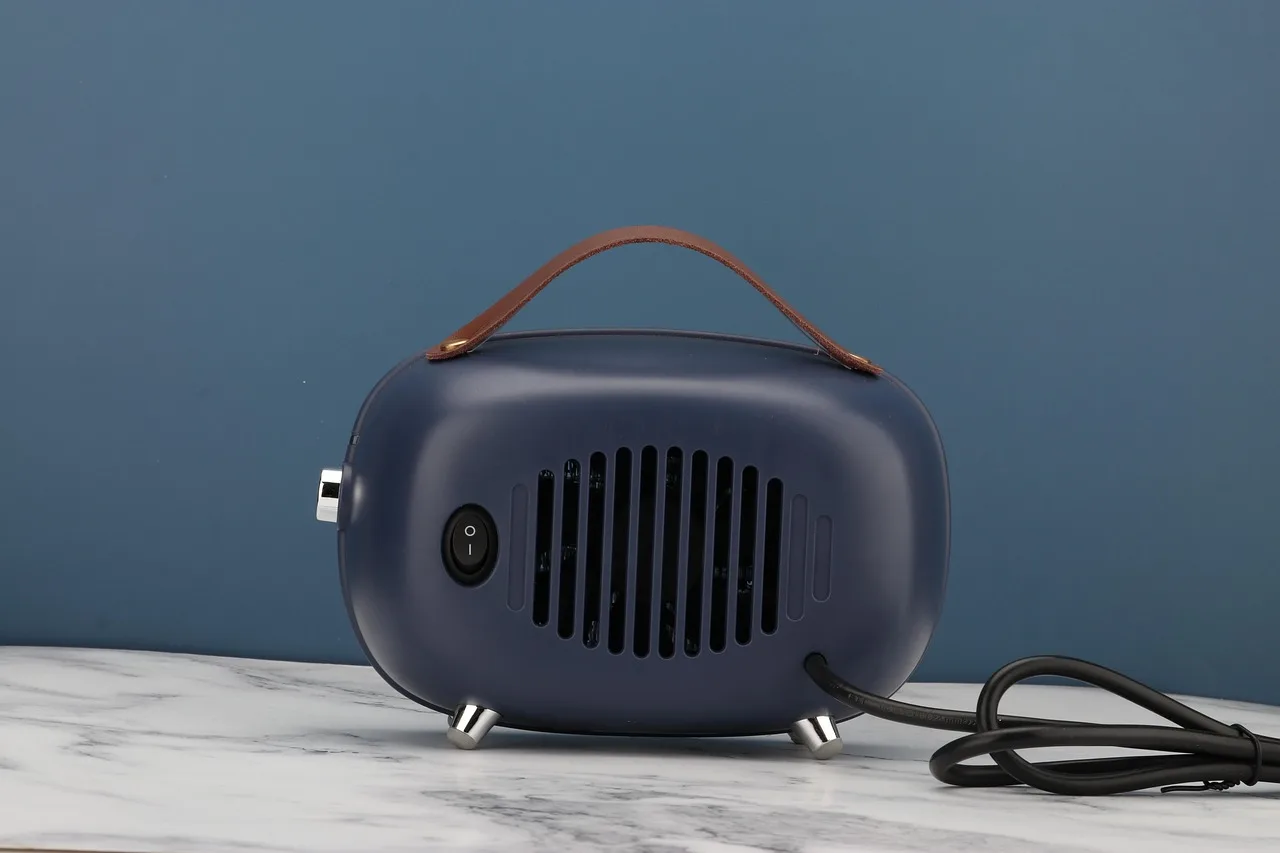
A high wattage portable heater makes sense when a room loses heat quickly, when insulation is weak, or when you need fast, targeted warmth for a short period. It works best where a small heater would take too long to catch up or never feel strong enough.
Drafty rooms and poor insulation
Cold air leaks pull heat away as soon as the heater adds it. In a drafty room, a 1500W unit can deliver a stronger heat push that helps offset those losses. The same logic applies to rooms over an uninsulated garage, basements with cold slab floors, and older rooms with loose windows.
Larger rooms that need a stronger heat push
Higher wattage helps when the room air volume is larger and the heater must cover more space before comfort improves. A 1500W portable heater is often the practical ceiling for portable indoor use because it is strong enough for many rooms without requiring a special circuit.
Short burst warming for bedrooms, offices, garages, and basements
High wattage often fits brief preheating. Picture a basement office that feels cold for the first hour in the morning. A 1500W ceramic fan heater can warm the zone quickly, then a thermostat can cycle the unit down once the space reaches a steady temperature.
Suppose a bedroom is cold for 20 minutes after the central heat shuts off. A high wattage portable heater can deliver short, targeted warmth better than a lower-watt desk heater, especially if the goal is quick comfort rather than all-night running.

When is 1500W too much for the job?
1500W is too much when the space is small, close-range, or already easy to warm with less power. It can also be a poor fit when the room is quiet, when fan noise matters, or when the circuit is already carrying other loads.
Small rooms and close-range personal heating
For a desk, bedside spot, or small dorm room, a lower-watt heater often fits the need more cleanly. A 400W or 500W unit can be enough for supplemental zone heating without blasting too much heat into a tight area. In small enclosed rooms, maximum wattage can make the space uncomfortable before it becomes more useful.
Quiet spaces where fan noise or rapid cycling is a problem
A fan heater can feel abrupt in a nursery, a meditation room, or a quiet bedroom. A lower-watt heater or an oil-filled radiator may fit better when silence and gentle warmth matter more than fast heat delivery. Faster heat helps only if it matches the comfort goal.
Shared circuits already running other appliances
A 1500W heater on a circuit with a TV, computer, lamp, or charger can be a bad mix. The heater may be safe on its own, but the total load across the circuit determines breaker trip risk. If the room already uses several devices, smaller wattage is often the smarter choice.
How much load does a 1500W heater put on a circuit?
A 1500W heater draws about 12.5 amps on a 120V household circuit, which puts it close to the practical limit of a 15-amp outlet. That leaves little room for other appliances on the same circuit, and the margin shrinks if the line already feeds lights, electronics, or a second device.
What 1500W means on a 15-amp household outlet
Most 15-amp household circuits are not meant to run near maximum load for long periods. A heater that uses 1500W can work fine by itself, but only if the rest of the circuit stays light. If a hair dryer, microwave, or vacuum shares the same branch circuit, tripping becomes more likely.
Shared-circuit load, breaker trip risk, and why extension cords change the equation
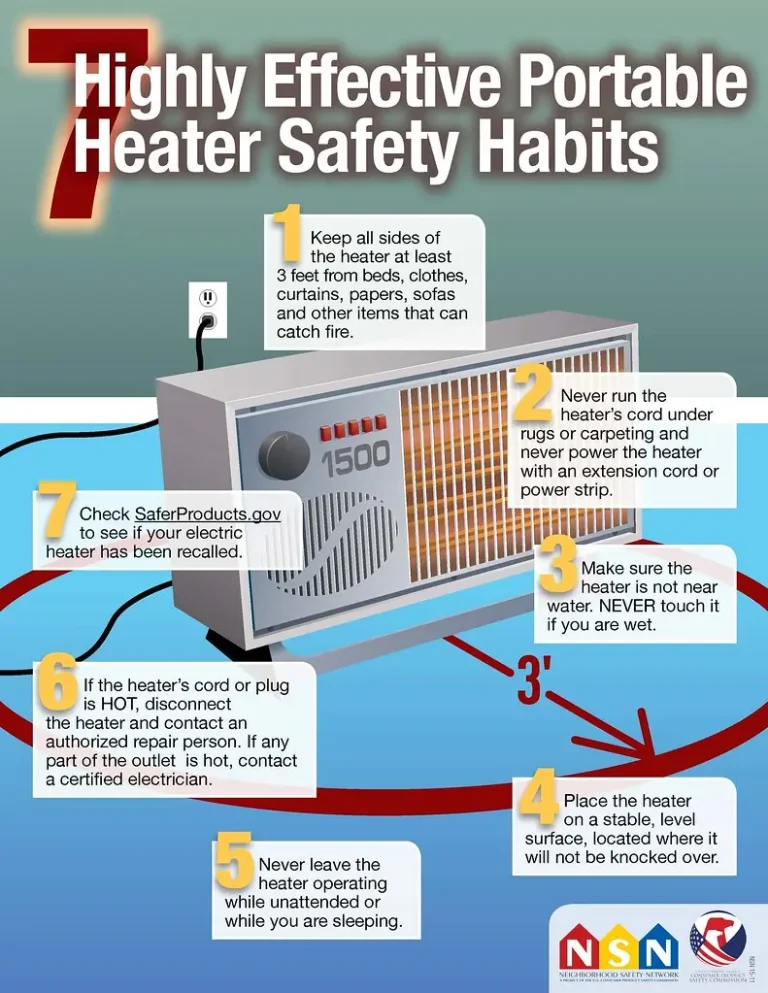
An extension cord adds resistance, heat risk, and another failure point. If a heater must be plugged in, use the shortest safe setup possible and avoid power strips or light-duty cords. Placement matters too: keep intake and exhaust clear, and give the heater open space around it.
Placement and setup basics that reduce electrical risk
Plug the heater directly into a wall outlet, not an overloaded strip. Keep cords flat and visible. Do not run the heater under rugs or behind furniture. If the room’s only outlet already feeds multiple loads, a lower-watt model is usually the better call.
Which heater type fits which situation?
Different heater types deliver heat differently, so the best choice depends on room size, insulation, noise tolerance, and how long you need warmth. A 1500W model is not automatically better than a lower-watt unit; it is better only when faster heat and higher output solve the problem.
1500W ceramic fan heater
A 1500W ceramic fan heater is a strong fit for fast heating, oscillation, timers, and digital controls. It moves warmed air into the room quickly, which makes it useful for bedrooms, offices, garages, or basements that feel cold at the start of use. Walmart lists a 1500W ceramic fan-force electric space heater, and multiple 1500W portable heaters for bedrooms and larger rooms.
Infrared portable heater
An infrared portable heater gives direct radiant heat instead of mainly heating the air. That makes it useful in drafty spaces where air-based warmth leaks away fast, or for targeted comfort when one person needs heat more than the whole room does. It is often better for spot use than for whole-room warming.
Oil-filled radiator
An oil-filled radiator is quiet, heats more slowly, and can hold steady background warmth after it reaches temperature. That suits bedrooms and long, low-noise use cases better than a fan heater. Walmart lists a 700W oil-filled radiator space heater, and a product description includes tip-over and overheat protection on an oil-filled radiator.
A common mistake is buying a high-wattage portable heater for a well-insulated guest room just because the thermostat dips overnight. A 1500W fan heater may fix the cold fast, but a lower-watt personal heater or an infrared unit may deliver enough comfort with less noise and less circuit stress.
How much does high wattage heating cost per hour?
A 1500W heater uses about 1.5 kilowatt-hours in an hour if it runs continuously. The hourly cost is simple to estimate: multiply 1.5 by your electric rate. At around $0.15 to $0.30 per kWh, that works out to roughly $0.23 to $0.45 per hour if it runs continuously.
Convert watts to kilowatt-hours
Divide watts by 1000 to get kilowatts. Then multiply by hours of use. A 1500W heater equals 1.5 kW, so one hour of continuous use equals 1.5 kWh. That gives you the base cost before thermostat cycling or ECO mode reduces runtime.
Thermostat cycling and ECO mode change the real bill
Most portable heaters do not run at full power every minute once the room warms up. A thermostat can switch the heater off and on, and ECO mode can reduce output further by matching heat delivery to demand. The actual bill depends on how cold the room is, how leaky it is, and how long the heater must stay on.
| Electric rate | 1500W heater hourly cost if it runs continuously | Cost for 6 hours continuous use |
|---|---|---|
| $0.15/kWh | $0.23 | $1.35 |
| $0.20/kWh | $0.30 | $1.80 |
| $0.25/kWh | $0.38 | $2.25 |
| $0.30/kWh | $0.45 | $2.70 |
What features matter most in a high wattage portable heater?
The most important features are tip-over protection, overheat protection, a thermostat, and clear controls. Higher wattage adds heat, but the safety and control package determines whether that heat is practical in real rooms. Cool-touch housing and flame-retardant materials are also worth prioritizing.
Tip-over protection and overheat protection
These two features are baseline safety items for portable indoor heaters. Tip-over shutoff matters in bedrooms, offices, and homes with pets or children. Overheat protection matters when airflow is blocked, dust builds up, or the unit runs too long at a high setting.
Thermostat, timer, and ECO mode
A thermostat prevents nonstop full-power operation once the room is warm enough. A timer helps limit runtime, which is useful for preheating before sleep or before a work session. ECO mode can reduce unnecessary output in rooms that only need a small amount of added heat.
Cool-touch housing and flame-retardant materials
Cool-touch housing lowers burn risk during normal handling, and flame-retardant materials add another layer of protection around the cabinet. These features matter most in compact rooms where the heater sits near walkways, furniture, or bedding.
Portability details
Look for a carry handle, stable base, and straightforward controls. A heater that is easy to move is more likely to be used in the right room at the right time, which matters more than raw wattage alone.
What room size is a high wattage portable heater best for?
A high wattage portable heater is best for small to medium rooms with clear heat loss problems, or for larger rooms when you only need one heated zone at a time. It is less useful as the sole heat source for a poorly insulated open floor plan or a space with constant drafts.
For bedrooms, offices, garages, and basements, the key question is not square footage alone. It is whether the room is enclosed, how much heat escapes, and whether the heater is meant to warm the whole room or only the occupied zone. If the room is small and tight, a lower-watt unit may be enough.
Is a 1500W portable heater too much for a small room?
Yes, it can be too much for a small room, especially if the space is well insulated or used only for close-range warming. In that case, a lower-watt heater often gives enough comfort with less noise, less cycling, and less risk of overheating the room.
How much electricity does a high wattage portable heater use?
A 1500W heater uses 1.5 kWh for each hour it runs continuously. The bill depends on your utility rate and how often the thermostat turns the heater off. If the heater only runs part of the hour, the cost drops in proportion to runtime.
Is a high wattage portable heater cheaper than running central heat?
It can be cheaper when you only need one room heated for a short time and your central system would otherwise warm the entire house. It is usually less economical if you need it for many hours in a cold, leaky room or if the thermostat keeps the unit running nearly nonstop.
When should I choose a low wattage heater instead?
Choose a low wattage heater for desks, dorms, bedside use, and other supplemental zone heating where full-room output is unnecessary. It is also the better call when the circuit is shared, when quiet matters, or when you only need modest warmth close to where you sit or sleep.
Are 1500W portable heaters safe to use in bedrooms?
They can be safe in bedrooms if the unit has tip-over and overheat protection, sits on a stable surface, and stays clear of bedding, curtains, and furniture. A timer and thermostat are especially useful in a bedroom because they reduce the chance of leaving the heater on too long.