How to Inspect Water Heater Venting Before Heating Season
Inspect a gas water heater’s venting once before heating season by checking for rust, loose joints, signs of backdraft, and blockage at the hood or termination. Faulty venting can send combustion gases indoors, cut heater output, and lead to repair costs or a shutdown. This guide shows a simple pre-winter inspection routine for draft, corrosion, and obstruction.
What you’ll need

- Handheld fog for spotting drafts
- Pocket-sized for quick inspections
- Quick-start kit for leak checks
- Flashlight
- Owner’s manual or model label
- Gloves
- Eye protection
- Phone or notepad for photos and notes
How do you identify the vent type?
Start by confirming whether the heater is atmospheric, power vent, or direct vent. The venting system must match the heater model and fuel type, because each design moves combustion gases a different way. Check the rating plate, the vent path, and the manual before you inspect anything else.
Atmospheric units use natural draft and a vertical vent path. Power vent models use a fan. Direct vent models pull air from outside and send fumes out through a separate path. A chimney vent connector may be part of the system, but only if the appliance is listed for it.
Quick identification cues
- Atmospheric: a hot vertical flue path, common on older gas water heaters.
- Power vent: a fan-assisted exhaust path, often with a motorized outlet.
- Direct vent: separate intake and exhaust paths to the outdoors.
How do you check the vent path?
Check the full route from the draft hood or outlet to the termination. Look for rust, dents, sagging, loose joints, or disconnected sections. The chimney vent connector is the pathway for exhaust gases, so it needs clear airflow and solid support. If the connector slopes the wrong way, or if the manual calls for a different pitch, stop and verify the installation.
Look for bird nests, insulation, leaves, or other debris at the vent opening. Check that the vent is sized for the specific heater model by comparing the appliance rating plate and manual with the installed connector and chimney route. Do not assume an older connector still fits a replacement unit. Suppose a 40-gallon atmospheric heater has a connector that sits flat for several feet before rising. That can trap flue gases and should be checked against the manual.
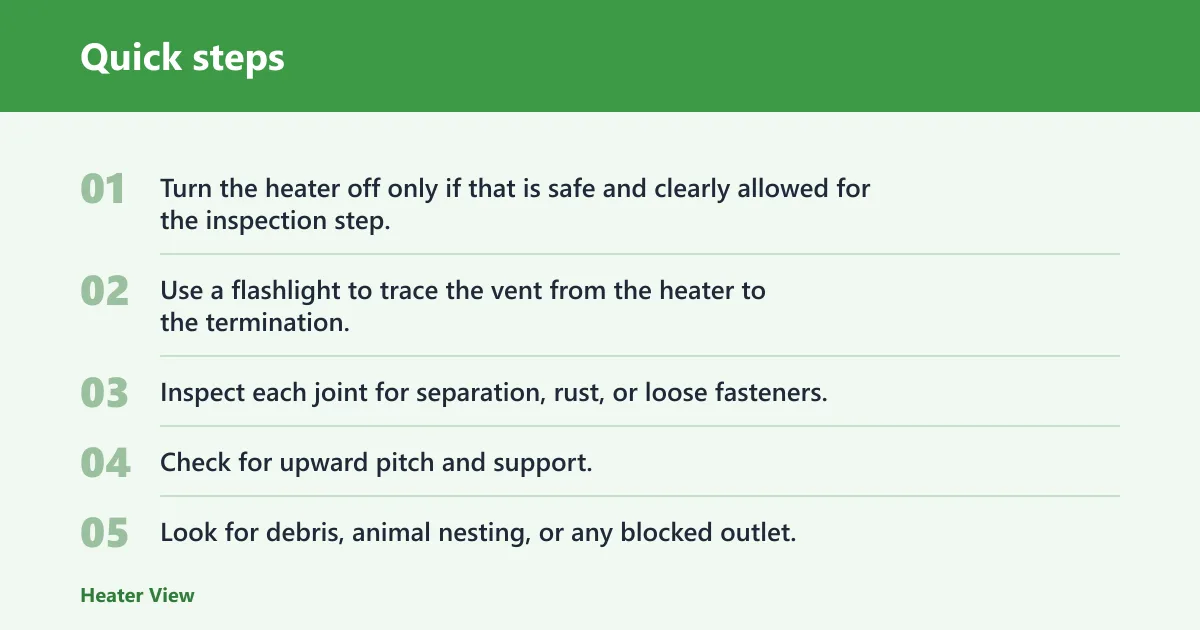
- Turn the heater off only if that is safe and clearly allowed for the inspection step.
- Use a flashlight to trace the vent from the heater to the termination.
- Inspect each joint for separation, rust, or loose fasteners.
- Check for upward pitch and support.
- Look for debris, animal nesting, or any blocked outlet.
- Compare the installed route with the model label and vent instructions.
What are signs that a water heater vent is blocked?
Blocked venting can show up as soot marks, frequent shutoffs, visible exhaust spill, or flames that look unusual. Yellow or flickering flames can point to vent blockage, but they can also point to burner or combustion problems, so treat them as a warning sign, not proof. Strong gas odors near the water heater call for gas-leak action, not a venting guess.
Backdrafting is one of the biggest warning signs during inspection. It happens when gases flow back into the home instead of moving outside. Visible spill at the draft hood, soot around the vent, or a unit that keeps shutting down can all point to a vent path problem.
Blockage indicators to treat seriously
- Soot marks around the vent or draft hood
- Frequent shutoffs
- Yellow or flickering flames
- Visible debris or a bird nest at the vent opening
- Combustion gases not moving out as expected
Water heater vent checklist
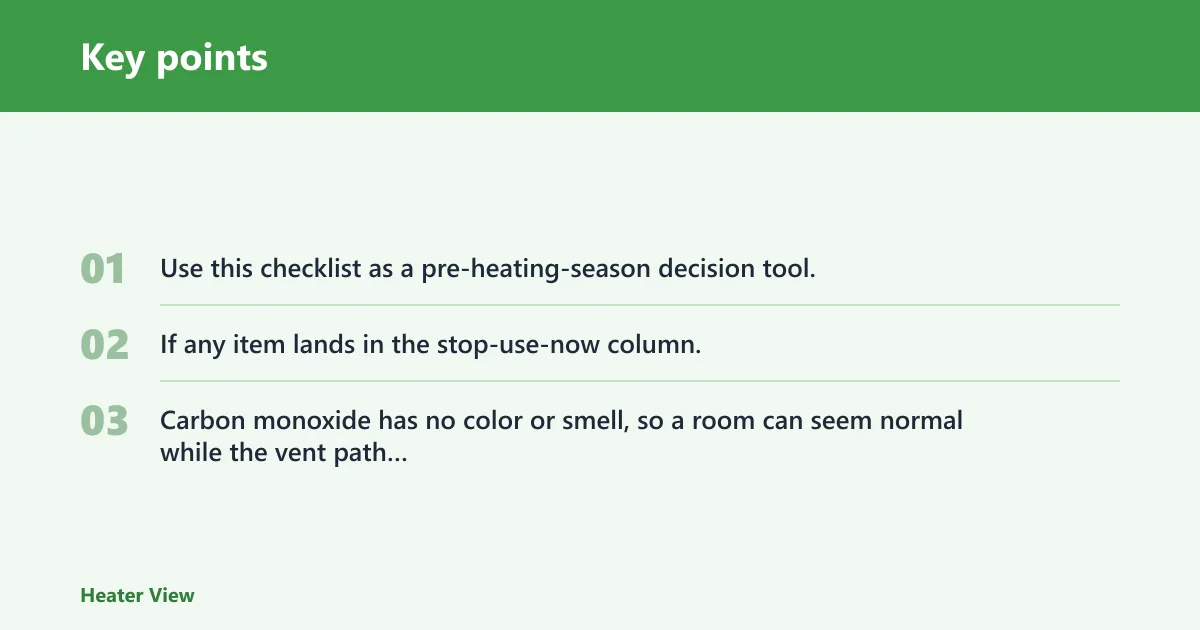
Use this checklist as a pre-heating-season decision tool. If any item lands in the stop-use-now column, do not run the heater again until a qualified professional checks the system. Carbon monoxide has no color or smell, so a room can seem normal while the vent path fails. (HRSA)
| Check | Pass | Monitor | Stop-use-now |
|---|---|---|---|
| System type | Atmospheric, power vent, or direct vent matches the label and manual; no mismatch found. | Model is unclear or paperwork is missing; verify before the next use. | Vent type does not match the heater or fuel type; stop using until it is corrected. |
| Draft | Flue gases move out normally and the vent path stays clear. | Draft seems weak or uncertain; recheck with the unit operating if the manual allows it. | Backdrafting, exhaust spill, or a draft hood that pushes gases indoors. |
| Vent joints | Joints are tight, aligned, and supported. | Minor looseness or light staining; schedule a closer look. | Separated joints, sagging sections, or disconnected pipe. |
| Visible corrosion | No rust holes, flaking metal, or soft spots. | Light surface rust or staining that should be watched. | Severe corrosion, holes, or metal that looks weakened. |
| Blockage | Termination is open and free of debris or nests. | Partial obstruction or limited buildup that needs cleaning soon. | Clear blockage, collapsed liner, or a flue that is closed off. |
| Combustion odor | No unusual exhaust smell indoors. | Unusual smell that fades after the area is aired out. | Any strong gas odor near the appliance; shut off gas if safe and follow leak procedures. |
| Flame color | Flame appearance is stable and even if the manual allows viewing during operation. | Yellow or flickering flame that needs more evaluation. | Flame behavior plus soot, shutoffs, or spill that points to unsafe operation. |
What should I look for when checking for backdrafting?
Look for exhaust that moves into the room instead of up the vent, soot around the draft hood, and signs that the appliance is not drafting normally. Backdrafting can come from blockage, poor design, or a vent that does not suit the heater. Treat it as a major warning sign, not a minor nuisance.
If you see heat or fumes near the heater room, stop use. Carbon monoxide can follow the same path. A carbon monoxide alarm adds urgency, but a silent alarm does not mean the vent is safe. Picture a basement water heater that puffs visible exhaust when a dryer or bath fan runs; that suggests the house may be pulling flue gases the wrong way.
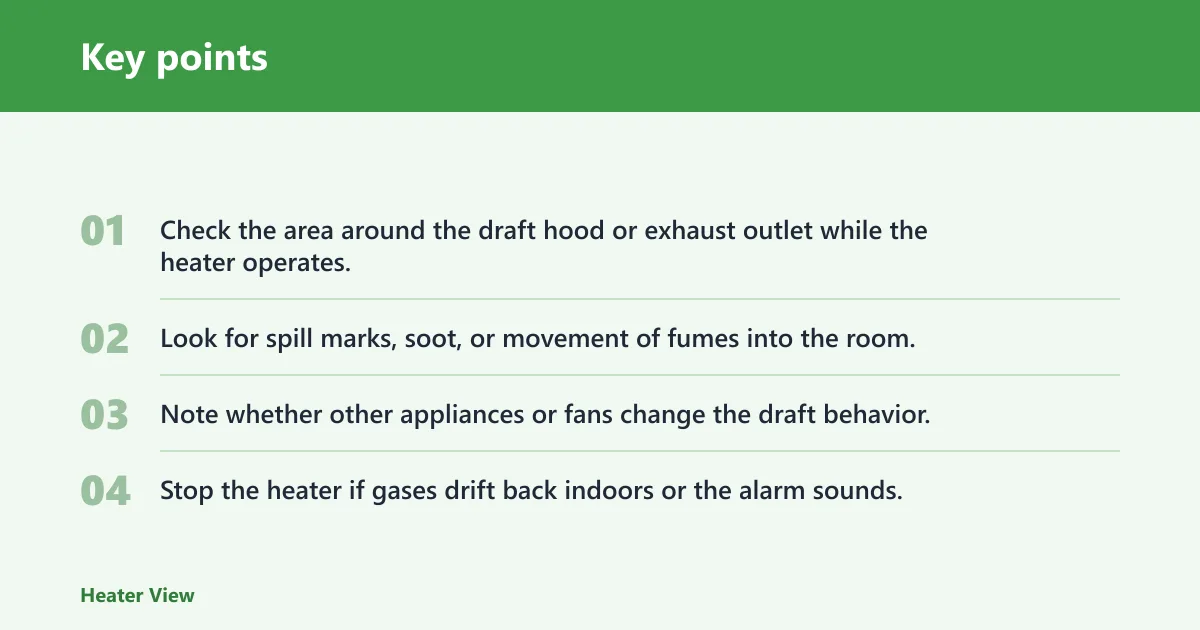
- Check the area around the draft hood or exhaust outlet while the heater operates.
- Look for spill marks, soot, or movement of fumes into the room.
- Note whether other appliances or fans change the draft behavior.
- Stop the heater if gases drift back indoors or the alarm sounds.
Can a water heater vent through a chimney safely?
Yes, chimney venting can be safe on some systems when the heater is listed for it and the chimney is clear and well maintained. Chimney venting uses a vertical chimney to guide gases outside, and it can help remove carbon monoxide and other fumes safely. The catch is fit: the chimney, liner, connector, and appliance all have to match.
Older atmospheric gas water heaters are common on chimney systems, but older does not mean automatically safe. Check chimney liner compatibility, vent sizing, and the connector route. A chimney that worked with one appliance may not work with a replacement unit without changes. If the vent connector looks oversized, undersized, or patched together, stop and verify the installation.
Chimney checks that matter
- Clear passage from connector to chimney exit
- No missing liner sections or obvious damage
- Connector size and route match the appliance manual
- No rusted-through metal or loose sections
How often should a chimney vent be cleaned?
Regular chimney cleaning is recommended based on the venting system, fuel, appliance category, and local code or manufacturer instructions. That is a baseline for keeping the vent path clear enough to do its job, not a promise that every chimney needs the same service interval. If you see soot, nesting, or repeated draft trouble, cleaning may need to happen sooner.
Keep the focus on condition rather than a fixed calendar alone. A chimney can need attention after a heavy debris season, after a bird nest, or after any repair that changed the vent path. If the system is direct vent or power vent, follow the manual for that model instead of assuming a chimney schedule applies.
When should I call a professional for venting problems?
Call a qualified professional right away if you see backdrafting, a carbon monoxide alarm, severe corrosion, a disconnected vent, or a vent that does not match the appliance. Strong gas odors near the water heater need gas-leak-specific emergency action first. Do not restart the heater until the hazard is identified and corrected.
Get professional help if the draft seems weak, the chimney liner looks wrong, or a power vent fan sounds abnormal. A direct vent model with a blocked intake or exhaust needs model-specific service. If the manual conflicts with what is installed, the manual wins.
- Shut the heater down only if that is safe and the manual allows it.
- Vent the area and leave if you suspect carbon monoxide or gas.
- Call emergency services or the gas utility for a strong gas odor.
- Schedule a qualified technician for sizing, draft, liner, or fan problems.
How do I know if my water heater draft is working properly?
Proper draft moves combustion gases out of the vent and keeps the area around the heater clear. On a natural draft unit, that depends on vertical rise and an open vent path. Draft quality is primarily a safety and combustion issue here; the main check is simple: no spill, no blockage, no odd odor, and no repeated shutoff tied to vent trouble.
If the heater is power vent, listen for the fan and watch for a clear exhaust path. If it is direct vent, check both the intake and exhaust routes. The exact operating signs vary by model, so use the manual as the final check. If the unit ever shows spill or shuts off during vent inspection, treat that as a failure, not a quirk.
Common mistakes
Homeowners often check only the chimney and ignore the connector, but the connector is where rust, sagging, and joint separation often show up first. Another mistake is judging safety by flame appearance alone. Yellow or flickering flame can mean a burner issue, vent trouble, or both.
Another common miss is assuming every older heater can share the same chimney route without verification. That can fail when the liner, size, or draft setup no longer fits the appliance. Always compare the installed system with the manual before the first cold snap.
Frequently asked questions
How do I inspect my water heater vent before winter?
Start with the rating plate and the vent route, then inspect the connector, chimney or sidewall termination, and the draft hood for rust, blockage, or separation. Use a flashlight and the owner’s manual. If the heater shows spill, soot, or an alarm, stop use and get a professional check.