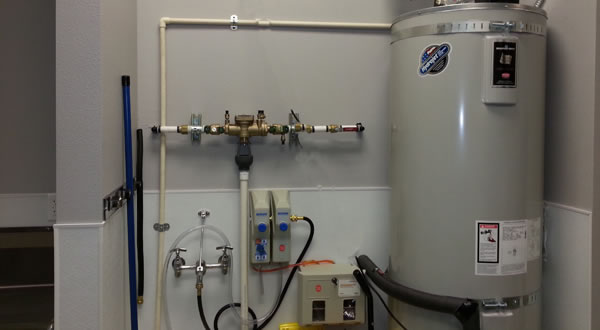
How to Tell If a Water Heater Is Full of Sediment
If your tank is 8 to 10 years old and you hear popping, rumbling, or see less hot-water output, sediment is a likely suspect. If the problem changes at a faucet, valve, breaker, or only on one fixture, look elsewhere first. This guide helps separate sediment from air, inlet, dip-tube, valve, and element issues using symptoms, flow checks, and tank age.
What you’ll need


- Garden hose long enough to reach a floor drain or a safe outdoor discharge area that can handle very hot water
- Flathead screwdriver or wrench, if your drain valve uses one
- Bucket or towel for a small sample check
- Owner’s manual for model-specific shutoff and drain steps
- Work gloves and eye protection
How to check for sediment
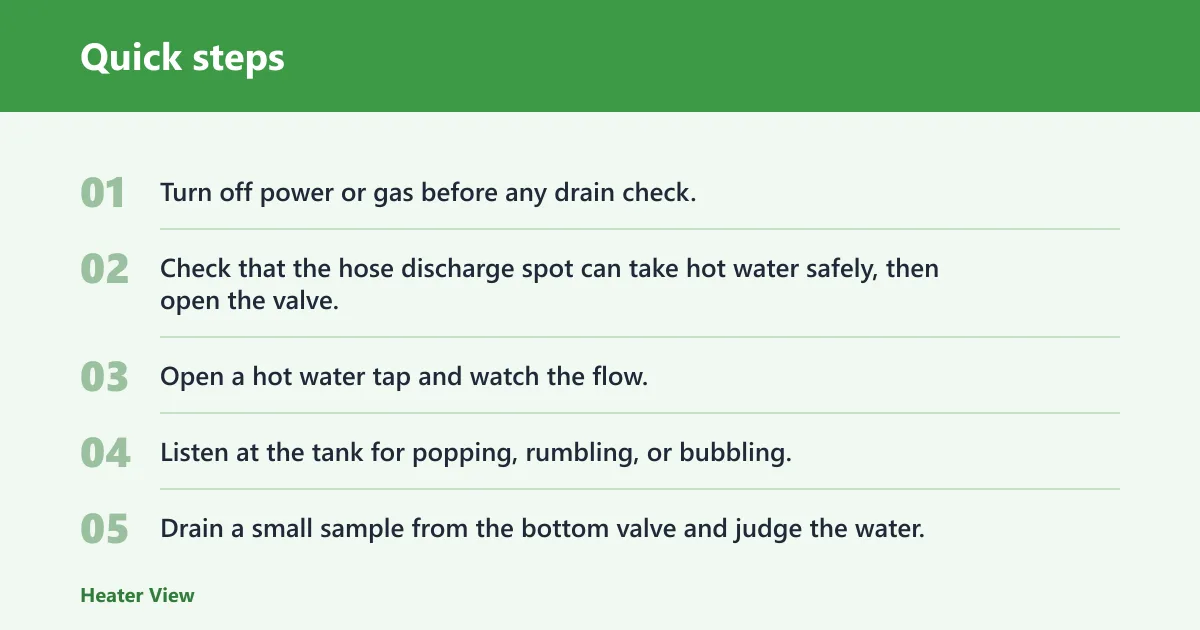
- Turn off power or gas before any drain check. For electric heaters, switch off the breaker. For gas heaters, set the control to Pilot or shut off the gas valve before draining.
- Check that the hose discharge spot can take hot water safely, then open the valve. Send the garden hose to a floor drain or outside only if the water will not burn, melt, or flood anything nearby.
- Open a hot water tap and watch the flow. Sputtering may point toward trapped air or a filling problem.
- Listen at the tank for popping, rumbling, or bubbling. These noises fit sediment better when they happen during heating, not just when a tap is first opened.
- Drain a small sample from the bottom valve and judge the water. Cloudy water, grit, or mineral flakes point more strongly to sediment than clear water does. Some heavily scaled tanks still drain with little visible debris, especially if scale is baked onto the bottom of a gas heater and does not break loose into the sample.
- If the valve drips slowly, loosen it only as your model allows. Do not force a stuck drain valve; sediment can clog it, and forcing it can crack the fitting.
Why sediment changes tank behavior
Sediment is mineral debris made mostly of calcium and magnesium, especially where hard water is common. It settles at the bottom of the storage tank year after year. That layer can interfere with heat transfer at the bottom of the tank and make the heater work harder without proving that pressure has dropped.
For example, if a tank starts popping every time it reheats, that pattern points more toward sediment than trapped air. The tank may still be full of water and still carry a layer of mineral buildup at the bottom.
How do you tell sediment from other problems?
Use the symptom, not just the age, to sort out the cause. Sediment often shows up as noise, slower recovery, cloudy discharge, or repeat clogging after a flush. Air, inlet issues, a bad dip tube, a mixing valve, or a failing element can create similar complaints, but the flow pattern and where the symptom appears usually differ.
Sediment versus trapped air
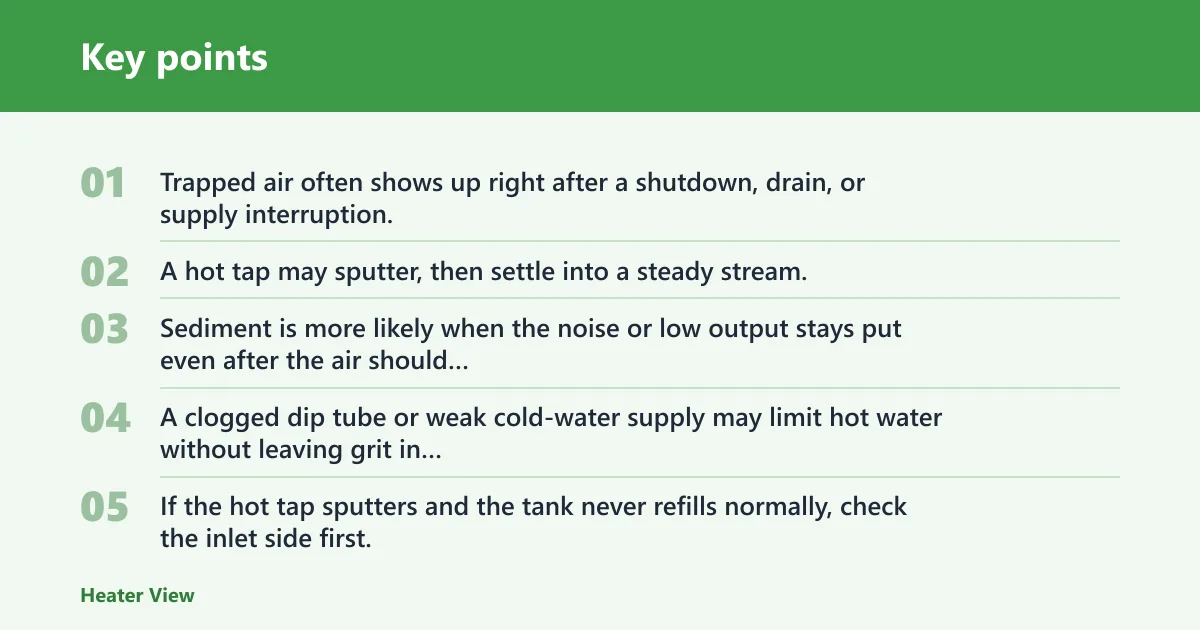
Trapped air often shows up right after a shutdown, drain, or supply interruption. A hot tap may sputter, then settle into a steady stream. Sediment is more likely when the noise or low output stays put even after the air should have cleared, especially if the tank is also noisy during heat-up.
Sediment versus a clogged dip tube or inlet issue
A clogged dip tube or weak cold-water supply may limit hot water without leaving grit in the drain sample. If the hot tap sputters and the tank never refills normally, check the inlet side first. Sediment usually changes the drain water more clearly than the inlet path does, and a problem that shows up at one fixture rather than the whole tank usually points to that fixture or branch line.
Sediment versus a failing heating element or valve
On an electric water heater, a failed lower element can mimic sediment by cutting hot-water capacity. The difference is often in recovery: sediment tends to leave the heater noisy and slow, while a bad element can leave the water lukewarm with little change in tank noise. A faulty temperature or mixing valve can also blur the picture.
When the pressure relief valve changes the diagnosis
Some checks involve the pressure relief valve, but because valve operation can be risky and old valves may not reseat cleanly, treat it as a separate fault and follow the manufacturer’s instructions before touching it. A normal brief release does not prove sediment, and a weeping or erratic valve does not by itself prove a low-water problem. If the valve behaves oddly, treat the valve as a separate fault.
Sediment symptom matrix
| Symptom | Likely cause | Confidence level | Immediate action | Flush, inspect, or call a plumber? |
|---|---|---|---|---|
| Popping or rumbling from the tank during heat-up | Sediment at the bottom of the tank | High if the tank is 8 to 12 years old and the noise is repetitive | Check the drain sample for grit or cloudy water | Flush if discharge is dirty; inspect if the sample is clear |
| Less hot water, but the hot tap stays steady | Sediment reducing tank efficiency or a lower element issue on electric models | Medium | Compare recovery time and check tank age | Inspect first; flush if other sediment signs also appear |
| Cloudy or gritty water from the drain valve | Sediment buildup in the tank | High | Keep draining until the sample runs clearer | Flush now |
| Drain valve clogs or slows, then clears in bursts | Sediment blocking the valve opening | Medium to high | Stop forcing the valve and let it rest | Inspect; call a plumber if it sticks or leaks |
| Problem returns soon after a flush | Heavy scale, a failing element, or valve trouble | High enough to stop assuming simple buildup | Check for repeat grit, bad recovery, or valve faults | Call a plumber |
Suppose a 40-gallon electric heater drains with clear water, yet the lower element still gives weak recovery and the tank pops when reheating. That pattern leans away from loose sediment alone and toward an element, scale, or valve problem that needs inspection rather than another quick flush.
When should you flush or call a plumber?
Flush when the evidence is strong: gritty discharge, repeating noise, or a tank that has not been cleaned in years and now shows reduced output. Inspect further when the signs conflict, such as clear drain water but weak hot-water recovery. Call a plumber when the drain valve sticks, the tank keeps clogging after flushing, or the heater still underperforms.
If that didn’t work, try this next
- Close the drain valve, refill the tank fully, and open a hot tap until the stream runs steady.
- Restart the heater only after the tank is full. On electric units, dry firing can destroy elements, so keep the breaker off until refill is complete.
- Drain again if the first flush released heavy grit. Short cold-water bursts can help stir remaining sediment off the tank floor.
- If the valve still clogs, replace the valve or call a plumber instead of forcing it.
Common mistakes
Do not treat a restricted drain as proof of sediment. Some heavily scaled tanks still drain normally. Do not assume every sputter means low water either; recent shutoff, trapped air, and inlet issues can all do that.
Do not drain to a place that cannot handle very hot water. And do not skip the shutoff step. For electric heaters, the breaker must be off before draining; for gas heaters, set the control to Pilot or shut off the gas valve first.
Do not keep prying on a stuck drain valve with a wrench. If it does not move with normal hand force and the correct tool for your model, leave it and move to service. For most tank-type heaters, a flush takes 30–60 minutes.
What is sediment in a water heater?
Sediment is mineral debris, mainly calcium and magnesium, that settles at the bottom of a storage tank. It is most common in hard-water homes. Over time, that layer can reduce efficiency, raise operating noise, and contribute to wear on the tank and heating parts.
Will sediment impact water heater performance?
Yes. Sediment can slow heat transfer and leave you with less usable hot water, especially in tanks that have not been flushed in years. It usually affects recovery and efficiency more than house water pressure. A clean water heater can heat water faster, while a tank with buildup may need longer to recover after each use.
How do I know if my water heater has sediment?
Look for a mix of signs: popping or rumbling at the tank, cloudy discharge from the drain valve, and lower hot-water output that does not match a faucet-only problem. Tank age matters too; tank-type water heaters often last around 8 to 12 years, though many last longer depending on water quality, maintenance, and tank design.
What does sediment buildup in a water heater look like?
In a drain sample, it can look like cloudy water, fine grit, or pale mineral flakes. Inside the tank, it settles at the bottom and is not always visible without draining. Clear discharge does not rule it out, but dirty discharge is a strong clue. It is often easiest to spot after a flush starts moving debris.
Does sediment cause popping or rumbling noises?
Yes, those noises often point to sediment. Water trapped beneath the mineral layer can boil and burst through it, which makes popping or rumbling sounds during heating. If the noise appears with reduced output or cloudy drain water, sediment becomes more likely than a fixture or breaker issue.
How can I tell if sediment is reducing hot water capacity?
Check whether the hot tap stays steady but the supply runs out sooner than it used to. If recovery is slow and the tank is noisy, sediment may be taking up space or blocking heat transfer. If the tap sputters instead, look first at air, fill, or inlet issues before blaming sediment.
How do I check a water heater safely for sediment?
Turn off power or gas, attach a hose to the bottom drain valve, and route the hose to a safe place that can handle very hot water. Open a hot tap, then drain a small sample and check for grit or cloudy water. Follow the manufacturer’s manual for your model before draining.
When should I flush a water heater because of sediment?
Flush when you see repeated noise, dirty drain water, or reduced hot-water performance that fits sediment better than air or an element fault. If the heater is older and has not been flushed in years, a maintenance flush is also reasonable even before symptoms grow worse. If the drain sticks or the problem returns quickly, inspect for another fault.
Can sediment buildup make a water heater fail?
Yes. Sediment buildup can cause inefficiency and failure by stressing the tank, reducing heat transfer, and forcing parts to work harder. If symptoms return soon after flushing, the heater may need repair or replacement rather than another drain-and-rinse cycle. Repeat clogging is a warning sign, not proof that the tank simply needs more flushing.
Should I call a plumber if sediment keeps clogging the drain valve?
Yes. A valve that keeps clogging can mean heavy buildup, damaged threads, or a valve that needs replacement. If you cannot drain normally without forcing the valve, stop there. A plumber can clear the blockage safely and decide whether the valve or tank needs service.