How to Make an Old Heater More Efficient
Fix airflow and controls first: replace dirty filters, clear vents, seal duct leaks, and service burners or heat exchangers. If the unit is unsafe or over 20 years old, replacement may be smarter. Skipping those fixes wastes fuel, raises bills, and can push a worn heater into shutdown or carbon monoxide risk. This guide covers the biggest losses first: airflow, heat loss, controls, and unsafe operating conditions.
What you’ll need


- Correct-size replacement filter, usually printed on the old filter frame
- Vacuum with brush attachment
- Foil HVAC tape or mastic for duct joints
- Weatherstripping for doors and operable windows
- Door sweep or threshold seal
- Thermostat manual and screwdriver
- Flashlight for return grilles, registers, and heater access panels
- Carbon monoxide alarm for homes with gas or oil heat
- Work gloves and dust mask
Which fixes pay off first?
Start with losses that affect every cycle: airflow, thermostat control, and house heat loss. For gas furnaces, the next tier is combustion cleaning and duct sealing. For electric baseboard, wall heaters, and portable space heaters, the biggest gains usually come from better zoning, draft control, and using heat only where it is needed.
-
Replace the filter.
Use the size printed on the frame, and choose a MERV rating the system can handle; many older furnaces work best with MERV 6 to 8, while tighter filters can restrict airflow if the cabinet and blower were not sized for them. Check monthly and replace every 1 to 3 months. -
Seal obvious leaks.
Close gaps around doors, windows, attic hatches, plumbing penetrations, and rim joists. Add weatherstripping at leaky door jambs and window sashes, and use caulk where trim meets framing. Even basic sealing can cut drafty air leakage and reduce the heat a weak heater has to chase. -
Set back the thermostat.
Use a programmable or smart thermostat only if it is compatible with the system wiring and control type. A 7 to 10°F setback for 8 hours can cut run time, but some heat-pump or older gravity systems do better with smaller changes. -
Balance the distribution.
Open blocked returns, clear registers, and seal leaky ducts in attics or crawlspaces. On forced-air systems, duct leakage can waste heated air before it reaches rooms.
Gas furnace
A gas furnace usually gives the biggest payoff from airflow fixes, combustion service, and duct sealing. Older units commonly fall in the roughly 60% to 80% AFUE range, while newer condensing furnaces are commonly 90% or higher, so age and efficiency matter together when deciding what to fix first.
If the furnace runs for 5 minutes, shuts off, then starts again 10 minutes later, that short cycling often points to restricted airflow, oversizing, or a control problem. Have a qualified technician clean the burners, check the heat exchanger, and verify flue draft before assuming the thermostat is the main issue.
Electric baseboard and wall heater
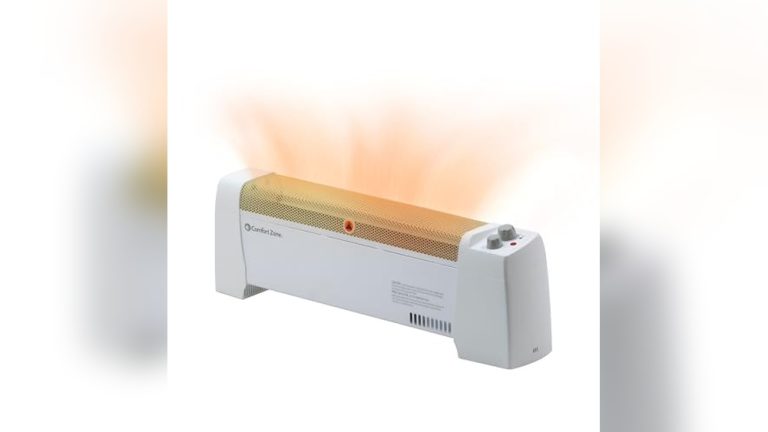
Electric resistance heaters are already close to 100% efficient at turning electricity into heat, so the house usually wastes more energy than the heater itself. Focus on room zoning, thermostat accuracy, and stopping drafts at windows, exterior doors, and outlet penetrations. For wall heaters, keep the intake and discharge clear.
A common first-timer mistake is buying a smarter thermostat for a line-voltage baseboard without checking compatibility. Many line-voltage heaters need a line-voltage thermostat, not a low-voltage smart model. If the room still feels cold after that, the problem is usually heat loss, not the heater element.
Portable space heater
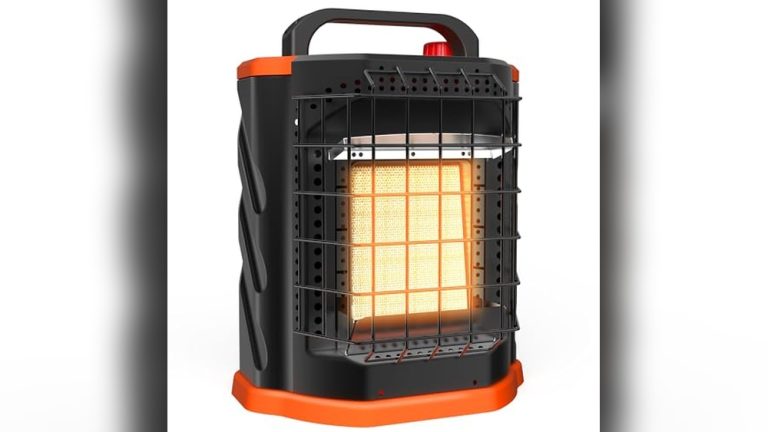
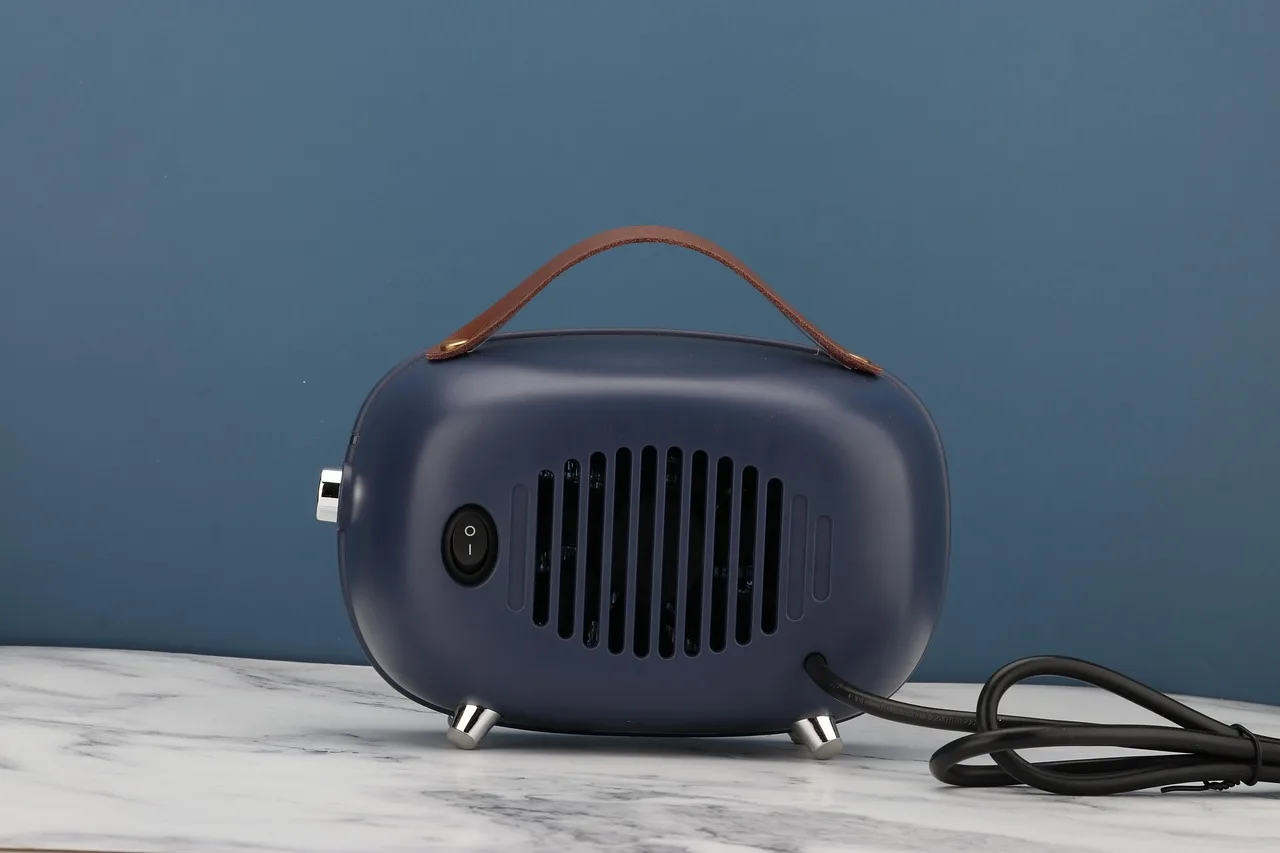
Use a portable space heater as supplemental heat only. Choose one with thermostat control, tip-over shutoff, overheat protection, and a wattage matched to the room; 1,500 watts is common for a small room, but it should not replace a whole-home system. Keep it away from bedding, curtains, and furniture.
If the space heater is covering for a weak central system, the real fix is usually in the house envelope or the main heater. Running one in every room can raise the bill fast because electric resistance heat is costly to operate.
How to improve heater efficiency
The right order is house first, controls second, heater third. If the building leaks heat faster than the heater can replace it, no tune-up will feel like a full fix. Use the steps below to attack the biggest losses before buying parts or equipment.
-
Match the control to the system.
Check thermostat compatibility before upgrading. Low-voltage furnaces often accept programmable or smart controls; line-voltage baseboard and wall heaters usually need matching line-voltage controls. Setbacks of 5 to 10°F usually help without making the system swing too far. -
Clear airflow paths.
Vacuum returns, open closed registers, and move furniture away from grilles or wall heaters only as far as the manufacturer requires. Keep rugs, storage bins, and drapes out of the air path. Restricted airflow makes furnaces run longer and can overheat electric heaters, which cuts comfort and can trigger safety limits. -
Seal ducts and ducts in cold spaces.
Seal joints with mastic or foil HVAC tape, then insulate ducts in attics or crawlspaces to at least R-8 where local code and space allow. Leaks in unconditioned spaces dump heat before it reaches the rooms you pay to warm. -
Service combustion parts.
Have a qualified technician clean burners, inspect the heat exchanger, and check flue draft on gas or oil systems. Poor combustion can waste fuel and raise carbon monoxide risk, so this is efficiency work and safety work at the same time. -
Add attic insulation first.
If the attic is underinsulated, it should be the first insulation job. Raising attic insulation to a practical target often cuts heat loss more than the same money spent on wall or floor work.
Old heater efficiency fixes table
| Section | Fix | Impact rank | Effort | Cost | Safety risk | Likely savings band | When to skip the fix |
|---|---|---|---|---|---|---|---|
| Gas furnace | Replace or clean filter | 1 | Low | Low | Low | Low to moderate if airflow was restricted | Skip if the filter slot is damaged or the system needs a different size or airflow setup |
| Gas furnace | Seal duct leaks and insulate ducts | 2 | Moderate | Low to moderate | Low to moderate | Moderate to high in leaky systems | Skip only if ducts are inaccessible, unsafe to access, or already sealed and insulated well |
| Gas furnace | Burner cleaning and heat exchanger inspection | 3 | Moderate | Moderate | Moderate to high | Low to moderate, plus safety benefit | Skip if the unit is already being replaced or if damage means the heater should be shut down |
| Gas furnace | Thermostat setback schedule | 4 | Low | Low to moderate | Low | Low to moderate | Skip if the control is incompatible or the system already swings too hard with setbacks |
| Gas furnace | Weatherstripping and door/window sealing | 5 | Low | Low | Low | Moderate in drafty homes | Skip if the leakage is already controlled or the opening needs repair before sealing |
| Gas furnace | Attic insulation upgrade | 6 | Moderate to high | Moderate to high | Low | High if the attic is underinsulated | Skip if the attic already has strong insulation coverage and air sealing |
| Electric baseboard | Thermostat setback schedule | 1 | Low | Low to moderate | Low | Low to moderate | Skip if the thermostat is not compatible or the heater is used only briefly |
| Electric baseboard | Weatherstripping and door/window sealing | 2 | Low | Low | Low | Moderate in drafty homes | Skip if the room already holds heat well |
| Electric baseboard | Attic insulation upgrade | 3 | Moderate to high | Moderate to high | Low | High if the attic is underinsulated | Skip if the house envelope is already tight and insulated |
| Wall heater | Clear airflow path and keep intake and discharge open | 1 | Low | Low | Low to moderate | Low to moderate | Skip if the heater is already unobstructed and clean |
| Wall heater | Weatherstripping and draft sealing | 2 | Low | Low | Low | Moderate in drafty homes | Skip if the room has minimal leakage or another building issue is bigger |
| Wall heater | Attic insulation upgrade | 3 | Moderate to high | Moderate to high | Low | High if the attic is underinsulated | Skip if the room problem is local and the envelope is already strong |
| Portable space heater | Use a thermostat-controlled unit with safety shutoffs | 1 | Low | Low to moderate | Moderate | Low, because it shifts heat rather than improving the main system | Skip if the room does not need supplemental heat or if a central problem is the real issue |
| Portable space heater | Weatherstripping and draft control | 2 | Low | Low | Low | Moderate in drafty homes | Skip if the room already stays comfortable without supplemental heat |
| Portable space heater | Attic insulation upgrade | 3 | Moderate to high | Moderate to high | Low | High if the attic is underinsulated | Skip if the room is already easy to heat and the issue is not whole-house loss |
When is replacement the better call?
Replacement starts to make more sense when the heater is unsafe, parts are failing often, or the fuel bill stays high after the house is tightened up. For gas furnaces, a unit below about 70% AFUE is often a poor fit when long service is expected and the ducts are already in good shape.
Furnace AFUE and age
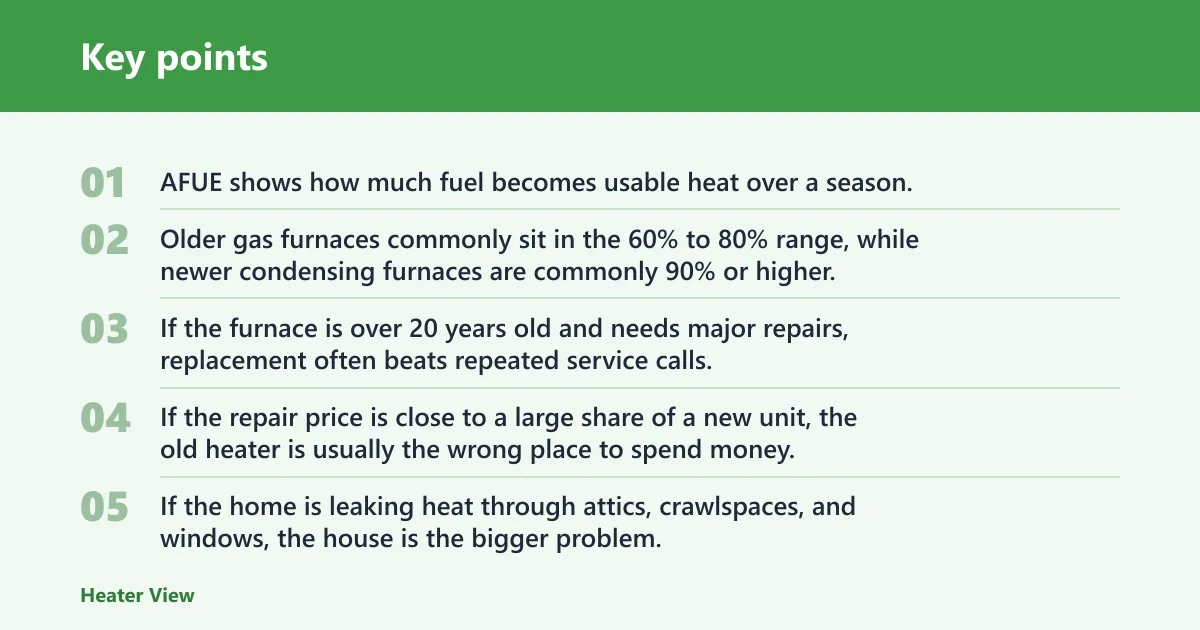
AFUE shows how much fuel becomes usable heat over a season. Older gas furnaces commonly sit in the 60% to 80% range, while newer condensing furnaces are commonly 90% or higher. If the furnace is over 20 years old and needs major repairs, replacement often beats repeated service calls.
Repair costs versus fuel waste
If the repair price is close to a large share of a new unit, the old heater is usually the wrong place to spend money. A clean, safe furnace with sound ducts can still be worth keeping; one with a failing heat exchanger, cracked flue section, or repeated shutdowns is a different case.
House losses versus heater losses
If the rooms still feel cold after sealing drafts, adding insulation, and fixing control issues, the heater may be undersized or worn out. If the home is leaking heat through attics, crawlspaces, and windows, the house is the bigger problem. Fix the house first, then judge the heater against the remaining load.
What safety checks should you do first?
Safety comes before any efficiency tweak on combustion or electric heat. Check for carbon monoxide protection, clearances, damaged cords, and blocked airflow before trying to save fuel. A heater that is unsafe should not be pushed harder or left running as-is.
-
Test carbon monoxide alarms.
Install one outside each sleeping area and follow the manufacturer’s instructions for placement near fuel-burning equipment, then press the test button. If the home has a gas or oil heater, a working alarm is part of the efficiency plan because incomplete combustion can be dangerous long before it becomes obvious. -
Inspect the heat source.
Look for soot, scorch marks, cracked panels, or rusted vent parts on gas or oil units. Shut the system down and call for service if you see damaged venting, a strong fuel smell, or signs of backdrafting. -
Check heater placement.
Keep portable heaters 3 feet from combustibles, and never use extension cords unless the manufacturer allows it. For wall and baseboard units, remove stored items and fabric that block convection.
Common mistakes
People often spend on a thermostat before fixing airflow. That can help comfort, but it will not rescue a furnace with a clogged filter or leaky ducts. Another common mistake is using a high-MERV filter that the blower cannot move well enough, which can cut airflow instead of improving it.
Other errors are easier to avoid. Do not cover return grilles, do not use a portable heater as the main heat source, and do not ignore short cycling because the room still feels warm. Short bursts usually mean the system is wasting starts, not operating efficiently.
Suppose a 1,200-square-foot home has drafty windows and an attic with thin insulation. Sealing the worst leaks and adding attic insulation usually helps more than buying a new room heater for the living room, because the heat stays in the house longer.
Frequently asked questions
What maintenance actually improves an old heater’s efficiency?
Filter changes, burner cleaning, heat exchanger inspection, duct sealing, and thermostat calibration can all reduce wasted energy. To check calibration, compare the thermostat setting with a separate room thermometer after the system has stabilized, then use the thermostat’s adjustment or settings in its manual if the reading is off. Cosmetic cleaning does little. The maintenance that matters is the kind that improves airflow, combustion, or heat delivery to the rooms you want warm.
Which low-cost fixes make the biggest difference first?
Replace the filter, seal door and window leaks, close gaps around ducts, and set a sensible thermostat schedule. Those are usually cheaper than major repairs and often faster to do. If the house is very drafty, weatherstripping and attic air sealing can outperform heater tweaks.
When is an old heater too inefficient to keep using?
If the heater is unsafe, needs repeated repairs, or is very old and inefficient by today’s standards, replacement becomes the practical choice. A gas furnace below about 70% AFUE, or any heater with a failing heat exchanger or chronic shutdowns, is a strong candidate for replacement.
How much energy can I save from sealing drafts and insulating?
The savings depend on how leaky and underinsulated the home is. Draft sealing and attic insulation often deliver the biggest gains in older homes because they cut heating load directly. If the home already holds heat well, the savings from further tightening will be smaller.