Are Electric Heaters Safe for Birds Indoors?
Yes, when used thoughtfully and with specific precautions, most modern electric heaters can be safe for indoor birds. The key is to prevent direct contact, overheating, and exposure to fumes or very dry air, which are the primary risks. Understanding how to choose and operate them will ensure your feathered friend stays warm and safe.
Keeping your home cozy during colder months is a priority, and for many, that means using electric heaters. But if you share your living space with a beloved bird, you might be wondering about their safety. It’s a common concern, and for good reason! Our avian companions are more sensitive to environmental changes than we are. The good news is that with a little knowledge and some simple precautions, you can enjoy the warmth of an electric heater without putting your feathered friend at risk. This guide will walk you through everything you need to know, step by step.
Understanding Bird Sensitivity to Heat and Air Quality
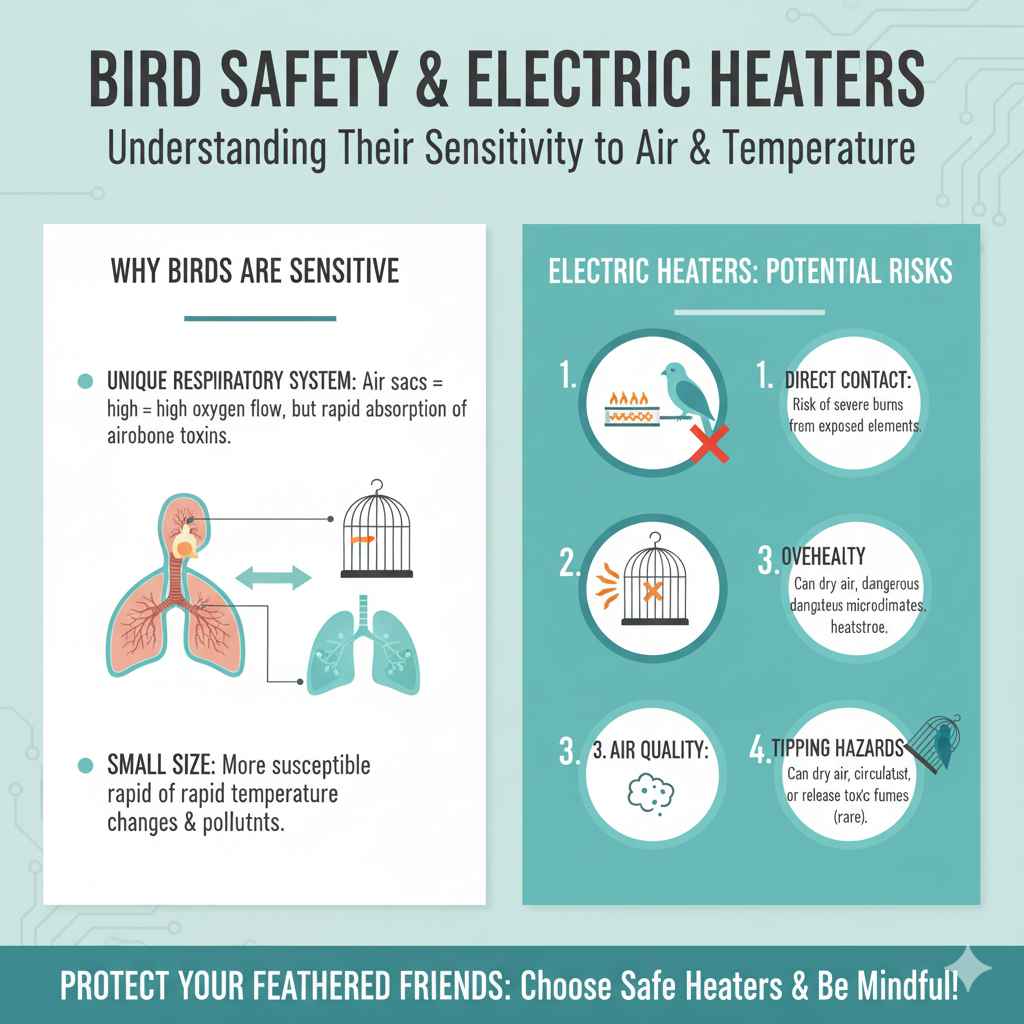
Birds have a unique respiratory system that makes them very susceptible to airborne irritants and drastic temperature shifts. Unlike humans, birds have air sacs that allow for a continuous flow of oxygen. This efficiency also means that if there are harmful fumes or dust in the air, they can reach the bird’s lungs quickly. This is why selecting the right heater and operating it correctly is so important. We want to ensure a comfortable and safe environment for them, just as we do for ourselves.
How Electric Heaters Can Pose Risks to Birds
While electric heaters are great for targeted warmth, some models and usage patterns can create potential hazards for birds. Understanding these risks is the first step to avoiding them. The main concerns revolve around:
- Direct Contact: Birds, especially curious ones, might try to perch on or peck at a heater, leading to burns.
- Overheating the Cage Environment: Placing a heater too close to a bird’s cage can create an dangerously hot microclimate, leading to heatstroke.
- Air Quality: Some heaters can dry out the air excessively or, in rare cases with malfunctioning units or certain materials, release fumes that are toxic to birds.
- Tipping Hazards: An unstable heater could tip over, frightening the bird or becoming a hazard if it falls near the cage.
Choosing the Right Electric Heater for a Bird-Friendly Home
Not all electric heaters are created equal when it comes to safety for our feathered friends. Opting for the right type of heater can significantly reduce risks. Here’s what to look for:
Recommended Heater Types for Birds
For bird owners, certain types of electric heaters are generally considered safer due to how they distribute heat and their design features:
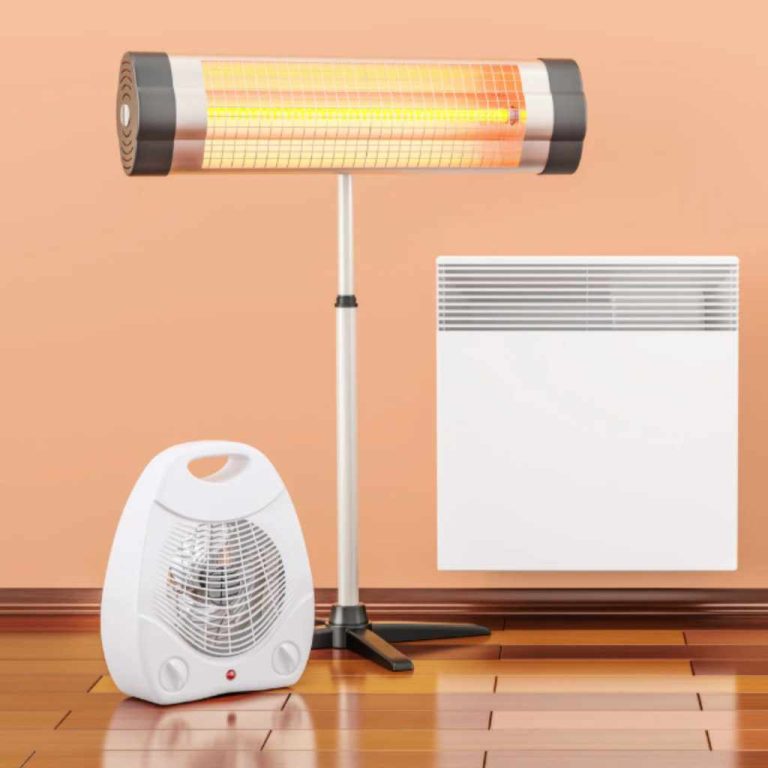
- Oil-Filled Radiators: These are often a top choice because they heat up slowly and emit a gentle, consistent warmth. They don’t have exposed heating elements, making burns less likely. They also tend to be quieter and don’t blow air, which can help maintain a more stable humidity level compared to fan heaters. Benefit: Even heat, no exposed elements, quiet operation, less air disturbance.
- Ceramic Heaters with Safety Grilles: Ceramic heaters often have enclosed heating elements and a protective grille. This makes them safer to be around, as it’s harder for a bird to come into direct contact with the hot parts. Many also have automatic shut-off features if they tip over. Benefit: Enclosed heating element, safety grille, tip-over protection features.
- Infrared or Radiant Heaters (with caution): These heaters warm objects and people directly, rather than the air. They can be useful if placed at a safe distance. However, their direct radiant heat can still be too intense if a bird gets too close, so careful placement is paramount. Benefit: Direct, targeted warmth; can be energy-efficient.
Heaters to Approach with Extra Caution
Some heaters require more vigilance or might be best avoided if you have birds:
- Fan Heaters (Convection Heaters with Fans): The blowing air can be irritating to a bird’s sensitive respiratory system, potentially distributing dust and allergens. The rapid temperature fluctuations from the fan can also be stressful for some birds. If you must use one, ensure it has a good filter and is kept on a low, consistent setting.
- Open Coil Heaters: These have exposed heating elements that get very hot and are a significant burn risk. They are generally not recommended in homes with pets, especially birds.
Essential Safety Measures When Using Electric Heaters Around Birds
Once you’ve chosen a suitable heater, the way you use it is crucial. Safety is always the top priority. Here’s how to ensure your bird remains safe and comfortable:
Positioning the Heater Safely
Location, location, location! Where you place the heater makes a world of difference. Follow these guidelines:
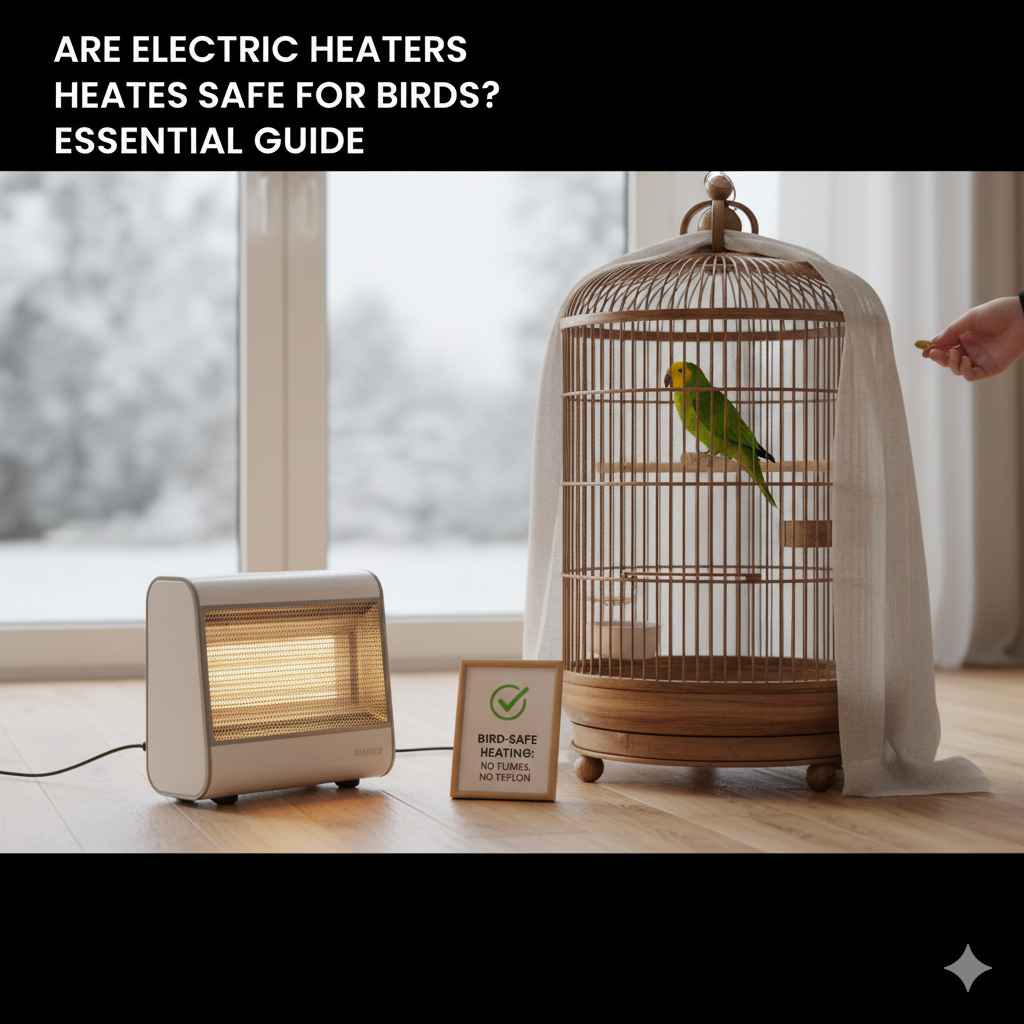
- Keep it Away from the Cage: Never place a heater directly next to or aimed at your bird’s cage. Aim for a minimum distance of 3-5 feet (1-1.5 meters) to avoid creating a hot zone around their living space.
- Place on a Stable Surface: Ensure the heater is on a flat, stable surface where it’s unlikely to be knocked over. Avoid placing it on plush carpets that could block ventilation or pose a fire risk. A tiled or hard floor is ideal.
- Avoid Direct Pathways: Don’t position the heater in a place where your bird might naturally fly or walk towards it. Think about their usual movement patterns in the room.
- Consider Room Airflow: Place the heater where it can circulate warm air effectively throughout the room without creating drafts directly on the bird’s cage. Gentle circulation is key.
Temperature Control and Monitoring
Maintaining a stable, comfortable temperature is vital. Birds can’t sweat, so they are vulnerable to overheating. Here’s how to manage temperature effectively:
- Use Thermostatic Controls: Opt for heaters with built-in thermostats. This allows you to set a specific temperature and lets the heater cycle on and off to maintain it, preventing drastic fluctuations.
- Invest in a Room Thermometer: Don’t rely solely on the heater’s thermostat. Place an inexpensive room thermometer near your bird’s cage to get an accurate reading. A good target temperature range for most pet birds in a home environment is typically between 65-75°F (18-24°C), but this can vary by species. Always research your specific bird’s needs. Tip: Consult your avian veterinarian for the ideal temperature range for your specific bird species.
- Monitor Your Bird: Observe your bird’s behavior. Signs of discomfort can include panting, holding their wings away from their body, or lethargy, which could indicate they are too hot. If they are huddled, fluffing up excessively, or seem chilled, they might be too cold.
Preventing Direct Contact and Burns
Direct contact with a hot heater is a serious burn risk. Here’s how to safeguard your bird:
- Use Protective Barriers: If you’re concerned about proximity, consider creating a safe barrier. This could be a sturdy pet playpen or a strategically placed piece of furniture (ensuring it doesn’t block necessary ventilation for the heater).
- Choose Heaters with Guards: As mentioned, heaters with well-designed safety grilles or enclosed elements are preferable.
- Supervise New Setups: When you first set up a heater in a shared space, supervise your bird closely to ensure they don’t show any undue interest or try to approach it.
Air Quality and Humidity Concerns
Birds are sensitive to air quality. Electric heaters themselves don’t produce fumes, but they can affect the air.
- Ventilation is Key: Even when using a heater, ensure the room has some minimal air exchange. Birds need fresh air. Avoid sealing the room up completely.
- Monitor Humidity: Some electric heaters, especially fan-assisted ones, can dry out the air. Birds, particularly those from more humid regions, can suffer from dry respiratory passages. If you notice excessive dryness (peeling skin on feet, dusty feathers), consider using a humidifier in the room, keeping it at a safe distance from both the bird and the heater. Good practice: Aim to maintain a humidity level of 30-50% for most tropical bird species. A hygrometer can help you measure this.
- Choose New Heaters Wisely: When buying a new heater, check if it has any odor when first turned on. If it smells strongly of plastic or chemicals, let it run in a well-ventilated, unoccupied area for several hours or even a day before using it around your bird. Resource: Learn more about avian respiratory health from the Cornell University College of Veterinary Medicine (Note: While this link is about diagnosis, it highlights the importance of respiratory health in birds).
Heater Safety Checklist for Bird Owners
To make sure you haven’t missed anything, here’s a quick checklist. Tick off these points before and during heater use:
- Is the heater type appropriate for use around birds (e.g., oil-filled, ceramic with grille)?
- Is the heater placed at a safe distance (3-5+ feet) from the bird’s cage and out of reach?
- Is the heater on a stable, flat surface?
- Does the heater have a thermostat and/or tip-over auto-shutoff?
- Is there a separate room thermometer providing an accurate temperature reading near the cage?
- Is the room adequately ventilated without creating drafts on the bird?
- Are you monitoring your bird’s behavior for signs of stress or discomfort (too hot/cold)?
- If using a humidifier, is it placed safely away from the heater and cage?
- Is the heater in good working order, with no strange smells or noises?
Temperature Considerations for Different Bird Species
While general guidelines exist, the ideal temperature can vary depending on your bird’s species, age, and health. Some birds are naturally more tolerant of cooler temperatures than others.
General Temperature Guidelines
Most common pet bird species, like parrots and finches, thrive in room temperatures that are comfortable for humans. However, “comfortable for humans” can still be too cool for some birds, especially small or very young ones, or those accustomed to warmer climates.
- Tropical Species: Birds originating from tropical rainforests generally prefer slightly warmer temperatures than those from temperate regions. Aiming for the higher end of the 70-80°F (21-27°C) range might be beneficial.
- Young, Old, or Sick Birds: Chicks, elderly birds, and those recovering from illness often require warmer ambient temperatures to conserve energy and maintain their body heat.
Monitoring and Adjusting
The best approach is always to observe your bird and adjust as needed. If your bird seems constantly fluffed up and seeking warmth, even when the room feels adequate to you, they may need a slightly warmer environment. Conversely, if they are gaping, panting, or holding wings away from their body, it’s too hot.
Always consult with your avian veterinarian if you are unsure about the specific temperature needs of your bird or if you notice any concerning changes in their behavior or health.
Maintaining Your Electric Heater for Optimal Safety
Regular maintenance ensures your heater functions safely and efficiently. This is a small step that makes a big difference.
Cleaning and Inspection
- Dust and Debris: Over time, dust and pet dander can accumulate on heater grilles and vents. This buildup can reduce efficiency and, more importantly, be a fire hazard or be blown into the air. Regularly unplug the heater and gently clean the exterior and any accessible vents with a soft brush or vacuum cleaner attachment.
- Cord and Plug: Periodically inspect the power cord and plug for any signs of fraying, cracking, or damage. If you notice any issues, discontinue use immediately and have the heater repaired or replaced.
- General Wear and Tear: Check for any loose parts or unusual noises during operation. If the heater seems damaged or is behaving erratically, it’s time to replace it. For example, a malfunctioning thermostat could lead to overheating.
When to Replace a Heater
Electric heaters, like all appliances, have a lifespan. If your heater is old, shows signs of wear, or has been recalled, it’s time for a new one. Investing in a new, modern heater with advanced safety features is a worthwhile expense for the peace of mind it provides, especially with birds in the house. Look for certifications from organizations like UL (Underwriters Laboratories) to ensure it meets safety standards.
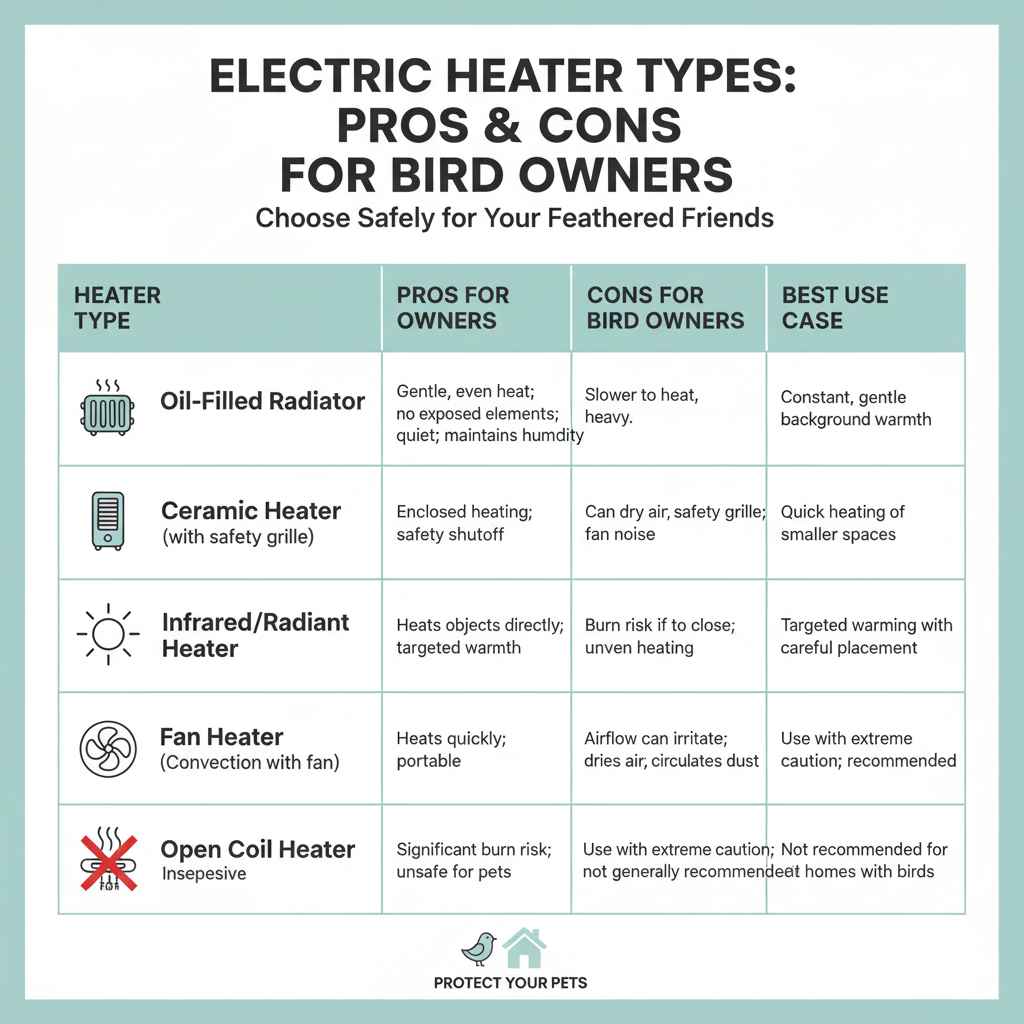
Table: Electric Heater Types – Pros and Cons for Bird Owners
To help you compare, here’s a quick look at the common types:
| Heater Type | Pros for Bird Owners | Cons for Bird Owners | Best Use Case |
|---|---|---|---|
| Oil-Filled Radiator | Gentle, even heat; no exposed elements; quiet operation; maintains humidity better than fan heaters. | Slower to heat up a room; can be heavy. | Constant, gentle background warmth; for any room where consistent temperature is needed. |
| Ceramic Heater (with safety grille) | Enclosed heating element; safety grille prevents direct contact; often has tip-over auto-shutoff. | Can dry the air if used excessively; fan noise can be a minor issue for some. | Quick heating of smaller spaces; good for targeted warming. |
| Infrared/Radiant Heater | Heats objects/people directly, not air; efficient for targeted warmth. | Risk of burns if bird gets too close; potential for uneven heating if not positioned well. | When specific areas need quick warming, with careful placement and monitoring. |
| Fan Heater (Convection with fan) | Heats up quickly; portable. | Airflow can irritate respiratory systems; can dry air significantly; may circulate dust. | Use with extreme caution, on low settings, with good filtration, and away from the bird. Generally less recommended. |
| Open Coil Heater | Inexpensive. | Significant burn risk due to exposed elements; generally unsafe for homes with pets. | Not recommended. |
Frequently Asked Questions (FAQs) for Bird Owners and Electric Heaters
Here are some common questions bird owners have about electric heaters:
Q1: Can an electric heater be placed in the same room as my bird’s cage?
A: Yes, but it must be placed at a safe distance, typically 3-5 feet or more away from the cage, and out of reach. It should not be pointed directly at the cage, and the overall room temperature should be monitored to ensure it doesn’t become too hot for your bird.
Q2: What is the main danger of electric heaters to birds?
A: The primary dangers are physical burns from direct contact with hot elements, overheating of the bird’s environment leading to heatstroke, and potential respiratory irritation from very dry air or airborne dust stirred up by some heater types.
Q3: How can I tell if my bird is too hot or too cold from the heater?
A: Signs of being too hot include panting, holding wings away from the body, looking lethargic, or increased unease. Signs of being too cold include excessive fluffing up of feathers, shivering, seeking warm spots constantly, or appearing unusually subdued. Always refer to your specific bird species’ needs.