Best Freeze Plug Heaters for Reliability (2026): We Compared
The most reliable freeze plug block heaters are exact-fit units with positive sealing, molded strain relief, and a replaceable cordset; choose the engine match over a universal kit. A weak heater can leak coolant, overheat, short at the cord, or leave you with a no-start in deep cold. This guide focuses on freeze plug block heaters by seal design, cord durability, fitment precision, and serviceability.
Quick comparison
| Product | Badge | Best for | Price | ||
|---|---|---|---|---|---|
 |
Zerostart 3100098 Freeze Plug Engine Block HeaterZerostart | Our pick | 35mm · 400W · CSA Approved | $100.97
Price as of 21 Nov 2026
|
View |
 |
Kat’s 11409X 400 Watt 3/4" NPT Frost Plug HeaterKAT’S | Upgrade pick | 3/4 NPT · 400W · Frost Plug | $47.07
Price as of 21 Nov 2026
|
View |
The core trade-off is simple: a true freeze plug design gives direct coolant heating and a clean seal. Reliability depends more on fitment accuracy, cord quality, and seal integrity than on nameplate wattage alone.
How we chose
The ranking uses manufacturer specs, listing details, and published buyer feedback. The comparison weighs seal method, fitment burden, serviceability, cordset durability, and whether the heater is a direct coolant-heating design.
- Exact fitment path first, because a heater that does not match the block opening is a reliability problem before installation starts.
- Seal design second, because o-rings, gaskets, and expansion mechanisms are the parts most tied to leaks and repeat work.
- Cordset quality third, because the cord is a common wear point in temperature swings, moisture, and vibration.
- Serviceability last, because the easier it is to replace the cord or inspect the seal, the less likely a small fault becomes a winter failure.
Freeze plug heater scorecard
| Heater type | Seal method | Failure risk | Serviceability | Compatibility burden | Best use case |
|---|---|---|---|---|---|
| Freeze plug (V-Lock) block heater | V-Lok expansion mechanism with an o-ring seal | Moderate if the bore is damaged or the o-ring is pinched | Good when the cordset is replaceable and the opening is accessible | High, because it must match an existing freeze plug opening | Direct coolant heating in engines that already have the correct opening |
| Threaded block heater | Threaded engagement in a dedicated port | Low to moderate if the threads and port are correct | Good, but removal depends on port access | High, because it requires engine-specific compatibility | Engines built with a dedicated threaded port |
| Plate / bolt-on block heater | Gasket seal under bolts | Moderate if gasket surfaces are uneven or corroded | Fair, since bolt access can be awkward | High, because it needs a dedicated mounting location | Applications that call for a bolt-on mounting point |
| Cartridge block heater | Dry socket fit | Low at the coolant interface, higher on fit accuracy | Fair to good, depending on socket access | Very high, because the dry socket is engine-specific | Engines designed for surrounding-metal heating rather than coolant contact |
What the product pages say about reliability
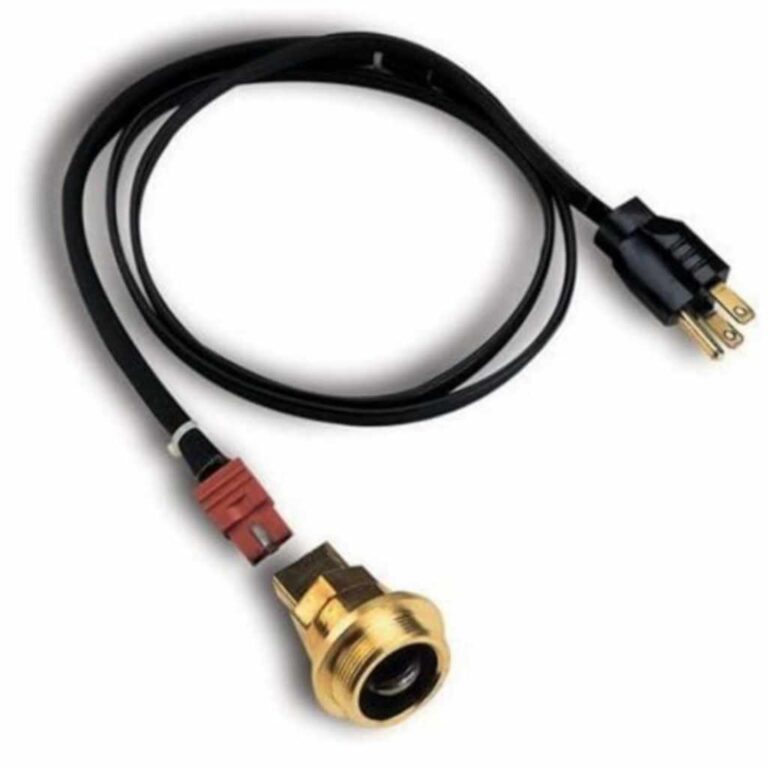
Freeze plug heaters install in an existing freeze plug opening, use a V-Lok expansion mechanism with an o-ring seal, and heat the coolant directly. That difference matters because the seal and the mounting bore do most of the work.
Coolant-contact designs depend on the seal and the mounting bore. If the engine calls for this style, fitment and surface condition matter more than extra wattage.
Zerostart 3100098: best for exact-fit freeze plug applications
- 400-watt freeze plug heater
- 5.8-foot cord included
- Fits listed Asian applications
Zerostart’s 3100098 is the better fit when your engine calls for a freeze plug-style heater in a listed 35 mm application. The 400-watt rating and included 5.8-foot cord make it a straightforward coolant-heating option for owners who want a direct fit rather than a universal workaround.
What stands out is the match between the freeze plug format and the listed Asian applications. That cuts guesswork when the catalog already points to the correct opening. The drawback is the same thing that helps it: it is narrower in fitment, so you still need the exact engine callout before buying.
For reliability, this style is strongest when the bore is clean and the cordset is protected from abrasion and strain. A bad bore surface can defeat a good heater body, and a stressed cord can turn a sound install into a winter repair.
Kat’s 11409X: best for threaded-port reliability
- Directly submerges in coolant
- 400-watt frost plug heater
- Specific part-number applications
Kat’s 11409X is the better choice when the engine uses a dedicated 3/4″ NPT port and you want a secure threaded installation. It directly submerges in coolant, and the 400-watt rating places it in the same basic warm-up class as other compact winter heaters.
The advantage is the secure threaded fit when the block is built for it. The drawback is compatibility burden: a threaded heater is only as reliable as the port it was designed to fit, so the engine match has to be confirmed before purchase. If the port spec is wrong, the install is wrong.
This is the type to favor when the manufacturer listing or the service manual names a threaded port by size and location. That kind of fitment clarity keeps a winter heater from becoming a leak or a return.
What makes one more reliable?
Reliability starts with the seal. A freeze plug heater depends on the V-Lok expansion mechanism and an o-ring; a threaded heater depends on the port threads; a plate heater depends on the gasket and mating surface. If the sealing surface is damaged, contaminated, or not the right shape, the heater becomes a weak point instead of a winter aid.
Seal design and mounting surface quality
For freeze plug heaters, inspect the bore condition and make sure the opening is the correct size for the part. For threaded and plate styles, confirm the port or gasket face is not corroded, stripped, or warped. A clean mounting surface is part of the heater, not an afterthought.
Picture an engine with a rough freeze plug opening and an otherwise correct heater. The seal can still fail if the opening is pitted or deformed, because the o-ring has nothing uniform to press against.
Cordset durability and connector protection
The cordset is a separate failure point, which is why it deserves its own check. Cordsets are engineered and tested to withstand temperature, moisture, and vibration, but the connector still needs strain relief and a jacket that will not crack in cold weather.
An indicator light can help you confirm power is reaching the block heater. That is useful only if the cord and connector stay intact long enough to carry power in the first place.
Serviceability and replacement part access
Serviceability matters when the cord wears out or the plug face needs inspection. A heater with a replaceable cordset is easier to keep in service than one that turns a minor cord fault into a full heater replacement. That reduces downtime and makes planned maintenance simpler.
Say your engine needs winter support for several months and the cord sits near a hot exhaust path. A replaceable cordset can make that setup easier to maintain, while a sealed-in cord can turn a small problem into a larger repair bill.
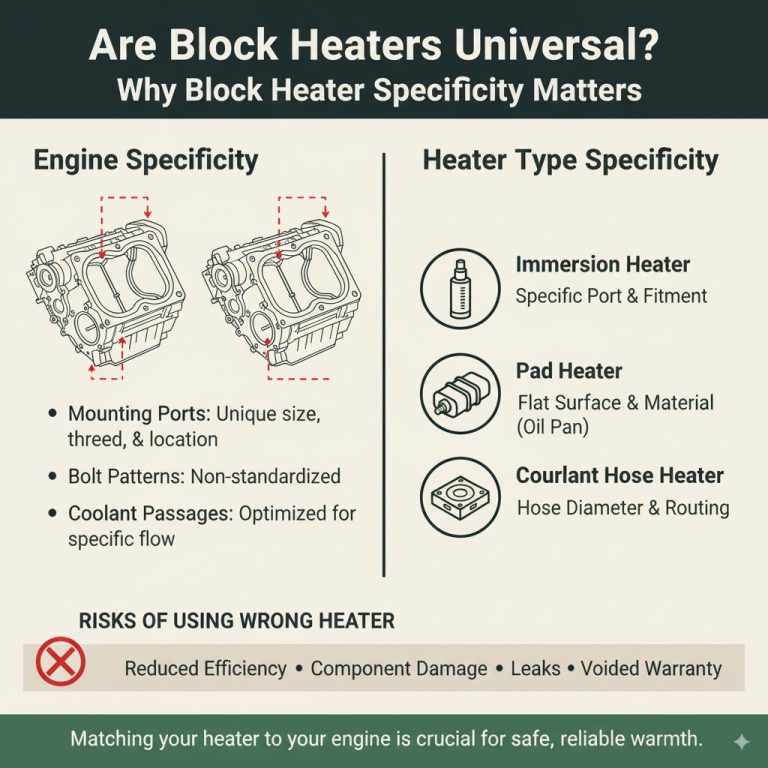
Will a freeze plug heater fit your engine?
A freeze plug heater fits only if your engine has the correct existing freeze plug opening. The right style is the one the engine was built to accept.
Freeze plug openings and V-Lock fitment
Freeze plug heaters install in an existing freeze plug opening in the engine block. They use a V-Lok expansion mechanism with an o-ring seal, so the opening has to be the correct size and in usable condition. This is a fitment-first purchase, not a universal one.
Why the other styles need exact confirmation
Each style is reliable only inside its intended engine design.
- Check the engine listing. Match the heater style to the engine callout before you order. If the listing does not name your exact engine, keep looking.
- Inspect the opening. Verify the freeze plug bore, threaded port, gasket face, or dry socket is clean and undamaged. Surface problems create seal problems.
- Confirm the cord path. Make sure the cord can route away from hot and moving parts without tension. A stressed cord shortens service life.
How do freeze plug heaters work?
Freeze plug heaters work by heating the coolant directly through an element installed in the engine block. That warms the coolant and helps the block come up to a higher starting temperature before cranking.
Coolant-heating designs versus dry-socket designs
Freeze plug heaters are coolant-heating designs. That difference affects both fitment and maintenance, because coolant-contact heaters must keep a good seal where the coolant sits.
120V household power is common for these heaters, but the unit must match the product’s electrical requirements. Wattage rating affects warm-up speed, and it should be matched to engine size and climate severity rather than chosen by habit.
Runtime control and electricity use
A coolant thermostat can reduce engine heater operating hours and save money. That matters when the heater would otherwise run longer than needed. A 300-watt heater running continuously through a winter month consumes about 216 kWh, but actual use depends on the duty cycle.
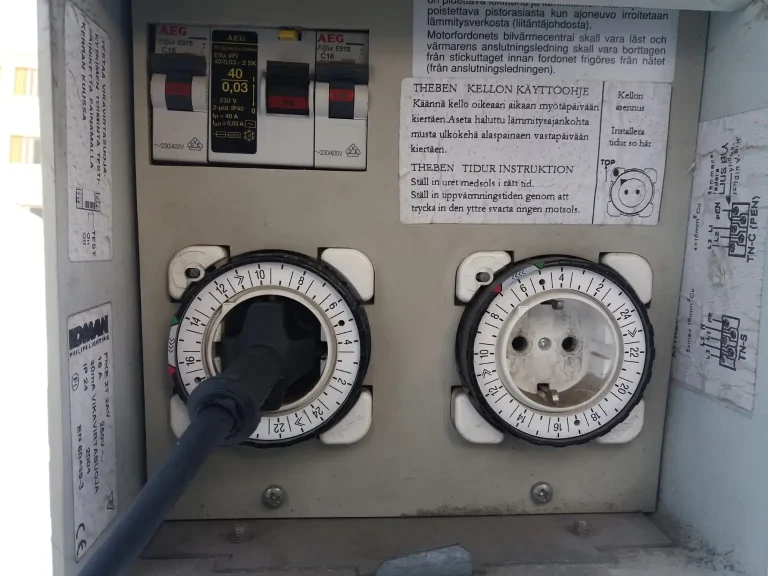
Use the thermostat or timer to cover the coldest start window, not the entire day. The point is dependable starting, not maximum runtime.
Freeze plug heater with the best cordset
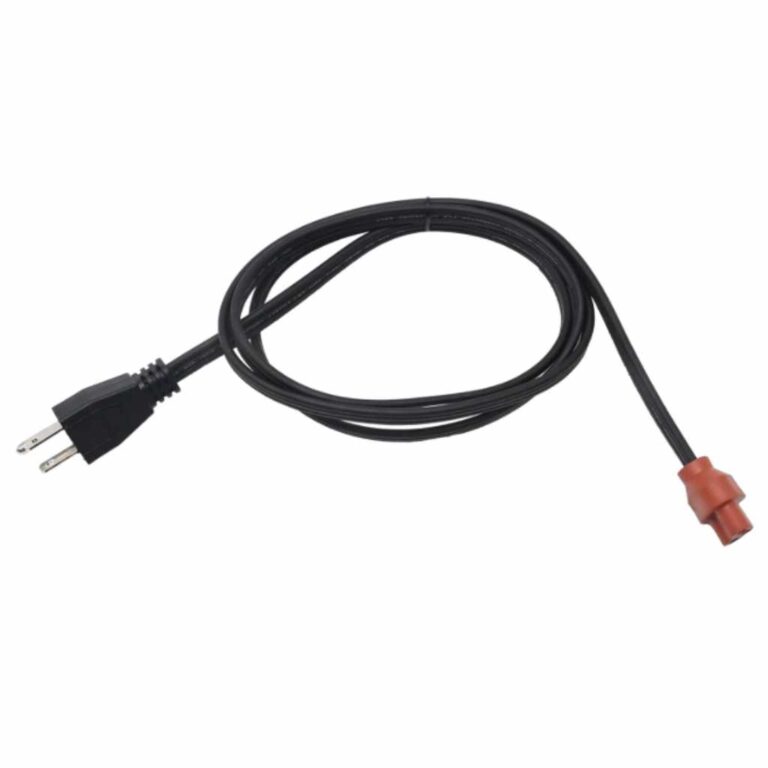
The cordset matters as much as the heater body because it is one of the most exposed parts of the system. A replacement cordset can reduce one potential failure point, and that is useful in a winter install where temperature swings, moisture, and vibration are constant.
What to check before purchase
- Look for molded strain relief where the cord meets the heater body.
- Check whether the cordset is replaceable rather than permanently attached.
- Inspect the connector for secure fit and weather protection.
- Confirm the jacket is rated for cold, moisture, and vibration exposure.
- Make sure the plug end matches your outlet and any included indicator light setup.
Which one should you buy?
Buy the freeze plug style if your engine has the correct opening and you want a direct coolant-heating setup. Choose the Zerostart 3100098 when the 35 mm freeze plug fit is the right match and you want the cleaner seal path of a true freeze plug design. Choose Kat’s 11409X when the engine calls for a 3/4″ NPT threaded port and you want a secure threaded installation.
Use thermostat control when you want fewer runtime hours and lower energy use. If you are choosing between two compatible heaters, favor the one with the better cordset, the clearer fitment listing, and the easier replacement path for wear parts.
For automotive and light duty, freeze plug styles often make the most sense when the engine listing is exact. For heavy duty trucks, construction, agriculture, and power generation, the right heater type depends even more on the mounting location the engine already provides.
- Match the opening. Select the heater style that the engine block was built to accept.
- Favor replaceable cords. A replaceable cordset lowers the cost of future maintenance.
- Use control accessories. Add a thermostat or timer when you want shorter heater run time.
- Verify power requirements. Confirm the heater is meant for 120V household power before you buy.
Frequently asked questions
What is the best freeze plug block heater for reliability?
The best freeze plug block heater for reliability is the one that matches the engine opening exactly and has a positive seal, a durable cordset, and a replaceable cord if possible. In practice, that means choosing fitment precision first and treating wattage as a secondary factor. A correct seal matters more than extra power.
How do freeze plug block heaters work?
Freeze plug block heaters install in an existing freeze plug opening and use an immersed heating element to warm the coolant directly. The V-Lok expansion mechanism and o-ring seal hold the heater in place. That raises block temperature before startup, which helps cold cranking without requiring a different engine layout.
Are freeze plug block heaters better than magnetic heaters?
Freeze plug heaters are usually the better choice when the engine already has the correct opening, because they heat the coolant directly and sit inside the block. Magnetic heaters are more universal, but they do not offer the same fit precision or sealing confidence. If fitment is available, the freeze plug design is usually the more dependable path.
What wattage freeze plug block heater do I need?
Choose wattage based on engine size and climate severity, then confirm the heater listing. Higher wattage warms faster, but only when the engine and electrical setup can support it. A 120V household outlet is common, yet the heater still has to match the product’s electrical requirements and intended use.
Will a freeze plug block heater fit my engine?
It will fit only if your engine has the correct freeze plug opening and the part number or application listing matches your model. Check the listing against your exact engine.
How long should I run a block heater before starting?
Run time depends on outdoor temperature, engine size, and the heater’s wattage. A timer or coolant thermostat can reduce operating hours and electricity use by limiting runtime to the cold start window. The safest answer is to follow the manufacturer’s guidance for your heater and shorten runtime once the block is warm enough.
Do block heaters run on 120V?
Many block heaters run on 120V household power, which lets them plug into standard outlets. That is common, but it is not automatic, so the heater’s electrical requirements still need to match the outlet and your local setup. Always confirm the product listing before installation.
What makes a block heater more reliable in winter?
A block heater is more reliable in winter when the seal is correct, the cordset is durable, and the mounting surface is clean and undamaged. A replaceable cordset and a clear fitment listing reduce risk further. Reliability comes from the whole assembly, not from wattage alone.