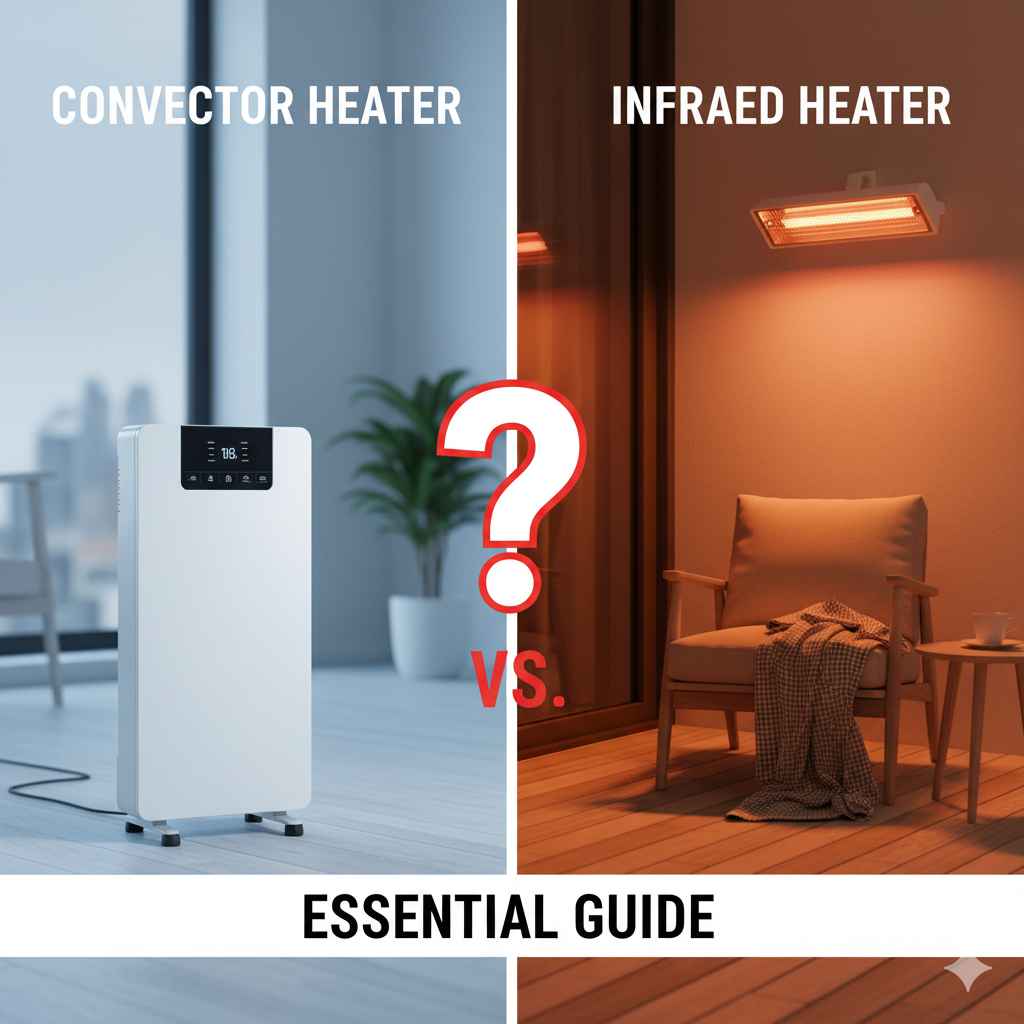
Convector Heater vs Infrared: Essential Guide
Choosing between a convector heater and an infrared heater? Convector heaters warm the air, offering gentle, consistent room heating, great for whole-room comfort. Infrared heaters use radiant heat, warming objects and people directly, providing instant warmth in specific zones and often feeling warmer faster, ideal for quick, targeted heating.
Welcome! Are you feeling a bit chilly and wondering which heater is the best fit for your home? It’s a common question, and honestly, the world of heaters can seem a little confusing at first. But don’t worry, I’m here to help you understand the differences between convector heaters and infrared heaters. We’ll break it down in a way that’s super easy to grasp, so you can feel confident choosing the perfect cozy solution for any room. We’ll explore exactly how each type works, their pros and cons, and where they shine brightest. Ready to get warmer?
Finding the right heater can transform a room from cold and unwelcoming to a warm and inviting sanctuary. Two popular choices you’ll often hear about are convector heaters and infrared heaters. They both aim to do the same thing – warm you up – but they go about it in very different ways. Understanding these differences is key to making a smart choice that fits your needs, your space, and your budget. Let’s dive in and explore what makes each one unique and when you might choose one over the other.
How Convector Heaters Work: Warming the Air Around You
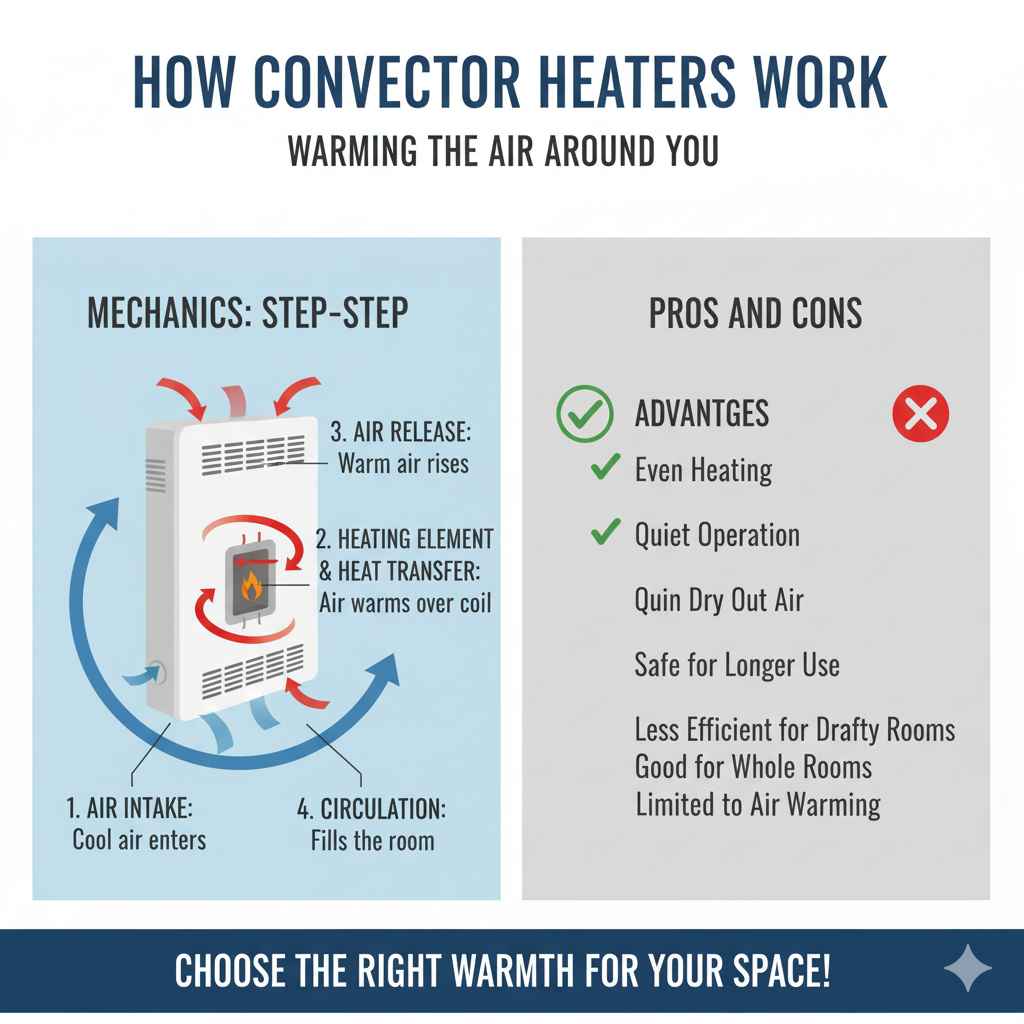
Imagine a gentle breeze of warm air filling your room. That’s essentially what a convector heater does! These heaters work by drawing in cool air from the room, heating it up, and then releasing the warmer air back into the space. This process creates a natural circulation, much like a convection oven. Here’s a closer look at the mechanics:
- Air Intake: Cool air from the room enters the heater, usually through vents at the bottom.
- Heating Element: Inside, a heating element (like a coil or a ceramic plate) gets hot.
- Heat Transfer: As the air passes over the hot element, it absorbs heat.
- Air Release: The warmed air then rises and is released back into the room through vents at the top.
- Circulation: This cycle repeats, gradually warming the entire room by circulating the air.
Convector heaters are often designed as panel heaters, oil-filled radiators, or upright fan heaters. They tend to heat a space evenly and maintain a consistent temperature. Because they warm the air, they are excellent for heating entire rooms over longer periods. They are also great for maintaining a comfortable baseline temperature without feeling like a blast of heat.
Pros and Cons of Convector Heaters
Like any heating solution, convector heaters have their advantages and disadvantages. Knowing these can help you decide if they are the right choice for your situation.
Advantages:
- Even Heating: They distribute heat evenly throughout a room, creating a consistent and comfortable temperature.
- Quiet Operation: Many convector heaters, especially oil-filled ones, operate very quietly, making them ideal for bedrooms or quiet living spaces.
- Safe for Longer Use: Their surfaces generally don’t get as intensely hot as other types, making them a safer option around children and pets if used with caution.
- Good for Whole Rooms: Excellent at raising and maintaining the overall temperature of a medium-sized room.
- Thermostat Control: Most models come with adjustable thermostats to maintain your desired temperature.
Disadvantages:
- Slower to Heat Up: It takes time for a convector heater to warm the air, so you won’t feel instant heat.
- Can Dry Out Air: Some models, particularly fan-assisted ones, can reduce humidity levels, potentially making the air feel dry.
- Less Efficient for Drafty Rooms: In rooms with significant drafts, the heated air can escape quickly, reducing efficiency.
- Limited to Air Warming: They don’t have a direct warming effect on objects or people, relying solely on air circulation.
How Infrared Heaters Work: Direct Heat, Like Sunshine
Infrared heaters work differently by emitting infrared radiation. Think of how you feel warm standing in the sun, even on a cool day, or sit near a campfire. That’s infrared heat! Instead of warming the air, infrared heaters directly warm objects and people within their line of sight. Here’s how it works:
- Heating Element: An infrared element (often quartz or ceramic) heats up significantly.
- Radiation Emission: This element emits infrared radiation waves.
- Direct Heating: These waves travel through the air and are absorbed by surfaces they hit – like furniture, walls, and you!
- Feeling the Warmth: As these surfaces absorb the radiation, they heat up, and you feel an immediate sense of warmth.
- Air Remains Cooler: The air itself doesn’t get heated, so the room might feel cooler until you are directly in the beam’s path.
Infrared heaters are often seen as panel heaters, quartz heaters, or even patio heaters. They are fantastic for providing instant warmth in specific areas and are great for spaces that are hard to heat completely or have high ceilings. They don’t rely on air circulation, so they are less affected by drafts.
Pros and Cons of Infrared Heaters
Infrared heaters offer a unique way to stay warm. Let’s look at what makes them a great choice and where they might fall short for some.
Advantages:
- Instant Heat: You feel the warmth almost immediately as the infrared rays hit you.
- Energy Efficient for Spot Heating: They are very efficient for heating specific areas or people, rather than trying to heat an entire room’s air volume.
- No Noise: Most infrared heaters operate silently, as they don’t rely on fans for heat distribution.
- Doesn’t Dry Out Air: Because they don’t heat the air, they don’t typically reduce humidity levels.
- Good for Drafty Areas: Less affected by air currents or drafts, making them suitable for workshops, garages, or rooms with less insulation.
- Can Warm Large Spaces Zoned: In large or open-plan areas, multiple infrared heaters can effectively warm occupied zones without heating the entire volume.
Disadvantages:
- Uneven Heating: They only heat what they can “see.” If you move out of the direct line of radiation, you’ll feel cooler.
- Surface Heat: While the objects and people get warm, the air temperature might remain lower, which some people find less comfortable.
- Safety Concerns: The heating elements can get very hot, requiring careful placement to avoid burns and fire hazards. Always follow manufacturer guidelines.
- Limited for Whole-Room Heating: Not ideal for maintaining a consistent, comfortable temperature throughout an entire room unless multiple units are used.
- Potential for Glare: Some types, especially quartz models, can emit a bright light that some find bothersome.
Convector Heater vs Infrared Heater: Key Differences at a Glance
To make the choice even clearer, let’s compare these two types side-by-side. This table highlights the core distinctions you need to know.
| Feature | Convector Heater | Infrared Heater |
|---|---|---|
| Heating Method | Warms the air through convection | Warms objects and people directly via radiant heat |
| Heat Distribution | Even, consistent room heating | Direct, targeted heating in line of sight |
| Speed of Heat | Slow to heat up; gradual warmth | Instant warmth felt immediately |
| Effect on Air | Can sometimes dry out air through circulation | Does not affect air humidity |
| Noise Level | Varies; some are very quiet (oil-filled), others have fan noise | Generally very quiet, no fan needed for heat distribution |
| Best For | Whole-room heating, maintaining consistent temperatures, bedrooms, living rooms | Spot heating, quick warmth, drafty areas, workshops, bathrooms (when designated safe) |
| Energy Efficiency | Efficient for steady, whole-room heating; can be less efficient in drafty spaces. For energy-saving tips, check out resources on efficient home heating from the U.S. Department of Energy’s Energy Saver program. | Highly efficient for targeted heating; can be more efficient overall if only specific zones need warming. |
When to Choose a Convector Heater
You might find a convector heater is your best friend when:
- You want to heat an entire room: If your goal is to make the whole living room or bedroom comfortably warm, a convector heater is ideal.
- You prefer steady, consistent heat: Convectors excel at maintaining a set temperature without blasts of heat or cold spots.
- You need quiet operation: Especially oil-filled radiators, which are almost silent. Perfect for light sleepers or those who dislike background noise.
- Safety is a top priority: While all heaters require care, the gentler surface temperatures of some convector types make them a somewhat safer bet in homes with small children or pets, always ensuring they are used according to instructions and kept away from flammable materials.
- You have a well-insulated room: They work best when the warm air can be contained and circulated effectively.
For example, if you’re looking to take the chill off your home office during the day or ensure your child’s bedroom is a cozy temperature all night, a convector heater is likely the perfect fit.
When to Choose an Infrared Heater
An infrared heater could be your perfect choice if:
- You need heat now: If you hate waiting for a room to warm up and want immediate comfort, infrared is the way to go.
- You only need to warm a specific spot: Maybe you sit in one armchair while reading, or you want to warm up your workspace under your desk. Infrared heats you directly, not the whole room.
- Your room is drafty or has high ceilings: Since it heats objects and people directly, drafts impacting air temperature won’t matter as much. It’s also great for heating the people in the room before the air temperature rises significantly.
- You want to save energy by heating only what you need: If you’re only in a room for short periods or only need to make yourself comfortable, targeting your heat with an infrared heater can be more energy-efficient than heating an entire room.
- You want to avoid dry air: If dry air bothers you, infrared’s lack of impact on humidity is a big plus.
Consider using an infrared panel heater in a bathroom for quick warmth before you get out of the shower, or a portable quartz heater to warm your feet while you’re working at your desk on a cold morning.
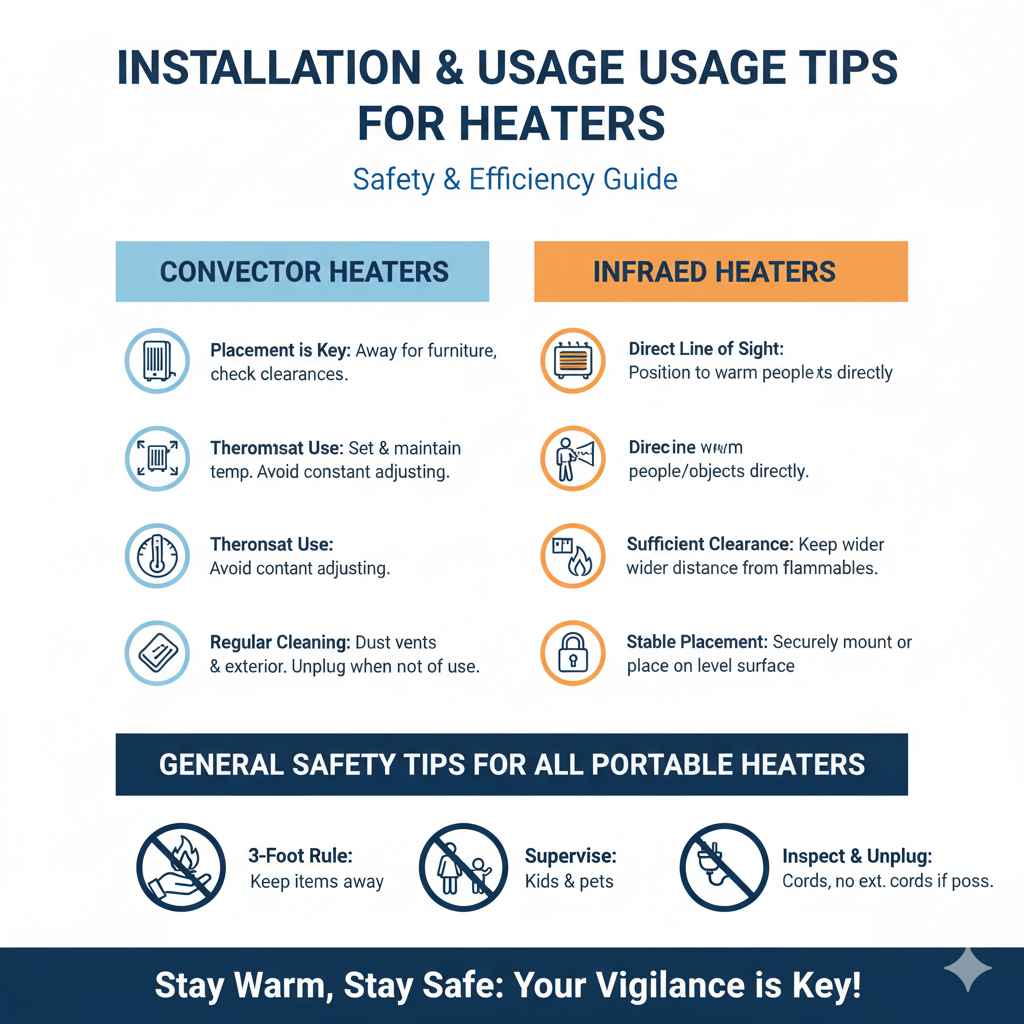
Installation and Usage Tips for Both Heater Types
Regardless of which type of heater you choose, proper installation and usage are crucial for safety and efficiency. Think of these as simple steps to ensure you get the most warmth and peace of mind.
For Convector Heaters:
- Placement is Key: Place them away from furniture, curtains, and anything flammable. Ensure there’s space around the heater for air circulation, usually at least a few feet. Check the manufacturer’s recommendations for clearance. For wall-mounted units, ensure they are securely fixed into studs or using appropriate wall anchors.
- Level Surface: Make sure the heater is on a stable, level surface, especially portable models.
- Thermostat Use: Set your thermostat to your desired temperature and let the heater do its job. Avoid constantly adjusting it, as this can be less energy-efficient. Consider using a programmable thermostat if your unit has one.
- Regular Cleaning: Dust can build up on the heating elements and vents, reducing efficiency and potentially becoming a fire hazard. Wipe down the exterior and gently clean vents according to the manual.
- Safety First: Never cover a convector heater. Ensure cords are not frayed and plugs are securely in outlets. Unplug when not in use for extended periods or when cleaning.
For Infrared Heaters:
- Direct Line of Sight: Position the heater so the infrared rays directly hit the area or people you want to warm. Directing it towards a sofa or a desk area is common.
- Sufficient Clearance: While they heat objects directly, the heating elements can get very hot. Always maintain a safe distance from combustible materials, furniture, and curtains. Check the manual for specific clearance requirements, which are often greater than for convector heaters due to the intense heat emitted.
- Stable Placement: Ensure portable units are on a stable, level surface and are not likely to be knocked over. Wall-mounted or ceiling-mounted units must be installed securely according to instructions.
- Understand the Heat Pattern: Infrared heat is directional. If you move, you might need to reposition the heater or accept that you’ll be outside the warming zone.
- Handle with Care: Avoid touching the heating elements directly. If bulbs are exposed, they can be fragile.
- Consider the Light: If glare from quartz or halogen models bothers you, opt for ceramic infrared heaters, which tend to emit less visible light.
General Safety Tips for All Portable Heaters:
The U.S. Consumer Product Safety Commission (CPSC) offers excellent advice for staying safe:
- Keep Them at Least 3 Feet Away: Maintain a 3-foot (or about 1 meter) zone around any portable heater, free from flammable items like curtains, bedding, paper, and furniture.
- Never Let Children or Pets Play Near Them: Always supervise children and pets when heaters are in use.
- Use Them on a Hard, Level Surface: Avoid placing them on rugs or carpets that could be a tripping hazard or overheat.
- Turn Them Off When You Leave the Room or Go to Sleep: This is a critical safety measure to prevent fires.
- Inspect Cords and Plugs: Ensure they are not worn or damaged.
- Don’t Use Extension Cords: If possible, plug the heater directly into a wall outlet. If an extension cord is absolutely necessary, make sure it is rated for the heater’s wattage and is in good condition.
- Look for Safety Features: Modern heaters often have features like automatic tip-over shutoff (which turns the heater off if it’s knocked over) and overheat protection.
Frequently Asked Questions (FAQ)
Q1: Which type of heater is more energy-efficient?
A1: It depends on your usage. Infrared heaters are more energy-efficient for spot heating because they only warm what they aim at. Convector heaters are more efficient for consistently warming an entire room over time.
Q2: Can I use a convector heater in a bathroom?
A2: Be very careful! Most standard convector heaters are not designed for bathrooms due to humidity and water. Some specialized convector heaters are IP-rated (Ingress Protection) for bathroom use, but always check the manufacturer’s specifications and local electrical codes. Infrared patio heaters are sometimes used in bathrooms, but again, ensure they are specifically designed for such environments.
Q3: Which heater is better for allergies?
A3: Convector heaters, especially those with fans, can circulate dust and allergens. Infrared heaters don’t circulate air, so they are generally better for allergy sufferers as they don’t kick up dust. However, both types can accumulate dust on their surfaces, so regular cleaning is essential for all heaters.
Q4: How do I know if my heater is safe?
A4: Look for safety certifications (like UL or ETL listing) and features such as automatic tip-over shutoff and overheat protection. Always follow the manufacturer’s instructions for placement, usage, and maintenance, and keep flammable materials at a safe distance.
Q5: Can I leave a convector heater on overnight?
A5: Many modern convector heaters with thermostats and safety features are designed for safe continuous operation. However, it’s always the safest practice to turn off any heater when you are not actively in the room and especially when you are sleeping, unless the unit is specifically designed and rated for such use and you have followed all safety guidelines, including clearance and cord integrity. Always