How Air Conditioners and Heaters Connect Through HVAC
Air conditioners and heaters connect via a system of refrigerant lines, electrical wiring, and a shared thermostat. While often integrated into a single HVAC unit, separate systems link through these essential components to manage your home’s temperature efficiently and safely. This guide breaks down how.
Hello there! It’s Tanim, your friendly guide to a cozy home. Ever wonder how your magical box of air conditioning in the summer and your trusty heater in the winter seem to work together, or perhaps separately, to keep you comfortable? It’s a question many homeowners have, and it can feel a bit like a puzzle when you’re trying to understand your home’s climate control. Don’t worry! We’ll explore this connection in simple terms, making sure you feel confident about how your heating and cooling systems talk to each other. By the end, you’ll understand the essential links that keep your home just right, all year round.
Understanding Your Home’s Comfort System: The HVAC Core
At its heart, your home’s heating and cooling system is likely an HVAC unit – that’s short for Heating, Ventilation, and Air Conditioning. This powerhouse is designed to do a lot! It’s responsible for not just heating and cooling but also for moving the air around your home, keeping things fresh and comfortable.
While some homes might have separate heating and cooling systems, many modern setups integrate them. This integrated approach is where the connection becomes most apparent. Think of it like a well-coordinated team, where each part knows its role to achieve the ultimate goal: your comfort.
The Big Picture: How HVAC Works Together
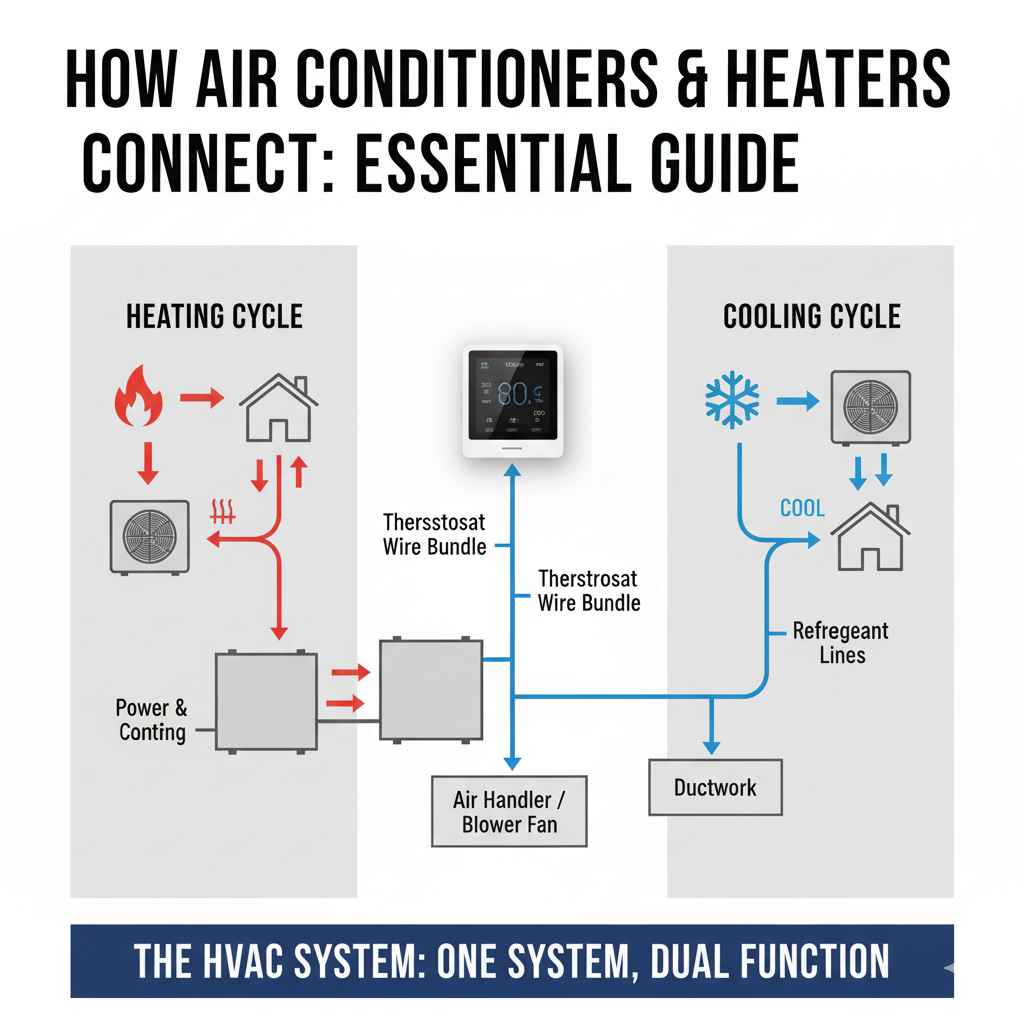
In a typical split system, which is very common, you have two main parts: an outdoor unit and an indoor unit. The outdoor unit usually houses the compressor and condenser for your air conditioner, and often the heat pump’s reversing valve if you have a heat pump system. The indoor unit, often found in a closet, attic, or basement, contains the evaporator coil and the blower fan. For heating, your furnace (if you have one) would be the indoor component, and it uses the same blower fan to distribute heat.
The magic happens when these units communicate. The thermostat on your wall is the conductor of this orchestra, telling the system when to turn on and off. When you set your desired temperature, the thermostat sends a signal, and the appropriate system—heating or cooling—kicks into action.

Key Components: The Connections That Matter
So, how do these parts actually connect and talk to each other? It’s all about a few crucial elements working in harmony. Let’s break them down so you know exactly what’s happening behind the scenes.
1. Refrigerant Lines: The Veins of the AC System
Your air conditioner (and heat pump when it’s cooling) uses a special fluid called refrigerant. This refrigerant is the key to transferring heat. It travels in a closed loop between the indoor and outdoor units through two copper tubes, often covered in insulation.
- The Larger, Insulated Line: This is the “suction line.” It carries the cool, low-pressure refrigerant vapor from the indoor evaporator coil back to the outdoor compressor. This is why it’s insulated – to keep it cool and prevent moisture from the air condensing on it.
- The Smaller, Uninsulated Line: This is the “liquid line.” It carries the warm, high-pressure liquid refrigerant from the outdoor condenser to the indoor evaporator coil.
These lines are critical for the cooling cycle. If they’re damaged or leaking, your AC won’t be able to move heat effectively, and that’s a big problem.
2. Electrical Wiring: The Nervous System
Just like any appliance, your HVAC system needs electricity to run. This isn’t just a simple plug-in situation; it’s a sophisticated network of wires connecting all the components.
- Power Supply: High-voltage wires bring electricity from your home’s main breaker panel to both the outdoor unit and the indoor unit (furnace or air handler). These wires provide the raw power needed to run the motors, fans, and heating elements.
- Control Wires: These are low-voltage wires that are even more important for the “connection” aspect. They run from the indoor unit to the outdoor unit and, crucially, to your thermostat. These wires carry signals that tell the system when to turn on, what mode to run in (heat or cool), and when to shut off.
- Thermostat Connection: Your thermostat is the brain. It communicates with the indoor unit via these control wires. When you make a selection, say “heat,” the thermostat sends a signal through these wires to the furnace or heat pump, and then another signal might go to the outdoor unit if it’s a heat pump, telling it to start its heating cycle.
Think of the control wires as the language the thermostat uses to command the rest of the system. Without them, nothing would know what to do.
3. Ductwork: The Highways for Air
While not a direct connection between the AC and heating components themselves, the ductwork is absolutely vital for them to deliver what they promise: conditioned air. Your HVAC system uses a network of ducts to distribute warm air from your furnace or heat pump and cool air from your air conditioner throughout your home.
- Supply Ducts: These carry the conditioned air from the indoor unit (furnace/air handler with AC coil) to the different rooms in your house.
- Return Ducts: These pull air from your rooms back into the indoor unit to be reconditioned (heated or cooled) and recirculated. This continuous flow ensures your system operates efficiently and maintains consistent temperatures.
The blower fan within your indoor unit is the engine that pushes air through these ducts. In many systems, the same blower fan is used for both heating and cooling, which is another way the two functions are linked.
4. The Thermostat: The Master Controller
You interact with your thermostat daily, but it’s truly the brain of your entire HVAC operation. It’s the central point where the commands for heating and cooling converge.
- Sensing Temperature: The thermostat constantly monitors the air temperature in its location.
- Sending Commands: Based on your settings and the current temperature, it sends electrical signals through the control wires to the appropriate part of the system.
- Mode Selection: Whether you switch from “Cool” to “Heat,” the thermostat communicates this change, and the system responds by activating the correct components. For example, switching to “Heat” will signal the furnace to ignite (or the heat pump to start its heating cycle), and the blower fan to circulate warm air. Switching to “Cool” will signal the AC compressor to start and the blower to circulate cool air.
Modern smart thermostats can do even more, learning your habits and allowing remote control, but their core function remains the same: controlling the comfort of your home by orchestrating the heating and cooling equipment.
Integrated Systems: When AC and Heat are One
Many homeowners have what’s called an “all-in-one” or integrated HVAC system. This means the heating and cooling components are designed to work together seamlessly, often sharing parts like the blower fan and ductwork.
Split Systems: The Most Common Setup
As mentioned earlier, the most prevalent setup is the split system. Here’s a simplified look at how the connections work:
Outdoor Unit (Condenser/Compressor)
Houses the following:
- Compressor (the “heart” of the AC, pumps refrigerant)
- Condenser coil (where heat is released to the outside air)
- Fan (to move air over the condenser coil)
- For heat pumps: Reversing valve (changes refrigerant flow direction for heating)
Indoor Unit (Furnace or Air Handler)
Typically located inside your home (basement, attic, closet):
- Evaporator coil (where refrigerant absorbs heat from indoor air for cooling)
- Blower fan (moves air through the system and ducts)
- For furnaces: Heat exchanger and burner (for gas/oil heating) or electric resistance heat strips.
- Drainage system for condensation (especially from AC operation)
The connections are the refrigerant lines running between these two units, the electrical wires linking them and the thermostat, and the shared ductwork originating from the indoor unit.
Furnace and AC: A Classic Pairing
In many homes, especially in colder climates, you’ll find a separate furnace for heating and an air conditioner for cooling. They often share the same indoor air handler and ductwork. The connections largely mirror the split system, but the heating generation is purely within the furnace.
The indoor unit (often a metal cabinet called an air handler) contains the blower fan and the evaporator coil for the AC. When it’s cold, the furnace’s heat exchanger warms the air, and the same blower fan pushes that warm air through the ducts. When it’s hot, the AC’s evaporator coil cools the air, and the same blower fan distributes that cool air.
The thermostat signals either the furnace to turn on (heating) or the AC condenser unit outside to turn on (cooling), and in both cases, it signals the indoor blower fan to circulate the air.
Heat Pumps: The All-in-One Wonder
A heat pump is a fantastic piece of technology that can both heat and cool your home using the same equipment. It’s essentially an air conditioner that can reverse its operation.
- Cooling Mode: Works exactly like a standard air conditioner, removing heat from inside and transferring it outside.
- Heating Mode: The reversing valve switches the flow of refrigerant. Now, the outdoor unit absorbs heat from the outside air (even when it’s cold!) and transfers it inside your home.
A heat pump system typically consists of an outdoor unit (with the compressor, condenser coil, and reversing valve) and an indoor unit (often called an air handler, with the evaporator coil and blower). They are connected by refrigerant lines and electrical wiring, all controlled by the thermostat.
Heat pumps can struggle to provide enough heat in extremely cold temperatures. In such cases, they are often paired with a backup heat source, like electric resistance coils within the indoor unit or a separate furnace. This is called a “dual-fuel” system. When the heat pump can’t keep up, the thermostat automatically switches to the backup heat source.
Troubleshooting Common Connection Issues
Sometimes, things don’t work as smoothly as we’d like. If your heating or cooling isn’t performing well, the issue might be related to these connections. Here are a few common problems and what might be causing them:
1. No Heating or Cooling
Possible Causes:
- Power Issue: Check your home’s breaker panel. Has a breaker tripped for the HVAC system?
- Thermostat: Ensure it’s set to the correct mode (heat/cool) and temperature. Are the batteries dead if it’s a digital model?
- Safety Switch: Many systems have safety switches that shut them down if a problem is detected, like a drainage overflow.
- Control Wiring: A loose or broken control wire between the thermostat and the indoor unit, or between the indoor and outdoor units, can prevent signals from being sent.
2. Poor Airflow
Possible Causes:
- Clogged Air Filter: This is the most common culprit! A dirty filter restricts airflow, making your system work harder and less effectively. Always check and replace your filter regularly.
- Blocked Vents: Make sure vents in your rooms aren’t blocked by furniture or rugs.
- Blower Fan Issues: The fan motor in your indoor unit might be malfunctioning.
- Duct Leaks: Leaks in your ductwork can cause significant loss of conditioned air before it reaches your rooms. You can check for visible damage or listen for air escaping. For more in-depth checks, a professional familiar with HVAC best practices might use specialized equipment. According to the U.S. Department of Energy, leaky ducts can waste a considerable amount of energy.
3. Strange Noises
Possible Causes:
- Loose Parts: Rattling or banging could indicate loose panels or components within the indoor or outdoor unit.
- Refrigerant Leaks: A hissing or bubbling sound might suggest a refrigerant leak in the lines or coils. This is a serious issue that requires professional attention.
- Fan Problems: Squealing or grinding noises could point to issues with the blower fan motor or bearings.
4. Leaking Water
Possible Causes:
- Clogged Condensate Drain Line: During cooling, your AC removes moisture from the air. If the drain line (a small pipe typically leading outside or to a drain) gets clogged with algae or debris, water can back up and leak.
- Frozen Evaporator Coil: If airflow is severely restricted (e.g., by a very dirty filter), the evaporator coil can freeze, leading to water leaks as it melts.
Important Note: For many of these issues, especially those involving refrigerant or electrical components, it’s essential to call a qualified HVAC technician. Attempting DIY repairs on these systems can be dangerous and may void your warranty.
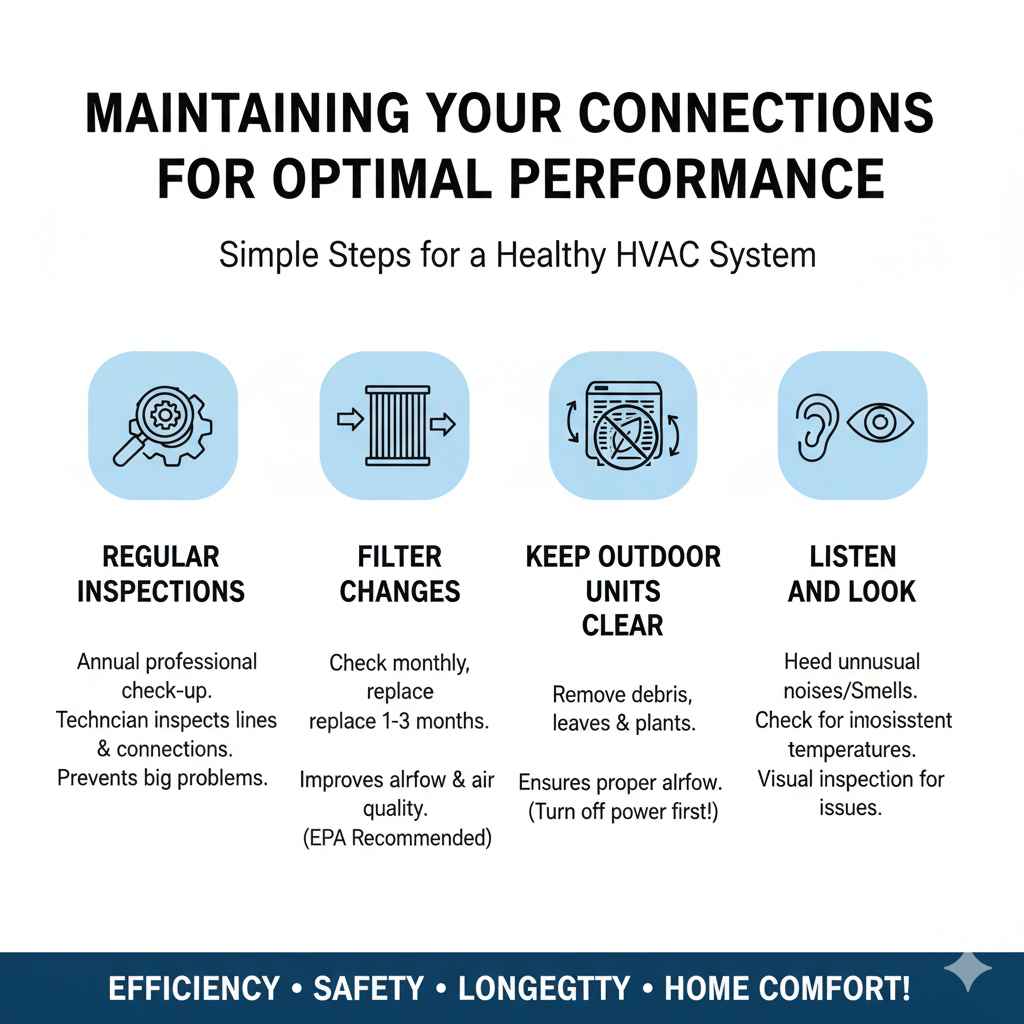
Maintaining Your Connections for Optimal Performance
Keeping your HVAC system running smoothly is all about regular maintenance. By tending to the connections and the components they link, you ensure efficiency, safety, and longevity.
Regular Inspections
Schedule an annual check-up with a professional HVAC technician. They can inspect refrigerant lines, electrical connections, and all the critical components. They can also catch small problems before they become big, expensive ones.
Filter Changes
This is the easiest and most impactful maintenance task you can do. A clean air filter ensures good airflow, which is crucial for both heating and cooling. Check your filter monthly and replace it according to the manufacturer’s recommendations (usually every 1 to 3 months). The Environmental Protection Agency (EPA) emphasizes the importance of clean filters for indoor air quality and system efficiency.
Keep Outdoor Units Clear
Ensure the area around your outdoor AC condenser unit and heat pump is clear of debris, leaves, and vegetation. This allows for proper airflow, which is vital for heat exchange. Don’t let plants grow too close, and consider gently hosing down the fins if they look dirty (turn off the power first!).
Listen and Look
Be attentive to any changes in how your system operates. Unusual noises, strange smells, or inconsistent temperatures are all signs that something might need attention. A quick visual inspection of accessible components, like the indoor unit and ductwork openings, can sometimes spot obvious issues.
Frequently Asked Questions (FAQ)
Are air conditioners and heaters always connected?
Not always in the sense of being a single unit, but they are usually interconnected through your home’s ductwork and often share a common thermostat and blower fan in an integrated HVAC system. Some older homes might have purely separate systems, but modern setups aim for efficiency through connectivity.
What kind of lines connect an air conditioner to an HVAC system?
An air conditioner is connected to the main HVAC system (specifically the indoor air handler/furnace) via two refrigerant lines (made of copper tubing) and electrical control wires. These lines allow refrigerant to circulate for cooling and enable communication between the indoor and outdoor units.
Can I connect a new heater to an old air conditioner?
Yes, in many cases. If you have a functioning air conditioner and your furnace needs replacing, a new, compatible furnace can often be connected to the existing AC’s evaporator coil, ductwork, and blower fan. Compatibility and proper installation by an HVAC professional are key.
Conclusion
Understanding how your air conditioner and heater connect is like knowing how the engine of your car works – it gives you confidence and helps you make informed decisions. Whether it’s the refrigerant lines carrying the cooling magic, the intricate electrical wiring that forms the communication network, the vital ductwork distributing your comfort, or the simple thermostat acting as the central command, each connection plays a crucial role.
By keeping these systems maintained and understanding their basic functions, you’re well on your way to a more comfortable, energy-efficient, and worry-free home. Remember, if you ever suspect a problem with the connections or components, don’t hesitate to reach out to a qualified HVAC professional. They have the expertise to keep your home’s comfort system performing at its best, ensuring you stay perfectly cozy no matter the season.