
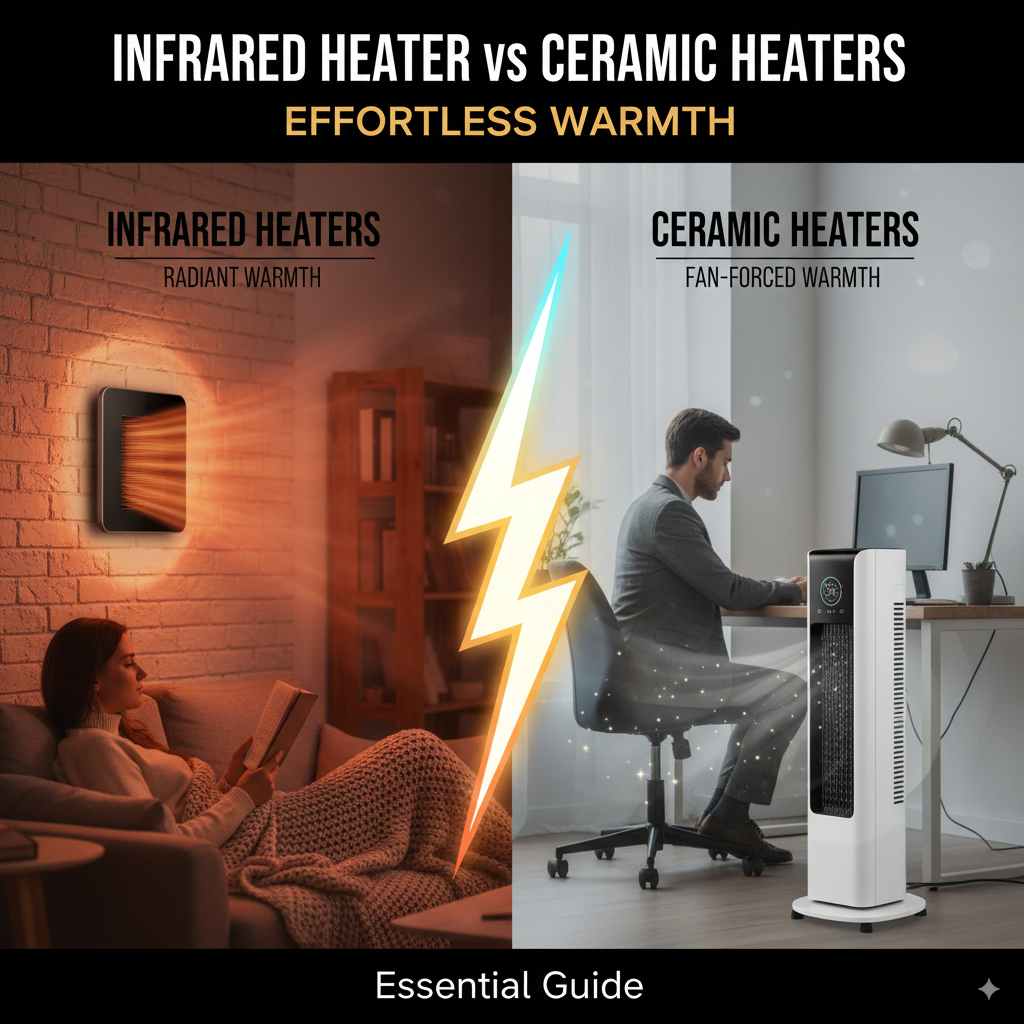
Choosing between an infrared heater and a ceramic heater is simple! Both offer efficient, cozy warmth, but infrared heaters warm objects and people directly, creating instant, consistent heat while ceramic heaters warm the air. For quick, targeted warmth, infrared is often preferred. For general room heating, ceramic is a great choice. We’ll break down which is best for your needs, making your home perfectly comfortable.
Finding the right way to keep your home toasty warm can feel tricky. You want comfort without a sky-high energy bill or complicated setup. Two popular choices for home heating are infrared heaters and ceramic heaters. They might seem similar, but they work quite differently! This can make it hard to know which one is the perfect fit for your cozy space. Don’t worry, I’m here to help! We’ll walk through everything you need to know, step-by-step, so you can choose the heater that brings effortless warmth to your home. You’ll feel confident and in control of your comfort in no time.
Understanding How They Work: Infrared vs. Ceramic
It’s like comparing sunshine to a gentle breeze – both are warm, but they feel different and achieve warmth in their own unique way. Let’s explore what makes each of these heaters special.
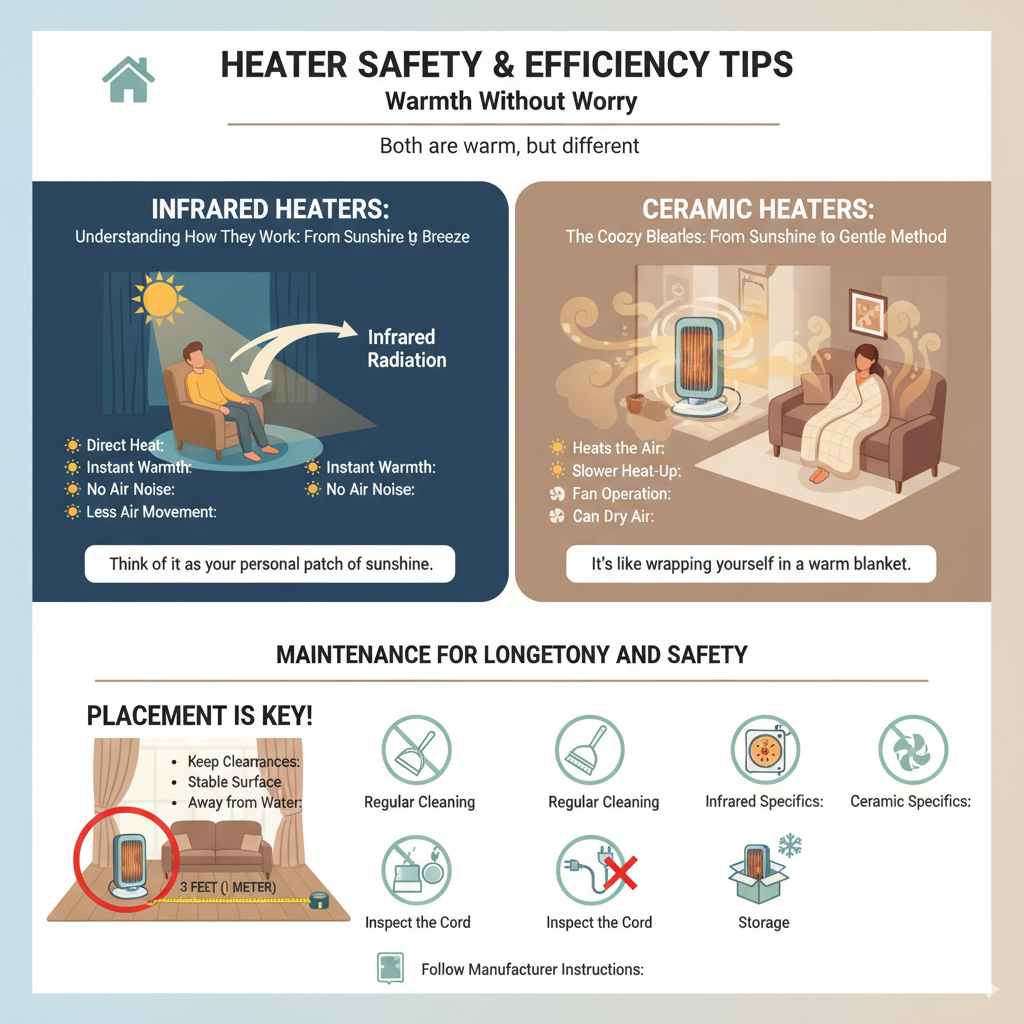
Infrared Heaters: The Sunny Approach
Imagine standing in the sun. You feel its warmth directly on your skin, even if the air around you is cool. That’s exactly how an infrared heater works! Instead of heating the air, infrared heaters emit infrared radiation, a type of light that our bodies and objects absorb directly. This means you feel warm almost instantly, without waiting for the entire room to heat up.
- Direct Heat: Warms people and objects in its path.
- Instant Warmth: You feel the heat as soon as you turn it on.
- No Air Noise: They operate silently, without fans blowing air around.
- Less Air Movement: Good for people with allergies, as they don’t stir up dust.
Think of it as your personal patch of sunshine, perfect for keeping you cozy even if you’re sitting in a larger, cooler space.
Ceramic Heaters: The Cozy Blanket Method
Ceramic heaters work more like a traditional heater. They have a heating element typically made of ceramic that gets hot. A fan then blows air across this hot element, warming the air and circulating it throughout the room. It’s like wrapping yourself in a warm blanket; the air around you gets heated and then keeps you warm.
- Heats the Air: Warms the entire room by circulating heated air.
- Slower Heat-Up: Takes a bit longer to feel the full effect as the air needs to warm up.
- Fan Operation: Uses a fan, so you might hear a gentle whirring sound.
- Can Dry Air: The fan can sometimes make the air feel a bit drier.
These are great for evenly warming an entire room, making sure every corner feels snug and comfortable.
Key Differences at a Glance
To help you see the main distinctions clearly, let’s put it into a table. This makes it easy to compare their features side-by-side.
| Feature | Infrared Heater | Ceramic Heater |
|---|---|---|
| How it Heats | Radiant heat (like the sun) | Convection (heats air, then circulates) |
| Speed of Warmth | Instant | Gradual |
| Heating Area | Directly warms objects and people in its path | Warms the entire room’s air |
| Fan? | Typically no fan | Yes, uses a fan |
| Noise Level | Silent | Gentle fan noise |
| Best For | Spot heating, quick warmth, drafty areas | Even room heating, general comfort |
| Energy Use | Efficient for targeted areas | Efficient for room heating |
| Air Quality Impact | Doesn’t stir dust or allergens | Can stir dust if not cleaned regularly |
Infrared Heater vs Ceramic Heaters: Which is Right for You?
The choice really depends on what you need the heater to do. Think about your home, your schedule, and what will make you feel most comfortable.
When to Choose an Infrared Heater:
Infrared heaters are fantastic for specific situations where you need immediate, targeted warmth. They are efficient because they don’t waste energy heating empty air.
- You want instant heat: If you step into a cold room and want to feel warm right away, an infrared heater is your best friend.
- You’re heating a specific spot: Perfect for warming you up while you’re sitting at your desk, reading in your favorite chair, or even on a covered patio.
- You have allergies or sensitivities: Since they don’t use fans to blow air, they don’t circulate dust, pollen, or pet dander, making the air cleaner to breathe.
- You have drafty areas: An infrared heater can provide a comforting warmth in a drafty room without having to run a large central heating system.
- You want quiet operation: If noise is a concern, an infrared heater is completely silent.
Consider an infrared heater if you’re looking for efficient, personal warmth that makes you feel comfortable right away.
When to Choose a Ceramic Heater:
Ceramic heaters are the workhorses for general room heating. They are great for maintaining a comfortable temperature throughout an entire space.
- You want to heat a whole room: If your goal is to make a bedroom, living room, or office comfortable from wall to wall, a ceramic heater is excellent.
- You need consistent, general warmth: They are designed to raise the temperature of the air in a room, providing an even and steady heat.
- You don’t mind a slight fan noise: The fan helps distribute the heat, but it’s usually a soft sound, not disruptive.
- You want a simple, effective solution: Ceramic heaters are straightforward to use and a popular choice for a reason – they get the job done reliably.
- You want a portable option: Many ceramic heaters are compact and lightweight, making them easy to move from room to room as needed.
If your priority is to warm up an entire space evenly and consistently, a ceramic heater is a solid choice.
Features to Look For in Both Types
No matter which type you lean towards, there are always smart features that can make your heater even better, safer, and more enjoyable to use.
Safety First!
Safety is always top priority for home heating. Look for these features:
- Overheat Protection: This is a crucial safety feature that automatically shuts off the heater if it gets too hot, preventing accidents.
- Tip-Over Switch: If the heater is accidentally knocked over, this switch will turn it off immediately, reducing fire hazards.
- Cool-Touch Exterior: Keeps the outer casing from getting dangerously hot, which is especially important if you have children or pets.
- Durable Construction: A sturdy build means the heater is less likely to break or become a hazard.
Always check that any heater you buy meets safety standards. You can find more information on home heating safety from resources like the National Fire Protection Association (NFPA).
Convenience and Efficiency Features
Beyond safety, these features enhance your experience:
- Adjustable Thermostat: Allows you to set your desired temperature and helps the heater maintain it efficiently, saving energy.
- Multiple Heat Settings: Gives you flexibility to choose the right level of warmth for different situations and weather conditions.
- Timer Function: Lets you set the heater to turn on or off at specific times, so you can have warmth when you need it and save energy when you don’t.
- Energy-Saving Modes (Eco Mode): These settings optimize performance to use less electricity while still keeping you comfortable.
- Remote Control: For ultimate convenience, a remote lets you adjust settings without getting up.
- Air Filters (more common in ceramic): Some ceramic models have filters to help clean the air as it heats. Regular cleaning is key for these.
Comparing Costs: Purchase Price and Running Costs
When considering a new heater, the upfront cost and how much it costs to run are important factors. Generally, the initial cost and running expenses can vary.
| Factor | Infrared Heater | Ceramic Heater |
|---|---|---|
| Initial Purchase Price | Can range from moderate to high, depending on size and features. Some basic models are quite affordable. | Often more affordable, especially for smaller, portable units. High-end models can be pricier. |
| Running Costs (Energy Efficiency) | Very efficient for spot heating. Uses less energy when heating only a specific area or person. | Efficient for heating entire rooms. Energy use depends on room size and temperature setting. Can be more efficient than central heating for a single room. |
| Usage Impact | Lower cost if used for personal warmth or short bursts. | Lower cost if used to heat a specific room that would otherwise be uncomfortably cool. |
For example, if you only need to warm yourself while working from home, an infrared heater might use less electricity overall than a ceramic heater running to warm the entire office. However, if you need to make a chilly living room consistently comfortable for a family gathering, a ceramic heater might be more practical and efficient for that scenario.
When thinking about energy efficiency, both types can be excellent choices when used correctly. The U.S. Department of Energy recommends using zone heating (heating only the areas you are using) as a way to save energy. Both infrared and ceramic heaters can be effective zone heaters depending on your specific needs.
Tips for Using Your Heater Safely and Effectively
Getting the most out of your new heater means using it wisely. Here are some easy tips to keep your home warm and safe.
Placement is Key!
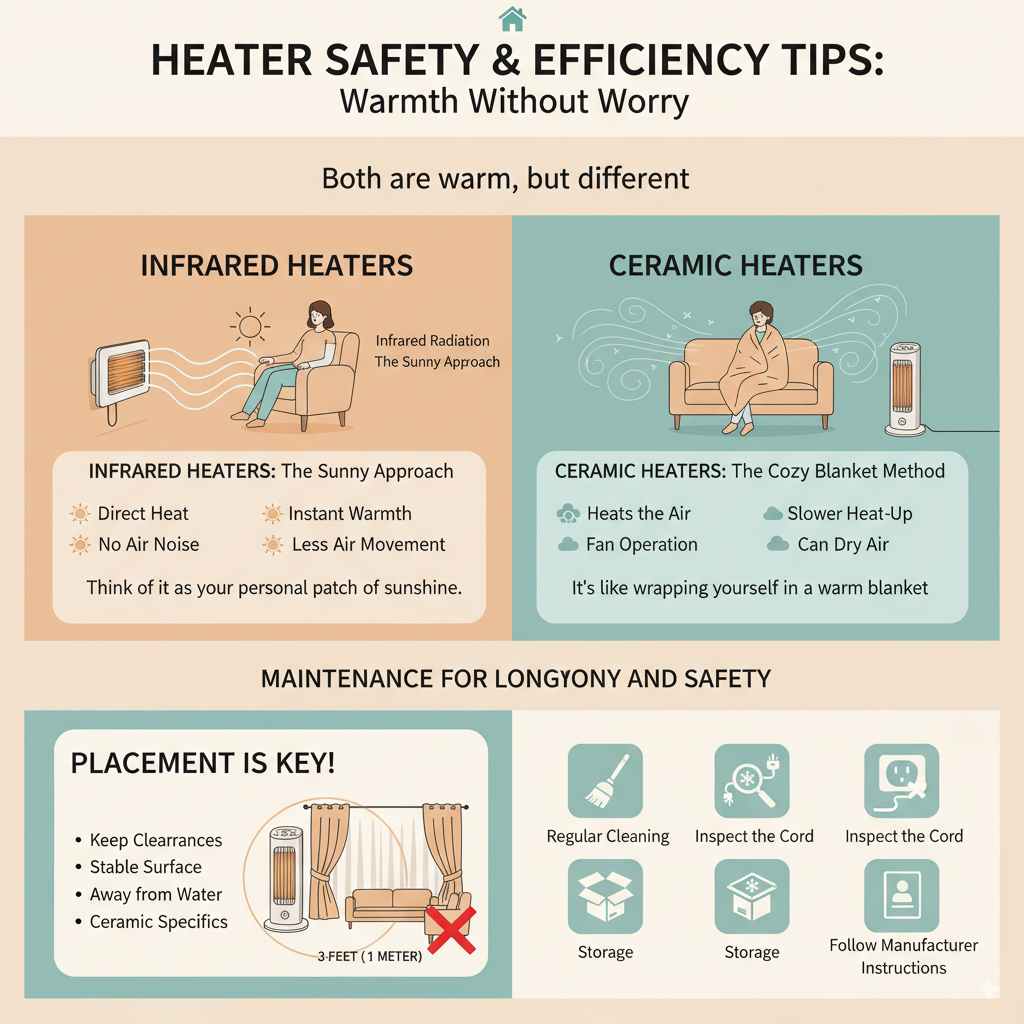
Where you put your heater makes a big difference. Always follow the manufacturer’s instructions regarding clearance distances.
- Keep Clearances: Ensure there is plenty of space around the heater, away from curtains, furniture, bedding, and other flammable materials. A good rule of thumb is at least 3 feet (about 1 meter) of clearance.
- Stable Surface: Place your heater on a flat, stable, and dry surface. Avoid placing it on rugs or carpets that can block vents or pose a fire risk.
- Away from Water: Never use heaters in bathrooms or other damp areas unless they are specifically designed for such use.
- Infrared Specifics: For infrared heaters, aim them towards the area or people you want to warm. They heat a direct line of sight.
- Ceramic Specifics: For ceramic heaters, place them in the room you want to heat, ideally in a central location to help the fan distribute air evenly.
Maintenance for Longevity and Safety
A little bit of care goes a long way in keeping your heater working perfectly and safely.
- Regular Cleaning: Dust can build up on heating elements and fans, reducing efficiency and posing a fire risk. Unplug your heater and gently dust it with a soft brush or vacuum cleaner attachment. For ceramic heaters, ensure the air intake and output vents are clear.
- Inspect the Cord: Periodically check the power cord for any signs of damage, fraying, or wear. If you find any, stop using the heater immediately and have it repaired or replaced.
- Storage: When not in use, store your heater in a cool, dry place, preferably in its original packaging or a protective cover.
- Follow Manufacturer Instructions: Always refer to the user manual for specific cleaning and maintenance guidelines for your model.
Common Questions Answered: Your Heater FAQs
What is the safest type of portable heater?
Both infrared and ceramic heaters can be very safe when used correctly. Look for models with an overheat protection system and a tip-over switch. Always ensure proper placement away from flammable materials.
Can I leave a heater on all night?
It’s generally not recommended to leave any portable heater running unattended, especially overnight. While modern heaters have safety features, it’s always best to turn them off when you go to sleep or leave the room. Using a programmable timer can be a safer way to ensure your space is warm when you need it.
Which heater is more energy-efficient, infrared or ceramic?
For heating a specific area or person, infrared heaters are often more energy-efficient because they heat objects directly, not the air. For heating an entire room evenly, ceramic heaters can be very efficient, especially compared to heating a whole house when only one room is occupied.
Do infrared heaters dry out the air?
No, infrared heaters typically do not dry out the air because they don’t use fans to circulate air. They work by radiation, which doesn’t affect humidity levels like fan-forced heaters can.
Can ceramic heaters be used in bathrooms?
You should only use a heater in a bathroom if it is specifically designed and rated as safe for damp environments (often indicated by an IP rating like IPX4). Standard ceramic heaters are not waterproof and can be a safety hazard if exposed to moisture.
How close can I safely stand to an infrared heater?
Infrared heaters provide a comfortable warmth at a distance. You can typically stand or sit within a few feet of the heater and feel its effects. The heat is more intense the closer you are, but the surfaces that emit the heat should not be excessively hot to the touch. Always refer to your specific model’s manual for exact guidelines.
What’s the best way to clean a ceramic heater?
First, unplug the heater and let it cool completely. Use a soft, dry cloth or a vacuum cleaner with a brush attachment to gently remove dust from the exterior and vents. For stubborn dust inside the vents, you can use compressed air. Never use water or cleaning fluids, as this can damage the internal components.
Making Your Choice for Effortless Warmth
Deciding between an infrared and a ceramic heater doesn’t have to be complicated. Think about your heating needs: do you want to feel a cozy warmth instantly in a specific spot, or do you need to heat an entire room steadily?
If instant, targeted warmth is your goal, or if you’re sensitive to air quality, an infrared heater is likely your perfect match. It’s like bringing the sun’s comforting rays indoors, heating you and your surroundings directly and quietly. They’re excellent for personal comfort zones and spaces where you don’t need to heat every inch of air.
If your aim is to make a whole room feel evenly warm and comfortable, a ceramic heater is a fantastic choice. They’re the reliable workhorses that gently circulate warm air, creating a consistent and welcoming environment. They’re ideal for living areas, bedrooms, or any space where you want to ensure a uniform temperature.
Remember to always prioritize safety by choosing models with good safety features like overheat protection and tip-over switches, and by following proper placement and maintenance guidelines. With the right heater, you can easily achieve that effortless, cozy warmth that makes your house truly feel like a home, no matter the season.