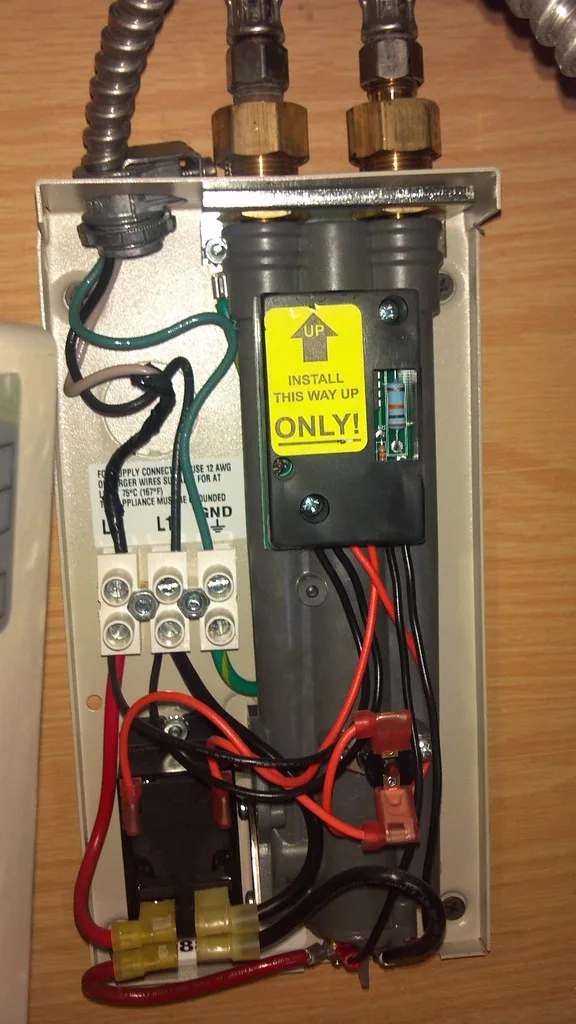
No hot water from water heater: first checks for homeowners
Start with the heater type: if an electric tank’s breaker has tripped or a gas heater’s shutoff or pilot is off, fix that first; if both seem normal and there’s still no hot water after a while, the issue may be inside the unit. I have seen this start with a simple trip and end in a reset loop, a failed part, or a service call that should have begun with a basic check.
What you’ll need
- Flashlight
- Non-contact voltage tester
- Continuity tester or multimeter with continuity and resistance settings
- Screwdriver for access panels
- Gloves and eye protection
- Replacement heating element, only if testing points there
According to DIY Water Heater Testing and Repair — Replacement heating elements are inexpensive, about $8 to $20.
Start by separating the symptom
No hot water at all points to a power, ignition, or control fault. Hot water that runs out fast points more often to a heating element, thermostat, heavy mineral scale in the tank, or a broken dip tube. Treat those as different jobs, because the first checks and the stop point are not the same.
- Decide whether the problem is total loss of heat or weak recovery after a short run.
- Identify the heater as electric or gas before touching any covers.
- Leave electrical panels closed until power is verified off with a non-contact voltage tester.
- Use the symptom to choose the next check, not the other way around.
What should I check first when my water heater stops heating?

Check the heater type first, then the fastest safe fix for that type. On electric units, start with the breaker and the high-temperature cutoff reset. On gas units, check the pilot light and gas supply status before assuming the tank has failed.
Electric units: start at the breaker and cutoff
Most residential electric water heaters have two heating elements, one near the top and one near the bottom of the tank. The elements are controlled by separate thermostats, and the upper and lower heating elements never come on at the same time. A tripped breaker or cutoff can stop the tank cold.
- Check the dedicated breaker in the electrical panel for the water heater.
- Reset it once if it is tripped, then wait for recovery.
- Find the high-temperature cutoff just above the upper thermostat and press the reset button only if the heater is off and the panel is safe to open.
- If the breaker trips again, stop there and call a pro.
Gas units: check the pilot light first
Gas water heaters may fail heating if the pilot light goes out. If the pilot is out, follow the manufacturer lighting steps and stop if you smell gas, hear hissing, or the burner will not stay lit. A gas control or venting fault needs a technician.
- Look through the sight glass or burner access for a pilot flame.
- Check the gas shutoff valve position.
- Relight only by the unit instructions.
- Call for service if the pilot will not hold.
Is your water heater electric or gas?
An electric water heater usually has a power supply panel and one or more access covers over the elements and thermostats. A gas heater has a burner compartment, a flue, and a pilot assembly. That split matters because the safest first checks are different for each type.
How to tell quickly
Look for a breaker-fed electrical supply and two access panels on an electric tank. Look for a burner compartment and pilot access on a gas tank. If both are present, stop and confirm the model tag, because some homes have a hybrid setup or a separate power supply for controls.
- Check for access covers on the tank body.
- Look for a gas line and burner compartment.
- Look for a dedicated breaker if the unit is electric.
- Use that result to choose the next section.
Why is there no hot water from my water heater?
The most common causes depend on heater type. Electric tanks can lose heat from a tripped breaker, a tripped high-temperature cutoff, a failed thermostat, or a burned-out heating element. Gas tanks can lose heat when the pilot goes out or the burner control fails.
Quick symptom-to-cause map
| Symptom | Heater type | Safest first check | Likely cause | Stop DIY and call a pro when |
|---|---|---|---|---|
| No hot water at all | Electric | Breaker, then high-temperature cutoff | Power loss, cutoff trip, failed element, bad thermostat | Breaker trips again or panel testing shows power issues |
| No hot water at all | Gas | Pilot light and gas shutoff | Out pilot, ignition fault, gas control issue | Pilot will not stay lit or gas odor is present |
| Lukewarm water or fast cool-down | Electric | Thermostat setting, then element testing | One element failed, thermostat fault, sediment buildup | Testing requires cover removal and power verification |
| Lukewarm water or fast cool-down | Any tank | Inspect age and recovery pattern | Heavy mineral scale in the tank, broken dip tube | Tank is leaking, corroded, or near end of life |
| Repeated breaker trips | Electric | Stop resetting | Shorted element or wiring fault | Immediate repeat trip or scorch marks appear |
| Repeated pilot outages | Gas | Check draft and gas supply | Thermocouple, gas control, venting issue | Pilot fails repeatedly after a correct relight |
How do I tell if my electric water heater element is bad?
A bad heating element can show up as no hot water, lukewarm water, or hot water that runs out early. A burned-out heating element can stop the water from heating altogether. Testing a burned-out element requires a continuity tester, and power should be confirmed off first with a non-contact voltage tester.
Element failure signs and basic test order
The replacement part itself is inexpensive, about $8 to $20, but diagnosis matters before buying anything. If the breaker and cutoff are fine, a failed thermostat can look like an element problem. If the element reads open or shorted, replacement is usually the next step.
- Turn off power at the breaker.
- Verify the panel is dead with a non-contact voltage tester.
- Remove the access cover only after that check.
- Test the element for continuity and for short to ground.
- Replace the element only if the test supports it.
What does the reset button on a water heater do?
The reset button on the high-temperature cutoff restores heat after the heater has overheated. The cutoff sits just above the upper thermostat, and when it trips it can stop the tank from heating. If it trips once and resets, that is useful; if it keeps tripping, there is a deeper fault.
When the reset helps and when it does not
A one-time trip can come from a control fault or brief overheating. Repeated trips point to a bad thermostat, element, wiring fault, or poor tank condition. Do not keep pressing it without finding why it opened.
- Shut off power at the breaker.
- Open the access panel only after a voltage check.
- Press the reset button once.
- Restore power and watch the heater.
- Call for service if it trips again.
What else causes cold water if the heater is on?
If the heater is powered and still gives cold or weak water, the fault may be inside the tank rather than at the controls. Heavy mineral scale in the tank can slow heat transfer and make recovery drag. A broken dip tube can mix incoming cold water with heated water and make the taps feel colder than they should.
Common hidden causes
Thermostats can fail and leave one element off. On electric tanks, the upper and lower heating elements are controlled separately, so one failed part can still leave some heat but poor recovery. That is why lukewarm water is a different symptom from no heat at all.
- Check whether the water warms briefly and then goes cold.
- Look for age, rust, or noisy heating that suggests sediment.
- Inspect for a dip tube issue if the hot water fails fast.
- Stop if the tank shows corrosion or active leakage.
Should I replace a thermostat or heating element first?
Replace neither until the basic checks point to one part. On electric heaters, a bad thermostat can stop heat and mimic an element failure, while a burned-out element can do the same. If testing is needed, use a continuity tester for the element; if the thermostat is suspected and access is already open, replacement may be cheaper than chasing a marginal part.
Simple decision rule
If the breaker trips or the cutoff trips, fix that fault first. If the heater has power but one section stays cold, test the element. If the element tests fine and the temperature still will not respond, the thermostat moves higher on the list.
- Check breaker and cutoff first.
- Test the element if power is present.
- Replace the thermostat if the element is good and the control still fails.
- Stop if wiring damage is visible.
Common mistakes and when to call a plumber
The biggest mistake is resetting a breaker or cutoff without finding why it tripped. Another is opening live electrical covers. On gas heaters, skipping the pilot check wastes time and can hide a burner or gas control fault. Repeated trips, leaks, corrosion, or a heater near the end of its life are service calls, not more resets.
Call a plumber or technician if
- The breaker trips again after one reset.
- The cutoff keeps tripping.
- The pilot will not stay lit.
- You see corrosion, moisture, or a leaking tank.
- The heater is old enough that repair no longer makes sense.
If that didn’t work, try this next
If the heater still will not make hot water after the safe checks, move from external controls to internal parts. On electric tanks, that means testing the element and thermostat with power off. On gas tanks, that means a service check for ignition, venting, or control failure.
- Confirm the heater type again.
- Recheck the breaker or pilot once.
- Test the likely internal part only after power is off.
- Call a technician if the failure repeats.
How long do water heaters usually last?
A heater often lasts around 10 to 15 years. Age alone does not force replacement, but repeated trips, corrosion, weak recovery, and leak signs move the decision toward replacement. Past that range, repairing one part can buy time, yet it is often a short one.
Frequently asked questions
Can a tripped breaker cause no hot water?
Yes. On electric units, a tripped breaker can cut off heat. Reset it once, then watch what happens. If it trips again, do not keep resetting it, because the breaker may be responding to a shorted element, wiring fault, or another electrical problem.