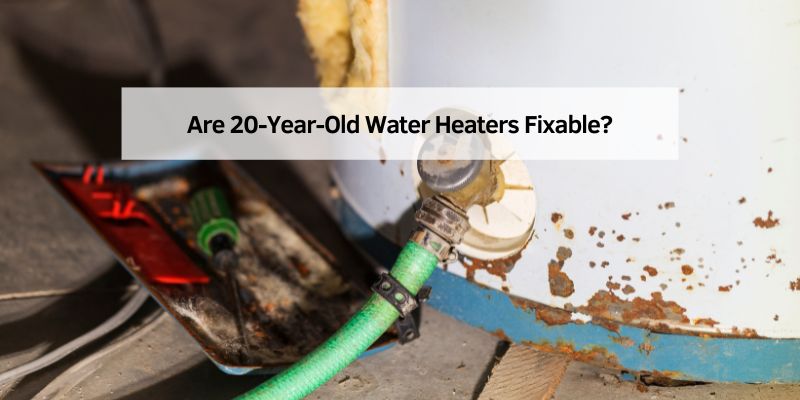
Are 20-Year-Old Water Heaters Fixable?
Hey there! If you’re wondering whether your 20-year-old water heater is fixable, you’re not alone. I’ve been in your shoes, staring at an ancient water heater in my basement, wondering if it’s worth the effort to repair or if it’s time to let it go. It’s a question that pops up for a lot of homeowners, especially when that trusty old tank starts acting up—leaking, making weird noises, or just not heating like it used to. I’ve spent time digging into this topic, talking to plumbers, and even tackling a few water heater issues myself. So, let’s dive in and explore whether a 20-year-old water heater can be fixed, what you should consider, and how to make the best decision for your home.
Water heaters are the unsung heroes of our homes. They quietly provide hot water for showers, dishwashing, and laundry, but when they hit the 20-year mark, they often start showing their age. The big question is: can you nurse them back to health, or is it time to say goodbye? In this article, I’ll walk you through the ins and outs of repairing an old water heater, the factors that affect its fixability, and some practical tips to help you decide what’s best. Let’s get started.
Understanding the Lifespan of a Water Heater
First things first, let’s talk about how long water heaters are supposed to last. Most tank-style water heaters, which are the most common in American homes, have a lifespan of about 8 to 12 years. That’s the average, but with good maintenance, some can stretch to 15 or even 20 years. I’ve seen it myself—my neighbor had a water heater chugging along for 18 years before it finally gave out. But 20 years? That’s pushing it.
The lifespan depends on a few things: the quality of the unit, how hard it works, the water quality in your area, and how well you’ve maintained it. Hard water, full of minerals like calcium and magnesium, can build up sediment inside the tank, making it work harder and wear out faster. If you’ve been diligent about flushing the tank annually and checking the anode rod (more on that later), your water heater might still have some life left. But at 20 years, it’s like a car with 300,000 miles—it might still run, but you’re probably on borrowed time.
Common Problems with 20-Year-Old Water Heaters
When a water heater hits the 20-year mark, it’s not uncommon for issues to crop up. I’ve dealt with a few of these myself, and they’re usually the reason people start wondering if their unit is fixable. Here are the most common problems you’ll see:
- Leaking Tank: This is a big one. If your water heater is leaking from the tank itself, it’s usually a death sentence. The tank is the heart of the unit, and once it starts corroding or cracking, there’s no patching it up for long. I learned this the hard way when my old unit started dripping from the bottom. A temporary fix might buy you a week, but replacement is usually the only real solution.
- No Hot Water: If your showers are suddenly ice-cold, the heating element (in electric models) or the burner assembly (in gas models) might be the culprit. These parts can often be replaced, which is good news. I’ve swapped out a heating element before, and it’s not too bad if you’re handy with tools.
- Strange Noises: Ever hear banging or rumbling from your water heater? That’s usually sediment buildup. Over 20 years, minerals settle at the bottom of the tank, hardening into a layer that makes the heater less efficient and noisier. Flushing the tank can help, but if the buildup is severe, it might be too late.
- Rusty Water: If your hot water looks brownish or smells metallic, the tank or anode rod might be corroding. This happened in my old house, and replacing the anode rod fixed it for a while. But at 20 years, rust often means the tank itself is failing.
- Low Hot Water Pressure: This could be due to sediment clogging the pipes or a failing pressure relief valve. These are fixable, but you’ll need to weigh the cost against the age of the unit.

Can You Actually Fix a 20-Year-Old Water Heater?
Now, let’s get to the heart of the matter: is it fixable? The short answer is, it depends. Some issues, like a faulty thermostat, heating element, or pressure relief valve, are relatively easy and inexpensive to repair. I’ve replaced a thermostat on an old electric water heater for about $30, and it was back to working like a charm. But other problems, like a leaking tank or severe corrosion, are dealbreakers.
Here’s a quick breakdown of what’s fixable and what’s not:
| Issue | Fixable? | Approximate Cost |
|---|---|---|
| Leaking Tank | No (usually requires replacement) | $800–$2,500 (new unit) |
| Faulty Heating Element | Yes | $20–$50 + labor |
| Broken Thermostat | Yes | $20–$40 + labor |
| Sediment Buildup | Sometimes (flushing may help) | $100–$300 (professional flush) |
| Corroded Anode Rod | Yes | $20–$50 + labor |
| Faulty Pressure Relief Valve | Yes | $20–$100 + labor |
| Burner Assembly (Gas) | Yes | $100–$300 + labor |
If the repair is minor, like swapping out a heating element or valve, it might be worth doing, especially if you’re not ready to shell out for a new unit. But if the tank is leaking or heavily corroded, no amount of patching will make it reliable again. I made the mistake of trying to fix a leaky tank once, and let me tell you, it was a waste of time and money. The leak came back within a month.
Factors to Consider Before Repairing
Before you grab your toolbox or call a plumber, there are a few things to think about. I’ve been through this decision-making process myself, and it’s not just about whether the heater can be fixed—it’s about whether it should be.
- Age vs. Cost: At 20 years, your water heater is well past its prime. Even if you fix one issue, another is likely to pop up soon. I once spent $200 fixing a thermostat, only to have the tank start leaking six months later. Compare the repair cost to the price of a new unit, which typically runs $800 to $2,500, including installation.
- Efficiency: Older water heaters are less energy-efficient than modern ones. Newer models have better insulation and technology, which can save you 10–20% on your energy bills. My old water heater was costing me an extra $50 a month compared to the new one I eventually installed.
- Safety: A failing water heater can be dangerous. Gas models can develop gas leaks, and electric ones can cause electrical issues if wiring is old. I’ve heard horror stories about water heaters flooding basements or even causing fires. If your unit is showing serious issues, safety should be your top priority.
- Warranty: Most water heaters come with a 6- to 12-year warranty. If yours is 20 years old, it’s long out of warranty, so you’ll be footing the bill for any repairs. New units come with fresh warranties, which can give you peace of mind.
- Water Quality: If you live in an area with hard water, like I did in my old house, your water heater has likely taken a beating. Mineral buildup can make repairs less effective, as the damage is already done.
DIY vs. Professional Repairs
If you’re handy like I am, you might be tempted to fix your water heater yourself. Some repairs, like replacing a heating element or flushing the tank, are doable with basic tools and a bit of know-how. I’ve watched a few YouTube tutorials and managed to replace a thermostat in about an hour. But there are risks.
- DIY Pros: It’s cheaper (often just the cost of parts), and you get the satisfaction of fixing it yourself. For example, a new heating element costs about $20–$50, compared to $150–$300 if you hire a pro.
- DIY Cons: You need to know what you’re doing. Draining a tank, working with electrical components, or handling gas lines can be dangerous if you’re not careful. I once forgot to turn off the power before working on my heater, and let’s just say I learned my lesson. Plus, if you mess up, you could void any remaining warranty or cause more damage.
- Professional Pros: A licensed plumber knows exactly what’s wrong and can fix it safely. They also have the tools and experience to handle tricky issues, like a stubborn anode rod or a complex gas burner problem.
- Professional Cons: It’s pricier. Labor costs can range from $50 to $150 per hour, depending on where you live. In my area, a simple repair like replacing a valve cost me $200 with a plumber.
If you’re not confident in your skills or the repair involves gas lines or major electrical work, call a professional. It’s worth the cost to avoid a disaster.
Maintenance Tips to Extend the Life of Your Water Heater
Even if your water heater is 20 years old, regular maintenance can keep it running a bit longer. I wish I’d known this earlier, as it might have saved me some headaches. Here are some tips I’ve picked up:
- Flush the Tank Annually: Draining the tank once a year removes sediment, which improves efficiency and reduces strain. It’s a simple process—turn off the power or gas, attach a hose to the drain valve, and let it flow. I do this every fall, and it’s made a big difference.
- Check the Anode Rod: The anode rod is a sacrificial piece of metal that prevents the tank from rusting. Check it every 2–3 years and replace it if it’s worn down. I’ve replaced mine twice, and it cost less than $50 each time.
- Insulate the Tank and Pipes: Adding an insulation blanket to the tank and wrapping hot water pipes can reduce heat loss, making the unit more efficient. I added insulation to my old heater, and it saved me about $10 a month on my bill.
- Test the Pressure Relief Valve: This valve prevents the tank from overpressurizing. Lift the lever annually to make sure it’s working. If it’s stuck or leaking, replace it.
These steps won’t make your 20-year-old water heater last forever, but they can buy you some time while you plan for a replacement.
When to Replace Instead of Repair
Sometimes, repairing just isn’t worth it. I learned this the hard way after sinking money into temporary fixes that didn’t last. Here are some signs it’s time to replace your water heater:
- Frequent Repairs: If you’re calling a plumber every few months, the costs add up. A new unit might be cheaper in the long run.
- Major Leaks: As I mentioned earlier, a leaking tank is a dealbreaker. Once the tank is compromised, no repair will make it reliable.
- Inefficiency: If your energy bills are creeping up, an old, inefficient water heater could be the culprit. New models are much more efficient, and the savings can offset the cost over time.
- Age: At 20 years, your water heater is living on borrowed time. Even if you fix it now, it’s unlikely to last much longer.
When I finally replaced my 18-year-old water heater, I chose a high-efficiency tankless model. It was a bigger upfront cost, but my energy bills dropped, and I haven’t had a single issue in three years.
Choosing a New Water Heater
If you decide to replace your water heater, you’ve got options. I spent a lot of time researching this when I upgraded, and here’s what I learned:
- Tank vs. Tankless: Traditional tank water heaters are cheaper upfront ($500–$1,500) but less efficient. Tankless models cost more ($1,000–$3,000) but save energy and provide endless hot water. I went tankless and love it, but it’s not for everyone.
- Gas vs. Electric: Gas heaters are faster and cheaper to operate if you have natural gas, but they require venting. Electric models are easier to install but cost more to run. Check what’s available in your area.
- Size: Make sure the new unit meets your household’s needs. A family of four typically needs a 40–50-gallon tank. I undersized my first replacement and regretted it when we ran out of hot water mid-shower.
- Energy Efficiency: Look for Energy Star-rated models. They cost a bit more but save you money over time.
Before buying, check for rebates or tax credits. I got a $300 rebate from my utility company, which helped offset the cost.

Conclusion
Deciding whether to fix a 20-year-old water heater is a bit like deciding whether to keep an old car running. Sometimes, a small repair can keep it going, but at that age, you’re often better off investing in a new one. I’ve been there, weighing the pros and cons, and I know it’s not an easy choice. If the issue is minor, like a faulty thermostat or heating element, a repair might make sense. But if you’re dealing with a leaking tank or constant breakdowns, it’s probably time to say goodbye. Regular maintenance can help, but at 20 years, most water heaters are ready to retire.
Think about your budget, your home’s needs, and how much you’re spending on energy. A new, efficient model could save you money and stress in the long run. Whatever you decide, I hope this guide helps you make an informed choice. If you’re still on the fence, call a trusted plumber for a professional opinion—they’ll give you a clear picture of what’s possible.
Frequently Asked Questions
Is it safe to keep using a 20-year-old water heater?
It depends on its condition. If it’s leaking, making strange noises, or showing signs of corrosion, it could be unsafe. Old gas heaters can develop leaks, and electric ones might have faulty wiring. I’d get it inspected by a pro to be sure.
How much does it cost to repair a 20-year-old water heater?
Repairs can range from $20 for a DIY heating element replacement to $300 or more for professional work on a gas burner or major component. If the tank is leaking, you’re looking at $800–$2,500 for a full replacement.
Can I fix a leaking water heater myself?
If the leak is from a valve or pipe, you might be able to fix it with some plumbing skills. But a leaking tank is usually unfixable. I tried patching a leak once, and it didn’t last. Call a plumber if you’re unsure.
How do I know if my water heater is too old?
If it’s over 15 years old, leaking, or needing frequent repairs, it’s likely too old. Check for rust, sediment buildup, or rising energy bills. My 18-year-old unit was costing me a fortune before I replaced it.
Are tankless water heaters worth it?
Tankless heaters are more expensive upfront but save energy and provide endless hot water. I switched to one and love it, but they’re not ideal for every home. Consider your hot water needs and budget before deciding.