Are Portable Gas Heaters Safe Indoors?
Yes—only portable gas heaters specifically listed for indoor use can be used indoors, and if the label does not say that, the answer is no. Used the wrong way, they can produce carbon monoxide, use up oxygen, and create fire or burn hazards. This guide explains which heaters are indoor-rated, when indoor use is unsafe, and which warning signs mean you should shut the heater off immediately.
Check the label before bringing it indoors
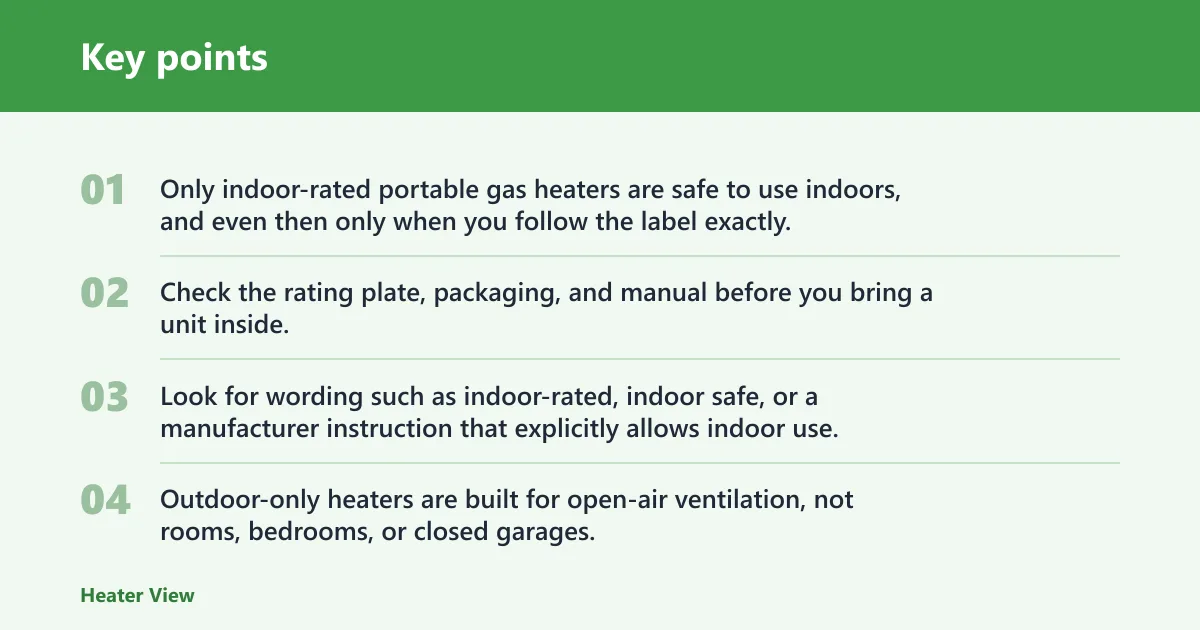


Only indoor-rated portable gas heaters are safe to use indoors, and even then only when you follow the label exactly. Outdoor-rated units are not safe inside. The heater class matters, because indoor-rated propane heaters are built with safety features for enclosed spaces, while outdoor-only models are not.
Check the rating plate, packaging, and manual before you bring a unit inside. If the label does not say indoor use, do not assume it is acceptable just because it is small, portable, or sold with a hose and cylinder.
What the label must say
Look for wording such as indoor-rated, indoor safe, or a manufacturer instruction that explicitly allows indoor use. A portable propane heater meant for indoors may include an oxygen depletion sensor, automatic shut-off, and tip-over protection. Outdoor-only heaters are built for open-air ventilation, not rooms, bedrooms, or closed garages.
Which portable gas heaters are indoor-rated?
Indoor-rated portable gas heaters include certain indoor propane heaters, some ventless propane heaters, and some direct vent propane heaters. These are the classes you should compare first. The right class depends on the room, the fuel source, and the way the heater handles combustion byproducts.
Indoor-rated propane heaters
Indoor propane heaters are designed for indoor use when the manufacturer allows it. They commonly use an oxygen depletion sensor, and many also have automatic shut-off and tip-over protection. They still need proper placement, safe clearances from combustibles, and a working CO detector nearby.
Ventless propane heaters
Ventless propane heaters use the room’s air for combustion. That makes room size and air exchange matter a great deal. You can use them indoors only when the product is rated for indoor use and the space matches the manufacturer’s limits.
Direct vent propane heaters
Direct vent propane heaters release combustion byproducts outside the home. That design is generally safer than ventless units in enclosed spaces because the exhaust path is not into the room. Even so, you still need to follow the product instructions and keep the unit in the right location for the vent system.
What makes a gas heater unsafe indoors?
An outdoor-rated gas heater is unsafe indoors, full stop. A heater can also be unsafe indoors if it burns poorly, loses oxygen-sensing protection, tips over, leaks fuel, or sits too close to fabrics and other combustibles. Safety depends on both the product label and the condition of the unit.
Carbon monoxide risk
Portable gas heaters can produce carbon monoxide, a colorless and odorless combustion gas. The risk rises when combustion is incomplete. Headache, dizziness, nausea, vomiting, and confusion are warning signs that may appear when CO is present, which is why CO detectors matter in rooms using combustion heaters.
Oxygen depletion and shutoff failures
Indoor-rated propane heaters use an oxygen sensor to monitor oxygen levels, and the shut-off switch is connected to that sensor. If the sensor fails or the heater lacks that protection, the risk rises in enclosed spaces. An oxygen depletion sensor helps, but it does not remove the need for ventilation or CO monitoring.
Fire and tip-over hazards
Modern indoor gas heaters may include tip-over protection and automatic shut-off mechanisms. Those features matter because portable units can be knocked over, shifted, or affected by movement in a room. Keep them away from bedding, curtains, paper, clothes, and other items that can catch fire.
Portable gas heater checklist
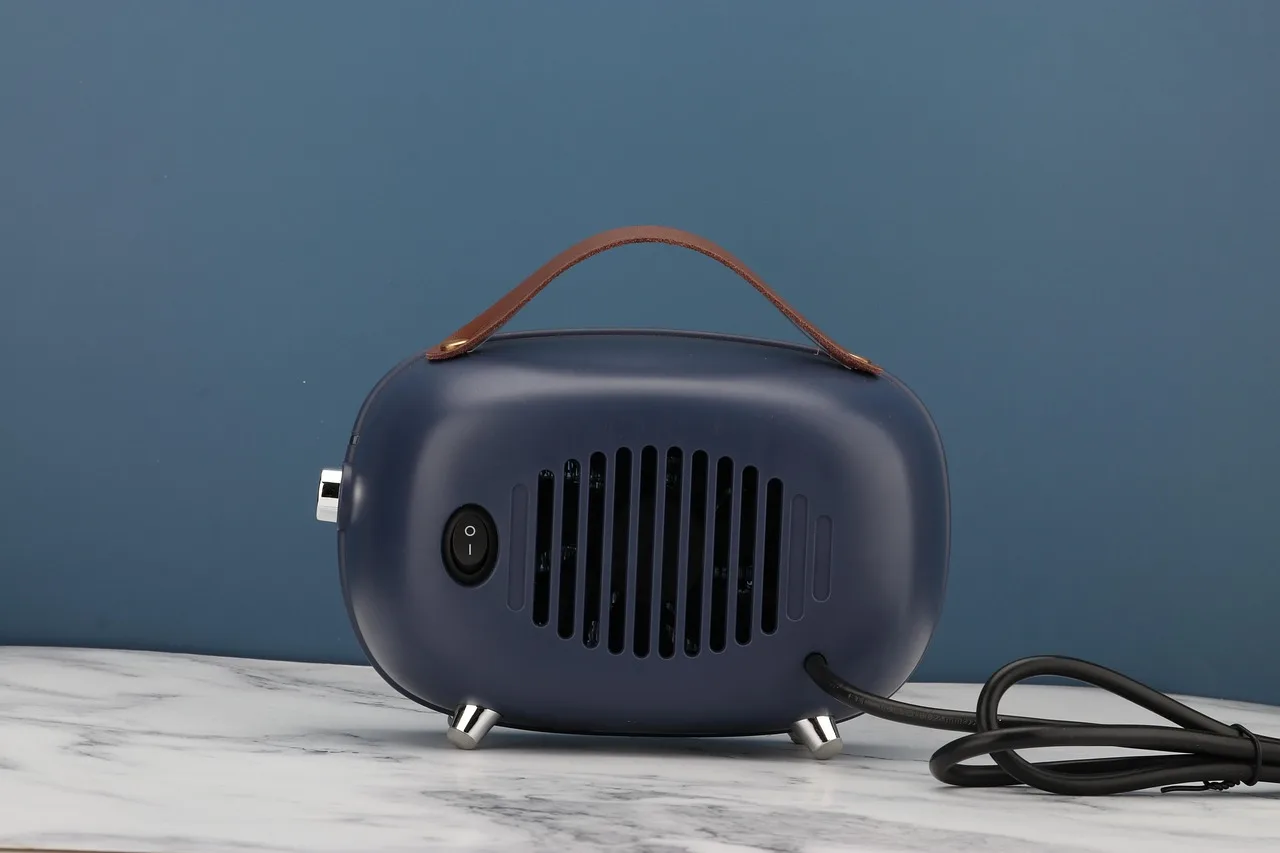
Use this checklist before you run a heater indoors. It separates heater type, required safety features, and the clearest stop-use signs so you can make a fast yes-or-no decision.
| Heater type | Required safety features | Stop-use red flags |
|---|---|---|
| Indoor-rated propane heater | Label says indoor use; oxygen depletion sensor; automatic shut-off; tip-over protection; clear manufacturer instructions | Soot; yellow flame; smell of fuel; headache; dizziness; unexplained shutoffs |
| Ventless propane heater | Indoor rating; oxygen depletion sensor; room-size limits; CO detector nearby; stated ventilation guidance | Soot; stale air; headache; nausea; frequent shutdowns; flame color changes |
| Direct vent propane heater | Approved vent path outdoors; intact exhaust path; indoor use allowed by label; clearances maintained | Exhaust smell indoors; soot; poor ignition; shutdowns; vent blockage or damage |
| Outdoor-only gas heater | None for indoor use; not designed for enclosed spaces | Any indoor use attempt; odor; soot; headache; dizziness; excess moisture; fire risk |
Yes/no decision path
-
Check the label.
If the heater is not listed for indoor use, do not use it indoors. Outdoor-rated propane heaters are not safe to use inside, even with a window open. -
Confirm the safety features.
For indoor-rated portable units, look for oxygen depletion sensing, automatic shut-off, and tip-over protection. If the manual calls for a specific room size or ventilation condition, follow that limit. -
Match the room.
Use the heater only in a room that fits the BTU rating and the manufacturer’s square-foot guidance. Small rooms, bedrooms, and RV spaces need extra caution because the air volume is limited. -
Install CO detection.
Put a CO detector in rooms using combustion heaters, especially near sleeping and living areas. If a detector alarms, shut the heater off at once and leave the area until the source is addressed.
Do portable gas heaters need ventilation?
Yes. Ventilation matters for indoor-rated combustion heaters, and it matters even more for ventless propane heaters because they rely on the room’s air for combustion. Direct vent units move combustion byproducts outside, but they still need the installation and clearance conditions specified by the manufacturer.
Ventless units
Ventless propane heaters need room-size awareness because they draw from indoor air. That means a larger, better-ventilated room is safer than a tight space. If a unit is rated for a room size, treat that number as a limit, not a target to stretch past.
Direct vent units
Direct vent propane heaters exhaust combustion byproducts outdoors. That reduces indoor exposure to exhaust gases. It does not make them interchangeable with outdoor-only heaters, and it does not cancel the need for a working vent path or proper clearances.
Outdoor-only units
Outdoor gas heaters are not safe indoors. Ventilation alone does not make them acceptable inside, because they are not built with the same indoor safety mechanisms. If the product is labeled for outdoor use only, keep it outside.
How do room size and BTU rating affect safety?
Room size and BTU rating go together. A heater that is too large for the room can make combustion conditions worse, while one that is too small may cycle in ways that do not suit the space. Typical portable indoor units range from about 3,800 to 30,000 BTU, so the right choice depends on the square footage and the manufacturer’s use limits.
Small rooms and bedrooms
Small rooms and bedrooms need the most caution because air volume is limited and people may sleep there. A portable indoor heater listed for up to 225 square feet is an example of how manufacturers may limit use by room size. Do not put an unapproved heater in a bedroom and assume a cracked window solves the problem.
Cabins, RVs, and garages
Cabins, RVs, and garages vary a lot in air exchange and insulation, so the room size number on the heater matters. Garages are especially risky because fuel vapors, clutter, and poor airflow can raise fire danger. Use only a heater that is explicitly allowed for that space.
BTU rating and square footage
Higher BTU ratings are not automatically safer or better. They must match the use case. A unit near 3,800 BTU may fit a very small area, while larger indoor-rated units can go much higher. Read the square-foot guidance first, then compare the BTU number to the room.
Picture a 180-square-foot bedroom with a portable indoor propane heater rated for that space. If the flame turns yellow and soot appears near the grille, shut it off right away. That change suggests combustion is off track, and the room should be checked before the heater goes back into service.
When should you shut it off?
Shut the heater off at once if you see soot, smell gas or combustion byproducts, notice a yellow flame, feel headache or dizziness, or hear repeated unexplained shutoffs. Those are not minor quirks. They are stop-use signs that can point to poor combustion, fuel problems, or unsafe room conditions.
Soot, smell, or yellow flame
Soot means incomplete combustion may be happening. A smell can point to fuel leakage or combustion trouble, and a yellow flame can also signal poor combustion. Any of those signs means the heater should be turned off and kept out of use until the cause is corrected.
Headache, dizziness, or nausea
These symptoms can match carbon monoxide exposure. Do not try to “push through” them. Shut the heater off, move to fresh air, and get the room checked before running the unit again. A CO detector should already be in place, but symptoms are enough reason to stop use.
Unexplained shutoffs
Frequent or unexplained shutoffs can mean the oxygen sensor is responding to poor room conditions, a failing component, or an ignition problem. Do not bypass a shutoff or keep restarting the heater without finding the reason. That behavior is a warning, not a nuisance.
-
Turn the heater off.
Shut the unit off immediately if you see soot, smell fuel, notice a yellow flame, or get symptoms such as headache or dizziness. If anyone feels unwell, leave the room and get fresh air first. -
Check the fuel path.
Inspect the propane cylinder, regulator, and hose for damage, looseness, or leaks before the next use. Fuel connections should be secure and in good condition every time the heater is used. -
Review the room setup.
Confirm that the heater is still in a room and position allowed by the manual. If the space is too small or the heater is too close to fabrics or furniture, do not relight it.
Say your 20-lb tank heater shuts off twice in one evening in a 12-by-12 room. That is not a normal pattern to ignore. Repeated shutoffs can signal oxygen depletion, bad combustion, or a room that is too tight for the heater’s rating.
Frequently asked questions
Are portable gas heaters safe indoors?
Only portable gas heaters specifically listed for indoor use are safe indoors. Outdoor-rated heaters are not safe inside, even if the room is large or a window is open. Use the label, the safety features, and the room-size guidance to make the decision.
Are portable propane heaters safe indoors?
Portable propane heaters can be safe indoors when they are indoor-rated and used exactly as directed. They should have safety features such as an oxygen depletion sensor, automatic shut-off, and tip-over protection. Always use a CO detector in the room.
Can an outdoor gas heater be used indoors?
No. Outdoor gas heaters are not safe to use indoors. They are generally intended for open-air ventilation and are not built with the indoor safety mechanisms needed for enclosed spaces. Ventilation does not change that basic limitation.
Do portable gas heaters produce carbon monoxide?
Yes, portable gas heaters can produce carbon monoxide, especially when combustion is incomplete. Carbon monoxide is colorless and odorless, so you cannot rely on smell to detect it. That is why CO detectors are essential in rooms using combustion heaters. (NASA)
Do portable gas heaters need ventilation indoors?
Yes. Indoor-rated gas heaters still need proper ventilation, and ventless models need careful room-size awareness because they use room air for combustion. Direct vent models send combustion byproducts outdoors, but they still need the correct setup and clearances.
What size indoor propane heater is safe for a small room?
The safe size depends on the manufacturer’s square-foot guidance, not just the BTU number. For a small room, match both the room size and the label.
Are portable gas heaters safe indoors: yes?
Yes, but only if they are specifically rated for indoor use. If the label does not allow indoor use, the answer is no. Outdoor-only models are unsafe indoors, and any combustion heater used inside should have a CO detector nearby.
Are calor gas heaters safe indoors?
If the heater is not listed for indoor use, do not use it indoors. The brand or fuel wording does not matter as much as the product rating, safety features, and manual instructions. Indoor use requires a heater built and labeled for that purpose.