Are Gas Wall Heaters Expensive to Run: Essential Facts
While gas wall heaters can be an efficient way to heat specific areas, their overall running cost depends on factors like local gas prices, the heater’s efficiency, your home’s insulation, and how often you use it. With smart usage and good maintenance, they can be a surprisingly affordable heating solution for many homeowners.
Heating your home should feel simple and cozy, not like solving a complex puzzle. Many of us wonder if our choices are truly cost-effective, especially when it comes to options like gas wall heaters. You might be asking yourself, “Are gas wall heaters expensive to run?” This is a very common and understandable question! It’s frustrating to face an unexpected bill, but I’m here to help clear things up. We’ll explore the essential facts together, so you can feel confident about keeping your home warm without breaking the bank. Let’s dive into understanding how these heaters work and what truly influences their running costs.
For many homes, especially older ones or those with zone heating needs, gas wall heaters are a popular choice. They offer a unique blend of benefits, but like any heating system, their cost-effectiveness isn’t a simple yes or no answer. As your friendly heating guide, Tanim, I’m here to walk you through everything you need to know about gas wall heater running costs, so you can make smart decisions for your comfort and your wallet.
Understanding Gas Wall Heaters: The Basics
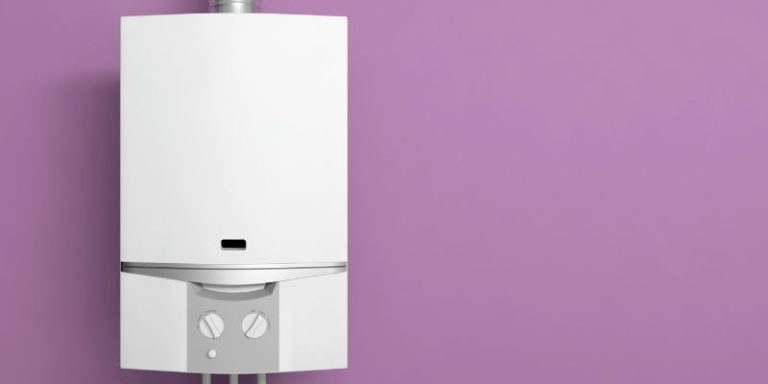
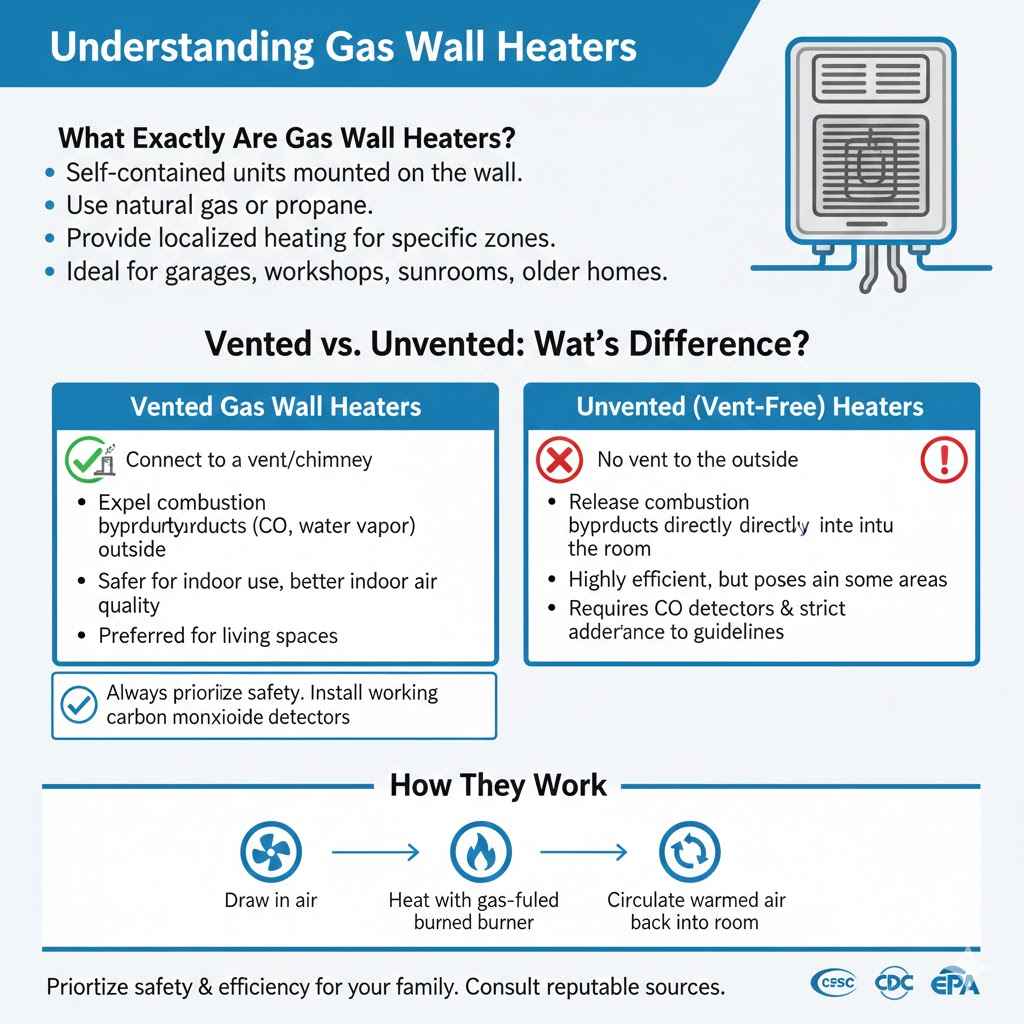
Gas wall heaters are self-contained heating units that are typically mounted on a wall. They use natural gas or propane to generate heat directly within a room, offering a quick and often powerful burst of warmth. Unlike a central furnace that distributes heat through ducts, wall heaters provide localized heating, making them ideal for supplementing a main system or heating specific zones. They are very common in garages, workshops, sunrooms, or older homes that lack ductwork for central heating.
These heaters work by drawing in air, heating it with a gas-fueled burner, and then circulating the warmed air back into the room. They don’t require ductwork, which makes their installation simpler and less intrusive than a full central heating system. However, understanding their basic operation is key to assessing their running costs and safety features.
Vented vs. Unvented: What’s the Difference?
One of the most crucial distinctions when it comes to gas wall heaters is whether they are vented or unvented. This difference significantly impacts safety, installation, and where they can be used.
- Vented Gas Wall Heaters: These heaters connect to a vent or chimney system that directs combustion byproducts (like carbon monoxide and water vapor) outside your home. This makes them safer for indoor use, as harmful gases are expelled. They are generally preferred for living spaces where people spend a lot of time. Vented models ensure excellent indoor air quality, which is a big plus for health and safety.
- Unvented (Vent-Free) Gas Wall Heaters: As the name suggests, these heaters do not have a vent to the outside. They burn gas and release all combustion byproducts directly into the room. While highly efficient because no heat is lost up a vent, they release carbon monoxide, nitrogen dioxide, and water vapor indoors. Because of these emissions, their use is restricted or even prohibited in certain areas and types of rooms. If used, they require strict adherence to manufacturer guidelines, especially regarding room size, air circulation, and the installation of carbon monoxide detectors. They are typically only recommended for short-term, supplemental use in well-ventilated areas.
Always prioritize safety when considering an unvented heater. Many states and localities have strict codes regarding their use. If you have an unvented heater, make sure you have working carbon monoxide detectors installed. For more detailed safety information on vent-free heaters, you can consult resources like the U.S. Consumer Product Safety Commission (CPSC).
Breaking Down the Cost: What Influences Gas Wall Heater Expenses?
Determining if a gas wall heater is expensive to run requires looking at several factors. It’s not just about the sticker price; it’s about the bigger picture of operation.
1. Natural Gas vs. Propane (LP Gas)
The type of gas your heater uses significantly impacts its running cost:
- Natural Gas: If your home is connected to a natural gas line, this is generally the most affordable option. Natural gas prices can fluctuate, but it’s typically cheaper per British Thermal Unit (BTU) than propane.
- Propane (LP Gas): Propane is stored in tanks and delivered to your home. While it offers flexibility for homes without natural gas lines, it’s almost always more expensive than natural gas per BTU. The price can also vary significantly based on your supplier, contract, and the time of year.
2. Local Gas Prices
Gas prices are not uniform. They vary by region, state, and even local utility company. What might be cheap in one area could be moderately priced in another. Keeping an eye on your local utility rates is important for understanding your potential running costs. You can often find current average prices from your local gas provider or energy information websites.
3. Heater Efficiency (AFUE Rating)
Like furnaces, many gas wall heaters have an Annual Fuel Utilization Efficiency (AFUE) rating. This percentage tells you how much of the fuel is converted into usable heat, with the rest being lost. A higher AFUE rating means the heater is more efficient and will cost less to run for the same amount of heat.
- For example, an 80% AFUE means 80 cents of every dollar spent on gas goes to heating your home, while 20 cents is lost.
- Modern heaters are much more efficient than older models. Choosing an ENERGY STAR certified model can help reduce costs.
4. Home Insulation and Size of the Heated Area
A well-insulated room or home will retain heat much better, meaning your heater won’t have to work as hard or as long.
- Poor Insulation: If your walls, windows, and doors aren’t well-sealed, heat will escape quickly, forcing your heater to run constantly to maintain temperature. This dramatically increases running costs.
- Room Size: A small heater trying to warm a large, drafty room will consume a lot of gas and struggle to reach the desired temperature, making it expensive and ineffective. Ensure your heater is appropriately sized for the space it needs to heat.
Improving your home’s insulation, sealing drafts, and ensuring energy-efficient windows can have a huge impact on all your heating costs, not just for a gas wall heater. The U.S. Department of Energy offers excellent resources on insulation improvements.
5. Usage Habits
How you use your heater directly impacts its cost:
- Thermostat Setting: Setting the thermostat to a very high temperature means the heater will run more. Even a few degrees can make a noticeable difference.
- Duration of Use: Running the heater all day, every day, will naturally cost more than using it only when needed for a few hours.
- Zone Heating: Gas wall heaters excel at zone heating. If you only heat the rooms you’re using, rather than your whole house, you can save money compared to a central system heating unused areas.
6. Maintenance
Regular maintenance keeps your heater running efficiently. A dirty or poorly maintained heater will have to work harder, consuming more fuel. This includes cleaning burners, checking vents, and ensuring proper airflow.
Comparing Gas Wall Heaters: Cost vs. Other Heating Options
To truly assess the “expensiveness” of gas wall heaters, it’s helpful to compare them to other common heating methods. Let’s look at how they stack up against electric space heaters and central furnaces.
| Feature | Gas Wall Heater | Electric Space Heater | Central Furnace (Gas) |
|---|---|---|---|
| Fuel Type | Natural Gas or Propane | Electricity | Natural Gas or Propane |
| Typical Running Cost (per BTU) | Generally low (natural gas) to moderate (propane) | Often high (electricity is more expensive per BTU than gas) | Generally low (natural gas) to moderate (propane) |
| Heating Coverage | Single room/zone | Single person/small area | Whole house |
| Efficiency | Good (vented typically 70-85% AFUE, unvented 99.9%) | 100% (all electricity converts to heat, but electricity cost is high) | Very good (80-98% AFUE) |
| Initial Cost | Moderate (heater + installation) | Low (portable unit) | High (furnace + ductwork + installation) |
| Installation | Professional required, gas line & vent (if vented) | Plug into outlet (no installation) | Professional required, complex system |
| Safety Considerations | CO risk (especially unvented), gas leaks | Fire hazard (overheating, tipping) | CO risk, gas leaks |
As you can see, gas wall heaters fit a niche. They are more efficient and typically cheaper to run per BTU than electric space heaters, making them a better choice for heating a single room for extended periods. Compared to a central furnace, a gas wall heater’s running cost for a single room might be lower than heating the entire house with a central system, especially if that system is old or inefficient. However, if you need to heat multiple rooms regularly, a central furnace usually becomes more cost-effective overall.
Are They a Good Investment? Pros and Cons of Gas Wall Heaters
Deciding if a gas wall heater is right for your home involves weighing its benefits against its potential drawbacks.
The Bright Side: Benefits of Gas Wall Heaters
- Efficient Zone Heating: They are excellent for heating specific rooms or areas, allowing you to turn down the central thermostat and only warm the space you’re using. This can lead to significant overall energy savings.
- Quick Heat: Gas heaters typically warm up a space much faster than electric alternatives, providing immediate comfort.
- Independent Operation: Many gas wall heaters don’t require electricity to operate, making them a reliable heat source during power outages (though some models may need electricity for fans or electronic ignition).
- Lower Running Costs (compared to electric): If you have access to natural gas, the cost per BTU is generally lower than electricity, making them more economical than electric space heaters for primary room heating.
- No Ductwork Needed: Their self-contained nature means no expensive duct installation, making them suitable for additions, garages, or homes without existing central heating systems.
Things to Consider: Potential Drawbacks
- Safety Concerns (especially unvented): Unvented models pose carbon monoxide risks and release moisture and other byproducts indoors. Even vented models require proper installation and maintenance to prevent gas leaks or venting issues.
- Installation Complexity: While simpler than a central furnace, installing a gas wall heater still requires a professional for gas line connection and, for vented models, a venting system. This initial cost can add up.
- Aesthetics: While designs have improved, a wall-mounted unit might not always blend seamlessly with your interior decor.
- Limited Coverage: They are designed for single rooms or zones. They are not suitable for heating an entire home.
- Initial Cost: The upfront cost of the unit and professional installation can be higher than a portable electric space heater.
Smart Strategies to Lower Your Gas Wall Heater Running Costs
Once you have a gas wall heater, there are many simple things you can do to ensure it operates as efficiently and affordably as possible.
- Proper Sizing and Placement:
- Size It Right: A heater that’s too small will run constantly, struggling to heat the space. One that’s too large will cycle on and off frequently, which can be less efficient and lead to uneven heating. Consult a professional or use BTU calculators to ensure your heater matches the room size.
- Strategic Placement: Place the heater on an interior wall away from drafts from windows or doors. Avoid placing furniture directly in front of it, which can block heat circulation.
- Utilize Your Thermostat Effectively:
- Programmable Thermostat: If your heater supports it, install a programmable thermostat. This allows you to set lower temperatures when you’re away or asleep and automatically raise them before you arrive home or wake up.
- Lower the Temperature: Even lowering your thermostat by 1-2 degrees can save a surprising amount of money over time. Dress warmly indoors instead of cranking up the heat.
- Regular Maintenance is Key:
- Clean Regularly: Dust and debris can accumulate on burner ports, heat exchangers, and air inlets, reducing efficiency. Follow manufacturer instructions for cleaning.
- Annual Professional Inspection: Have a qualified technician inspect your gas wall heater annually. They can check for gas leaks, ensure proper combustion, clean components, and verify the venting system (for vented models) is functioning safely. This not only saves money but also ensures safety.
- Improve Home Insulation and Seal Drafts:
- Seal Leaks: Use caulk and weatherstripping around windows and doors to prevent warm air from escaping and cold air from entering. Check for gaps around electrical outlets and pipes.
- Insulate: Ensure the walls of the room you’re heating are adequately insulated. Adding insulation can dramatically reduce heat loss. For comprehensive advice on where to insulate and how, check out the ENERGY STAR website on home sealing.
- Practice Smart Zone Heating:
- Close Doors: Keep the door to the room you are heating closed to contain the warmth.
- Turn Off When Not Needed: Don’t heat an empty room. Turn the heater off or set it to a lower standby temperature when you leave the space for an extended period.
By adopting these habits and making small home improvements, you can maximize the efficiency of your gas wall heater and keep its running costs firmly in check.
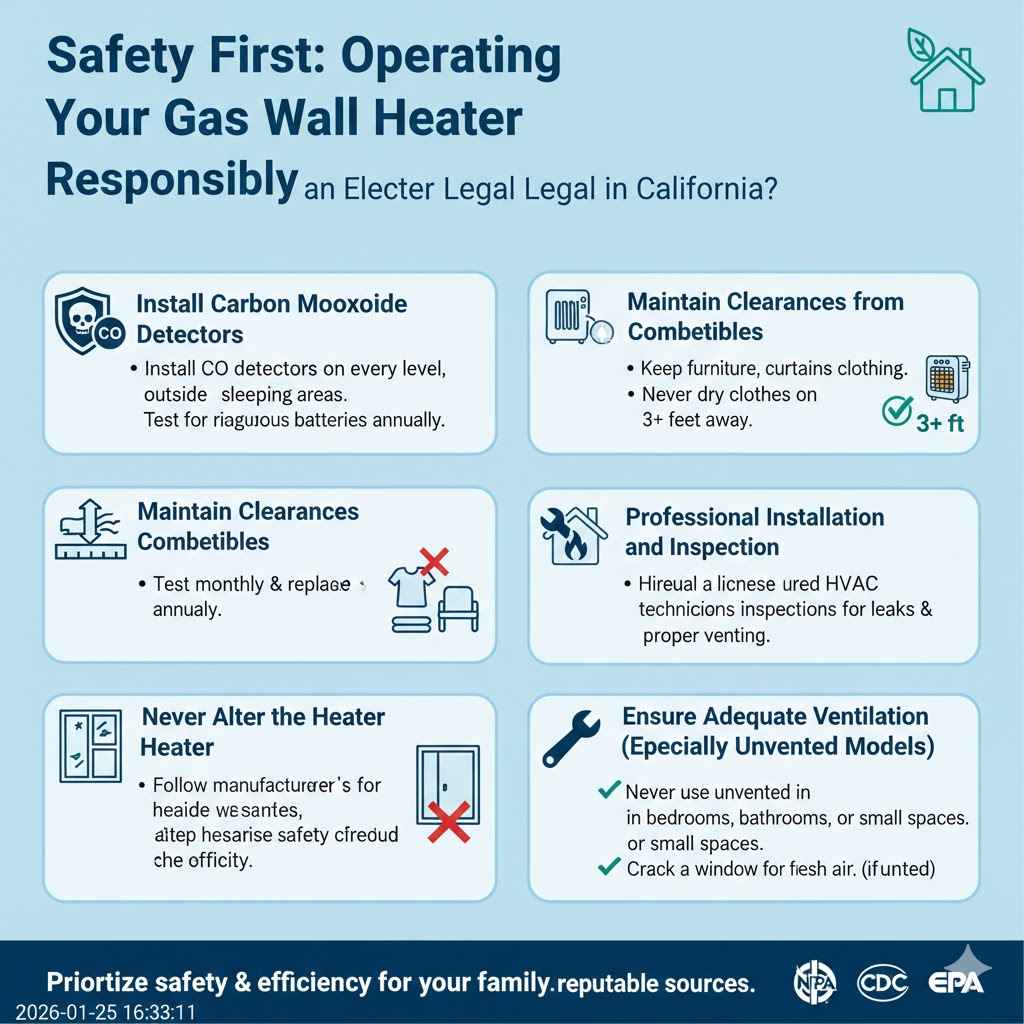
Safety First: Operating Your Gas Wall Heater Responsibly
Beyond efficiency and cost, safety is paramount when operating any gas appliance. Here’s what you need to know to keep your home and family safe with a gas wall heater.
1. Install Carbon Monoxide Detectors
This is non-negotiable for any home with gas appliances, especially if you have an unvented gas wall heater. Carbon monoxide (CO) is an odorless, colorless, and deadly gas.
- Install CO detectors on every level of your home, particularly outside sleeping areas.
- Test them regularly (monthly) and replace batteries annually, or as recommended by the manufacturer.
2. Maintain Clearances from Combustibles
Gas wall heaters produce intense heat. Make sure there’s enough space around the unit.
- Keep furniture, curtains, clothing, paper, and any other flammable materials at least three feet away from the heater. Always refer to your heater’s manual for specific clearance requirements.
- Never use the top of the heater for storage or to dry clothes.
3. Professional Installation and Inspection
Connecting to a gas line and, for vented models, installing a proper vent system are not DIY tasks unless you are a certified professional.
- Always hire a licensed HVAC technician or plumber for installation to ensure it meets all local codes and safety standards.
- Have your heater inspected annually by a professional to check for gas leaks, proper venting, and safe operation.
4. Ensure Adequate Ventilation (Especially for Unvented Models)
If you have an unvented gas wall heater, ventilation is critical.
- Follow the manufacturer’s guidelines for room size and ventilation requirements.
- Never use an unvented heater in a bedroom, bathroom, or small, confined space where oxygen can be depleted and CO can accumulate quickly.
- Crack a window or door slightly to allow for fresh air exchange if using an unvented heater, as recommended by the manufacturer and local codes.
5. Never Alter the Heater
Do not attempt to modify your gas wall heater in any way. Any alterations can compromise its safety and efficiency.
By following these safety guidelines, you can enjoy the warmth and convenience of your gas wall heater with peace of mind.
FAQ: Your Quick Questions Answered
Here are some common questions homeowners ask about gas wall heaters.
Are gas wall heaters safe to use indoors?
Yes, vented gas wall heaters are generally safe for indoor use when properly installed and maintained, as they vent exhaust gases outside. Unvented (vent-free) heaters are also used indoors but require strict adherence to safety guidelines, including adequate ventilation, room size restrictions, and always using carbon monoxide detectors, as they release combustion byproducts directly into the room.
How long do gas wall heaters typically last?
With regular maintenance, a good quality gas wall heater can last between 10 to 20 years. Lifespan depends on usage, brand quality, and how well it’s cared for. Annual professional check-ups can extend its life.
Can I install a gas wall heater myself?
Installing a gas wall heater, especially one connected to a gas line or requiring venting, is complex and involves significant safety risks. It requires connecting to a gas supply and often needs specific permits and inspections. It is highly recommended to hire a licensed professional (HVAC technician or plumber) to ensure safe and compliant installation.
Do gas wall heaters require electricity to operate?
Many basic gas wall heaters operate without electricity, using a standing pilot light or piezoelectric ignition to ignite the gas. However, models with fans, electronic ignitions, or advanced thermostat controls will require an electrical connection. Check the manufacturer’s specifications for your particular model.
What’s a good efficiency rating (AFUE) for a gas wall heater?
For vented gas wall heaters, an AFUE rating of 70-85% is common, with higher percentages being more efficient. Unvented (vent-free) models boast near 99.9% efficiency because all heat stays in the room, but remember their safety considerations. Always aim for the highest efficiency rating you can reasonably afford, considering your needs and safety priorities.
Are gas wall heaters good for heating large spaces?
Gas wall heaters are best suited for heating single rooms or specific zones, not large, open spaces or entire homes. They are designed for supplemental heating or for primary heating in smaller, well-defined areas like workshops, sunrooms, or individual rooms. For whole-house heating, a central furnace is typically more appropriate and efficient.
What maintenance do gas wall heaters need?
Regular maintenance includes keeping the heater clean from dust and debris, ensuring air inlets and outlets are clear, and having annual professional inspections. A professional technician will check for gas leaks, proper burner operation, clean the heat exchanger, and verify the integrity of the venting system (for vented models).
Wrapping Up Your Home Heating Journey
Deciding on the right heating solution for your home can feel daunting, but when it comes to gas wall heaters, the facts show they can be a highly effective and often economical choice for localized heating. While the question “Are gas wall heaters expensive to run?” doesn’t have a single answer, understanding the key factors like gas prices, efficiency, insulation, and your usage habits empowers you to control those costs.
By choosing the right type (vented for peace of mind!), maintaining your unit, making small improvements to your home’s insulation, and adopting smart heating habits, you can enjoy consistent warmth without constant worry about your energy bill. Remember, safety should always come first, so professional installation, regular inspections, and carbon monoxide detectors are non-negotiable.
Here at Tanim’s Heating Guide, my goal is to simplify home heating so you can create a comfortable, safe, and affordable haven. With these essential facts in hand, you’re now better equipped to manage your gas wall heater and ensure it contributes positively to your cozy home. Keep warm, stay safe, and enjoy the comfort you’ve created!