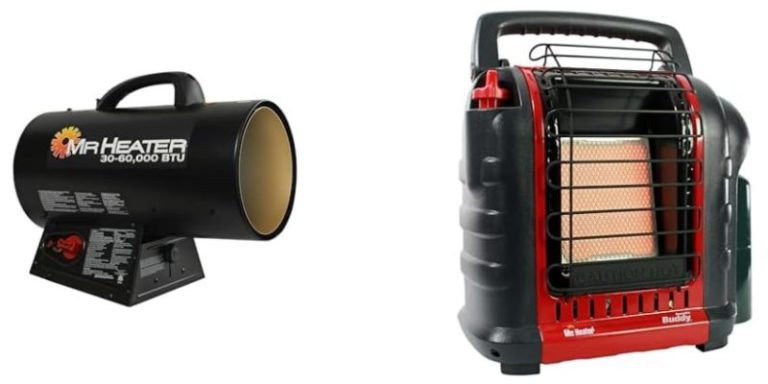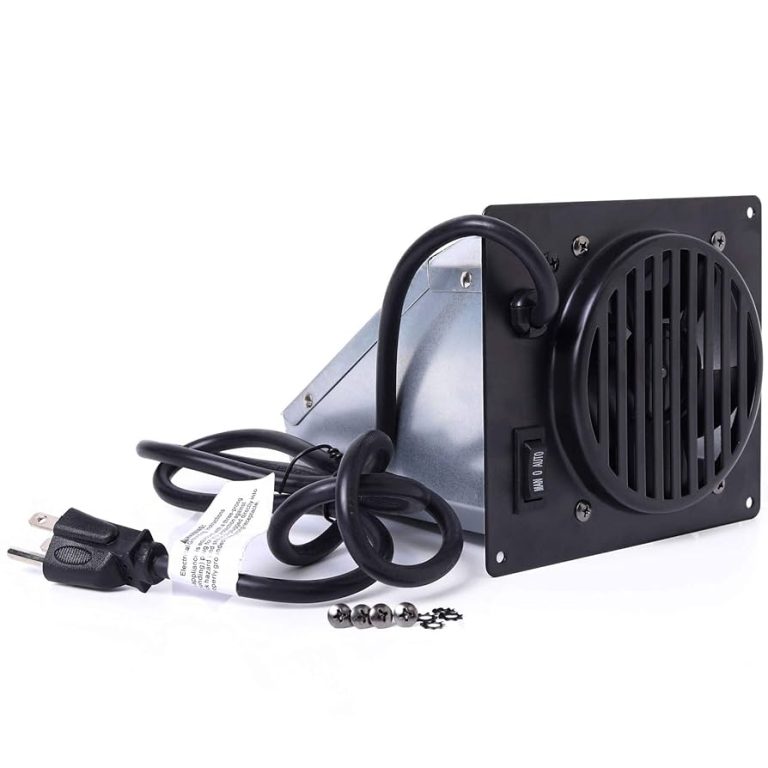
Garage Heater Permit Requirements for Homeowners
Most garage heaters may need a permit; electric units often require an electrical permit, gas units often require a mechanical or fuel gas permit, and vented units often require a mechanical permit. Skip it, and you can face failed inspections, fines, or a delay when you try to sell or insure the home. This guide gives you a permit decision tree for electric, gas, and vented garage heaters, plus the documents local building departments usually ask for before approval.
Garage heater permit decision tree
Start with the heater type. Then match the work to the permit path, building, electrical, mechanical, or fuel gas. That order matters because the authority having jurisdiction issues the final ruling, and different cities and counties split review duties in different ways.
If the project only plugs into an existing receptacle, the review may be lighter. If it adds a circuit, hardwires a unit, changes gas piping, or introduces venting, the permit path usually gets broader. Permit names and triggers vary by jurisdiction, so the answer in one place may not carry over to the next town over. Call your AHJ before you buy equipment.
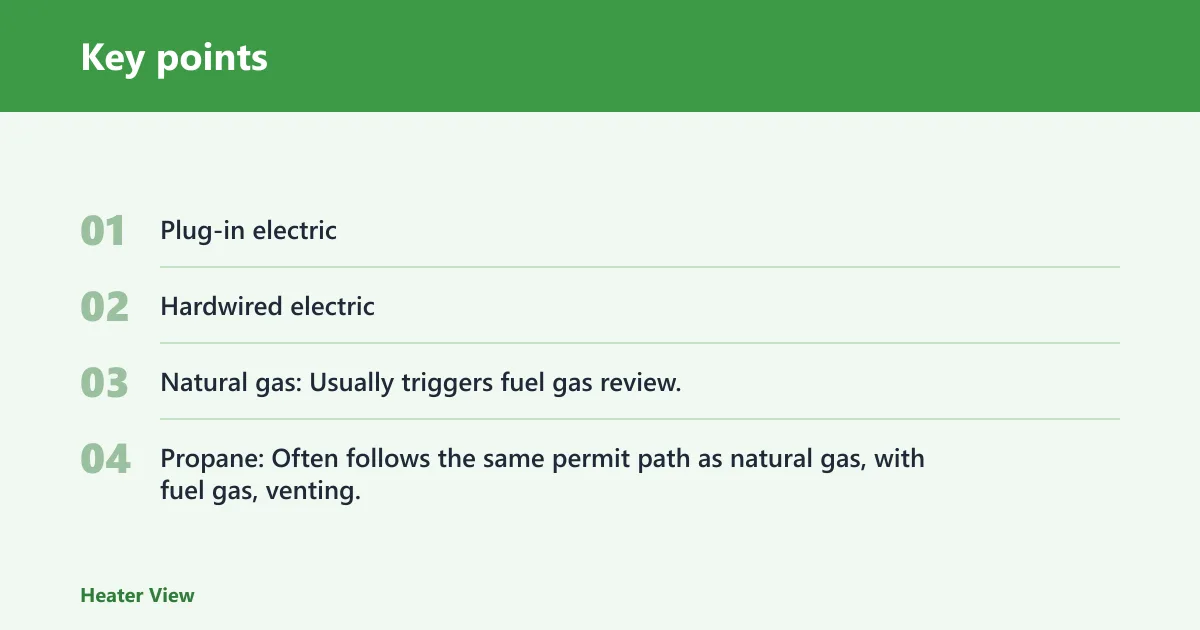
Start with heater type
- Plug-in electric: Often the simplest path, but still subject to local review if the installation affects building safety, clearances, or attached-garage alarm rules.
- Hardwired electric: Usually triggers electrical permit review because it involves wiring and circuit protection.
- Natural gas: Usually triggers fuel gas review, and may also trigger mechanical review if the unit is vented or part of a heating system change.
- Propane: Often follows the same permit path as natural gas, with fuel gas, venting, and combustion-safety review.
Match the project to permit paths
Building permit: Many alterations, renovations, and changes in use require one, and the local authority having jurisdiction decides scope. Heating work can trigger it when the heater changes structure, fire separation, or room use.
Electrical permit: Needed for added circuits or hardwired equipment.
Fuel gas permit: Relevant for natural gas or propane heaters. It covers gas piping, venting, and combustion safety, and it may be separate from the building permit.
Mechanical permit: May apply to HVAC-style garage heaters and other combustion appliances. It usually covers appliance placement, ventilation, and combustion air.
Identify the first approval blocker before purchase
For many homeowners, the first blocker is not the heater itself. It is the circuit, the vent path, or the clearance envelope. A unit that fits on paper can still fail approval if the electrical load is too high, the vent terminations are wrong, or the install location leaves less than the manufacturer allows around combustibles.
Say your garage has one spare 15-amp receptacle and you plan to hang a 7,500-watt electric heater. The heater may be suitable in size, but the circuit will likely need review because the load and wiring path matter more than the box on the wall.
Do you need a permit?
Yes in many cases. A plug-in electric heater can sometimes avoid a major permit path if nothing changes beyond placement, but hardwired units, new circuits, gas piping, venting, and attached-garage safety impacts commonly bring permit review into the project. The local building department should confirm the exact path before you buy equipment.
When a plug-in electric heater may still need review
A plug-in unit is not automatically exempt. If the heater changes the garage’s electrical load in a way that requires a new outlet, a dedicated circuit, or panel work, the project can trigger an electrical permit. If the garage is attached and the work affects smoke or carbon monoxide alarm placement, the review may also broaden.
When a 240V or hardwired unit triggers electrical approval
Any added circuit, new breaker, or hardwired connection usually needs electrical permit review. The inspection typically covers circuit protection, conductor sizing, termination quality, and the installation method.
When attached-garage work expands into building or fire-separation review
Attached garages get extra scrutiny because they connect to occupied space. Fire separation, alarm placement, and carbon monoxide detection can become part of approval. Local adoption of building and fuel gas codes can affect how inspectors review garage-to-house separation, heating equipment, and nearby sleeping areas.
What permits apply to garage heaters?
The permit mix depends on the fuel source and whether the heater is vented, hardwired, or tied into new gas piping. Building permits handle broader alterations. Electrical permits handle circuits and wiring. Fuel gas permits handle gas piping and related safety checks. Mechanical permits often cover appliance placement, ventilation, and combustion air.
Building permit triggers for alterations, renovations, and heating changes
A building permit is often the umbrella review when a heater project changes structure or occupancy. It can also appear when the work changes garage use, fire separation, or clearances near doors and vehicle parking spaces.
Electrical permit triggers for new circuits and hardwired equipment
Do I need an electrical permit for a garage heater? Usually yes if the heater is hardwired or requires a new circuit. That is especially true for 240V garage heaters. Inspection typically focuses on breaker size, conductor routing, disconnects when required, and overall installation safety.
Fuel gas permit triggers for gas piping, appliance connection, and venting
Do I need a plumbing or gas permit for a garage heater? For natural gas and propane units, usually yes. The fuel gas permit commonly covers pipe sizing, shutoff location, leak checks, venting details, and appliance connection.
Mechanical permit triggers for HVAC-style or combustion-appliance work
Some garage heaters function like small HVAC appliances and fall under mechanical review. That can include placement, ventilation, combustion air, and vent termination details. If the unit is vented, inspectors often want the manufacturer’s instructions in hand because the vent category must match the listing.
Homeowner permit table
This table is the quickest way to map heater type to the most likely permit path and the blockers that most often stop approval.
| Heater type | Likely permits needed | Common approval blockers |
|---|---|---|
| Plug-in electric | Often none for the appliance alone; may still need building review if attached-garage safety items or mounting changes are part of the job | Improper clearance to combustibles, no clear mounting plan, shared receptacle overloaded, missing alarm review in an attached garage |
| Hardwired electric | Electrical permit; building review if the work changes structure or fire separation | Undersized circuit, wrong breaker protection, incomplete wiring diagram, poor mounting height, unclear conductor route |
| Natural gas | Fuel gas permit; often mechanical permit for vented or combustion-appliance work; building review may apply | No vent data, gas piping not sized or shown, insufficient clearance, missing combustion air detail, alarm implications ignored |
| Propane | Fuel gas permit; often mechanical permit; building review may apply | Vent category mismatch, tank or piping details missing, improper appliance location, clearance or mounting conflicts |
Plug-in electric and common review points
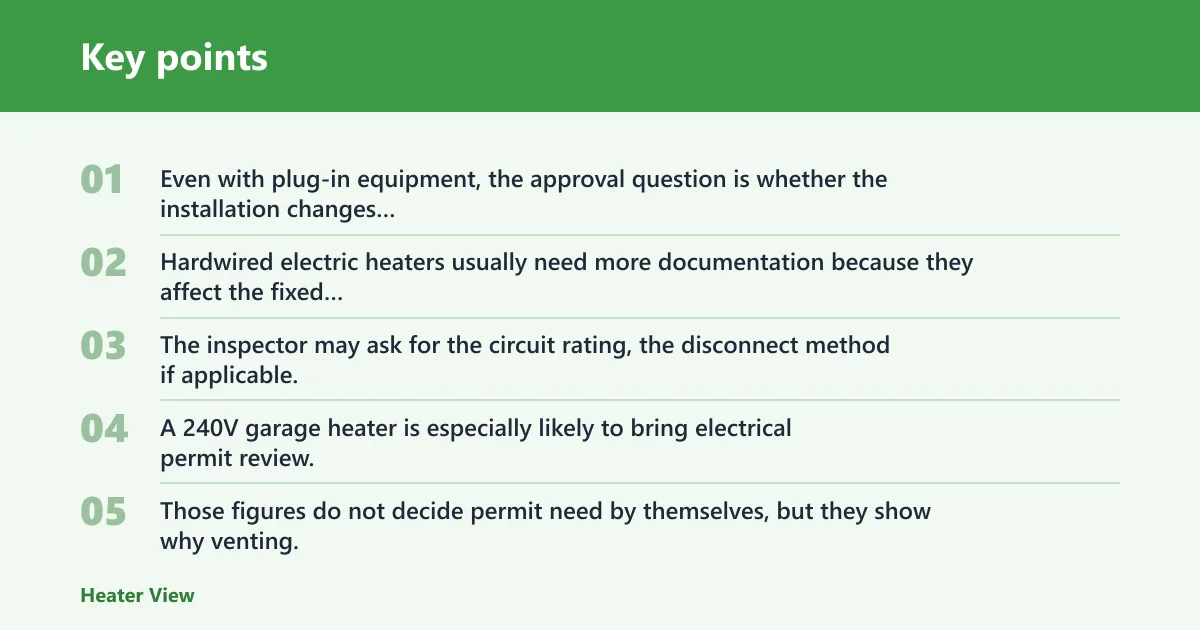
Even with plug-in equipment, the approval question is whether the installation changes any wiring, clearance, or alarm condition that the local building department wants reviewed.
Hardwired electric and common review points
Hardwired electric heaters usually need more documentation because they affect the fixed electrical system. The inspector may ask for the circuit rating, the disconnect method if applicable, the heater’s listed electrical input, and the exact location on the wall or ceiling. A 240V garage heater is especially likely to bring electrical permit review.
Natural gas and propane examples with permit paths
Those figures do not decide permit need by themselves, but they show why venting, mounting height, and combustion safety are central to review.
What code requirements apply to a garage heater in a garage?
Local code adoption controls the details. The main code issues are venting, clearances, fire separation, and alarm requirements near attached garages.
Category 1 vertical venting versus category 3 horizontal venting
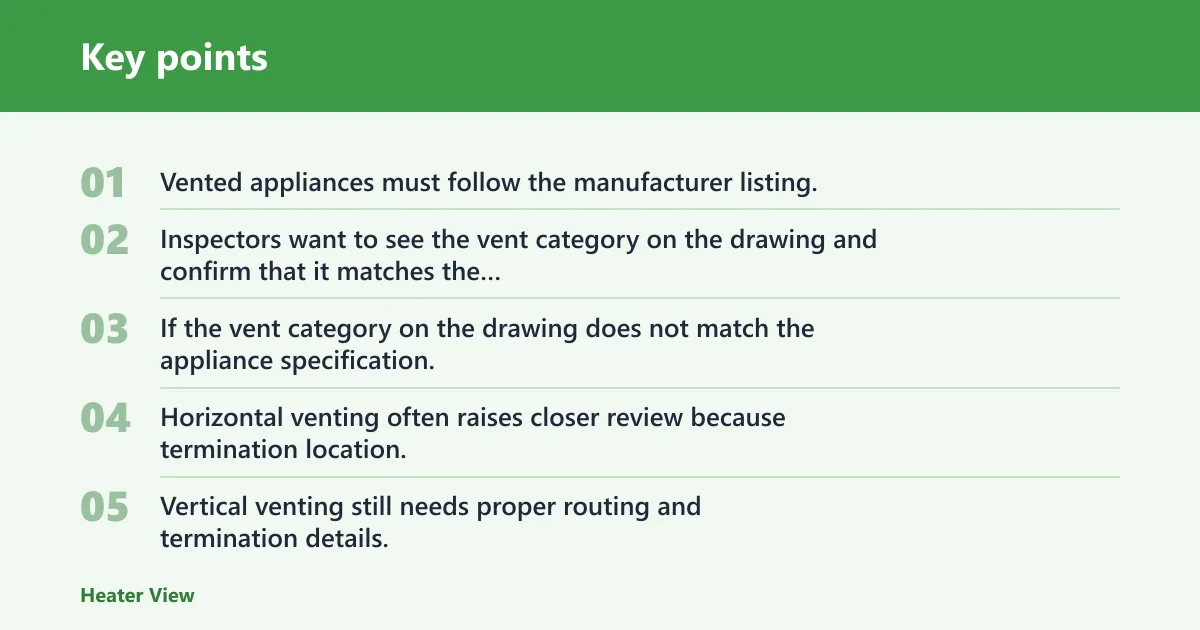
Vented appliances must follow the manufacturer listing. Inspectors want to see the vent category on the drawing and confirm that it matches the appliance specification. If the vent category on the drawing does not match the appliance specification, approval can stall fast.
Horizontal venting often raises closer review because termination location, condensate handling, and clearances from openings can matter. Vertical venting still needs proper routing and termination details. Either way, vent data should be on the submittal package, not left for a later correction.
Manufacturer-required clearances to combustibles, walls, and vehicles
Clearance requirements can decide the whole project. Inspectors will look for minimum side and overhead clearances to combustibles, plus distance from stored items and parked vehicles. The heater’s listed instructions govern those distances, and the garage layout must leave the required space in real use, not just on paper.
Picture a heater mounted above a workbench where the garage door opens under the unit. Even if the unit itself fits, the door track, stored ladders, or the hood of a tall SUV can create a conflict. That kind of layout issue is a common approval blocker.
Minimum mounting height and garage-door placement checks
Mounting height matters because the heater must stay above floor-level hazards and outside vehicle impact zones when the listing calls for it. Some listed heaters allow low mounting, but that does not remove the need to check vehicle clearance, door movement, and the manufacturer’s required distance from the floor and combustibles.
Do alarms and garage separation matter?
Yes. Attached garages can trigger smoke alarm, carbon monoxide alarm, and fire-separation review. Fossil-fuel appliances add more attention because combustion products and venting are part of the safety picture. The permit path can change if the heater is close to sleeping areas or if the garage shares walls and ceilings with occupied rooms.
Smoke alarm and interconnected alarm rules in attached situations
Alarm requirements can be triggered when heater work touches an attached garage or adjacent space, and inspectors may ask how the alarm system meets the locally adopted rules.
Carbon monoxide alarm requirements near sleeping areas and fossil-fuel appliances
Carbon monoxide detection can matter most when the heater burns natural gas or propane, or when the garage is near bedrooms. CO alarm placement can become part of the approval package, not an afterthought.
Fire separation issues that can change permit review
Attached-garage changes can drag adjacent room safety into the review. If a heater project changes openings, walls, or room use, the inspector may look at more than the appliance.
What inspectors usually ask
Inspectors usually want a clean paper trail before they approve a garage heater. The more the project touches wiring, gas piping, or venting, the more drawings and product details matter. A complete submittal often prevents a second trip and a correction notice.
- Show the heater location on a garage plan with wall or ceiling mounting height.
- Mark clearances to combustibles, doors, stored items, and vehicle spaces.
- List the appliance model, fuel type, and electrical input or BTU rating.
- Include vent layout, vent category, termination point, and combustion air details when the unit is vented.
- Show the electrical circuit, breaker size, and disconnect or receptacle detail for electric units.
- Show gas piping route, shutoff location, and connection detail for natural gas or propane units.
- Note alarm impacts for attached garages, including smoke and carbon monoxide detection where required.
- Prepare for inspection of mounting, labeling, circuit protection, venting, and clearances.
A common mistake is scheduling the installation before confirming whether the garage heater permit requires a site plan, equipment specs, and electrical details. The unit arrives, the mounting spot is chosen, and then the local building department asks for a vent diagram, a clearance sketch, and a gas or circuit plan that was never prepared.
Frequently asked questions
Do I need a permit to install a garage heater as a homeowner?
Usually yes. The permit path depends on the heater type and the work involved. Plug-in electric units may be lighter on paperwork, but hardwired electric, gas, and vented heaters commonly need review. The local building department is the final source, and city or county rules can differ.
What permits are required for a garage heater installation?
Most projects fall into one or more of four buckets: building, electrical, fuel gas, or mechanical. Building permits cover broader alterations and heating changes. Electrical permits cover added circuits and hardwired units. Fuel gas permits cover gas piping and venting. Mechanical permits often apply to vented or combustion-appliance work.
Does an electric garage heater need a permit?
Often yes if it is hardwired or needs a new circuit. A plug-in unit may need less review, but it can still trigger building or alarm-related questions in an attached garage.
Does a gas garage heater need a permit?
Usually yes. Natural gas and propane heaters commonly need a fuel gas permit, and vented units may also need a mechanical permit. Review usually covers piping, venting, combustion safety, and appliance placement. Missing vent data or unclear gas details are common reasons for delay.
Who approves garage heater permits: city or county?
It depends on where the home sits and which department has authority. Some projects go through a city building department, others through a county office. Do not assume one jurisdiction’s approval applies in another. Always confirm with the local building department before buying the heater or starting work.