How Long Does It Take a Garage Heater to Warm Up?
A garage heater may make tools and work surfaces feel usable in about 15 to 45 minutes, while the air itself may take roughly 30 to 90 minutes or longer in a cold, leaky garage. If you size or place it poorly, you waste power, wait longer, and still feel cold. This guide breaks down warm-up time by garage condition, heater type, and the setup choices that speed usable heat.
How garage conditions affect your warm-up timeline
For a small, insulated garage, a heater can make the space feel workable in just a few minutes and often comfortable enough for light tasks in about 15 to 30 minutes. In a larger or draftier garage, expect a longer wait, usable warmth may arrive before the air reaches the thermostat setting.
What “warm” means in a garage
In a garage, “warm” can mean three different things. First, the air temperature may rise slowly. Second, tools, benches, and concrete may stop feeling icy. Third, your body may stop feeling chilled once radiant heat reaches you. Those do not happen at the same time.
A space can feel workable even while the thermostat still reads below target. That is common with infrared heaters and with propane units aimed at the work area. Concrete floors stay cold, so the room can still feel uneven even after the air begins to rise.
Typical warm-up ranges by garage condition
A garage with insulated walls, a sealed door, and moderate ceiling height warms much faster than a leaky, unfinished garage. The difference is not small. Insulating the garage door alone can help reduce heat loss and shorten the time needed to feel comfortable, but the amount of improvement depends on the garage, the climate, and the rest of the insulation and air sealing.
| Garage condition | Typical usable heat | Typical air warm-up |
|---|---|---|
| Small, insulated, low ceiling | 15 to 25 minutes | 30 to 45 minutes |
| Two-car, partly insulated | 20 to 40 minutes | 45 to 75 minutes |
| Large or drafty garage | 30 to 60 minutes | 60 to 90 minutes or longer |
Those ranges assume the heater is sized for the space. A small space heater usually will not raise garage temperature more than a few degrees, so output matters as much as insulation.
Why tools and surfaces feel usable before the air fully heats
Metal tools, benchtops, and cold concrete absorb heat slowly at first, then become comfortable before the air catches up. That is why a garage can feel workable even when the room air still seems cool. Radiant heat makes this more noticeable because it warms objects directly.
Picture a two-car garage with a workbench near the heater. The bench top may stop feeling cold after 20 minutes, while the far side of the garage still feels chilly. That is normal. The room is warming unevenly, not failing.
📊 The Mr. Heater Big Buddy can warm up to 450 square feet at maximum output. Source: Caranddriver.
Why does a garage heater take so long?
A garage takes longer to warm when the heater has to heat a larger air volume, replace escaping warm air, and overcome cold concrete and unfinished surfaces. Wide doors, tall ceilings, and gaps around framing all slow heat-up time. Bigger garages also need more output.
Garage square footage and air volume
Square footage matters, but air volume matters too. A one-car garage is easier to heat than a three-car garage, and a tall garage needs more energy than a low one with the same floor area. Bob Vila says a garage heater should be adequately sized for square footage.
That means a heater sized for a small bay may feel slow in a larger room, even if it works properly. The heater is not broken. It is underpowered for the volume it has to warm.
Ceiling height and heat stratification
Warm air rises, so high ceilings create a gap between where the heat collects and where you stand. That is why wall-mounted or ceiling-mounted units often need placement changes or a fan to move warm air down. The same source recommends ceiling-mounted heaters placed in a corner and aimed downward at 45 degrees.
A taller garage can take noticeably longer to feel warm at floor level. The upper air heats first, then the lower working zone catches up. If the ceiling is high, the heater may be doing useful work long before the room feels evenly warm.
Drafts, door leaks, and cold surfaces
Air leaks can erase heat as fast as the heater makes it. Gaps around the garage door, framing cracks, and an unsealed man door all keep the heater running harder. Concrete floors also stay cold even when heating runs, which slows the feeling of comfort near the floor.
A common mistake is assuming the garage heater is too small when the delay is really caused by an uninsulated door and cold air seeping in. If warm air escapes at the same rate it is produced, the room may never feel stable. Sealing leaks often helps more than moving to a slightly larger unit.
Do electric heaters heat a garage fast enough?
Yes, but only in the right space. Electric garage heaters work well in small garages, especially when the space is insulated and the heater is close to the work area. A 120V unit is limited in output, so it can warm a garage enough to work in, but not every garage.
120V heaters and the 1,500-watt limit
A 120V garage heater may only deliver about 5,000 BTU. One forum user described 1,500 watts as roughly 5,000 BTU, which matches the common size of portable electric units. That output is enough for spot comfort or a small garage, not for a big, leaky space.
A 1,500-watt heater can be run on a 20-amp circuit but remains limited in output. A dedicated 20-amp circuit can support up to 1,920 watts, about 6,000 BTU. That extra capacity helps, but it does not turn a small electric heater into a high-output shop heater.
When a dedicated 20-amp circuit matters
If the heater is near the circuit limit or shares power with other tools, the breaker and wiring become part of the setup. A dedicated 20-amp circuit is worth considering for larger electric units because it provides headroom for safe operation and more consistent runtime.
Even then, the heater still produces only a modest amount of heat compared with larger gas units. The circuit improves reliability, not raw output. For a medium garage, that can be enough. For a three-car garage, it often is not.
Small and medium garage use cases
Electric heat works best when the target is a one-car or compact two-car garage, the door stays closed, and the room is somewhat sealed. That is where a 120V heater can make the space usable without waiting forever. It is less convincing in tall or poorly insulated garages.
| Heater setup | Best garage size | Warm-up expectation |
|---|---|---|
| 120V electric, about 5,000 BTU | Small one-car or tight two-car | Slow to moderate |
| Dedicated 20-amp electric, about 6,000 BTU | Small to medium | Moderate |
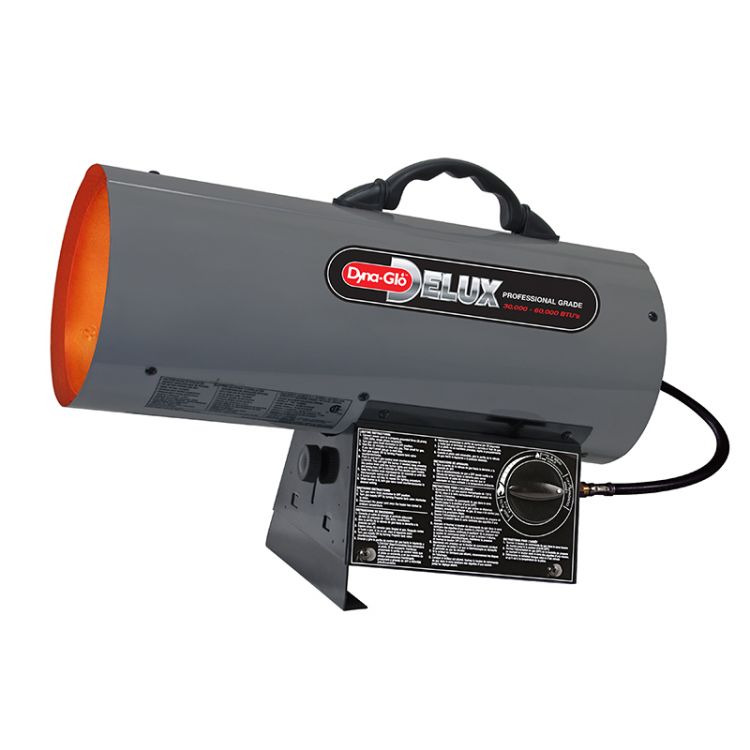
| Portable propane, 9,000 to 18,000 BTU | Small to medium, with ventilation | Fast |
Propane garage heater warm-up times
Propane heats faster than many electric options because portable models often deliver much higher BTU output. In a good setup, a propane heater can make a garage feel warm in minutes. The tradeoff is safety: only use indoor-safe, manufacturer-approved models indoors, and follow the product’s ventilation and clearance instructions because carbon monoxide risk remains even in a garage.
Fast heat output in minutes
Garage heaters can provide warmth “in just a few minutes,” and propane is usually the quickest path to that result. A propane torpedo heater can work well for a short session and then leave the garage holding heat. That is a useful pattern for short jobs.
High output helps the air warm faster, but the room still loses heat if the door leaks or the ceiling is high. Propane is fast, not magical. It works best when the space is shut down tightly before the heater starts.
Common portable BTU ranges
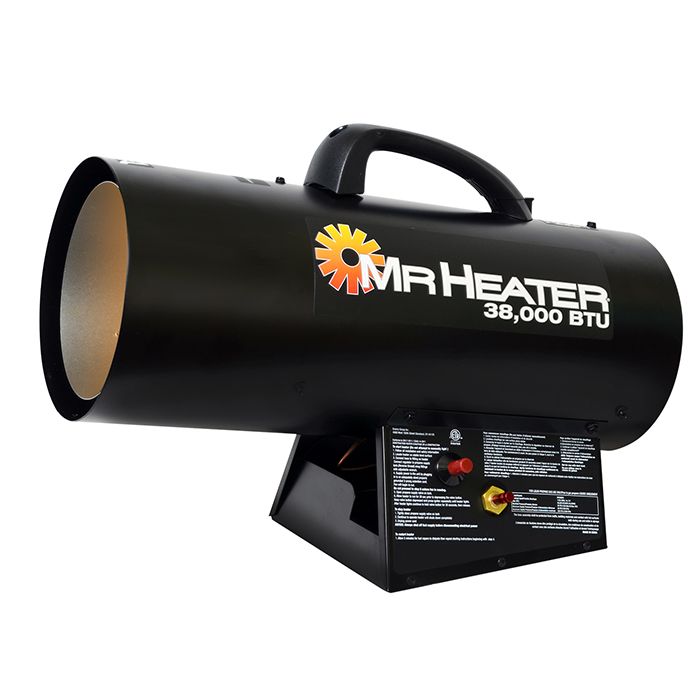
Portable propane units often fall in roughly the 9,000 to 18,000 BTU range. A 9,000 BTU propane heater was described as solid for compact garage use. The Mr. Heater Big Buddy has a maximum output of 18,000 BTU and can run on Low, Medium, or High heat settings.
The Big Buddy can warm up to 450 square feet at maximum output. That can be a better fit for smaller or medium garages when insulation, ceiling height, and air sealing are favorable, and when you want quick spot heat rather than all-day room heating.
Ventilation and indoor-use safety
Propane heaters need combustion air and ventilation. That matters even in a garage that feels only slightly cold. You also need to keep hot surfaces clear, manage tip-over risk, and avoid running a unit too close to flammables. Safety is part of the warm-up plan, not an afterthought.
Use propane only when the heater is approved for indoor use, the garage has the manufacturer-recommended ventilation, and you can keep the unit clear of stored items. Do not use it as a closed-room substitute for a sealed, permanent heater.
Infrared garage heater warm-up times
Infrared garage heaters feel warm quickly because they heat people and objects directly instead of waiting for all the room air to heat first. That makes them a strong choice for short sessions, bench work, and task areas where you stand in one place.
Why infrared feels warm quickly
Infrared heat reaches skin, tools, and surfaces without needing a full air-temperature climb first. That is why it can feel effective almost as soon as it starts. The room air may still be cool, but the work zone feels better much sooner.
People and object heating versus air heating
This is the key difference between comfort and thermostat reading. Infrared improves usable comfort first, while the air changes later and more slowly. If your goal is to work at a bench, that can matter more than total room temperature.
Infrared is less dependent on warming the entire garage. It is often the better choice when you only need the area around the lift, bench, or tool cart to feel comfortable.
Best uses for short sessions and spot heat
Infrared works well for quick in-and-out tasks and for garages where full-room heating is not practical. It is not the fastest way to raise the whole air temperature in a large space, but it is often the fastest way to feel warm where you stand.
Garage warm-up matrix
This matrix gives a practical warm-up estimate by heater type, garage size, insulation level, and ceiling height. Use it as a planning tool, not a stopwatch. The bigger and leakier the garage, the longer the room air takes to catch up.
| Garage setup | 120V electric, about 5,000 BTU | Propane, 9,000 to 18,000 BTU | Infrared, spot heat |
|---|---|---|---|
| One-car, insulated, low ceiling | 25 to 45 minutes | 10 to 20 minutes | 5 to 15 minutes |
| Two-car, partly insulated, standard ceiling | 45 to 75 minutes | 15 to 30 minutes | 10 to 20 minutes |
| Three-car, drafty, higher ceiling | 75 minutes or longer | 30 to 60 minutes | 15 to 30 minutes for the work zone |
Use this matrix in a practical way: the electric unit is the slowest for full-room heating, propane is the fastest for room warm-up, and infrared is the fastest for making a small work area feel comfortable. Ceiling height pushes every estimate higher.
- For a small, insulated garage, preheat the whole space if you will work for more than 30 minutes.
- For a medium garage, spot-heat the work zone if you only need one bench or one vehicle bay.
- For a large, leaky, or high-ceiling garage, size up the heater or add insulation before relying on a long preheat.
- For propane, use only indoor-safe, manufacturer-approved models indoors and keep the heater clear of stored items.
- For electric heat, match the heater to the circuit and garage size before expecting quick results.
Will insulation make it faster?
Yes. Insulation and air sealing shorten warm-up time and help the garage hold heat after the heater shuts off. Wall insulation, a better garage door, and sealed gaps around the edges all reduce heat loss. Insulation is not a cure-all, but it changes the math.
Wall and door insulation
Insulating the garage door can make the space about 10 to 12 degrees warmer in winter. Wall insulation and finished surfaces help more because they reduce the amount of heat that disappears into the structure. That means the heater spends less time fighting the shell of the garage.
Air sealing around gaps
Sealing around the door perimeter, utility penetrations, and framing gaps matters almost as much as adding insulation. Warm air is useful only if it stays in the room long enough to warm the surfaces. If drafts pull it out, the heater has to start over again.
How insulation changes heat retention and run time
Better insulation changes the run cycle in two ways. First, the garage warms faster because less heat escapes. Second, the heater can cycle less often once the room is warm. That is why an insulated garage often feels easier to heat even with the same heater size.
Suppose a one-car garage has an insulated door and sealed gaps. A 120V heater may make it workable after a half hour. In the same garage with a leaky door and no insulation, that same heater may only take the edge off.
Frequently asked questions
How long does it take a garage heater to warm up a garage?
Most garages become usable in 15 to 45 minutes, but the air may need 30 to 90 minutes or more to reach a target temperature. Small, insulated garages heat faster. Large, drafty garages take longer, especially with high ceilings or low-output heaters.
Why does my garage heater take so long to warm up?
Most slow warm-up problems come from too much air volume, heat loss through drafts, or a heater that is too small for the space. Concrete floors, uninsulated doors, and high ceilings all slow the process. If the garage leaks heat, the heater keeps chasing a moving target.
Do electric garage heaters heat up faster than propane?
Propane therefore heats the room faster in many garages, though electric heat can still work well in smaller, better insulated spaces.
How long should I run a garage heater before working?
For light bench work, start 15 to 30 minutes before you need comfort in a small garage and 30 to 45 minutes before you need it in a larger one. If the heater only warms the work zone, you may be ready sooner even while the air still feels cool.
Can a 120V heater warm a garage enough to work in?
Yes, but only in the right garage. A 120V heater may only deliver about 5,000 BTU, so it is best for one-car garages or compact two-car garages with decent insulation and modest ceiling height. In a large or leaky garage, it may not do enough on its own.
What is the fastest way to warm a garage on freezing days?
The fastest approach is a heater sized for the garage, good door sealing, and heat aimed at the work zone. Propane is often quickest for room warm-up, while infrared gives fast spot comfort. If the garage is large or drafty, size up the heater instead of waiting for a small one to catch up.