Can a Garage Heater Be Used in a Shed and Garage?
Yes, a garage heater can heat a shed if the heater type matches the space: sealed combustion or properly vented units are safest, and unvented heaters belong only in spaces with adequate air and clearances. Bad matches can cause carbon monoxide risk, fire hazard, or wasted fuel. This guide explains the compatibility checks for enclosure tightness, ventilation, power, and safe placement.
Can one heater work for both spaces?
The label matters less than the setup. A heater that works well in a ventilated, unfinished garage may be a poor fit for a small, tight shed, and an attached garage brings different code and safety issues than a detached outbuilding.
Start with four checks: how tight the enclosure is, which fuel or power source is available, where exhaust can go, and how the space is used. A workshop with people inside for long periods needs a different heater than a storage shed that only sees short visits.
Garage heater fit test
Use this as a practical compatibility check before you buy or move a heater from one space to another. The right answer depends on the building, not the word on the door.
| She shed size | Insulation | Air sealing | Fuel source | Venting requirement | Recommended heater type | Red-flag conditions |
|---|---|---|---|---|---|---|
| Under 200 sq ft | Little or none | Drafty | Electric | No combustion vent needed | Portable electric or small hard-wired electric | Single receptacle, overloaded circuit, heater aimed at flammables |
| Under 200 sq ft | Finished walls | Tight | Electric | No combustion vent needed | Electric with thermostat control | Oversized unit that short-cycles, blocked airflow, weak service panel |
| 200 to 400 sq ft | Moderate | Mixed | Propane or natural gas | Direct vent preferred | Direct-vent heater or vented unit sized to load | Tight walls with no exhaust path, no CO detector, poor clearance |
| 200 to 400 sq ft | Moderate to good | Mixed | Electric or infrared | No combustion vent needed | Infrared for work zones, electric for whole-room heat | No clear line of sight for infrared, crowded ceiling space |
| 500 sq ft and up | Good | Tight | Electric or gas | Depends on fuel type | Hard-wired electric, direct-vent gas, or sized unit heater | Undersized electrical service, combustible storage, poor mounting location |
| Scenario | Outcome | Why |
|---|---|---|
| Drafty storage shed | No-go for vent-free gas | Air leakage and poor insulation make combustion safety harder to manage |
| Insulated workshop shed | Caution | Heat loss is lower, so sizing and thermostat control matter more |
| Attached garage | Caution | Shared walls and home air pathways raise code and CO concerns |
| Fully finished she-shed | Safe with the right unit | Sealed construction works well with electric or direct-vent heat |
Say your 200-square-foot she shed is insulated and tightly sealed. An oversized garage heater may satisfy the room too fast and then shut off repeatedly, which wastes energy and leaves the temperature uneven. A smaller electric heater with a thermostat usually makes more sense there than a high-output garage unit.
What changes between sheds and garages?
Shed construction drives heater choice. A shed is often smaller and more tightly constructed than a garage, and that changes heat loss, air exchange, and how fast a heater reaches its set point.
Drafty storage sheds lose heat quickly through walls, floors, and leaky joints. Insulated workshop sheds hold heat better, but that lower load also makes oversizing more likely. In a small, well-sealed space, an oversized heater can short-cycle, stir dust, and create humidity swings instead of steady comfort.
Attached garages are different again. They may share a wall or ceiling with the home, which means exhaust routing, combustion air, and local code matter more than they do in a freestanding shed. Detached buildings give more placement freedom, but they do not remove clearance rules or fuel-safety concerns.
Insulation and air sealing change the math
Loose construction increases heat loss, so the heater has to run longer and harder. Tight walls and sealed gaps reduce that load, which is why a smaller heater can work well in a finished workshop shed but become too powerful in a tiny utility shed.
Short cycling is the usual failure mode in the small insulated space. The heater reaches the thermostat too quickly, shuts off, then starts again before the room stabilizes. That pattern wastes fuel and can make the room feel less comfortable, not more.
Humidity and dust matter too
Garages and sheds often store tools, cardboard, paint, or lawn equipment. A heater that blows hard across the room can stir dust and dry out stored materials. Electric radiant or infrared heat can be better when you want warmth directed at people or work zones rather than the whole air volume.
Which heater type fits your space?
The best option depends on fuel access, room tightness, and how often you need heat. Electric, direct-vent gas, infrared, propane, and natural gas units each solve a different problem.
Electric heaters
Electric heaters eliminate combustion risks entirely. They are a strong fit for smaller sheds, hobby rooms, and garages where you have enough electrical capacity and want quiet operation without exhaust.
Some models run from 120V, while others are hard-wired. Hard-wired units usually suit larger spaces or steady use, but they may need a dedicated circuit and an electrician-approved installation. The NewAir 5600W portable electric heater is described for spaces up to about 600 square feet, and the Comfort Zone hard-wired ceiling heater is rated up to 1250 square feet.
Thermostat control matters here. In a small insulated shed, a thermostat helps prevent the heater from overshooting the set temperature and cycling too often.
Direct-vent heaters
Direct-vent heaters use sealed combustion and route exhaust outdoors, which makes them the safer default for tighter enclosed spaces. They are a better match than vent-free combustion heaters when the shed is tight, finished, or used often by people.
This setup separates indoor air from combustion gases, which is the main reason sealed combustion is preferred in small buildings. It still needs correct clearances, proper termination outdoors, and installation that follows the manufacturer’s instructions and local code.
Infrared heaters
Infrared heaters heat objects and people directly rather than the air. That makes them useful in a garage or workshop where you want comfort at a bench or work area without trying to warm every cubic foot of air.
They need clear line of sight to the target area and enough mounting clearance from shelves, joists, and stored items. The Dr Infrared DR-238 has three power settings: 900W, 1200W, and 1500W. That kind of range can suit smaller zones, but it does not replace proper clearance planning.
Propane and natural gas heaters
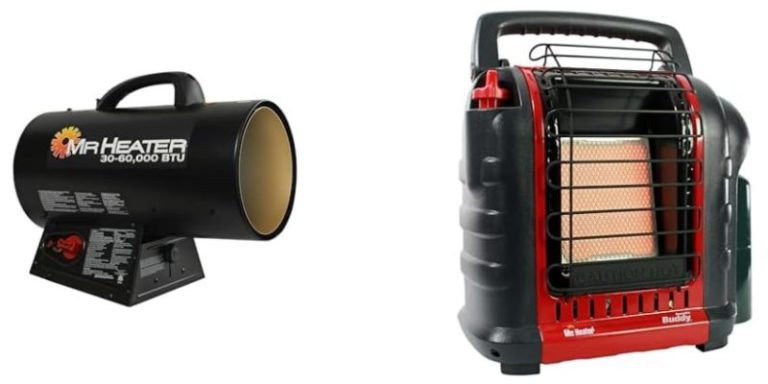
Fuel-burning heaters can heat a room very quickly, which is why they remain common in garages and larger sheds. A Mr. Heater blue flame propane heater is listed at 20,000 BTU, and that level of output can be too much for a compact, well-insulated shed.
Propane and natural gas units need careful review of venting, combustion air, and clearance. A vent-free unit may look simple to install, but it still produces combustion byproducts and depends on adequate air supply. In a tightly sealed shed, that makes it a poor default choice.
Suppose a 12-by-16 insulated workshop shed has a vent-free propane heater installed because the room “feels sealed.” If the space is tighter than expected and the heater is oversized, the unit can cycle poorly and still add combustion moisture and byproducts to the air. A sealed-combustion unit is the safer answer in that scenario.
Do you need ventilation and carbon monoxide protection?
Yes, if the heater burns fuel. Any propane or natural gas heater needs a venting and combustion-air check, and the safest answer in a tight shed is usually a direct-vent unit with exhaust routed outdoors.
Vent-free propane heaters are not suitable for tightly sealed sheds as a default. Even with an oxygen depletion sensor, they still release combustion byproducts into the room and depend on enough room air to operate as intended. That is a poor tradeoff in a small, airtight building.
When a fuel-burning appliance is used, carbon monoxide detectors should be placed near the heated space and near the home. Place them where they can warn you of exhaust problems, not hidden behind storage or next to supply registers.
Clearance and mounting rules still apply
No heater should be treated as a plug-and-play box. Check the label for ceiling, wall, and side clearances, especially for infrared and hard-wired units that mount overhead. Keep combustible storage away from the heater, and follow the manufacturer’s instructions and local codes exactly.
A common first-timer mistake is hanging a ceiling heater where it heats the workbench well but sits too close to stored paint cans or lumber. The heater may be “for a garage,” yet its mounting envelope still has to fit the room.
How much heat do you need?
A practical BTU target starts with size, insulation, and air sealing. The article says 5,000 to 15,000 BTUs is usually sufficient for a she shed, but that range only makes sense after you check how tight the building is and how often you plan to heat it.
Oversized garage heaters in a 200-square-foot she shed can cause short cycling. That wastes energy and makes the room harder to regulate. In a larger garage, the same heater may be acceptable if the space is leaky, tall, or only partially heated.
Use the load, not the label
- Measure the floor area and note ceiling height.
- Check insulation in walls, roof, and floor.
- Look for drafts around doors, windows, and seams.
- Match the heater type to the fuel source and venting path.
- Confirm electrical service or gas supply before buying.
- Choose a thermostat-controlled unit if the space is small and insulated.
One heater or two?
One heater across both spaces makes sense only if the spaces are similar in enclosure tightness, fuel access, and use pattern. A garage that needs quick warm-up and a finished shed that stays occupied for long periods often benefit from different heaters.
Separate units can be the better long-term choice when one space is drafty and the other is sealed. That split avoids overbuying a large garage heater for a small shed and keeps the safer venting option where it belongs.
Frequently asked questions
Can a garage heater be used in a shed?
Yes, if the heater type matches the shed’s size, insulation, air sealing, and available power or fuel. A garage heater that depends on combustion air or high output may be a poor fit in a small, tight shed. Always check the label, clearances, and local code before installation.
Is a garage heater safe for a shed?
It can be safe, but only with the right match. Electric heaters are simplest in tight sheds because they remove combustion risk, while direct-vent gas units are safer than vent-free units in enclosed spaces. Safety depends on venting, placement, and the shed’s construction, not the heater’s name.
What kind of heater is best for a shed?
For a small, insulated shed, an electric heater with thermostat control is often the cleanest choice. For a tighter space that needs fuel heat, a direct-vent heater is usually safer than a vent-free model. Infrared works well when you want to heat people or a work zone directly.
Do I need ventilation for a garage heater in a shed?
If the heater burns propane or natural gas, yes. Fuel-burning heaters need a proper venting plan, and sealed combustion is the safer default in tight sheds. Electric heaters do not produce combustion exhaust, so they do not need ventilation for fumes, though the room still needs safe clearances.
Can I use a propane garage heater in an insulated shed?
Sometimes, but it depends on the heater type and how tight the shed is. A vent-free propane heater is a poor choice for a tightly sealed shed. A direct-vent propane heater is safer because it routes exhaust outdoors and keeps combustion separate from indoor air.
Will a garage heater be too powerful for a small shed?
Often, yes. Oversized heaters can short-cycle in a small insulated shed, which wastes energy and reduces comfort. A smaller unit with a thermostat is usually better because it matches the room load more closely and avoids the rapid on-off pattern that comes with excess output.