How to Choose a Garage Heater for a Basement Garage
Choose a basement garage heater by heat loss first: estimate the room’s demand, then match heater type to power, venting, and clearance limits. A poor choice wastes energy, leaves cold corners, or creates moisture and combustion-safety problems. This guide covers sizing, heater types, power options, venting, and installation limits for basement garages.
Basement garage heater basics
A garage heater is a fixed or portable heating unit sized for a vehicle bay, workshop, or storage space. In a basement garage, the same heater can act very differently because the slab is colder, the walls may contact soil, and the door opening can leak air near grade level.
That is why a basement garage needs a different decision path than an above-grade garage. Heat loss does not come only from air leakage. It also comes from the slab, slab edge, uninsulated foundation walls, and any shared wall that may either help or hurt the load depending on whether the other side is conditioned.
What makes a basement garage different
Below-grade walls often cut heat loss where they are buried, but the slab can act like a cold sink. A garage that shares a wall with conditioned space may need less output than a detached garage of similar size, even while the slab and door still pull heat away fast.
Moisture matters too. Warm air hitting a cold slab or cold masonry can condense, especially after a vehicle brings in snow, slush, or rain. That can turn into mildew risk, damp storage, and a colder-feeling space than the thermostat suggests.
When a garage heater is the right tool
Use a garage heater when you want the space warm enough for vehicle work, tools, storage protection, or shorter recovery after door openings. If the goal is only to take the chill off, a smaller electric unit may be enough. If you want steady winter use in a large space, output and fuel choice matter more.
For some basement garages, a mini-split or a sealed-combustion heater is a better fit than a standard garage heater. That is especially true when fresh-air access is limited, the space is attached to the home, or the garage needs better moisture control without open combustion inside the room.
Common heater types at a glance
- Electric heaters: No venting required. A standard wall outlet tops out around 1,500 watts, while 240V hardwired units can run much larger and need a dedicated circuit for real garage heat.
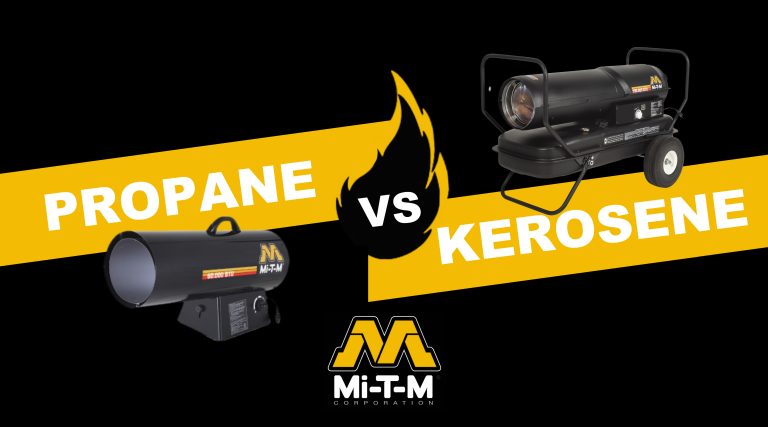
- Gas heaters: Natural gas or propane units suit larger or regular-use spaces, but combustion appliances need the correct venting or combustion-air setup, and some basement or attached garages may prohibit unvented units.
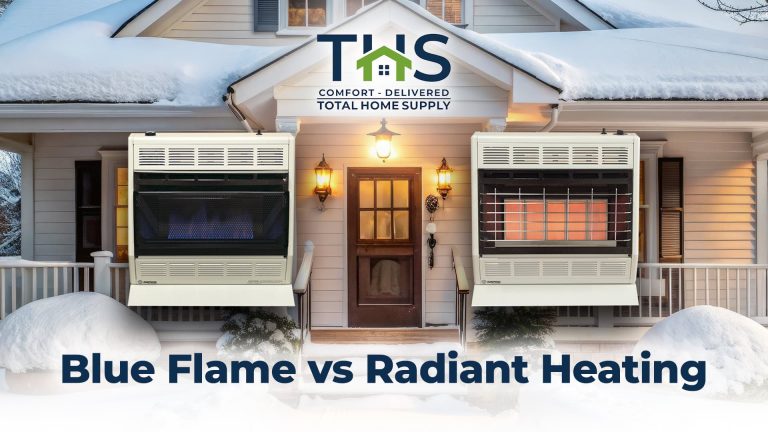
- Infrared heaters: These warm people and objects directly. They fit drafty or poorly sealed spaces well, but ceiling clearance and mounting height matter.
- Fan-forced heaters: These move warm air through the space and work better for whole-space warming, but they can move dust and debris.
📊 This Old House says the listed garage heaters range from about $47 to $425. Source: Best Garage Heaters of 2026.
Basement garage heat loss factors
Basement garage sizing starts with the surfaces that lose heat, not with the heater label. Insulation level, slab exposure, door leakage, and ceiling height all change the load. A heater that looks large on paper can still struggle if the slab and door keep bleeding heat away.
Insulation level and below-grade walls
Uninsulated basement garages usually need the most output. Moderately insulated spaces sit in the middle. Well-insulated garages need less heat, but below-grade walls and a cold slab can still raise the load compared with a finished room of the same size.
A practical basement-specific rule is that some uninsulated or leaky spaces may need roughly 25% to 50% more output than a simple size-only estimate would suggest. That is not a blanket bump for every basement garage. Shared conditioned walls can lower the load enough to offset part of the slab loss.
Cold slab and slab-edge exposure
The slab is one of the biggest basement-garage differences. Concrete absorbs heat quickly, then holds onto cold. If the slab edge is exposed, or if the garage floor sits over unheated soil, the room can feel colder than its air temperature suggests.
That is why floor contact belongs in the sizing check. It also affects comfort choice. Radiant heat can help people and tools feel warmer faster, while fan-forced heat may take longer to overcome a cold floor and cold mass in the room.
Garage door leakage and air sealing
Door seams, weatherstripping, and the opening itself often drive fast heat loss. In basement garages, a door near grade can leak wind and cold air even when the rest of the room is partly below ground. A heater that cannot recover after door openings will feel undersized.
A common first-timer mistake is to size only by floor area, then ignore a loose garage door. The heater may work on calm days and fail on windy ones. Air sealing, threshold repair, and proper weatherstripping can reduce the load before you buy more output.
Ceiling height and room volume
Higher ceilings increase the air volume that needs heating. A room with a tall basement ceiling may need more output than a low one, even at the same square footage. That matters most for fan-forced heaters, which warm the room air first.
Suspended placement also changes clearance. Ceiling-mounted units need more attention to mounting height and combustibles below them. Do not treat a basement ceiling like a standard utility room ceiling without checking the manual.
How much heat does your garage need?
Estimate the garage’s demand from its size and then adjust for insulation, ceiling height, slab exposure, and door leakage. A heater that is too small will never catch up, and one that is too large can waste energy or create comfort problems.
Use watts per square foot and BTU per square foot
Start with square footage, then account for the rest of the room conditions. Basement garages need those adjustments more than a simple size-only estimate, because insulation, slab exposure, ceiling height, and door leakage can move the target up or down.
Those are starting points, not a final answer. Insulation, ceiling height, slab exposure, and door leakage can move the target up or down. A basement garage with good insulation and a shared conditioned wall may need less than a detached garage of the same floor area.
When to size up
Size up when the garage is uninsulated, the slab is cold, the door leaks, or the space needs quick recovery after openings. That is where a larger output can make sense. The goal is not extra heat for its own sake. It is enough output to overcome the actual losses.
Suppose a leaky basement garage feels damp after every snowfall and the door opens several times a day. A heater sized only by floor area may never catch up. A larger output unit, paired with air sealing, usually performs better than a small unit running constantly.
When shared walls can reduce the load
If one or more walls border conditioned space, the heat loss can drop. That can lower the heater size you need even in a below-grade garage. Do not assume every basement garage needs a bigger heater than an above-grade one.
This is where blanket rules fail. The slab and door may push demand up, but a conditioned wall may pull it down. The right answer comes from the full load picture, not from a garage label alone.
Why drafty openings change the answer
Drafts make radiant and fan-forced choices behave differently. Radiant heat can still make a drafty bay feel usable because it warms objects and people directly. Fan-forced heat may spread warm air better across the room, but it can lose ground faster when air keeps moving through the door gap.
If the garage gets repeated cold-soak after each door opening, look at recovery time, not just rated output. The heater should be able to reheat the space without running at full output all day.
120V or 240V for a basement garage?
Choose 120V only for small, light-duty heating. Choose 240V for real garage heat in most basement garages. A standard wall outlet tops out around 1,500 watts, and 240V units require a dedicated circuit for real garage heat, which is why larger spaces usually need electrician work.
120V plug-in limits
A 120V plug-in heater is easy to place, but it is limited. A 1,500W model is common, and that size is suitable only for spot warming, a small one-car bay, or occasional use.
Also note the circuit limit. A common 15A circuit is not a license to run any load continuously at the top end. Treat the heater’s listed size as the starting point and make sure the circuit can safely support it.
When a dedicated 240V circuit is the better match
If the heater needs more than 1,500W, a dedicated 240V circuit is usually the better match. That is common for 3,000W to 10,000W+ electric heaters and for basement garages that need sustained heat rather than short bursts.
Because the heater load must match breaker capacity, many installations need an electrician. That extra work buys better heating, fewer nuisance trips, and a cleaner fit for a garage that sees regular winter use.
Why higher-output heaters usually need electrician work
Higher-output units are not just bigger versions of small plug-in heaters. They often need dedicated wiring, proper breaker sizing, and mounting that respects clearance rules. Skipping that step can turn a good heater into a safety problem.
For homeowners who want one heater to cover a larger basement garage, 240V is usually the practical path. It is also the path that gives you more options in electric heat without combustion concerns.
Electric, gas, radiant, or fan-forced?
Electric is the cleanest fit when you want simple installation and no venting. Gas is often better for large or regular-use spaces. Radiant heat works well in drafty garages. Fan-forced heat works better when you want the whole room to warm evenly, but it can move dust.
Electric garage heaters
Electric heaters are the easiest to place in a basement garage because they do not need venting. Small plug-in models suit spot heating. Larger 240V units suit full-space heating, provided the electrical service can support them.
They are also the safer choice when the garage is attached and fresh-air routing is limited. If the space is small to medium and you want low installation complexity, electric should be near the top of the list.
Gas garage heaters
Natural gas and propane heaters can deliver strong output for larger spaces and regular use. This Old House lists Mr. Heater Big Maxx as a 50,000 BTU natural gas unit heater, and its listed garage heaters range from about $47 to $425.
Do not treat gas as a simple plug-and-play choice. Combustion appliances need code- and manufacturer-compliant venting or combustion-air arrangements. Some basement or attached garages may prohibit or tightly restrict unvented fuel-burning units, so the manual and local code should come first.
Infrared and radiant heaters
Infrared heaters warm objects and people directly. That makes them useful in drafty or poorly sealed basement garages, where heating all the air can be inefficient. They also feel faster at the point of use.
Check ceiling clearance before buying one. Radiant heat needs enough distance from combustibles, and mounting height affects both performance and safety. Keep the path below the heater free of storage, ladders, and low-hanging items.
Fan-forced heaters
Fan-forced heaters blow warm air through the garage, so they are better for whole-space warming than for one warm spot. They can heat evenly, but they also move dust and debris, which matters in a garage that stores tools, cardboard, or sanding supplies.
If you want the room to feel warmer everywhere rather than only at the workbench, fan-forced can be the better pick. If dust control matters more, radiant often makes more sense.
When a mini-split or sealed-combustion unit fits better
Some basement garages are too tight for open combustion or too limited for fresh-air arrangements. In that case, a mini-split or sealed-combustion unit may fit better than a standard garage heater. Those options are especially useful when the garage shares walls with the home or has moisture concerns.
Choose them when comfort, safety, and moisture control matter more than low upfront cost. A sealed system can be easier to justify than trying to force a fuel-burning heater into a space that cannot support it.
Basement garage heater decision matrix
This table ties insulation, slab exposure, ceiling height, door leakage, electrical capacity, and ventilation access to a practical heater choice. Use it as a decision tool, not as a substitute for the manual, code, or local inspection rules.
| Garage insulation | Slab exposure | Ceiling height | Door leakage | Electrical capacity | Ventilation access | Recommended heater type/output range | Choose this, not that |
|---|---|---|---|---|---|---|---|
| Uninsulated | Cold slab, exposed edge | Standard to tall | High | 120V only | Limited | 120V electric, about 1,500W; spot heat only | Choose a plug-in electric unit for short, targeted use, not a gas heater or oversized fan unit. |
| Uninsulated | Cold slab, exposed edge | Standard to tall | High | 240V available | Limited | 240V electric, roughly 3,000W to 10,000W+ | Choose hardwired electric for full-space heat, not an unvented combustion heater in a restricted basement setup. |
| Moderately insulated | Partial slab loss | Standard | Moderate | 240V available | Good | Electric 3,000W to 7,500W, or sealed-combustion gas if code allows | Choose electric for simpler installation, not propane unless venting and combustion-air rules are fully satisfied. |
| Moderately insulated | Moderate slab loss | Tall | Moderate to high | 240V available | Good | Fan-forced electric or infrared, sized near the upper end of the range | Choose a higher-output electric unit, not a small heater that cannot recover after door openings. |
| Well insulated | Lower slab loss | Standard | Low to moderate | 120V or 240V | Limited | 120V for spot heat or 240V electric for full-space comfort | Choose electric first, not fuel-burning heat when the load is modest and ventilation is constrained. |
| Well insulated | Lower slab loss | Standard to tall | Low | Good 240V service | Good | Infrared or fan-forced electric; size for the actual square footage | Choose radiant for drafts and work zones, not a larger gas unit just because the room is below grade. |
- Estimate the garage’s square footage and ceiling height.
- Rate insulation as uninsulated, moderately insulated, or well insulated.
- Check slab exposure, door leakage, and whether one wall borders conditioned space.
- Confirm whether you have only 120V service or a suitable dedicated 240V circuit.
- Decide whether venting or combustion-air setup is allowed by code and the heater manual.
- Match the heater type to the real load, not the nameplate alone.
Safety, clearance, and CO rules
Clearance and carbon monoxide rules are not optional. Keep heaters away from gasoline, paint, solvents, rags, and other combustibles. For combustion heaters, use the required venting or combustion-air setup, and place carbon monoxide detectors according to code and the manufacturer’s instructions.
Clearance from combustibles
Minimum clearance around the heater depends on the model. Many units also have a mounting height requirement, especially ceiling-mounted or radiant models. Follow the manual exactly, because basement storage often creeps closer to the heater over time.
Leave room around the heater for airflow and servicing. Do not stack cartons, fuel cans, or seasonal items beneath it. A heater that is buried by storage is not installed correctly.
Fuel-storage hazards
Gasoline, paint, solvents, aerosol cans, and similar materials should stay clear of any heater. Heat and vapor do not mix well in a garage. This is true for electric heaters too, since hot surfaces and stored chemicals are a bad pairing.
If the basement garage doubles as a workshop, be stricter about storage. Paint lockers, fuel cans, and oily rags need distance from ignition sources and from the heater’s discharge path.
Carbon monoxide detectors and placement
Combustion heaters can produce carbon monoxide, so CO detection is required when those appliances are used in or near the garage. Place detectors according to code and the manufacturer’s instructions, which may mean one in an adjacent living area and another where required by the appliance instructions.
Do not use an open door or an improvised vent opening as a substitute for proper venting or combustion-air setup. That is not the same thing, and it may be unsafe or noncompliant.
When to stop and check code or the manual
Stop and verify the installation if the heater is fuel-burning, the garage is attached to the home, or the room has limited fresh-air access. The manual and local code decide whether a unit is allowed and how it must be vented or mounted.
If you are unsure, a licensed electrician or HVAC installer is the right next step. That is especially true for 240V circuits, gas piping, vent routing, and anything involving ceiling mounting or combustion-air sizing.
Frequently asked questions
What size garage heater do I need for a basement garage?
Start with square footage, then adjust for insulation, slab exposure, ceiling height, and door leakage. A leaky basement garage may need more output.
Do I need 120V or 240V for a basement garage heater?
Use 120V only for small, light-duty heating, usually up to about 1,500W. For real garage heat, 240V is the better fit, and it requires a dedicated circuit. That is the common choice when the space needs full-room heating rather than spot warmth.
Is electric or gas better for a basement garage?
Electric is usually simpler and safer to install because it needs no venting. Gas can be better for larger or regular-use spaces, but only if the venting or combustion-air setup is allowed and correctly installed. In attached or restricted basement garages, electric often wins.
Can I use a regular space heater in a basement garage?
Only if the heater is rated for that environment and the circuit can support it safely. Many regular space heaters are too small for a garage and may not have the mounting, clearance, or duty cycle needed. A garage-specific unit is usually the safer choice.
Do basement garage heaters need ventilation?
Electric heaters do not. Fuel-burning heaters do, but the right answer is not simply “open the door.” Some basement or attached garages may prohibit unvented units, and the manufacturer’s instructions plus local code control the setup. Sealed-combustion or vented units may be required.
How much clearance does a garage heater need?
It depends on the model. Many ceiling-mounted, radiant, or fan-forced units specify exact side, top, bottom, and front clearances, plus a mounting height. Keep the heater away from combustibles and stored fuel, and follow the manual rather than guessing from the room layout.