How Block Heaters Affect Fuel Economy in Winter
A block heater can cut cold-start fuel use in subfreezing weather, but the payoff depends on wattage, run time, electricity rates, fuel prices, and how short your trip is. If it stays plugged in much longer than needed, the electricity cost can erase the fuel savings. This guide explains when block heaters help, when they do not, and how temperature, trip length, and parking habits change the math.
How cold starts affect fuel economy
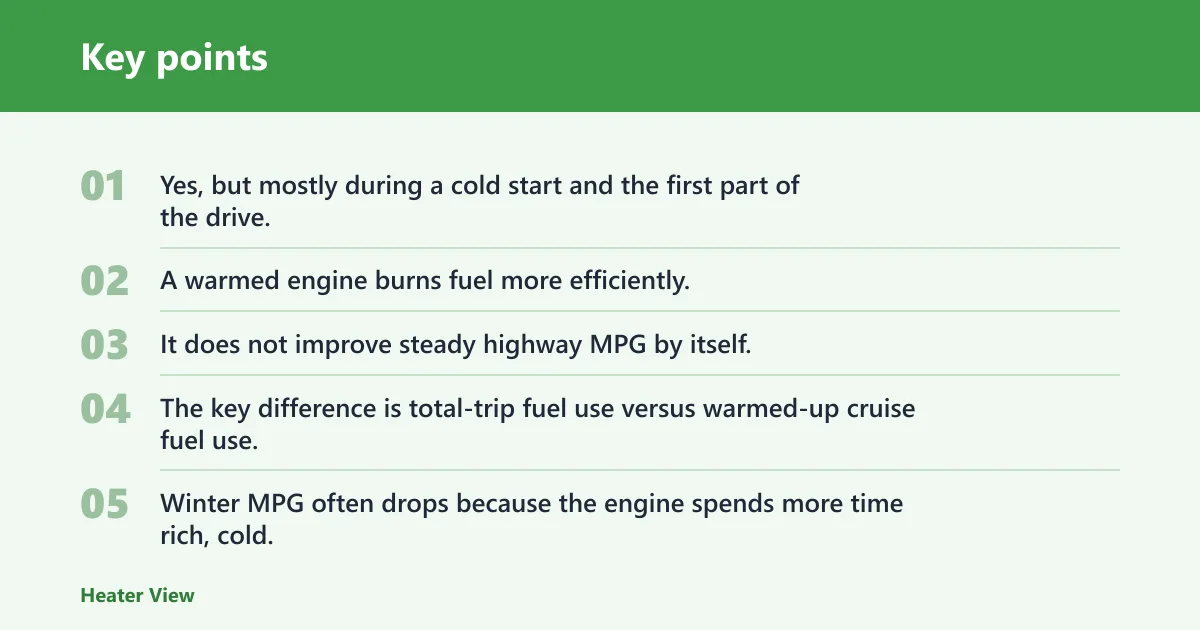
Yes, but mostly during a cold start and the first part of the drive. A warmed engine burns fuel more efficiently, so a block heater can reduce the fuel penalty from thick oil, extra friction, and longer warm-up. It does not improve steady highway MPG by itself, and the gain is usually most noticeable on short winter trips.
The key difference is total-trip fuel use versus warmed-up cruise fuel use. Winter MPG often drops because the engine spends more time rich, cold, and idling before it reaches normal operating temperature. If a heater cuts that cold phase short, it can reduce fuel burned before the vehicle is moving efficiently.
What changes during a cold start
Cold starts hurt fuel economy because several things happen at once. Oil thickens in low temperatures, friction rises between parts that are not properly lubricated, and the battery’s available output drops while the starter works against higher resistance. Those losses happen before the vehicle has covered much distance, which is why start-up efficiency matters so much in winter.
In plain terms, the engine needs more fuel to stabilize idle, warm the catalyst and coolant, and get the cabin heat moving. That extra fuel use is why a block heater matters most for short trips, where the warm-up penalty takes up a larger share of the whole drive.
Why warm coolant can cut idle time
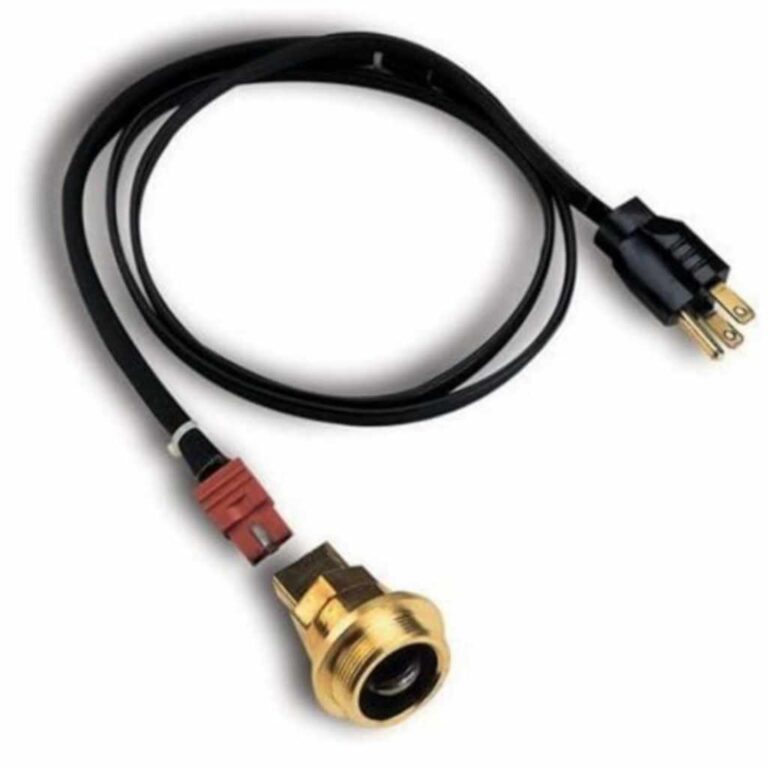
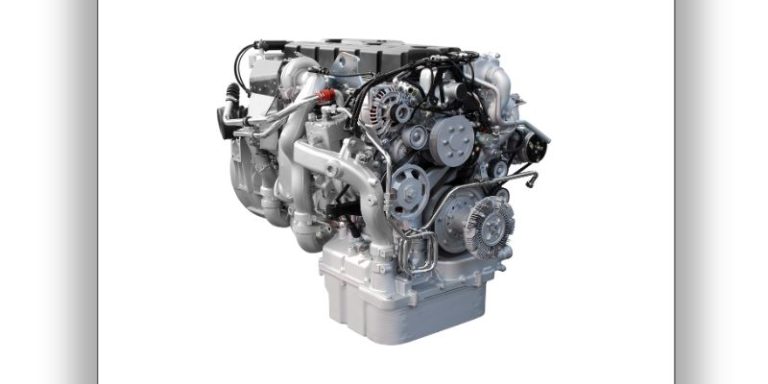
An engine block heater preheats the engine before startup using 120-volt AC power. Common residential block heaters typically draw about 300 to 1,500 watts depending on design and vehicle application, and the heater raises engine temperature before the first start. Depending on the design, some heaters primarily warm the block or oil area rather than directly heating coolant. That can shorten the time spent idling in a rough, inefficient warm-up state and help the cabin and defroster become usable sooner.
Practical heater specs vary by engine size and heater type, but the operating principle is the same: less time spent heating from a deep cold means less idle fuel burned before the vehicle is ready to drive normally. That is where the fuel savings come from. For a quick reference to heater sizing, see heater wattage and the matching installation instructions.
Why the answer depends on trip length
The shorter the trip, the bigger the warm-up penalty becomes. On a long drive, the first few minutes of extra fuel use get diluted by the rest of the trip. On a short commute, that same warm-up penalty may be a large fraction of the whole drive, so a heater has a better chance of paying back its electricity use.
That is why winter fuel economy is not the same as steady-state highway economy. A block heater changes the start of the trip, not the cruising portion. If you mainly drive long enough for the engine to reach normal temperature quickly anyway, the fuel savings may be small.
How a block heater changes fuel use
Fuel economy changes because the heater reduces the cold-start penalty, not because it makes the engine magically more efficient at cruise. A preheated engine needs less extra fuel for warm-up, may idle for less time, and can reach usable heat sooner. The fuel benefit is strongest when ambient temperatures are low and the drive is short, especially for vehicles parked outdoors overnight.
Coolant warmth and faster initial circulation
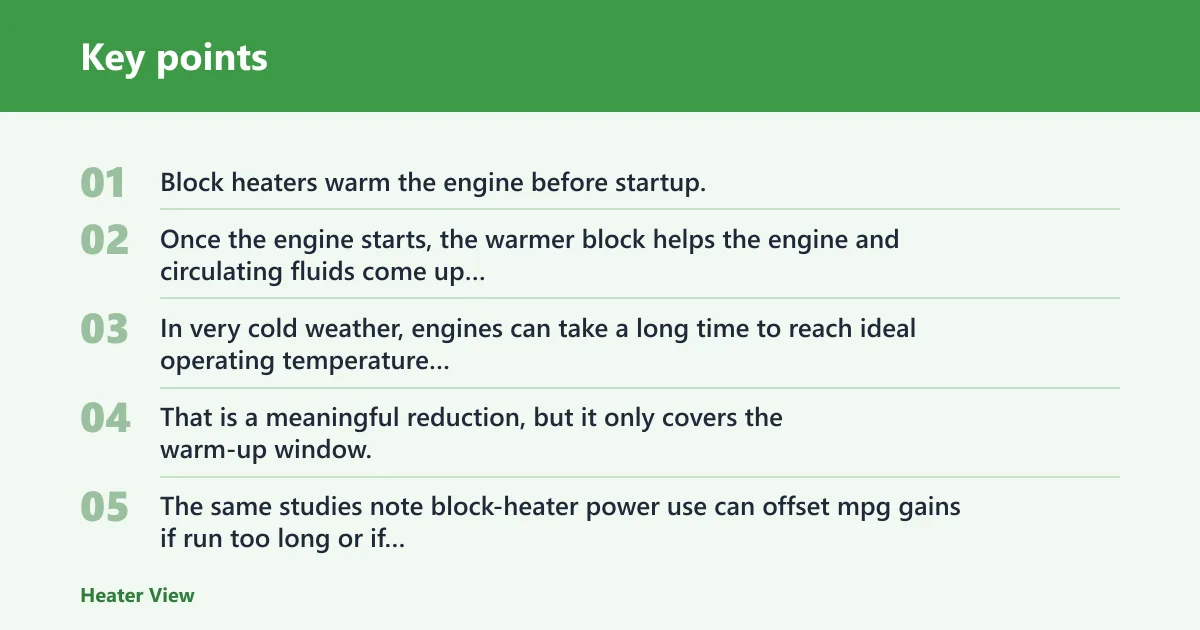
Block heaters warm the engine before startup. Once the engine starts, the warmer block helps the engine and circulating fluids come up to operating temperature faster. In very cold weather, engines can take a long time to reach ideal operating temperature after a cold start, and preheating can reduce the fuel used during the initial warm-up period.
That is a meaningful reduction, but it only covers the warm-up window. The same studies note block-heater power use can offset mpg gains if run too long or if the vehicle’s route is too short for the warm-up benefit to matter. That is the central tradeoff: less fuel burned in the engine, but more electricity used at the outlet.
Oil viscosity, battery capacity, and starter load
Cold oil is thicker, so the engine turns with more resistance and lubrication takes longer to reach all the moving parts. Battery capacity also drops in cold weather; lead-acid starting batteries can lose a large share of available cranking power well below freezing, which makes the starter work harder. A block heater does not fix the battery, but it can reduce the strain of a cold start enough to lower the fuel burned during the first minutes. Battery and starter stress are separate from fuel economy, but they are part of the same cold-start penalty.
Newer engines with synthetic oil can often start at 20°F without a heater. That does not mean a heater has no value; it means the fuel-saving case is weaker when the vehicle already starts and warms reasonably well on its own. Synthetic oil generally flows better than conventional oil in the cold, so the marginal gain from preheating is often smaller for newer engines, especially when parked in a garage rather than outside.
Cold-start fuel penalty versus steady driving
Steady driving fuel economy is mostly about load, speed, and drivetrain efficiency. Cold-start fuel penalty is about getting the engine from cold to normal temperature. A block heater acts on the second problem, so its effect is front-loaded. If your route is long enough, the overall MPG difference may be small even if the first few minutes use less fuel.
Picture a short commute of about 6 miles with a few stoplights and around 5 minutes of idle time in the driveway while the windshield clears. A block heater can trim the idle and warm-up fuel burned there. On a highway drive of about 45 minutes, the heater may save only a little at the start and do little for the rest of the trip.
Block heater fuel economy scenarios
The net result depends on electricity use, outside temperature, and how much warm-up fuel the vehicle would otherwise burn. The table below uses explicit assumptions so the break-even math is visible: heater wattage, electricity rate, fuel price, ambient temperature, trip length, and idle minutes avoided. For illustration, the example assumes a 1,000-watt heater, electricity at $0.18/kWh, gasoline at $3.60/gal, and a cold soak near 10°F to 28°F. Those figures align with common residential rates and the fuel-use ranges reported in winter-start studies and guidance.
| Winter scenario | Estimated preheat electricity use | Likely fuel-saving window during warm-up | Verdict |
|---|---|---|---|
| Short commute | 2-4 kWh | First 5-10 minutes after startup | Likely net-neutral or small save |
| Moderate commute | 2-4 kWh | First 10-15 minutes after startup | Likely net save |
| Overnight parking | 4-6 kWh | First 15-20 minutes after startup | Break-even only in very cold weather; otherwise unlikely to pay back |
These are practical estimates, not a guarantee. A clearer way to think about break-even is this: if a 1,000-watt heater runs 3 hours, it uses about 3 kWh. At $0.18/kWh, that is about $0.54 of electricity. If preheating avoids 0.15 gallons of gasoline on a cold morning, the fuel saved is about $0.54 at $3.60/gal, so the result is near break-even before considering engine wear or emissions benefits. If the heater runs longer than needed, the electricity cost can eat up the fuel saved.
A common first-timer mistake is leaving the heater on for the whole workday because it is “already plugged in.” Suppose the car sits outside for 10 hours at 28°F and the heater only needs 3 hours to do its job. The extra 7 hours add electricity cost without adding fuel savings. In that case, the net value depends more on plug-in discipline than on heater power alone.
When to plug in a block heater
Plug in when the temperature is low enough that cold starts meaningfully raise fuel use, and only for as long as the heater needs to warm the engine. Manufacturer recommendations vary by vehicle, heater design, and temperature, so there is no universal plug-in schedule that fits every car.
Temperature bands that usually justify it
Below freezing is where a heater starts to make the most sense for fuel economy. The colder it gets, the more the engine benefits from starting warmer, because oil thickens more and warm-up takes longer. At mild winter temperatures, the fuel penalty may be too small to offset electricity use, especially if the vehicle is garaged.
The practical cutoff is not the air temperature alone. Wind exposure, parking duration, vehicle age, oil choice, and whether the vehicle has synthetic oil also matter. A sheltered garage at 25°F is a different case from an exposed lot at 25°F. Outdoor parking produces the biggest cold-soak penalty; garage parking can make a block heater unnecessary unless temperatures are extreme or the vehicle is older and harder to start.
Trip length and parking duration
If you drive only a few miles, a block heater has more chance to save fuel because the warm-up phase is a bigger share of the trip. If you drive far enough for the engine to reach normal temperature early, the benefit shrinks. Remote parking also matters because plugging in may not be convenient every night.
For fleet vehicles and commuter cars, the best candidates are often those that spend long nights outside and then run a short to moderate route the next morning. Low-mileage drivers may see less payoff if the heater is used for hours but the engine barely leaves the cold-start phase before the trip ends.
How long to leave it plugged
Use the shortest run time that gets the engine warm enough for your conditions. The guide values above say a 1,000-watt heater running 4 hours uses 4 kWh, and some heaters may reach an effective preheat window within a few hours. If your heater is 600 watts, it may need more time than a 1,500-watt unit to produce the same effect. That is why exact run time depends on heater wattage and ambient cold.
Do not assume longer is better. Once the block and coolant are already warm enough, extra plug-in time mostly adds electricity cost. For many daily-driver situations, the right answer is a timer, not an all-night plug-in.
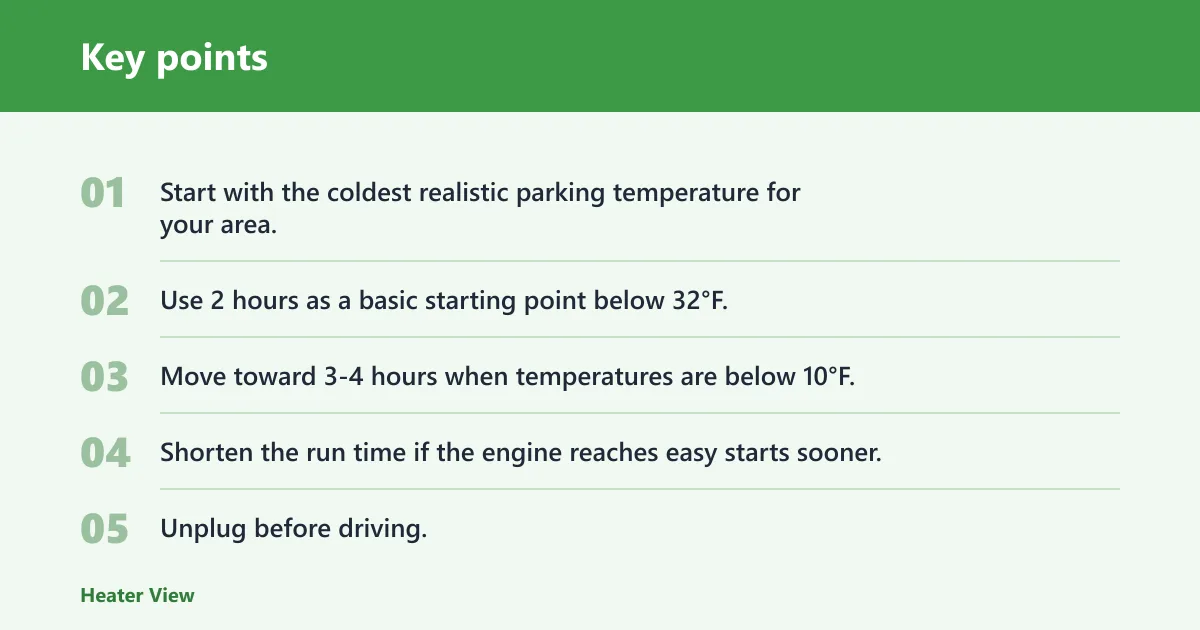
- Start with the coldest realistic parking temperature for your area.
- Use 2 hours as a basic starting point below 32°F.
- Move toward 3-4 hours when temperatures are below 10°F.
- Shorten the run time if the engine reaches easy starts sooner.
- Unplug before driving.
Which heater type fits your vehicle?
Different heater types fit different engines and parking setups. The fuel-economy logic is the same, but installation method and heat transfer differ. A block heater that matches the vehicle and the climate is more likely to deliver a real net benefit. In general, engine design, access to the freeze plug or coolant hose, and whether the vehicle is parked indoors or outdoors should drive the choice.
Freeze plug heater
A freeze plug heater replaces a freeze plug and warms the coolant directly. It usually requires draining coolant, and professional installation is often recommended. This type is common when a more permanent, factory-style solution is wanted, especially for vehicles that live outdoors in severe cold.
Circulating heater
A circulating heater connects to radiator hoses and may use a small pump to move warmed coolant through the engine. It can be useful when the goal is broader coolant circulation rather than heat in one fixed spot. These systems are often chosen when the vehicle layout makes freeze-plug access difficult.
Magnetic heater
A magnetic heater attaches to the oil pan or engine block and works best on cast iron. It needs clean, flat contact to transfer heat well. This style is often easier to install, but it depends more on surface fit and material than a coolant-based heater, and it is usually less effective on thin aluminum pans or poorly contacted surfaces.
What block heaters can and cannot save
Block heaters can save fuel by reducing idle time and shrinking the cold-start penalty. They do not guarantee better fuel economy on every winter trip, and they do not change highway efficiency once the engine is warm. Their value depends on temperature, trip length, heater wattage, and how much idling they replace. The most reliable savings come on short, cold, outdoor-parking commutes.
Fuel saved from less idling
Idle fuel use matters most in very cold weather, when drivers let the engine run longer to clear windows or warm the cabin. A block heater can shorten that warm-up window, so the vehicle may need less idling before driving comfortably. That is where much of the winter fuel savings comes from.
Fuel economy on short drives
Short trips are where the tradeoff is sharpest. A preheated engine may use less fuel during the first few minutes, but the electricity used to preheat can cancel that gain if the trip is very short or the weather is only mildly cold. For a long drive, the heater is more likely to come out ahead. Garage parking also lowers the odds of a noticeable fuel gain because the engine starts from a less severe cold soak.
Emissions and engine wear side effects
Lower emissions are a side effect of burning less fuel during warm-up and idling less, not a separate guarantee. Reduced wear is also a side effect of easier starts and warmer oil flow, but it should not be treated as a fuel-economy result. Cold-start emissions are typically highest before the catalyst lights off, so a warmer start can reduce that spike. Similarly, less metal-to-metal wear during the first seconds of operation is a plausible benefit, but it depends on vehicle condition, oil choice, and how cold the start is.
Frequently asked questions
Do block heaters improve fuel economy in winter?
Yes, mainly during the warm-up period after a cold start. A warmed engine burns fuel more efficiently, so winter fuel economy can improve when the heater shortens idling and reduces the cold-start penalty. The effect is weaker on long drives and may disappear if the heater runs too long before departure.
How much fuel does a block heater save?
There is no universal number. Your net gain may be smaller once electricity cost is included, especially on longer plug-in times.
Can a block heater reduce idling fuel use?
Yes. If the engine starts warmer, it usually needs less idle time before it is smooth enough to drive. That can reduce the fuel burned while waiting for oil flow, cabin heat, and normal combustion conditions. The effect is strongest in subfreezing weather and shortest on mild winter days.
Does a block heater help the engine warm up faster?
Yes. A block heater raises the starting temperature of the engine, so the thermostat, heater core, and circulating oil begin from a warmer baseline. That shortens the time to usable heat and reduces the minutes spent in rich warm-up operation, especially in very cold outdoor parking conditions.
When should I plug in a block heater in cold weather?
That depends on the vehicle and the heater, since manufacturer recommendations vary. The right plug-in time is the shortest time that gives an easy start and cuts warm-up idle. If the heater is left on much longer than needed, electricity use can outweigh the fuel saved from the warmer start.
How long should I run a block heater before starting?
A 1,000-watt heater running 4 hours uses 4 kWh, so the right run time is usually the shortest time that gives an easy start and cuts warm-up idle. Exact timing depends on heater wattage, ambient temperature, vehicle design, and whether the car is parked indoors or outdoors.
Can a block heater lower emissions during winter driving?
Yes, indirectly. Less idling and a shorter warm-up phase usually mean less fuel burned at startup, which can reduce tailpipe emissions during that part of the trip. It is not a guarantee for every vehicle or route, and it does not change emissions during steady cruising once the engine is warm. The biggest emissions benefit tends to come from the first minutes after a cold start.