What Size Generator Do You Need for a Block Heater?
Size the generator from the block heater’s nameplate watts first, then add extra capacity for cold-weather use, cord loss, and any other load. A 120V, 1,500W heater usually needs at least a 2,000W continuous generator. Too little capacity can trip breakers, slow startup, or leave you stuck in the cold. This guide shows how to read heater watts, convert them to generator size, check outlet compatibility, and plan for combined loads.
Calculate combined running watts with cold-weather headroom
Start with the heater’s nameplate watts, then add room for cold-weather use, cord loss, and anything else the generator must power. A block heater is usually a continuous resistive load, so running watts are the key number. If the heater is 1,000W to 1,500W, choose a generator with a higher continuous output rating.
Start with the heater’s nameplate watts
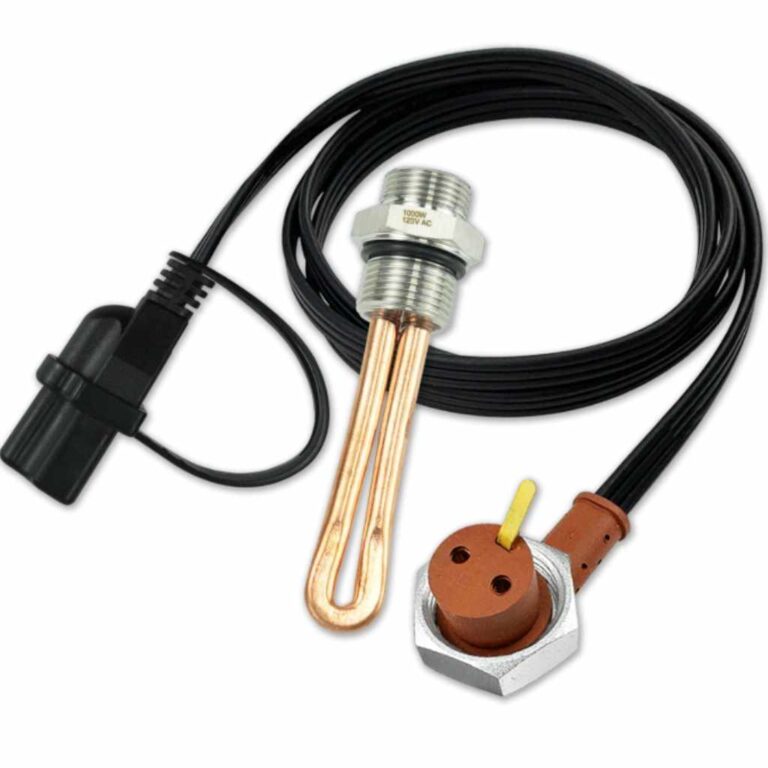
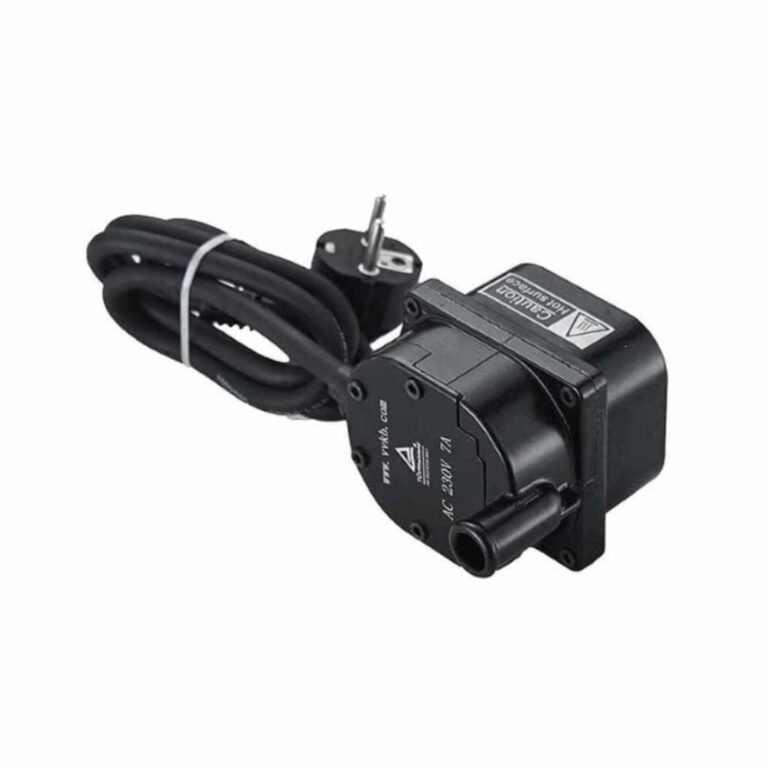
Most block heaters use a common 120V supply, and the label or cord tag usually lists the wattage. A block heater may warm engine coolant, oil, or the engine block itself, depending on the design. That makes it a steady load, not a short burst like a motor start.
Add headroom for cold weather and cord loss
Cold weather can cut generator margin, and long extension cords can drop voltage before the heater gets full supply. Leave extra capacity when the heater will run for hours. That helps the generator hold the load cleanly through the preheat period.
Account for any other loads on the same generator
If the generator also powers a battery charger, oil-pan heater, work light, or small fan, add those running watts to the heater watts before you pick a size. A common first-time mistake is choosing a unit that barely covers the heater, then plugging in one more load later. That is where nuisance tripping starts.
Say your diesel pickup uses a 1,200W block heater and a 100W battery charger. The combined running load is 1,300W before cord loss and headroom. A 2,000W continuous generator is still the floor, but a larger portable unit gives better margin in cold weather and with a long cord.
Block heater wattage by application
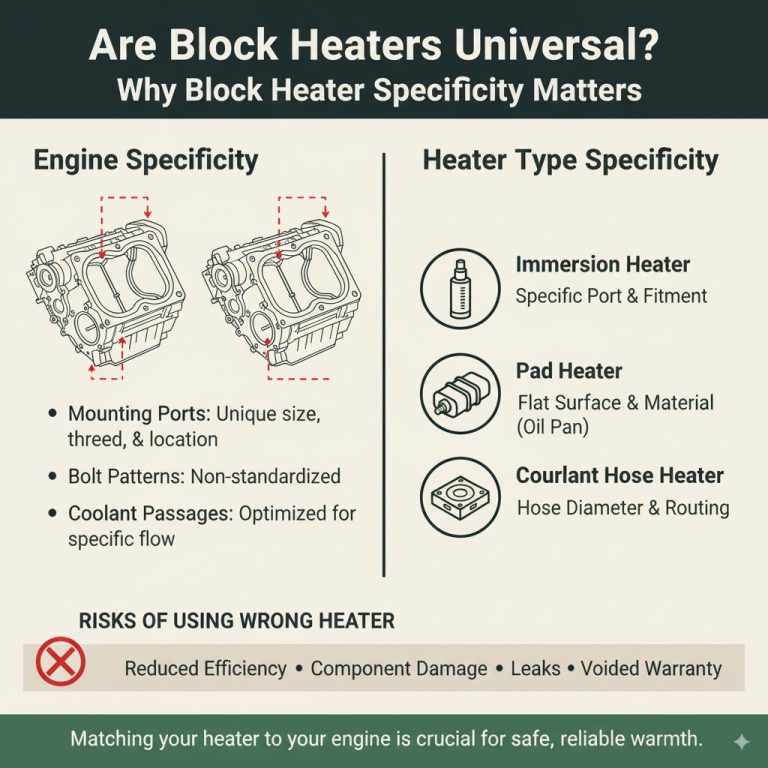
Block-heater wattage depends on the engine, the heater design, and whether the unit heats coolant, oil, or both. Gasoline cars often sit in the lower end of the range, while diesel trucks, tractors, and larger engines often use more. Thermostat-equipped variants can cycle on and off, but you still size from the nameplate rating.
Gasoline car and light-duty engine ranges
Small cars and light-duty engines commonly use lower wattage heaters, often in the 400W to 1,000W range. Many are immersion or in-line types. These loads are easy for a portable generator to carry, provided the outlet matches the heater plug and the cord is sized correctly.
Diesel truck, tractor, and larger engine ranges
Diesel trucks and tractors often need higher wattage heaters, commonly around 1,000W to 1,500W, and some setups go higher depending on engine size and heater type. Oil-pan heaters and circulating coolant heaters can push the total higher if more than one device is active at once. That is where combined-load math matters.
Coolant, oil-pan, and thermostat-equipped variants
Coolant heaters warm the fluid that carries heat through the engine. Oil-pan heaters warm the oil so it flows better during startup. Thermostat-equipped heaters can reduce wasted power once the engine reaches a target temperature, but they still count as the rated load when you size the generator. Block heaters can be immersion, in-line/circulating, oil-pan, cartridge, or thermostat-equipped.
Block heater sizing table
This table uses common application ranges to show the minimum generator size for the heater alone and the recommended size when you add a battery charger or small accessory load. The “alone” column assumes the heater is the only load. The recommended column adds practical headroom for cold weather and a modest accessory load.
| Application | Common heater wattage | Minimum generator size alone | Recommended size with charger or small accessory |
|---|---|---|---|
| Gasoline car, light-duty engine | 400W to 1,000W | 1,000W to 1,500W continuous | 1,500W to 2,000W continuous |
| Small diesel car or compact utility engine | 800W to 1,200W | 1,500W to 2,000W continuous | 2,000W to 2,500W continuous |
| Diesel truck, tractor, larger engine | 1,000W to 1,500W | 2,000W to 2,500W continuous | 2,500W to 3,500W continuous |
| Oil-pan heater plus coolant heater | 1,200W to 2,000W combined | 2,500W to 3,000W continuous | 3,000W to 4,000W continuous |
A battery charger usually adds a modest running load, but a small cabin fan, diesel-fired accessory, or second heater can change the answer fast. If the accessory has a motor, use the largest motor-start surge rule, not just the running watt total. If it is resistive heat, add the wattage directly.
Do you size by running watts or starting watts?
For a block heater, size by running watts first because the heater is a steady resistive load, not a motor with a big startup surge. Starting watts still matter if other equipment on the same generator has a motor or compressor. A home generator should often be sized to handle starting wattage, not just running wattage.
Why a block heater is mostly a continuous load
A heater element draws power as long as it is energized. It does not need a surge to spin up. That means the generator’s continuous output rating is the number to watch, along with the outlet rating and cord capacity.
When surge wattage still matters
Surge wattage matters if the same generator also powers a charger with a transformer, a pump, a compressor, or any motorized accessory. In that case, use the largest motor-starting load rule: add the heater’s running watts to the largest starting surge on the circuit.
How the largest motor-starting load rule fits here
If the block heater is the only load, surge is not the sizing driver. If you plan to run a sump pump or air compressor at the same time, the generator must cover the heater plus that surge. The rough method is to match the generator wattage to the calculated starting wattage when the load mix includes motors.
What generator amperage and voltage do you need?
Match the generator outlet to the heater plug and keep the current within the outlet’s rating. A 120V heater usually runs from a standard household-style receptacle, so the key is making sure the outlet, cord, and plug all match. Voltage mismatch is a practical problem, not a theoretical one, because the plug and cord must fit the supply you actually have.
20 amp, 30 amp, and 50 amp output classes
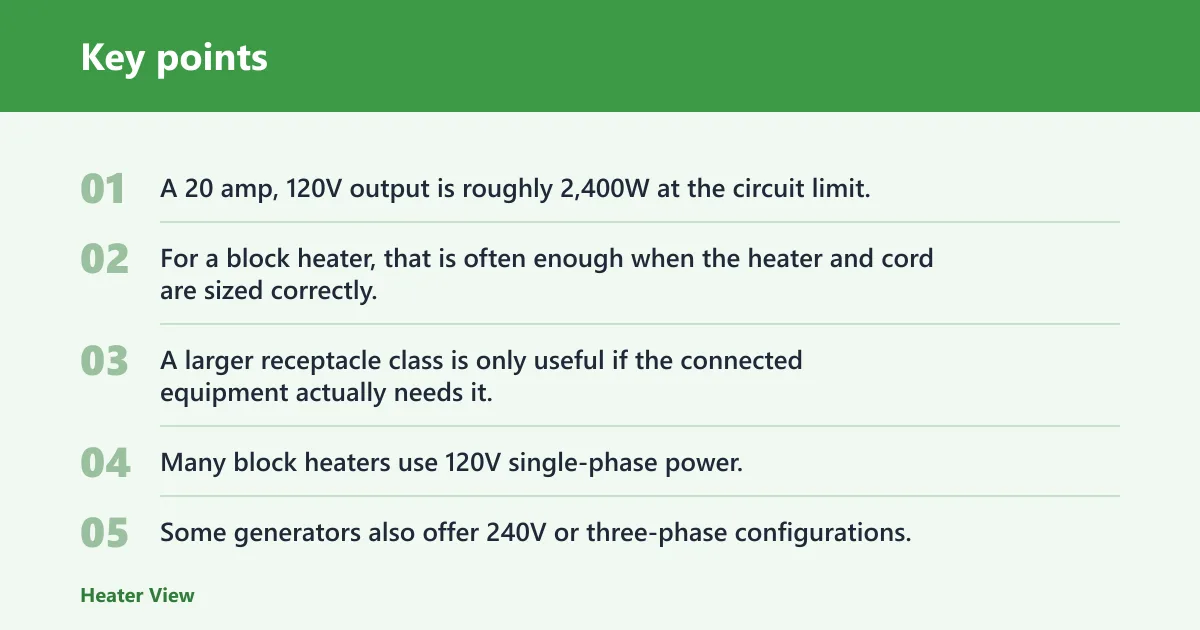
A 20 amp, 120V output is roughly 2,400W at the circuit limit, though you should not plan to sit right on the edge. For a block heater, that is often enough when the heater and cord are sized correctly. A larger receptacle class is only useful if the connected equipment actually needs it.
120V versus 240V outlet matching
Many block heaters use 120V single-phase power. Some generators also offer 240V or three-phase configurations, but a 120V heater still needs the correct 120V receptacle or a proper adapter setup approved by the manufacturer. Do not assume a 240V outlet is useful unless the heater or connected equipment is rated for it. Voltage options run from 120V single-phase to 240V or three-phase configurations.
Extension-cord limits and voltage drop
Long cords reduce the voltage delivered to the heater, especially in cold weather. Use the shortest practical cord and a heavy enough gauge for the amperage and distance. If the cord feels warm, that is a warning sign. Keep the generator outdoors and dry, but place it where it can breathe and stay stable.
Suppose a 1,000W heater is 80 feet from the generator. The nameplate load looks small, but the cord can still create enough drop to slow heating or stress the plug. A shorter, heavier cord often solves that problem better than buying a larger generator.
Will a portable generator be enough?
A portable generator is usually enough when the block heater is the main load and you want direct appliance use. It becomes less suitable as the load mix grows. If you only need one heater, a charger, and a light, a small portable unit can work well as long as the continuous output rating covers the total running watts.
Essentials-only loads and direct appliance use
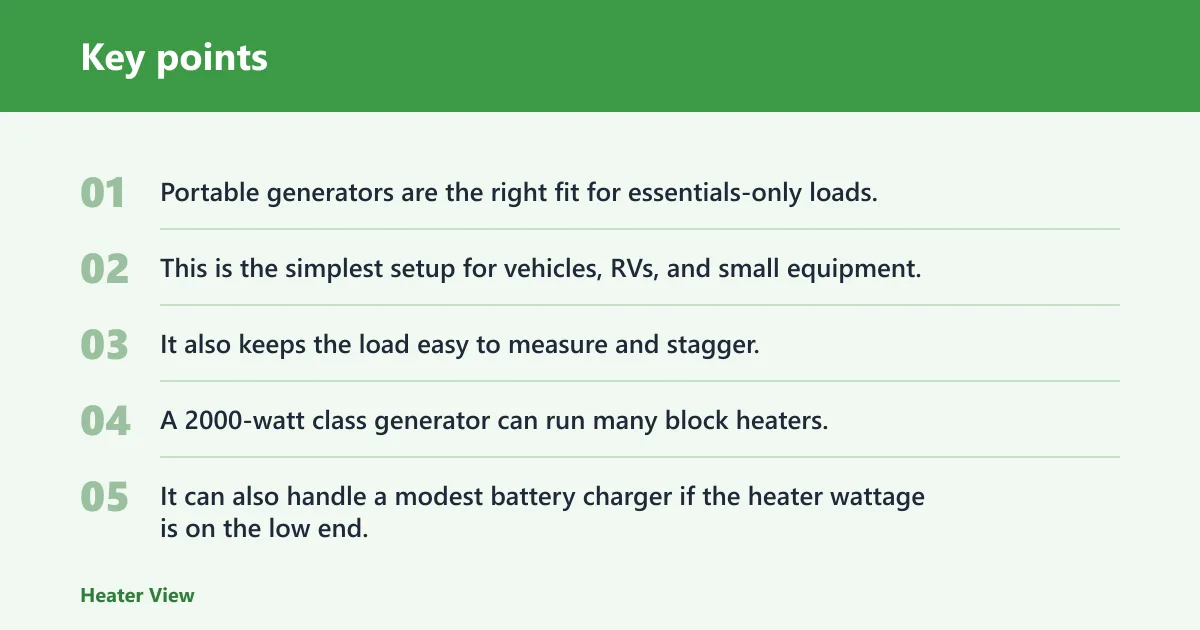
Portable generators are the right fit for essentials-only loads, especially when the heater plugs directly into the machine or into one heavy-duty cord. This is the simplest setup for vehicles, RVs, and small equipment. It also keeps the load easy to measure and stagger.
When a 2000-watt class unit can work
A 2000-watt class generator can run many block heaters, especially on gasoline cars and lighter engines. It can also handle a modest battery charger if the heater wattage is on the low end. Can a 2000-watt generator run a block heater? Yes, if the heater’s running watts and cord loss stay comfortably below the unit’s continuous output rating.
When to step up to a larger portable model
Move up when the heater is near 1,500W, when you need a charger plus a heater, or when the cord run is long. The average running wattage for a home is 2 to 4 kilowatts, but that is far above what a single heater usually needs. For heater-only use, a larger portable model often provides the better safety margin without moving into standby territory.
When does a standby generator make sense?
A standby generator makes sense when the block heater is one part of a larger winter load plan, or when the heater is tied into a fixed panel-backed setup. It is the better choice if you want automatic operation, multiple circuits, and enough continuous output for more than one essential load.
Whole-home wiring and panel load context
Standby systems are usually sized from the panel load, not from one appliance. That means you consider the heater, heating controls, chargers, sump pumps, and any other winter load that may run together.
Fixed installation and continuous output planning
Standby generators are fixed installations, and the output rating must cover the expected continuous load, not a best-case guess. If the block heater is one item in a panel-backed system, the sizing check gets closer to whole-home planning.
When combined winter loads justify standby capacity
Choose standby capacity when the heater is paired with furnace controls, sump pumps, garage equipment, or other essential winter circuits. The point is not to oversize a single heater. The point is to avoid running out of capacity when the weather turns and multiple loads come on together.
What size generator do I need for a block heater?
For most block heaters, start with the heater’s running watts, then add extra headroom and any other connected load. Check the outlet, cord, and combined load before you buy.
Frequently asked questions
How many watts does a block heater use?
Common block heaters fall roughly from 400W to 1,500W, depending on engine size and heater type. Gasoline cars are often at the lower end, while diesel trucks and tractors often sit higher. Oil-pan and combined coolant systems can push the total above that range when more than one heater is active.
Can I run a block heater and battery charger on the same generator?
Yes, if the generator’s continuous output covers both running loads with room to spare. Add the block heater watts and the charger watts, then include headroom for cord loss and cold weather. If the charger is small, this is often easy. If it is a larger charger, step up the generator size.
Do I size a generator by running watts or starting watts?
For a block heater, size by running watts first because the heater is a steady resistive load. Starting watts matter when the same generator must also start a motor, compressor, or pump. If the only load is the heater, the running watt total and continuous output rating are the key numbers.
How long should I run a block heater before starting?
Follow the vehicle or heater manufacturer’s instructions, since thermostat-equipped variants and colder ambient temperatures can change the ideal runtime.
What else can I power with a generator if the block heater is plugged in?
You can usually power small extras such as a battery charger, a work light, or a modest accessory load if the total stays within the generator’s continuous output rating. Avoid stacking larger loads on top of the heater unless you have done the watt math and checked the outlet rating and cord size.
Do I need a portable generator or a standby generator for a block heater?
Choose a portable generator if the heater is an occasional, appliance-level load and you want direct plug-in use. Choose standby if the heater is part of a fixed winter load plan, or if you also need panel-connected support for multiple circuits. The deciding factor is the full load list, not the heater alone.