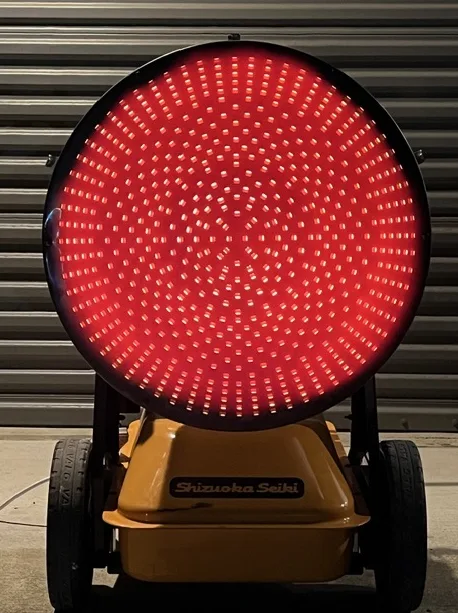
Can Infrared Heaters Run on Solar Power?
Yes, infrared heaters can run on solar power if your PV array, inverter, and battery can supply the heater’s steady wattage. For most homes, that means daytime use or a battery bank sized for the load, because the heater’s continuous draw and winter solar variability usually matter more than the heater style itself.
Success depends on three things: heater wattage, stored energy, and the hours of daylight available. Solar panels turn sunlight into electricity, but heating demand often arrives before dawn, after dark, or on dull days. That timing gap is the main reason a setup that looks fine on paper fails in late afternoon or after sunset. The U.S. Department of Energy notes that solar output varies by location, season, and weather, which is why winter sizing needs extra margin. DOE Energy Saver
PV, inverters and batteries for heat


How solar PV powers infrared heat
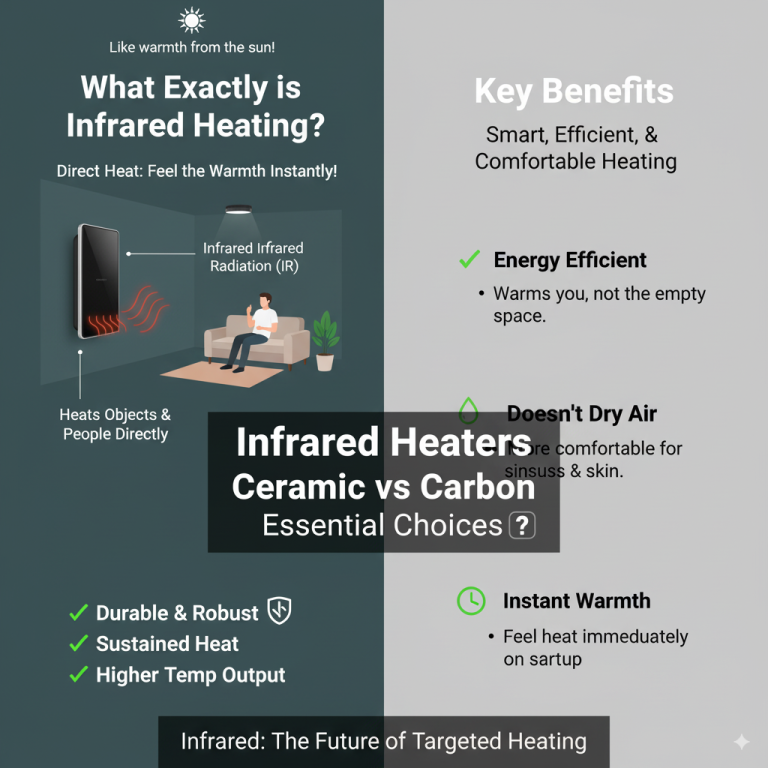
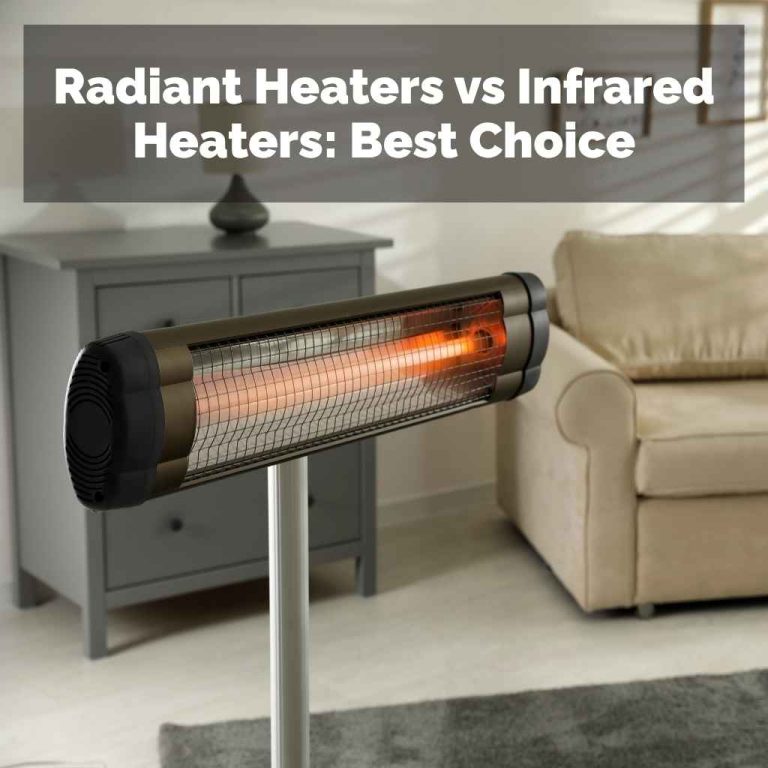
Solar photovoltaic panels supply power best during daylight hours, so they fit daytime heating top-up well. Infrared heaters use electricity to send radiant warmth to people and surfaces, which means PV can feed them directly when the sun is high enough and the inverter can handle the load. That does not mean infrared uses less electricity at the same wattage; the advantage is comfort control and shorter runtime in occupied zones, not a lower electrical draw per watt.
Inverter size matters because the heater needs AC power at its rated wattage. A standard 1,500 W heater draws about 12.5 A at 120 V, since current equals watts divided by volts. That is a heavy, continuous load for a small system, and inverter conversion losses reduce the usable output further. Many modern inverters advertise efficiency in the mid-90% range, so a small share of battery energy is always lost in conversion. See inverter documentation from major manufacturers such as SMA Solar Technology and Enphase for published efficiency ranges and load limits.
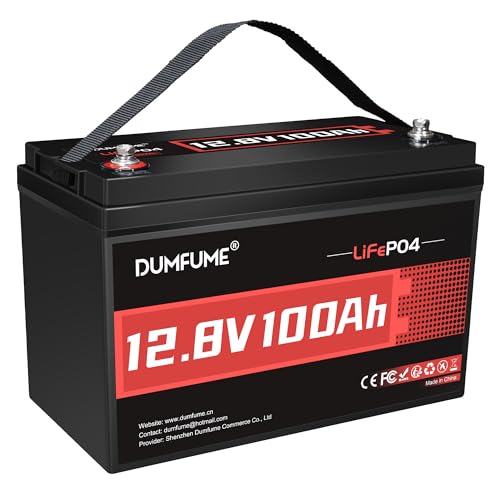
Battery storage changes the answer after sunset. Surplus solar electricity can be stored for later heating use, but capacity and depth of discharge limit how much heat you can run in the evening. If the battery is too small, the heater may work for a short window and then stop. Battery systems are also constrained by usable capacity, not nameplate capacity: many battery documents and DOE guidance explain that reserve limits and round-trip losses reduce what is actually available for the load. DOE homeowners’ solar guide
What heater wattage can solar support?
The wattage rating sets the rest of the system size. Lower-wattage infrared panels are easier to run from solar, while higher-wattage heaters need more panels, a larger inverter, and more battery headroom. A 400 W heater is often realistic for daytime support, while a 1,500 W heater quickly becomes a system-design question rather than a simple appliance choice.
400W and 750W: the easier loads
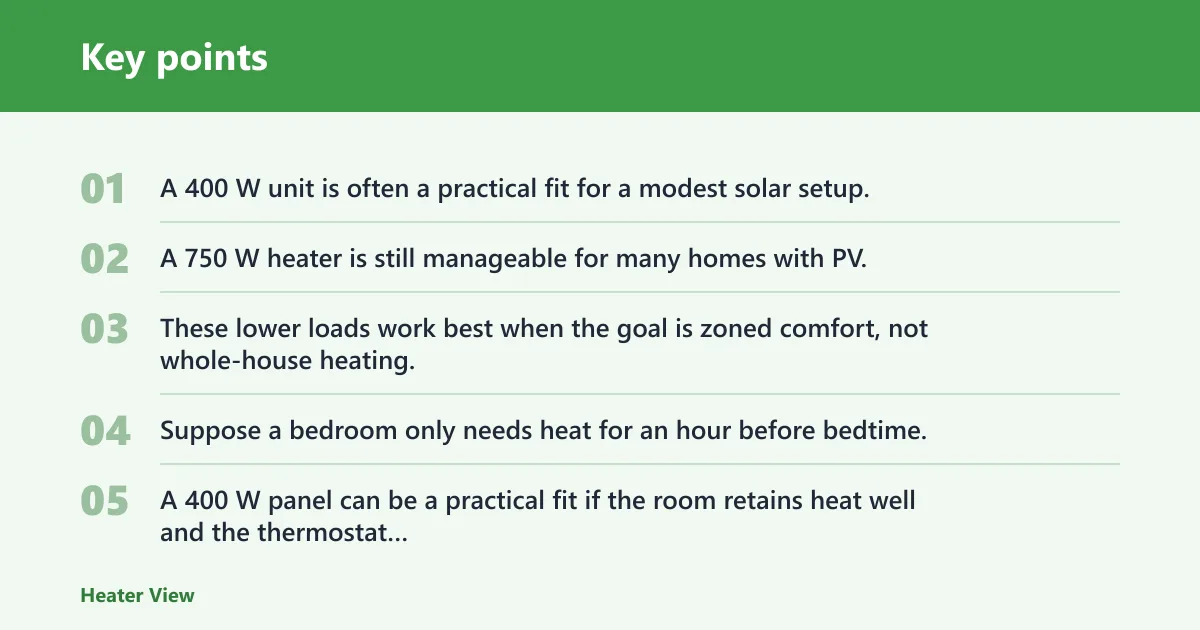
A 400 W unit is often a practical fit for a modest solar setup, especially if it runs during the day or in a small, well-insulated room. A 750 W heater is still manageable for many homes with PV, but battery runtime becomes a more important limit once the sun drops.
These lower loads work best when the goal is zoned comfort, not whole-house heating. Suppose a bedroom only needs heat for an hour before bedtime. A 400 W panel can be a practical fit if the room retains heat well and the thermostat avoids long overshoot cycles.
900W and 1200W: possible with careful sizing
At 900 W, solar support is still possible, but the system has less margin for cloud cover, battery loss, and inverter inefficiency. At 1200 W, the heater begins to behave more like a major appliance than a light auxiliary load, so the solar array and storage need to be sized with more care.
A common first-timer mistake is to size the array for average daytime output and ignore the heater’s continuous draw. That works only until weather turns dull or the heater stays on longer than planned. Zoned control and shorter duty cycles become important at these wattages, especially in winter when PV output can be lower than summer by a wide margin. NREL’s PV resource guidance and SEIA’s winter performance discussions both note that seasonal sun angle, day length, and weather change system output materially. NREL solar resource tools SEIA winter solar
1500W: why it becomes hard fast
A 1,500 W heater is demanding for a small solar setup. It can be done, but the system must be built around that load, not added to it later. In practice, this is where panel count alone stops being a useful metric and inverter capacity plus battery size take over the discussion.
For whole-room heating, a 1,500 W unit is often the point where solar only works in a large, well-designed system or in daytime top-up use. If the goal is after-sunset heating, storage must cover the heater plus conversion losses, which pushes the battery bank higher than many homeowners expect.
Infrared heater decision table
| Heater wattage | Likely solar setup fit | Battery dependency | Daytime-only realism | Evening realism | Whole-room realism |
|---|---|---|---|---|---|
| 400W | Good fit for a small to moderate PV system | Low if used in strong daylight; moderate after sunset | Realistic | Possible with storage | Best for a small, insulated room |
| 750W | Good fit with careful inverter and battery sizing | Moderate | Realistic | Possible with a sized battery bank | Possible for zoned use |
| 900W | Borderline on smaller systems, workable on larger ones | High after sunset | Realistic with strong solar output | Possible, but storage becomes important | Limited unless insulation is good |
| 1200W | Needs a stronger inverter and more storage headroom | High | Possible on a well-sized system | Only with substantial storage | Possible in a smaller zone, not ideal for whole-home use |
| 1500W | Large-system territory | Very high | Possible only with strong PV and inverter support | Poor fit for small battery banks | Usually impractical for modest solar setups |
This table separates the real decision points: panel output, battery dependency, and whether the load makes sense for a small room, an evening session, or whole-room heating. It is the battery and inverter side of the system that usually fails first, not the heater itself.
Can a battery run infrared heat after sunset?
Yes, but runtime depends on usable battery capacity, inverter losses, and the heater’s wattage. Battery storage can run an infrared heater after sunset, yet the real question is how long. A small solar setup usually cannot store enough power for evening heat, and the useful runtime is always less than the battery label suggests.
Runtime depends on usable battery capacity
A battery only gives back part of its nameplate energy in practical use. Depth of discharge matters because most systems do not use the full rating every time. The inverter then subtracts another slice through conversion losses, so the heater sees less usable energy than the battery label suggests.
A simple sizing formula helps: runtime in hours = usable battery kWh × inverter efficiency ÷ heater kW. For example, if you have 5 kWh usable, a 90% efficient inverter, and a 0.75 kW heater, runtime is about 6 hours. The same battery with a 1.5 kW heater drops to about 3 hours. That is why the load size matters so much.
What happens when inverter losses are included
The inverter must match the heater’s continuous wattage demand, and that is before losses are counted. A battery that looks large enough on paper may still run short in practice if the inverter is undersized or inefficient. That matters most for evening use, when solar input is gone.
Picture a 1200 W heater used after dinner in a garage conversion. If the battery bank was sized only for a short daytime boost, the heater may work at first and then cut out well before the space reaches a stable temperature.
Worked battery examples
If usable storage is 3 kWh and inverter efficiency is 90%, a 400 W heater can run for roughly 6.75 hours, a 750 W heater for about 3.6 hours, and a 1,500 W heater for about 1.8 hours. If usable storage rises to 10 kWh, those figures become about 22.5 hours, 12 hours, and 6 hours respectively, assuming all other conditions stay constant.
Those numbers are still idealized. Real systems lose some energy to wiring, battery management, temperature effects, and cycling. The practical takeaway is that evening infrared heating is possible, but long runtimes require much more storage than most people expect.
What makes solar heating practical or impractical?
Insulation, timing, and room control decide whether solar infrared heating feels useful or wasteful. Solar PV output is generally strongest during daylight hours, while heating demand can peak in colder mornings, evenings, and winter periods. That mismatch is the core limit, especially in colder climates.
Insulation and air leakage
Building insulation reduces heat loss, which cuts the energy required to maintain comfort. If the room leaks heat quickly, solar support becomes much harder because the heater must run longer and the battery drains faster. A sealed, insulated space gives you a better chance of making solar heat practical.
Infrared heat can feel effective in a cooler room because it warms people and surfaces directly, but it still cannot beat physics. If walls, windows, or floors lose heat quickly, you need more runtime to hold the same comfort level.
Thermostats, schedules, and room zoning
Zoned control helps because you only heat the room you are using. Thermostats and schedules reduce unnecessary heating hours, which matters more with solar than with grid power. The goal is to line up heater use with occupancy and daylight instead of forcing the system to cover every hour.
Say your sunroom gets strong afternoon sun but cools off after 6 p.m. A 400 W or 750 W panel heater may work well there if you set it to top up only when someone is in the room, rather than trying to hold a constant temperature all night.
Winter output versus heating demand
Winter is where many solar heating plans break down. PV output drops with shorter days, lower sun angle, and weather changes, while heating demand rises in the same season. That is why solar PV can offset on-site electrical heating demand, but often cannot carry all of it in winter without a larger system. NREL and DOE both point out that solar production is seasonal and location-dependent, and utility solar guides commonly recommend conservative winter sizing for space-heating loads. DOE solar electricity basics NREL photovoltaics
If your goal is full-room or whole-home heating through cold months, a heat pump is often the better fit. Infrared heating works best as a targeted load, especially where you can match short heating windows to daylight or use a modest battery bank for limited evening runtime.
Do infrared heaters work with solar panels?
Yes. Infrared heaters work with solar panels because both are part of the same electric system once the inverter is in place. The real limit is whether the PV array, battery storage, and inverter can cover the heater’s wattage when you need it, especially after sunset or during winter.
How many solar panels do I need for an infrared heater?
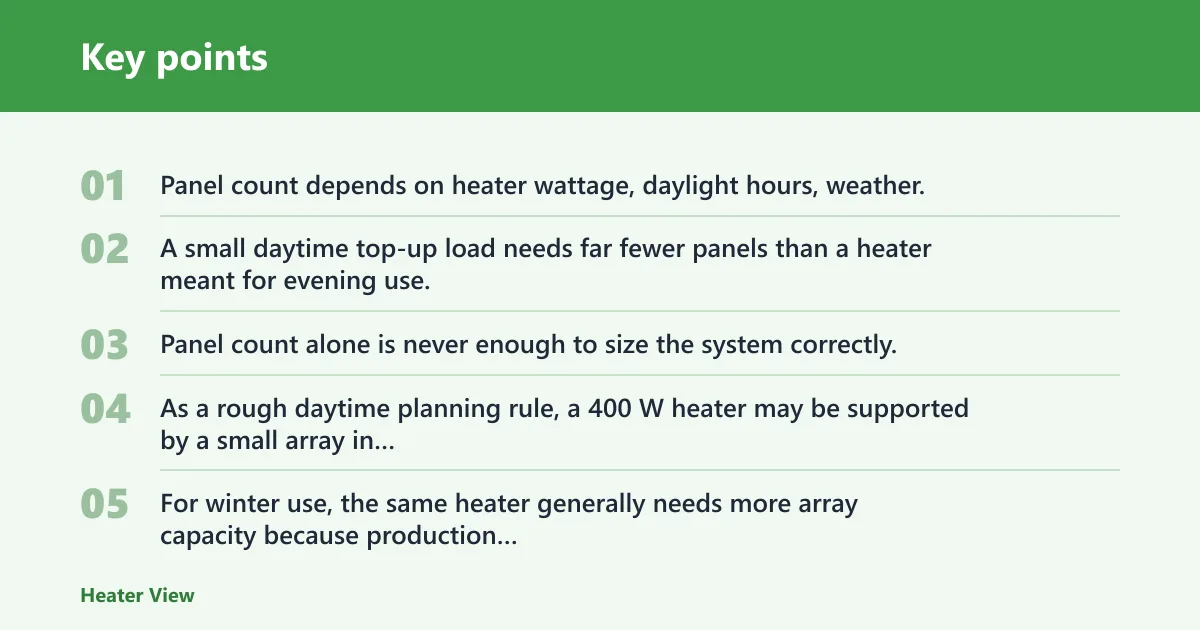
Panel count depends on heater wattage, daylight hours, weather, and how long you want to run the heater. A small daytime top-up load needs far fewer panels than a heater meant for evening use. Panel count alone is never enough to size the system correctly.
For winter use, the same heater generally needs more array capacity because production is lower and loads are longer.
What size inverter do I need for an infrared heater?
The inverter must handle the heater’s continuous wattage with headroom for losses and any brief transients. For a standard 1,500 W heater, the inverter must be sized for that kind of steady draw, not just for occasional use. Undersizing here can cause shutdowns even when the battery is full.
A practical rule is to size the inverter above the heater’s continuous draw, not at the exact same number. That is especially important for 1,200 W and 1,500 W heaters, where continuous operation leaves little margin. Major inverter documentation typically shows that efficiency improves when the unit is operating within its intended load range rather than being pushed to the edge.
Are low-watt infrared panels better for solar systems?
Often, yes. Lower-watt infrared panels are easier to match with daytime solar output and modest battery storage, so they fit small homes, bedrooms, and zoned spaces better. Lower wattage is not magic; it simply reduces the electrical demand that the PV and battery system must cover.
That said, low wattage is only useful if the room also holds heat well. A low-watt panel in a leaky garage may still disappoint, while the same heater in a sealed bedroom can be enough for steady comfort.
Can solar PV cover all my infrared heating needs in winter?
Usually not for a whole home, and especially not with a small solar setup. Winter heating demand often rises when solar output falls, so direct PV use can cover parts of the load, but not always the full space-heating need. Storage helps, yet it does not remove the seasonal mismatch.
Frequently asked questions
Can infrared heaters run on solar power?
Yes, if the solar array, inverter, and battery are sized for the heater’s continuous wattage. The easiest setup is daytime operation, when PV output is strongest. After sunset, you need enough stored energy to cover both the heater and the losses that come with moving power through the inverter.
Do infrared heaters use less electricity than other space heaters?
Not by default. Infrared heaters use electricity to deliver radiant warmth, and the wattage still sets the power draw. They can feel more efficient in a targeted zone because they warm people and surfaces directly, but insulation, schedules, and runtime matter more than the heater type alone.
Can a battery run an infrared heater after sunset?
Yes, but only for as long as the usable battery capacity lasts. Depth of discharge and inverter losses reduce the real runtime. A 400 W heater is much easier to support than a 1,500 W unit, especially if you want more than a short evening session.
Do infrared heaters need battery storage or can panels run them directly?
Panels can run them directly during daylight if solar output is high enough and the load stays within the inverter limit. Battery storage becomes important when you want evening heat, cloudy-day backup, or steadier operation after the sun drops. Without storage, solar heating is mostly a daytime solution.