Can You Use an Infrared Heater in a Garage Gym?
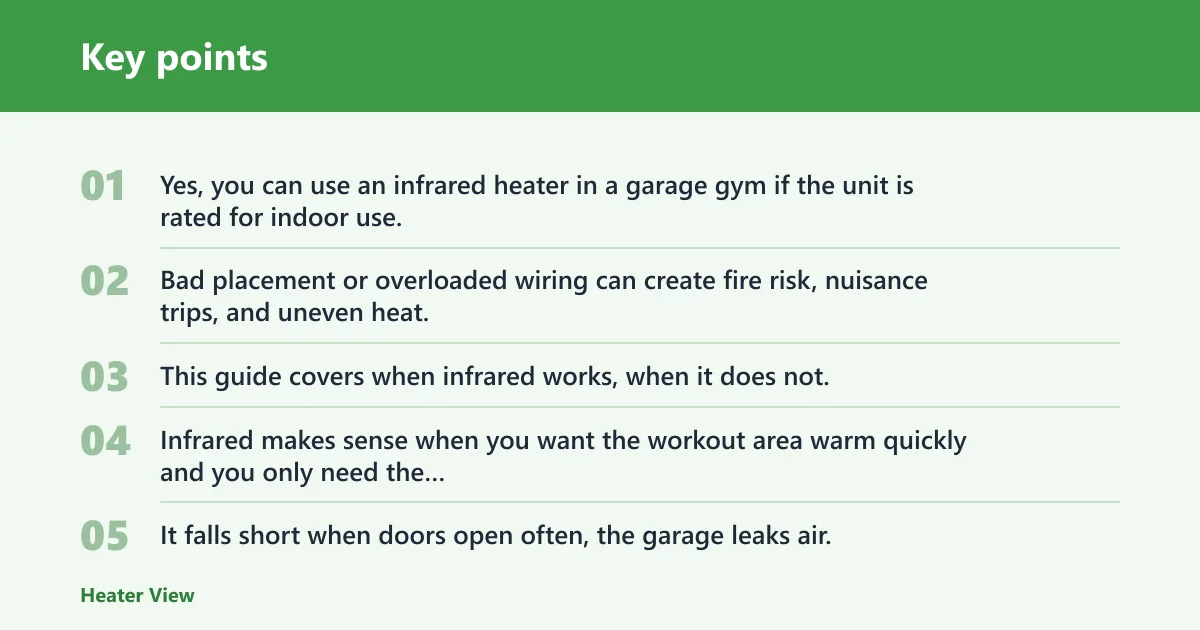
Yes, you can use an infrared heater in a garage gym if the unit is rated for indoor use, mounted with the required clearances, and your circuit can handle the load; for larger or poorly insulated garages, it may not be enough on its own. Bad placement or overloaded wiring can create fire risk, nuisance trips, and uneven heat. This guide covers when infrared works, when it does not, and how to place it safely around racks, mats, and shared circuits.
Infrared makes sense when you want the workout area warm quickly and you only need the rack, bench, or platform to feel usable. It falls short when doors open often, the garage leaks air, or the bay is large enough that the heater cannot keep pace with heat loss.
Safety and placement considerations

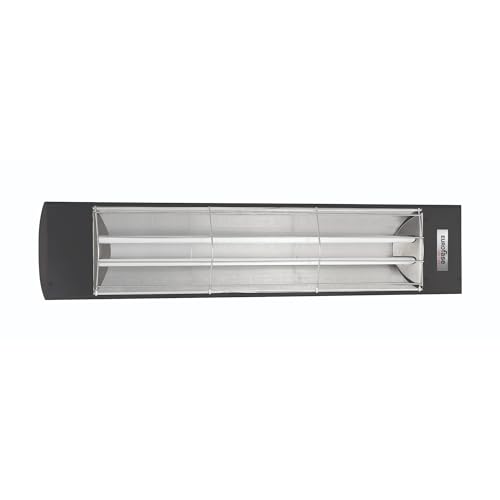

What you’ll need
- Infrared heater sized to the circuit and workout zone
- Circuit information for the outlet or hardwired run
- Tape measure for zone size and clearances
- Mounting hardware rated for the unit
- Clear space around racks, benches, barbells, plates, and mats
- Basic weatherstripping or insulation upgrades for leaky garages
- Breaker panel label, so shared loads can be checked before use
How infrared heat works in a garage gym
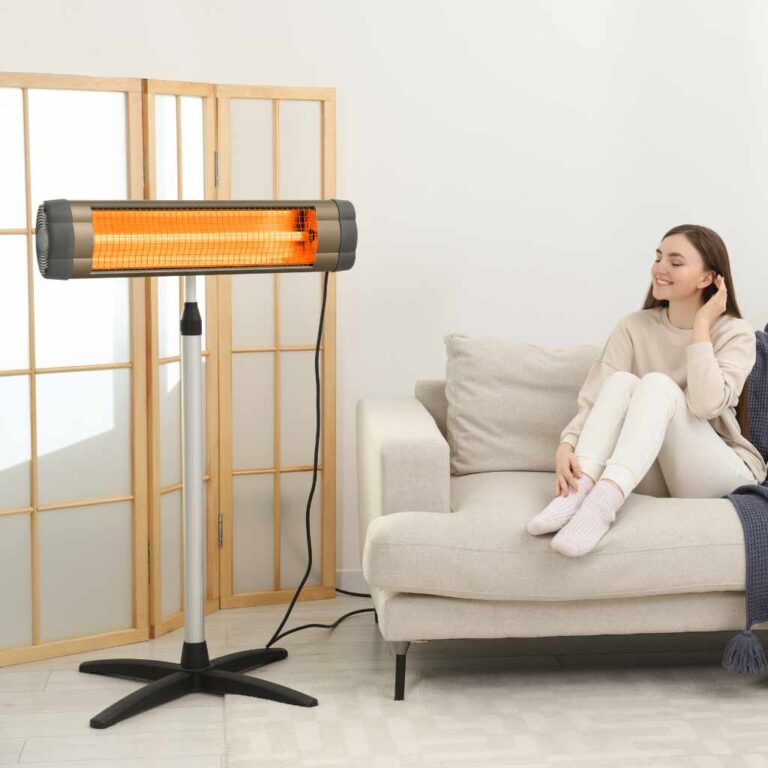
Infrared heaters warm objects and people directly, while convection heaters mostly warm the air. That difference matters in a garage gym, because cold air leaks through gaps, concrete floors hold chill, and high ceilings waste heat above the lifting area.
In a drafty garage, a warm air layer can disappear as soon as the door opens. Radiant heat is better when the goal is to warm the bench, rack, and lifter zone first. It is weaker when the garage is full of stored gear or the door stays open for long stretches.
Say your garage is 180 square feet, insulated, and used only for lifting. A wall panel aimed at the rack can make more sense than a unit trying to heat the entire bay. The same heater can feel weak in a space with repeated door openings and bare block walls.
Infrared garage gym fit check
| Garage insulation | Circuit type | Workout zone size | Door-opening frequency | Recommended heater type | Mounting location | No-go warnings |
|---|---|---|---|---|---|---|
| Well insulated | 120V / 15A | 150-200 sq ft | Rare | 1,500W infrared wall panel | Wall beside or ahead of the rack | Do not block the panel with plates, bands, or storage |
| Semi-insulated | 120V / 15A | Under 150 sq ft | Occasional | Portable plug-in infrared unit | Near the lifting zone, not under benches | Open doors and long sessions will cut output fast |
| Insulated, larger bay | 240V / 30A | Two-car garage | Rare to occasional | 5,000W ceiling unit heater | Ceiling centerline, aimed at training area | Hardwired install required; keep storage away from the throw path |
| Uninsulated | Any plug-in setup | Any medium-to-large zone | Frequent | Mini-split or hardwired heater | Not a plug-in infrared job | Open doors, drafts, and about 1.5x heat loss make plug-in infrared poor fit |
Which heater fits your garage gym?
A 1,500W infrared wall panel suits a small, insulated workout zone. The Heat Storm HS-1500-PHX-WIFI is a 1,500W infrared wall panel that runs on a standard 120V outlet, which makes it practical for many garage gyms that only need targeted heat at the rack or bench.
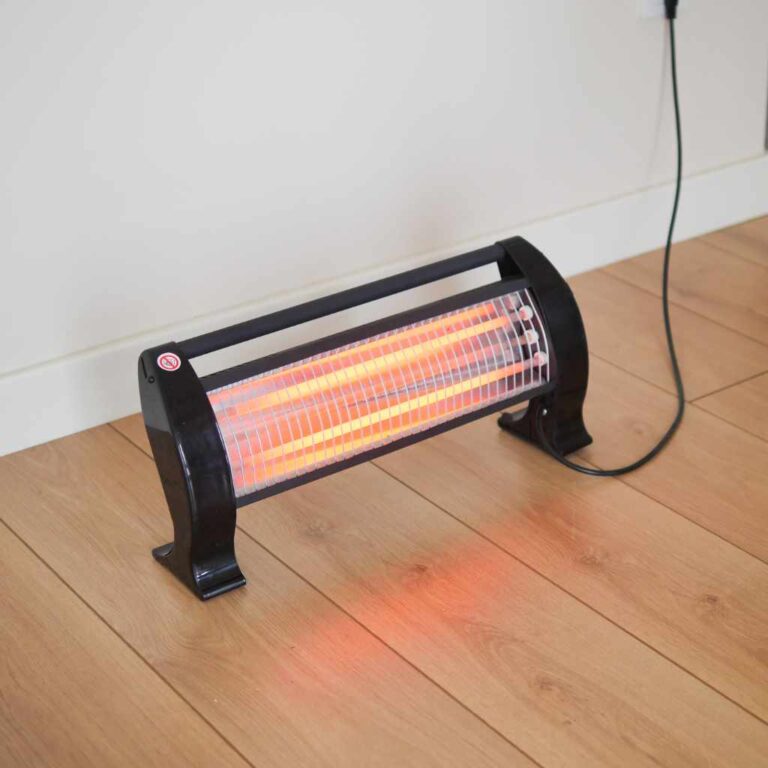
A portable plug-in infrared unit fits renter-friendly setups or spaces that change often. The Dr Infrared DR-968 is a portable 1,500W option on a standard 120V outlet, so it is easier to move, but it is generally better suited to a smaller zone with limited door opening.
For a larger insulated two-car garage, a hardwired 240V ceiling unit is the stronger fit. The Comfort Zone CZ220 is a 5,000W ceiling unit heater on a hardwired 240V / 30A circuit and is listed at 17,060 BTU. That level is aimed at larger garage-volume heating, not a tiny corner.
A mini-split makes more sense when you want steady whole-garage comfort, frequent door use, or better control in a space that is not holding heat well. Infrared is the better choice when you care more about warming the lifting zone than conditioning the entire bay.
How many watts do I need for a garage gym heater?
A standard 120V outlet safely delivers 1,440 watts, which is about 4,900 BTU/hr. That is the practical ceiling for a plug-in garage gym heater on a normal outlet. A 120V / 15A circuit realistically heats 150-200 sq ft of insulated space.
For a larger insulated garage, a 240V / 30A hardwired circuit can support 5,760 safe continuous watts. That setup is listed for heating a two-car garage, so it fits bigger training zones better than a plug-in unit.
Should I mount an infrared heater on the wall or ceiling in a garage gym?
Wall mounting is better when you want the heat aimed directly at the rack, bench, or platform. Ceiling mounting works when the garage is larger, the unit needs to stay out of the way, and the heat can drop into the training area without being blocked by stored gear.
Keep both options clear of hanging accessories, pull-up attachments, bumper plate stacks, and tall shelving. The goal is direct radiant exposure to the workout area, with the rack and bench first in line, not heat trapped behind equipment.
How should you set it up safely?
Check the circuit first, then place the heater where its output reaches the lifting area before it hits storage. Clearances matter more in a garage gym because racks, bands, and benches can end up under the unit if the layout changes later.
- Identify the circuit at the panel and confirm whether it is 120V / 15A or 240V / 30A.
- Add up shared loads on the same breaker, including a garage door opener, compressor, treadmill, or charging gear.
- Measure the lifting zone and choose a heater that matches that area, not the whole garage.
- Mount the unit so the main beam or radiant face points at the rack, bench, or platform first.
- Keep the heater away from plates, bands, ropes, towels, and storage shelves so nothing blocks output.
- Use the built-in overheat protection and automatic shutoff features, and never cover the unit.
Suppose a roughly 170 sq ft garage gym sits on a 120V / 15A circuit with a door opener on the same branch. A 1,500W wall panel can be a workable match if the zone is insulated and the opener is not sharing a heavy load at the same time. The same setup becomes shaky if the door is opened repeatedly between sets.
If that did not work, move up the ladder in this order: reduce shared electrical loads, improve sealing around the door, and then consider a hardwired 240V unit or a mini-split. More wattage will not fix a garage that leaks heat as fast as it is added.
Prevention: keep a clear wall or ceiling lane around the heater so future storage does not end up inside the clearance zone.
Common mistakes
Trying to heat the whole garage with a 1,500W plug-in unit is the most common mistake. That size is for a workout zone, not a full bay with cold concrete and a leaky door.
Ignoring open doors is the second problem. If the garage door stays cracked for ventilation or traffic, radiant heat loses ground quickly.
Mounting too close to a rack, bench, or storage shelf can also block the heat path or create a clearance problem later. Check the space above pull-up bars, band pegs, and plate trees before drilling.
Do not overload a 120V circuit with other garage loads. Door openers, compressors, vacuums, and charging equipment all matter when the heater is already near the circuit limit.
Skip propane, kerosene, and other unvented fuel heaters indoors. They are the wrong fit for a garage gym because the combustion risk is not worth the tradeoff.
Frequently asked questions
Can you use an infrared heater in a garage gym?
Yes, if the unit is rated for indoor use, the circuit can support it, and clearances are respected. Infrared works best when you want targeted heat in the lifting zone. It is a weaker choice for a drafty, frequently opened garage that needs whole-space comfort.
Is an infrared heater safe for a garage gym?
It can be safe when mounted correctly and kept away from racks, benches, mats, plates, and hanging gear. Use models with overheat protection and automatic shutoff, and do not place them where stored items can block the radiant path or touch the housing.
How far should an infrared heater be from my gym equipment?
Follow the manufacturer’s clearance specs first; they vary by model. As a practical rule, keep the face and sides free of equipment, straps, and storage so the heat can reach the workout area directly and nothing can overheat near the unit.
Can I run a garage gym heater on a normal outlet?
Yes, but only within the outlet’s limit. That works for a smaller insulated zone, but not for a large or uninsulated garage that needs much more heat.
Will an infrared heater warm an uninsulated garage gym?
It may warm the immediate training area, but uninsulated garages are often reported to lose significantly more heat and to be more sensitive to open doors. For that setup, plug-in infrared is usually underpowered, and a mini-split or hardwired heater is a better fit.
Do infrared heaters work better than fan heaters in a garage gym?
Infrared is usually better for warming the lifter and equipment directly, while fan heaters try to heat the air and lose more to drafts. Fan heaters can still help in a tighter, sealed garage, but radiant heat is often the stronger choice for a garage gym workout zone.